Hepper is reader-supported. When you buy via links on our site, we may earn an affiliate commission at no cost to you. Learn more.
Pitbull vs Great Dane: The Main Differences (With Pictures)
In this article
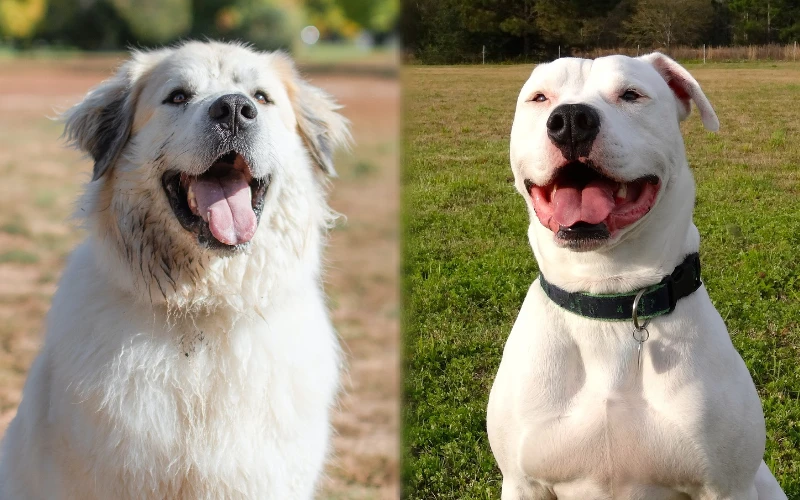
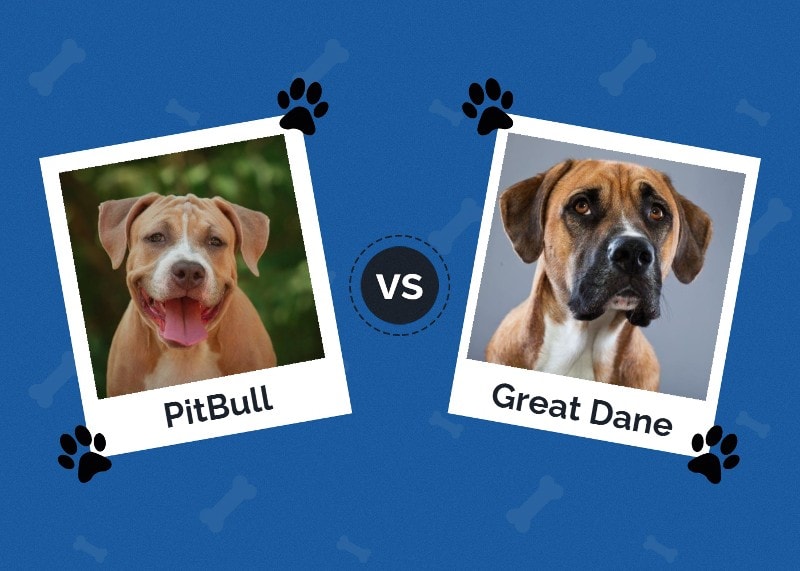
If you’re looking for a big, strong dog that will protect you and your family but also be affectionate, loyal, and great with children, the Pitbull and the Great Dane would be excellent choices. Both dogs are mighty, with solid musculature, large heads, and powerful jaws, although the Great Dane is by far the bigger of the two breeds. What’s similar is that, although both have a reputation for fierceness, Great Danes and Pitbulls are gentle dogs that deeply love their adopted pet families when raised in a loving, caring home.
If you’re planning to adopt a dog soon and can’t decide between a Great Dane or Pitbull or are just curious about their contrasts, the information below will be enlightening. It’s a side-by-side comparison of these adorable breeds. Read on to discover the most significant differences and most notable similarities between Great Danes and Pitbulls and get the deep insight and info you need to make the best adoption decision.

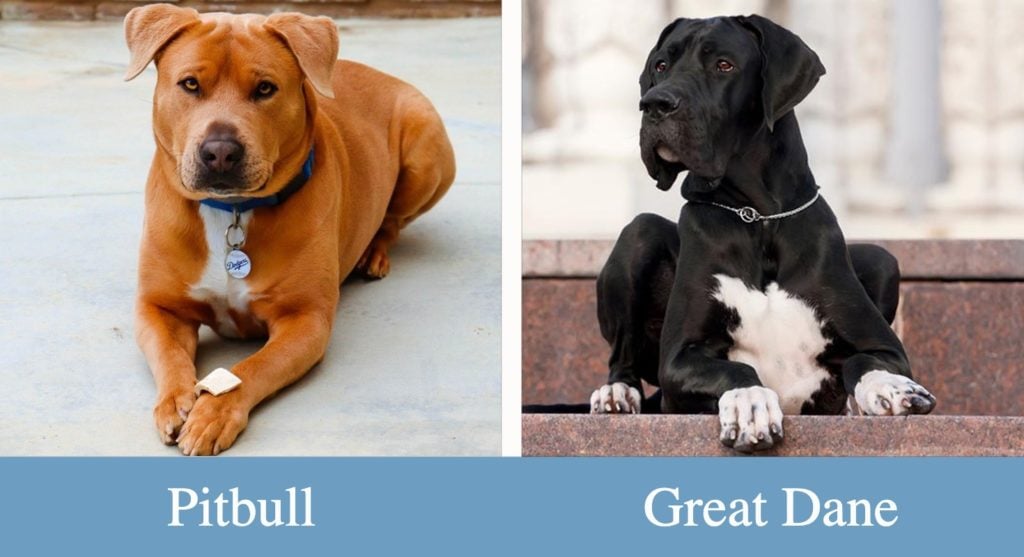
Visual Differences
At a Glance
Pitbull Overview
Personality / Character
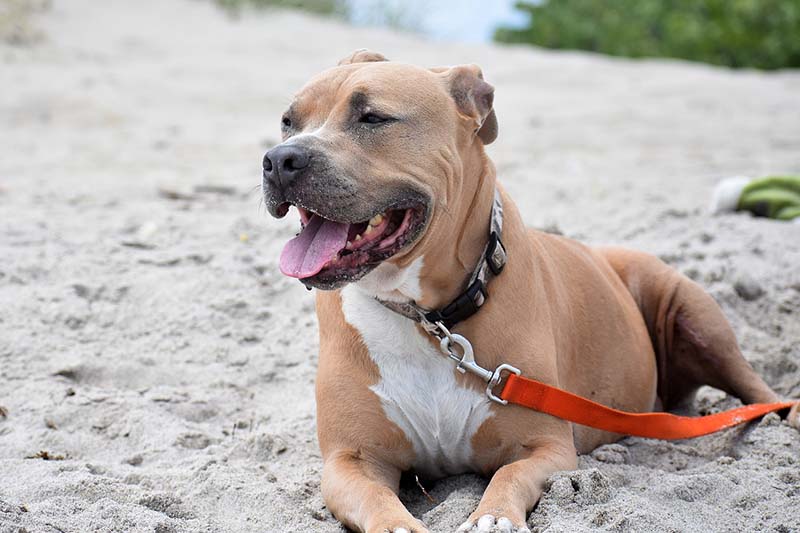
Pitbulls are very affectionate with their adoptive families and treat them very kindly. That goes the same for even the youngest children, including infants. It also extends toward strangers, although the Pitbull isn’t nearly as friendly when it comes to other dogs. To get along well with other dogs, the best recommendation is to adopt a Pitbull and another dog as puppies so that they grow up together. However, that might still be problematic once they reach adulthood.
Training
Pitbulls are sensitive, intelligent dogs that are relatively easy to train but need a lot of time, perseverance, and patience. They also need to be socialized very well with all members of the family, one of which will need to be the “alpha” dog. Pitbulls tend to push back quite a bit when being trained, as they have a mind that is entirely their own.
It’s also essential that you keep them on a leash or fenced in as Pitbulls have a strong prey drive and will run after anything that moves when outside. Luckily, Pitbulls don’t have a high tendency to bark, but they like to howl if they want attention.
Exercise Needs
One thing Pitbulls need more than almost anything else is a lot of activity to get rid of their enormous amounts of energy. The good news is that they will participate in nearly any activity and love to fetch, play tug-of-war, and many other fun games. Also, having a Pitbull is a great way to get lots of conditioning for yourself because they’re so strong.
Grooming Needs
Even though most Pitbulls have very short coats, they tend to shed quite a bit and go through two periods annually where they shed much more than usual. However, when they aren’t shedding profusely, Pitbulls only need to be brushed sporadically, about once every 2 weeks, to get rid of their dander before it becomes a problem. They need regular nail clipping, and brushing a Pitbull’s teeth every few days is recommended.
Suitable for:
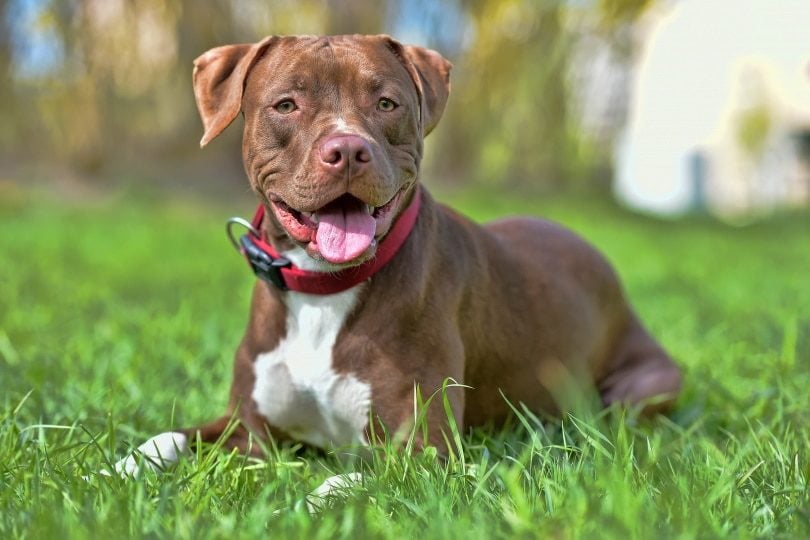
Pitbulls are best suited to small families and pet parents who have plenty of time to give them the attention and training they need, especially when they’re puppies. Pitbulls are great with children, and larger families looking for a protector who will be great with little ones should consider a Pit. Families with other adult dogs might want to avoid getting an adult Pitbull and start with a puppy so that there are fewer fighting issues. These lovable, trustworthy, and loyal dogs need lots of room to run around and don’t make good apartment dogs, although if you’re single and have lots of extra time, you could probably make it work.
Pros
- Affectionate towards their family
- Very good with small children and even infants
- Form powerful bonds with their owners and are extremely loyal
- Very energetic and dynamic dogs that love to play, run, swim, and much more
- Require very little grooming compared to many breeds
Cons
- Don’t take kindly to other adult dogs.
- Strong-willed, stubborn, and can be a bully if not trained well
- Discriminated against due to stories of aggression
- Have a high prey drive and will run off if given the opportunity
- Need a lot of space to run and play
- Suffer from separation anxiety
Great Dane Overview
Personality / Character
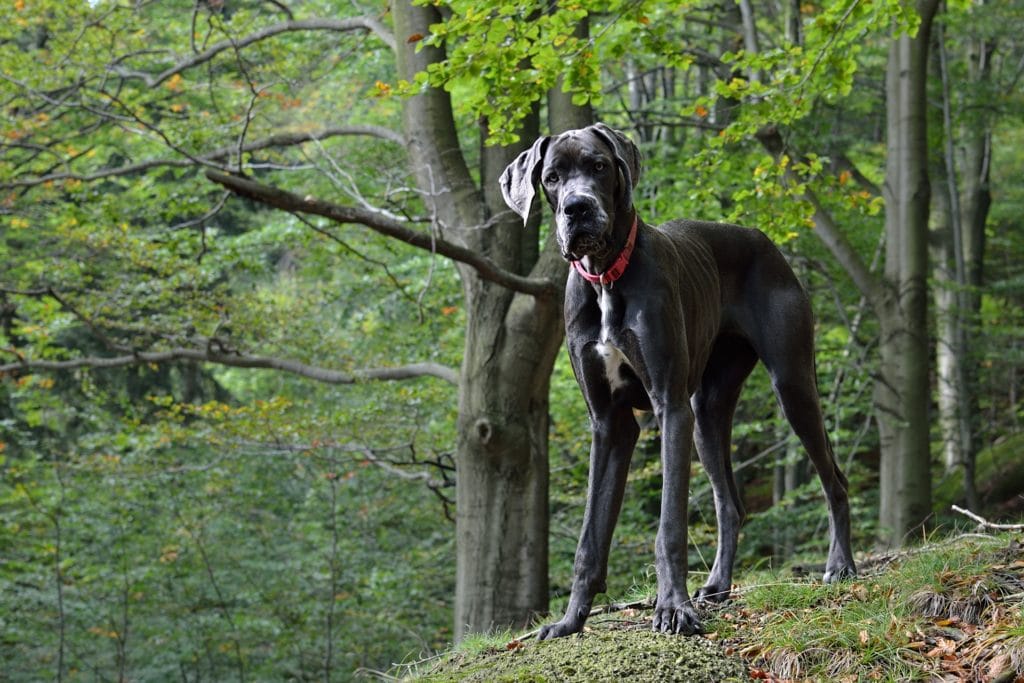
Great Danes have been called “gentle giants” for years because that’s exactly what they are; giant and gentle. Never has a dog so large been so affectionate towards its adopted family, showing everyone the same amount of love and attention. That said, Great Danes aren’t especially fond of strangers, but they will warm to them after a while.
Great Danes might not always be good-natured towards other dogs, and they don’t tolerate tiny children only because of the sheer difference in size. Great Danes are also incredibly protective and will fight to the death to protect their family from harm; they are adaptable to many family situations.
Training
Great Danes are intelligent dogs but need extra time and diligence during training due to their stubborn nature. You need to be serious when training a Great Dane! They have plenty of energy and will do almost anything to please their pet parents, which helps during training. They also bark less than many dog breeds, although they crave mental stimulation and are prone to being destructive if ignored for too long. Once trained, a Great Dane will make a fine pet, companion, and guardian.
Exercise Needs
Few dogs are as calm and passive as the Great Dane, especially when they’ve matured. However, as strong as they seem, a Great Dane will quickly become weak and gain weight if they don't get plenty of regular activity. Several short walks throughout the day are highly recommended when you’re a Great Dane parent, and they also like going with their humans when they jog.
One thing you need to note is that you shouldn’t take a Great Dane running with you until they are about 2 years of age. Running too much too early and the strain on their massive joints can cause early-onset joint problems.
Grooming Needs
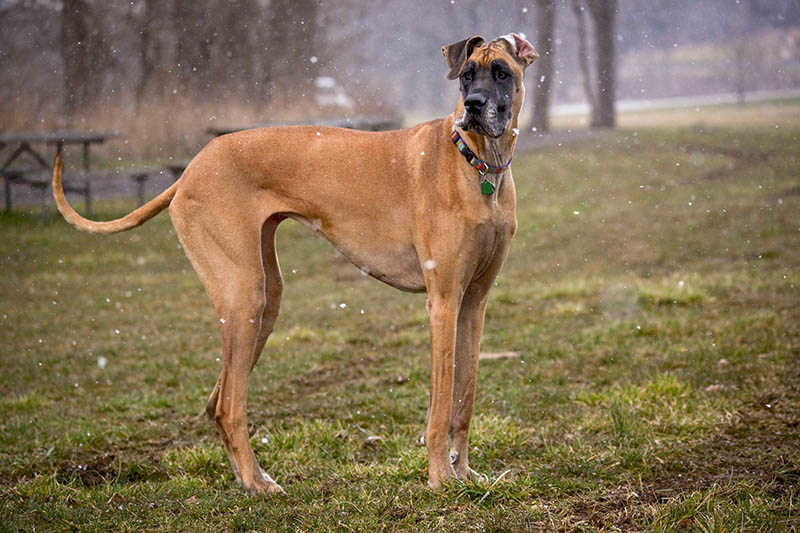
One of the perks of being a Great Dane parent is that they have short, smooth coats that shed very little, much like the Pitbull. They don’t shed much, but a Great Dane can still make more than their fair share of dander due to their massive size. Brushing them once a week will suffice except for two times a year when they shed profusely for a few weeks.
During that time, daily brushing might be necessary. Trimming your Great Dane's nails must also be done regularly, as long nails can cause discomfort and pain when walking.
Suitable for:
Great Danes are well-suited to several family types, but they need a family with a big house and yard to run around and play. They like everyone, but since Great Danes are so large, very small children can get hurt simply due to normal roughhousing. Senior citizens will enjoy that Great Danes are so docile and calm; however, their excessive size might be hard to control.
Lastly, Great Danes are not suitable for apartments. They’re much too big and, since some suffer from separation anxiety, can easily cause a noise problem if they howl when their pet parents are away. A stay-at-home owner would be best since Great Danes love to be around their owners all the time.
Pros
- Will stay calm and quiet if they are with their humans
- Make excellent watchdogs
- Get along well with everyone, including other pets
- Have minimal grooming needs
- Highly intelligent and easy to train
- Highly affectionate and caring dogs
Cons
- Most have serious health issues.
- Health issues can reduce their lifespans
- More expensive than many dog breeds due to their massive size
- Some Great Danes drool excessively
- Can be destructive if not kept engaged constantly.
Both Breeds have a High Number of Health Problems
One unfortunate fact about Pitbulls and Great Danes is that both breeds suffer from an excessive number of health issues. Most are due to their large size, including hip dysplasia, kneecap dislocation, and congenital heart defects. Both breeds suffer from several skin conditions also, including allergies. It can be said, however, that Pitbulls suffer from several fewer life-threatening health conditions, which is further proven by the fact that they tend to live about 20% to 30% longer than Great Danes.
Both Pitbulls and Great Danes are Incredibly Powerful Dogs
One of the aspects of dog ownership that you need to address with the Great Dane and Pitbull is that they are powerful, muscular dogs who can easily hurt you if not trained well. They won’t do it on purpose, as both breeds are very affectionate and love their pet parents madly. However, the Pitbull and Great Dane could, for example, pull so hard that there’s no way the average person could control them if they got too excited, angry, or emotional.
In other words, Great Danes and Pitbulls need to be very well-trained and socialized so they don’t accidentally hurt someone.
Great Danes are Better Watchdogs than Pitbulls
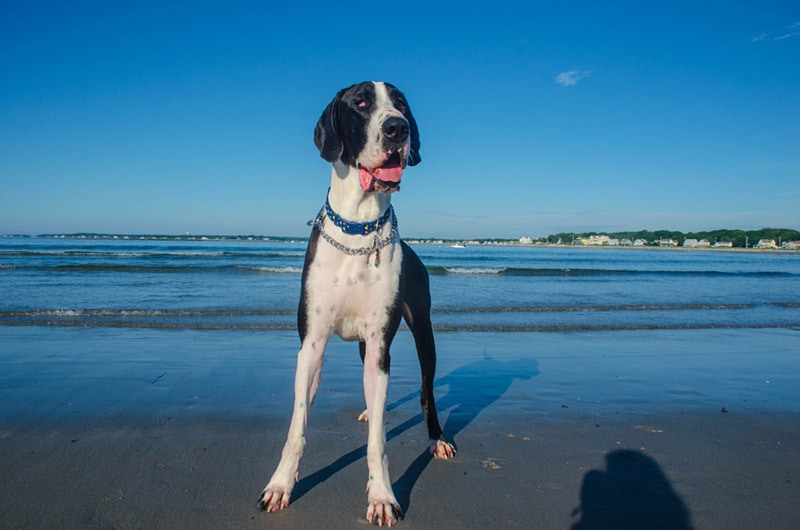
As surprising as it might seem, Pitbulls aren’t the best watchdogs because they’re too friendly toward strangers and don’t go into defensive mode immediately. Great Danes make top-notch watchdogs and are extremely protective of their family units. They also have a bark that you can hear several streets over!
However, both breeds will immediately jump to your protection should you or another family member be in imminent danger.
Which Breed Is Right for You?
If you have small children in your home, your best choice is a Pitbull because they adore children. Great Danes like kids, but small children confuse them and can accidentally hurt them. Both dogs need a lot of space, although if you’re single, they might do OK in an apartment as long as you take them on regular outings. The two breeds will also do well with large families and make good watchdogs, although the Great Dane is the surprisingly better choice if you’re looking for home and family protection.
Grooming, training, and engaging with the Great Dane or the Pitbull are very similar, and both are intelligent breeds that learn quickly. The biggest difference is that Great Danes are about 20 to 30% larger than Pitbulls, which is saying something since Pitbulls are already considered big dogs. Whichever breed you choose, you’ll get a big, muscular, affectionate dog that will protect your family well and be a terrific companion.
Sources
Featured Image Credit: Left: Voltgroup, Shutterstock, Right: Ysbrand Cosijn, Shutterstock
Get Hepper In Your Inbox


Pet care tips from our vets and experts, straight to your inbox.
You may opt-out at any time. View our Privacy Policy for more information.

Greg Iacono is a self-taught writer and former chiropractor who, ironically, retired early due to back problems. He spends his time writing scintillating content on a wide variety of subjects. Greg is also an accomplished video script writer known for his ability to take a complex subject and make it accessible for the layperson.
Join the conversation
Ask a question, share your story, or send private feedback.