Hepper is reader-supported. When you buy via links on our site, we may earn an affiliate commission at no cost to you. Learn more.
Plum-Headed Parakeet: Info, Pictures, Personality, Food & Care Guide
In this article
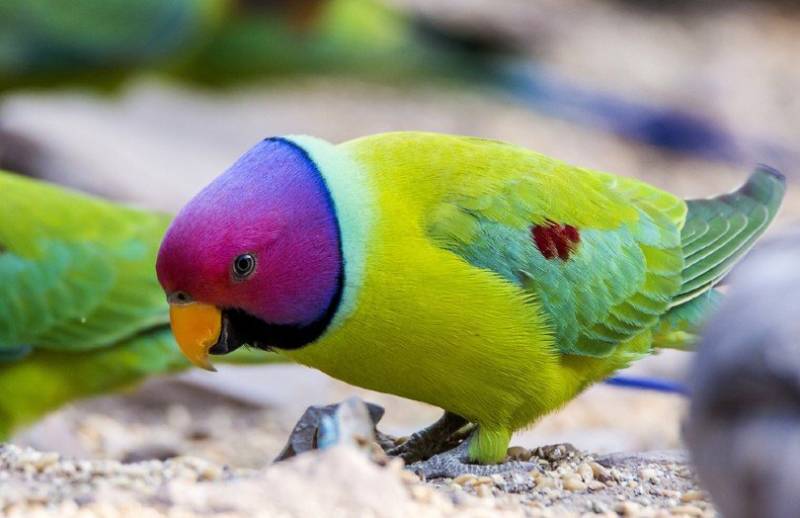
The Plum-Headed Parakeet, Psittacula cyanocephala, combines a brilliant, exotic appearance with hardiness and an appealing personality. Although active and inquisitive, their calm and relaxed demeanor makes these South Asian natives wonderful pets and aviary additions.
Read on to find out why they’re one of the most popular bird pet choices in the world.
Species Overview
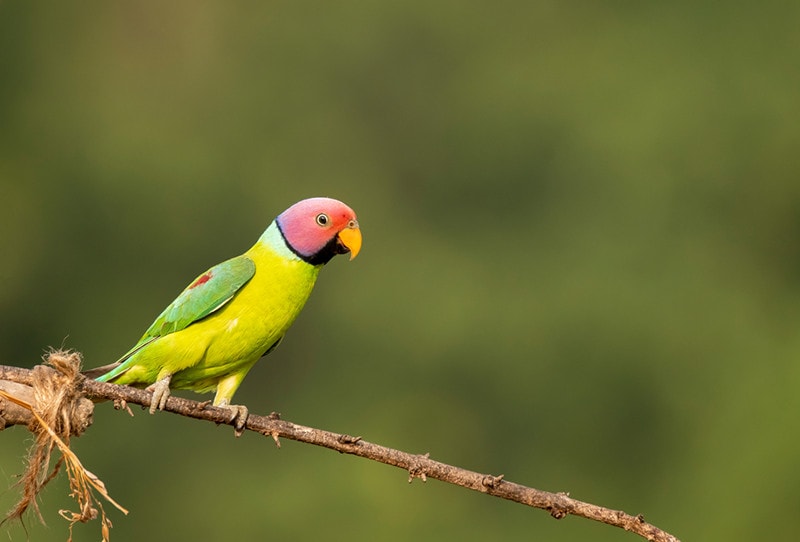
| Color: | Green, varied over the body, head is purple/red (male) and blue/gray (female) |
| Size: | 13–14 inches (adult) |
| Weight: | 2.3–2.8 ounces |
| Wingspan: | 14 inches |
Medium-sized parrots of singular beauty, Plum Headed Parakeets make good pets, being less aggressive and possessive than other species, and getting along well with others. While less demanding of owners’ time than other parrots, they still require regular interaction to maintain socialization.
These social birds can reside alone or in groups. Owners commonly keep 2 to 4 parakeets together in a single enclosure. Perfect family pets, Plum Headed Parakeets thrive in situations where several people are providing socialization and enrichment.
Plum-Headed Parakeet Characteristics

History & Natural Habitat
Plum Headed Parakeets originate from India, Pakistan, Nepal, Bhutan, Bangladesh, and Sri Lanka, and they can be found in the woodlands and forests of nearly any well-wooded area other than the high Himalayan mountains. In the few cases in which they have been transplanted, Plum Headed Parakeets have succeeded in a variety of climates all over the world, having even been known to establish small breeding populations.
While wild numbers have gradually decreased with habitat loss, Plum-Headed Parakeets still thrive and are not threatened by extinction.

Things to Know When Owning a Plum-Headed Parakeet
Temperament
Plum Headed Parakeets are known to be gentle, social, and affectionate, particularly with their owners. With strangers, however, they can be rather aloof and unresponsive. Relatively quiet for parrots, they can be a good choice for those in apartments or other close quarters with neighbors.
If hand-fed from infancy, Plum-Headed Parakeets can grow to be quite tame and develop strong bonds with their owners. While they are generally less demanding of dedicated owner interaction than most parrots, a certain amount of regular interaction remains important to sustain bonding.
If you are inexperienced with Psittacula species, you need to be aware that they often undergo a “bluffing” phase during adolescence. During bluffing, you will likely see increased aggression, including hissing, biting, and overall resistance to interaction. Bluffing is strictly hormone-related and in no way an indicator of the bird's eventual personality. It is critical during this time to ignore the bird’s cues and continue regular bonding behaviors, no matter the response.
It only lasts a few months, so it’s not that big of a deal. Plum-Headed Parakeets that are handled on a daily basis will stay tame and continue to bond well once their hormones have stabilized.
Sounds, Speech & Vocalizations
Plum Headed Parakeets have well-known talking abilities, which can include mimicking and reproducing human speech. They learn well and can imitate all kinds of words and phrases accurately, thanks to intelligence and a keen sense of hearing. Plum Headed Parakeets are quick learners with superior memory retention and are known to recognize sounds and reproduce them easily.
If properly trained and socialized, can learn to associate words with specific situations or actions, and reply in turn. Also, vocalization is diverse and can incorporate a range of whistles, chirps, squawks, and other sounds. Their distinct singing style is unique from other parrots.
Plum-Headed Parakeet Appearance
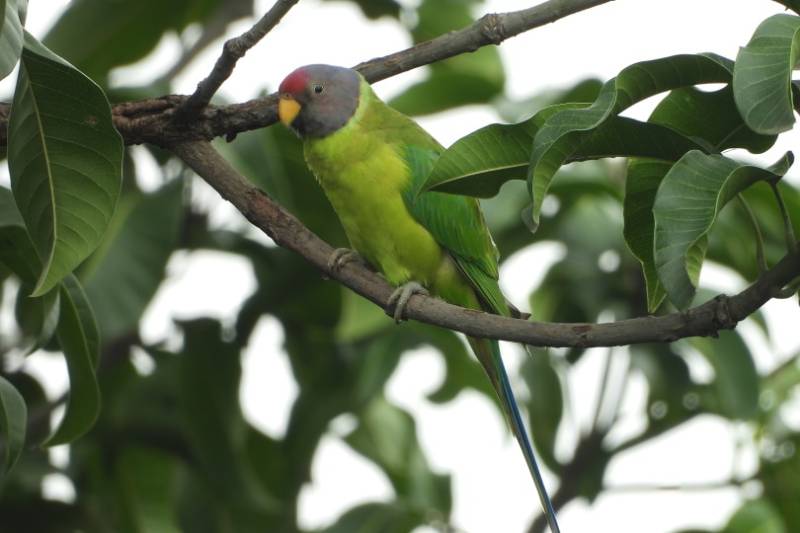
Plum-Headed parakeets are some of the most beautifully colored birds you can own.
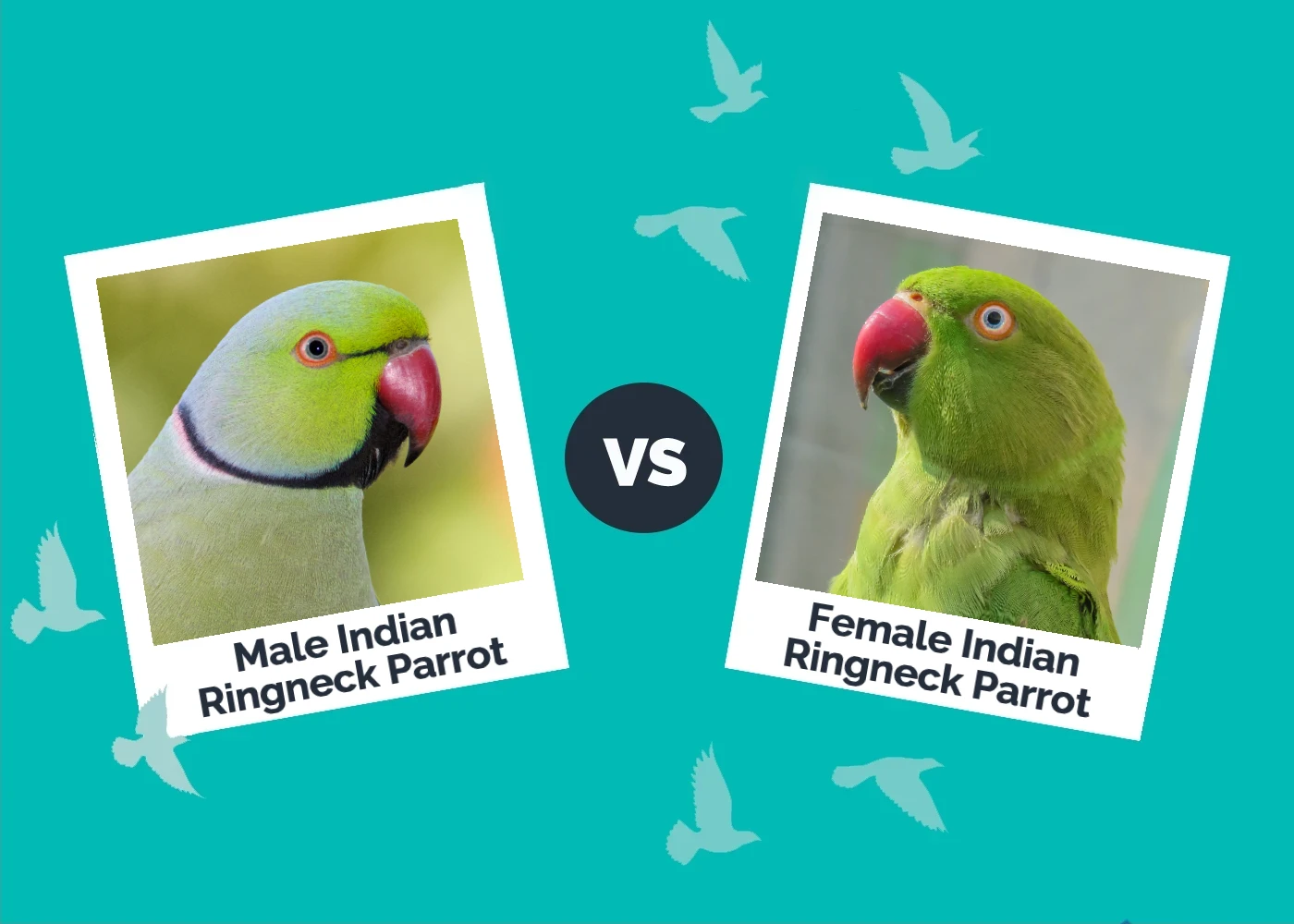
They are sexually dimorphic, that is their appearance will differ by gender.
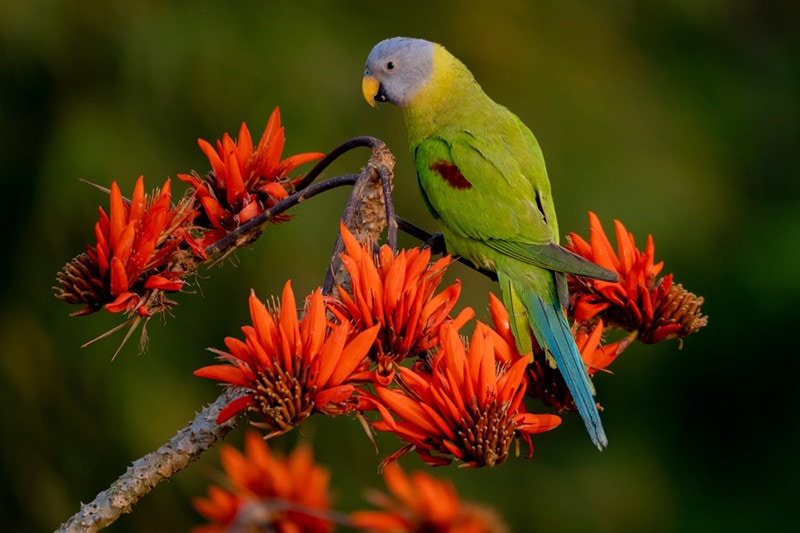
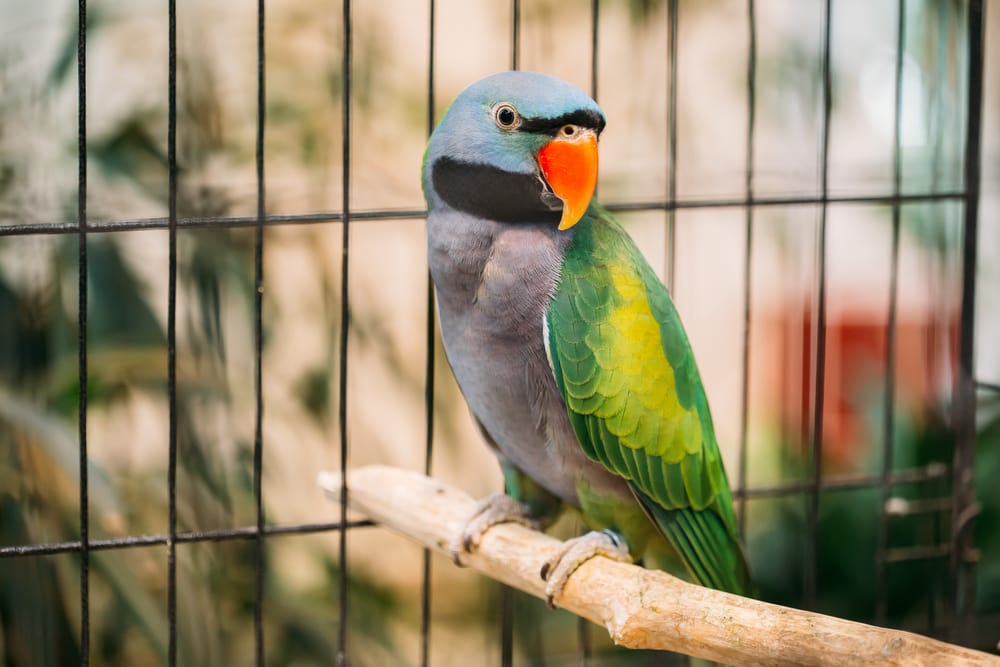
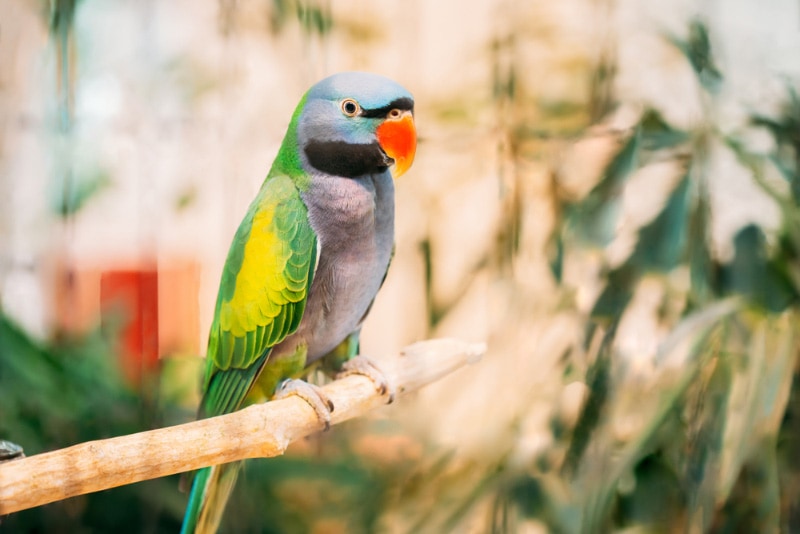
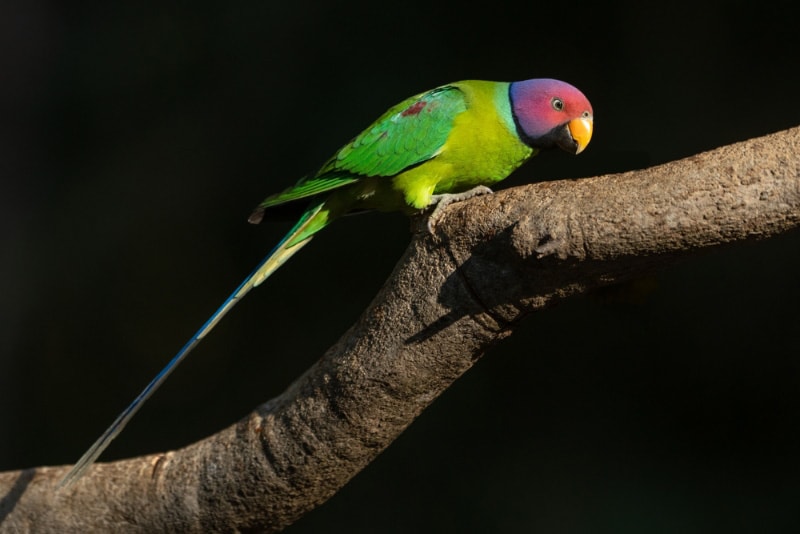
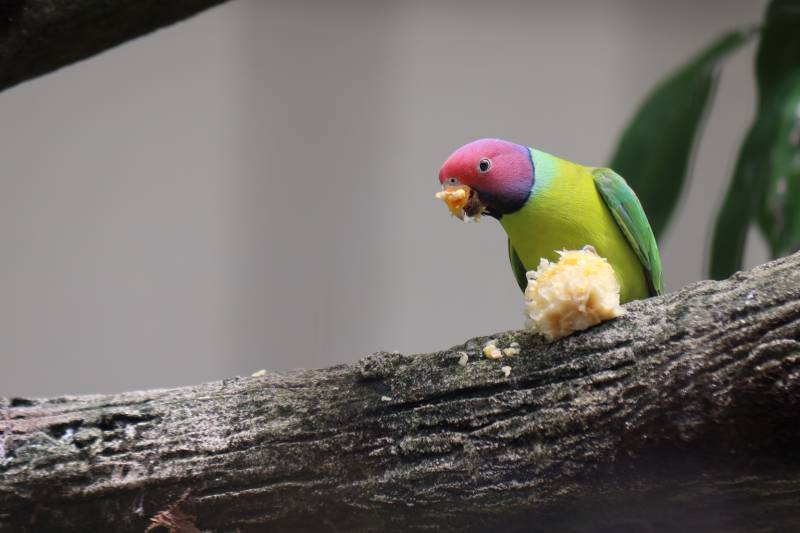
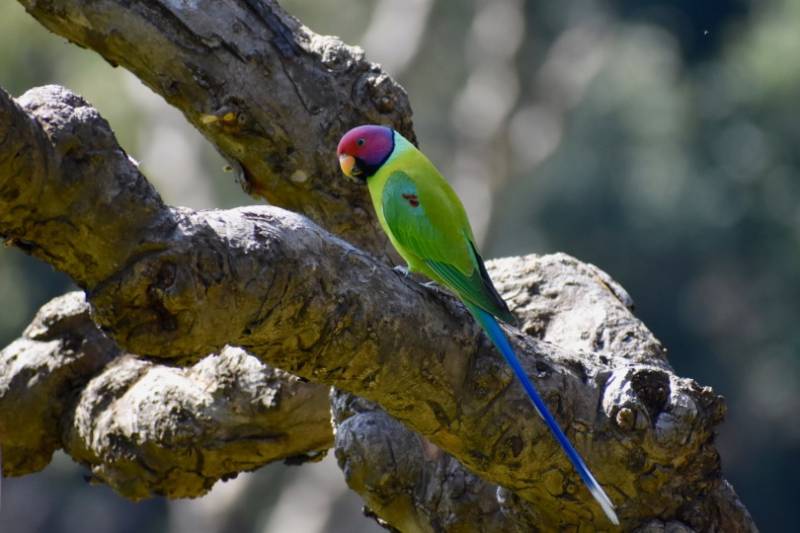
Males have red-colored heads moving to grey or, obviously, plum, to a bluish-purple at the back of the head, back of the neck, and cheeks. The male is easily recognized by a narrow black neck collar and a black chin stripe extending to the lower jaw. They also can show a red shoulder patch.
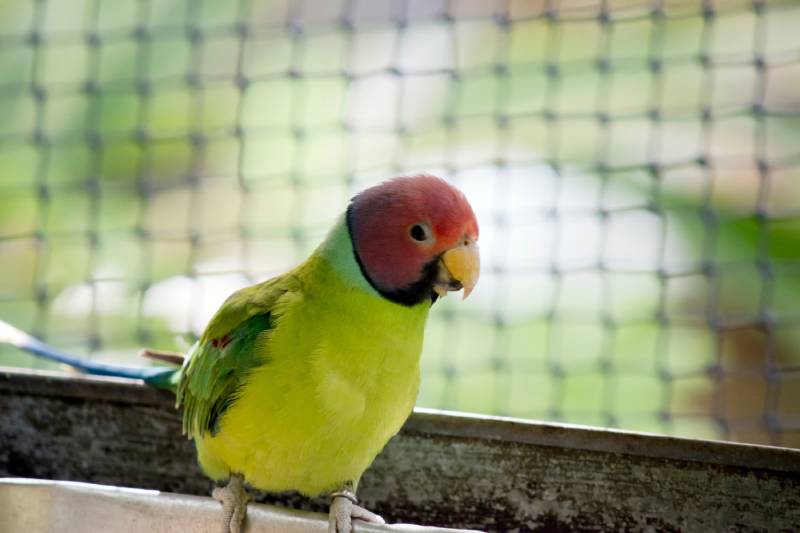
Females exhibit a bluish-gray head with no black neck band, but rather a gradient pale-yellow collar. Younger females have green heads and yellow mandibles. Both sexes have long, narrow, bluish tails shading to white at the very tip. The irises are black, and the legs are pale gray.
Caring for the Plum-Headed Parakeet
Plum-Headed Parakeets have a generally relaxed nature, allowing them to generally coexist peacefully with other birds in shared quarters such as aviaries. Like other species, though, they can become aggressive during breeding periods, especially females, so they should be monitored. Temporary separation may be necessary.
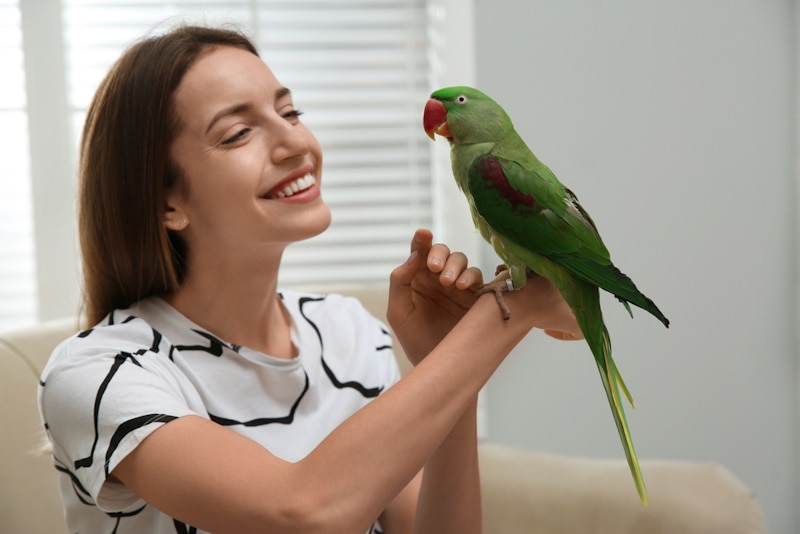
In captivity, they may exhibit initial shyness and timidity, although this can be overcome with regular, consistent training and daily interaction. You should be aware that, despite being sociable, they generally aren’t fond of being cuddled by their owners. Rather, yours will probably be perfectly content to simply sit on your shoulder and chat with you.
Keeping your Plum-Headed Parakeet’s plumage healthy and clean is fairly simple. A flat container full of water should be kept available for regular bathing. Also, a shower sprayer can be used to bathe them two or three times weekly. You should also have specific grooming tools and items to trim beaks and nails as necessary.
Diet & Nutrition
In the wild, these birds mostly exist on fruit and seeds. In captivity, a diet consisting of high-quality seed and pellet mix, such as a good small parrot feed blend, supplemented daily with fresh, bird-safe fruits and vegetables will do them well.
A Plum Headed Parakeet will eat up to 1 tablespoon of food per day. They do enjoy variety, so you can experiment with foods like sprouts, leafy greens, and berries.
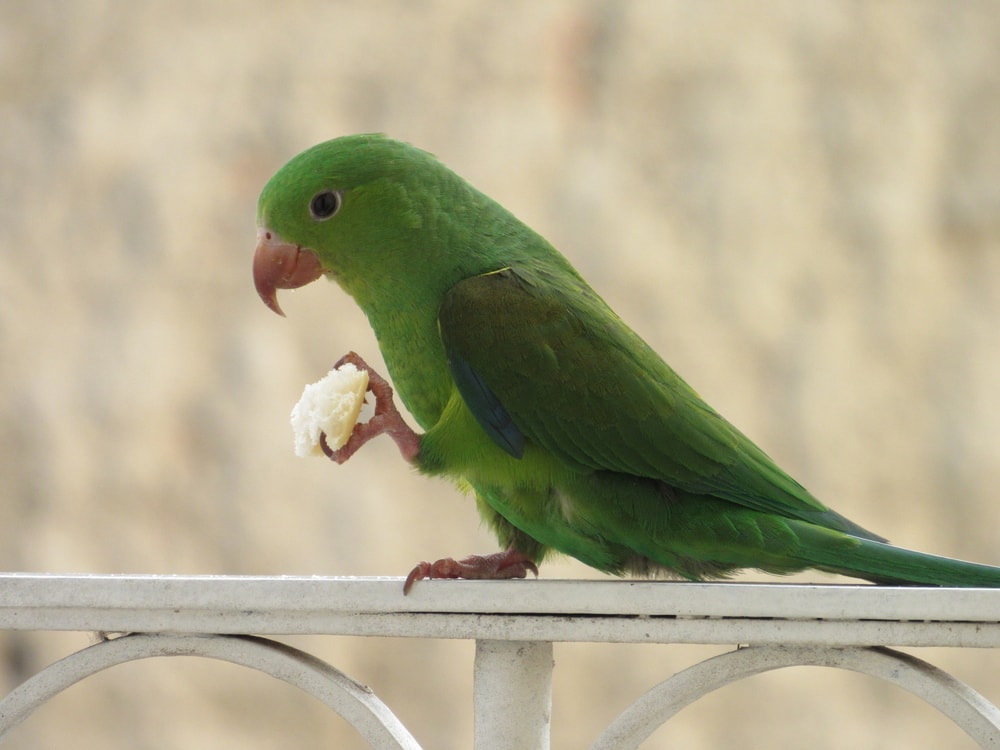
Branches from budding apple, pear, peach, and other fruit trees will please them, as well as keep them occupied for hours. Plum-Headed Parakeets like to hold their food in one foot while perching with the other. Cutting fruits and vegetables into cubes of roughly 1 square inch will allow them to indulge in this.
Cage & Housing Requirements
Since they are quick, energetic flyers, Plum Headed Parakeets do well in larger cages or aviaries. A cage minimum of 40 x 20 x 32 inches is good to house a pair. Two softwood perches of about a half inch in diameter placed at different heights in the cage provide good roosting. Cage accessories such as toys, food dishes, and perches should be kept to a minimum, so there’s plenty of room to move without crowding. Make sure the cage is in a location away from drafts or harmful fumes.
Branches from non-toxic trees should be provided for natural perches and to provide an opportunity to chew on bark, leaves, and seeds, which they not only love, but further provides excellent beak exercise. These birds love to climb and are skillful, graceful fliers. Thus, they do best in outdoor or indoor aviaries, so they can stay active and have an interesting environment. While Plum-Headed Parakeets can get used to life in a large cage, they still can get sluggish if they don’t have daily exercise out of the cage.
Although they’re found in tropic-like habitats, Plum-Headed Parakeets also frequently inhabit higher altitudes throughout the Subcontinental region. You might be surprised at how well-adapted they are to cooler temperatures. Outdoor housing can often work out well if heat is provided to their home.
Your Plum-Headed Parakeet is mild-mannered and normally gets along well in groups and with such neighbors as Java Rice Birds, Chinese Quail, larger finches, and similar birds. Breeding pairs, however, are best kept alone.
Exercise
As noted, it is recommended that your Plum-Headed Parakeets spend time outside of the enclosure every day. They need the room to stretch out and use their wings, and this provides a lot of the exercise they need.
Inside the enclosure, parakeets can also be provided with climbing and chewing toys for more exercise and enrichment throughout their day. Some examples of these are ropes, swings, and ladders.
Parakeets thrive on consistent enrichment and interaction. As we’ve said, they can be trained to execute not only tricks but also obey commands for naturally occurring actions such as flying to certain spots and retrieving items.
Health & Conditions
Plum-Headed Parakeets are a hardy and resilient species, but the following preventative health measures should still be taken.
- Strict worming and parasite control
- Maintain hygiene by routinely cleaning discarded food and droppings
- Clean water dishes daily
- Remove fresh food before spoiling
Common Illnesses for this birds are:
If the behavior or appearance of your parakeet seems abnormal, it is always a good idea to seek medical care.
3 Little-Known Facts About the Plum-Headed Parakeet
1. During flight, Plum-Headed Parakeets change directions rapidly, twisting and turning while making unique sounds.
2. Chewing is almost as appealing to them as flying. They’ll chew on anything they can in their enclosure.
3. Historically, Plum-Headed Parakeets were included in the same group as Psittacula roseate, the Blossom-Headed Parakeet.
Conclusion
An appealing personality and set of character traits, stunning appearance, and pleasant social profile make the Plum-Headed Parakeet a most enjoyable member of the family. Loved worldwide, they are very clever and playful, easy to care for, and can be depended on to make the day brighter and more interesting.
See also:
Sources
Featured Image Credit: Amol Subhash Rapte, Shutterstock
Get Hepper In Your Inbox


Pet care tips from our vets and experts, straight to your inbox.
You may opt-out at any time. View our Privacy Policy for more information.

Nicole is a lover of animals of all sizes but is especially fascinated with the feline variety. She’s the proud mom of Baby, a Burmese, and works every day so he can relax in the sunshine or by the fire. She’s always had a cat in her home and has spent countless days with others, observing behaviors and softening up even the grouchiest of the lot. Nicole wants to share her kitty expertise with you so you and your cat can live happy, healthy, and care-free.
Join the conversation
Ask a question, share your story, or send private feedback.