Hepper is reader-supported. When you buy via links on our site, we may earn an affiliate commission at no cost to you. Learn more.
Male vs Female Indian Ringneck Parrot: The Differences (With Pictures)
In this article
The Indian Ringneck Parrot is also known as the Rose-Ringed Parrot and is interchangeably called a parrot and parakeet. They come from India, as their name implies. They are popular parrots kept as pets because they are gorgeous, but they are also excellent companions and great talkers.
It can be challenging to tell the difference between certain male and female birds, but it’s easy to tell at a glance with others.
If you own an Indian Ringneck or are trying to decide which sex might be best for you, there are several notable differences that should help you figure out if they are male or female.

Visual Differences
At a Glance
Indian Ringneck Parrot 101
Indian Ringneck Parrots are adaptable and hardy birds that have overcome the destruction of their habitat and live in various parts of the world in the wild, even in Europe and North America.
They are energetic and intelligent and are known to be quite good at talking. They can be noisy birds, so they aren’t ideal for people in apartments or with neighbors who like to complain about noise. Like all parrots, Indian Ringnecks like to flock, so they can do well in a home with other birds, but your own family can be a part of their flock.
If these birds are neglected, they can become defiant, unfriendly, and temperamental and will likely start biting. They also won’t do well in a chaotic and noisy environment, so families with young children might not be a good match.
Indian Ringnecks have been known to live for up to 50 years, but the average is 20 to 30 years. They are definitely a long-term commitment.
Male Indian Ringneck Parrot Overview
Appearance
One of the easiest ways to tell the difference between male and female Indian Ringnecks is by their appearance.
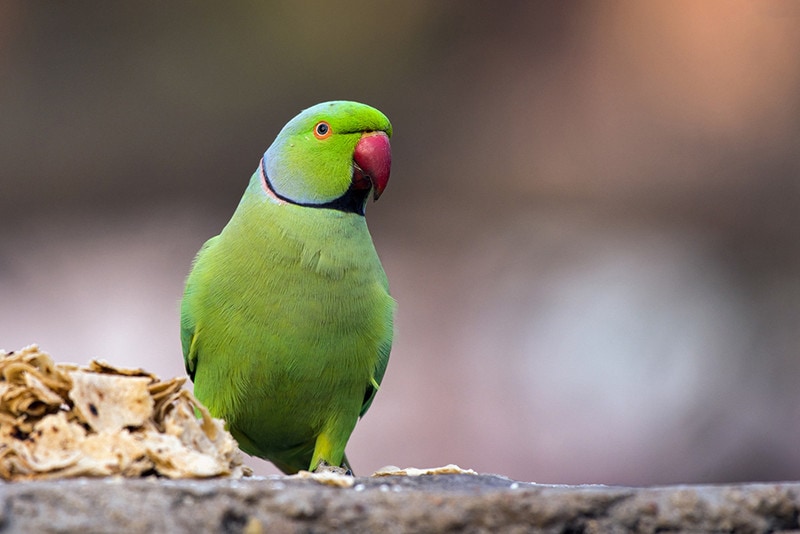
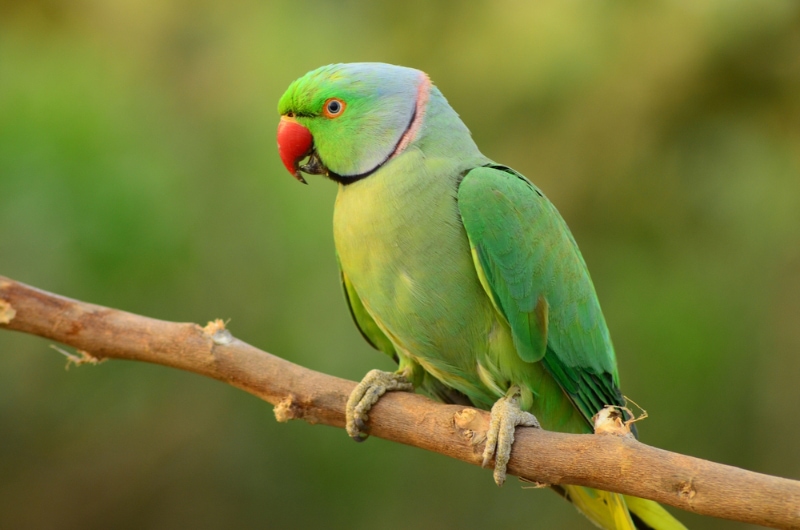
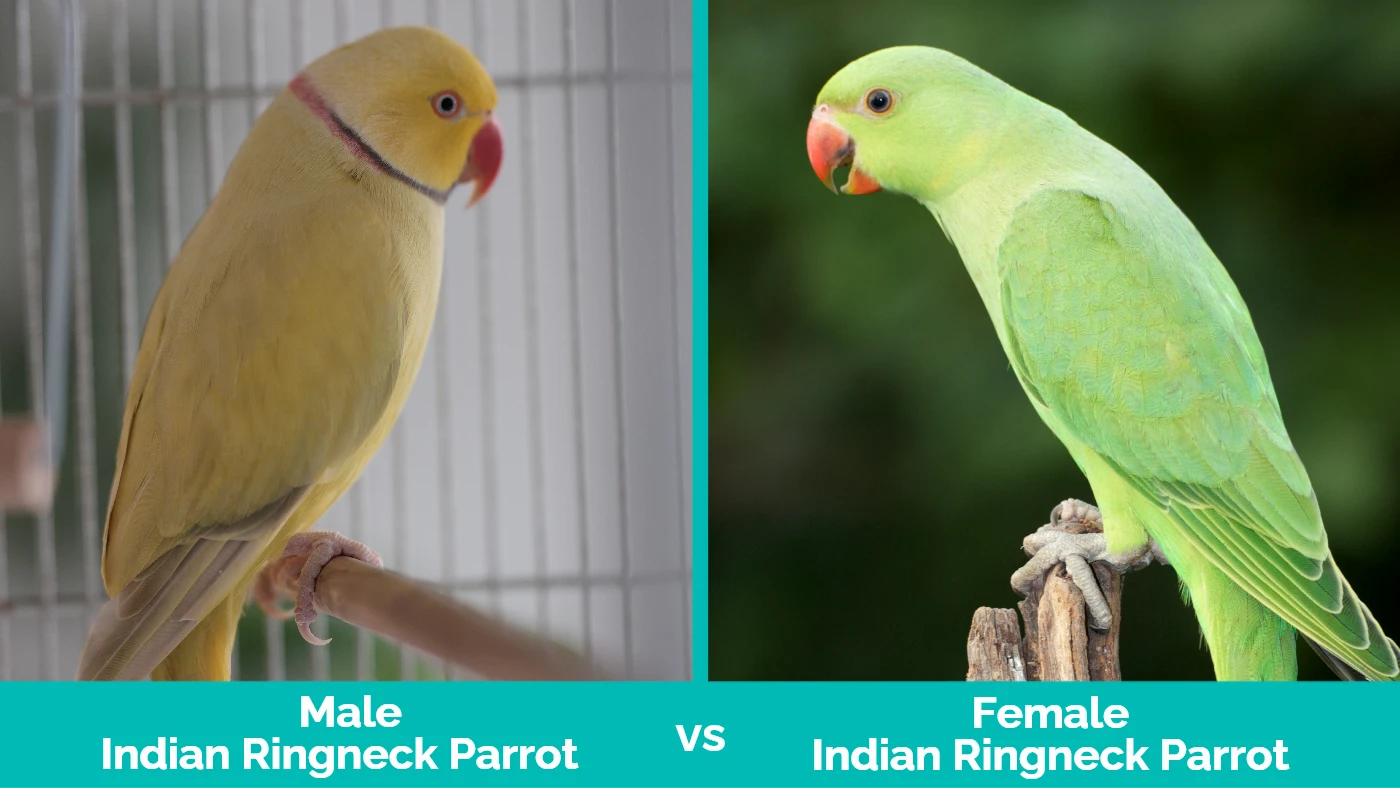
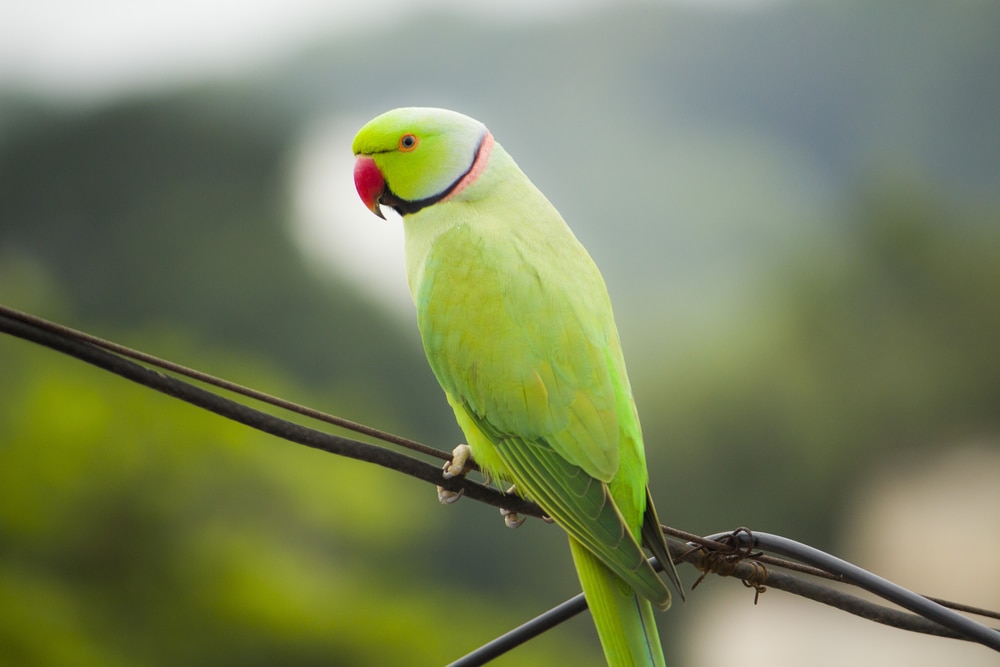
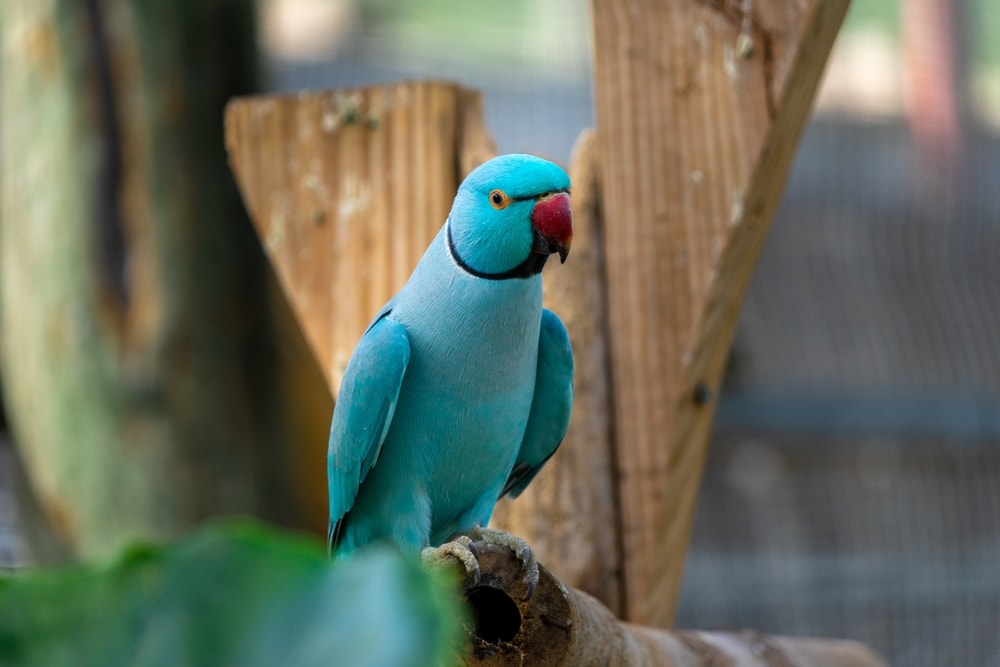
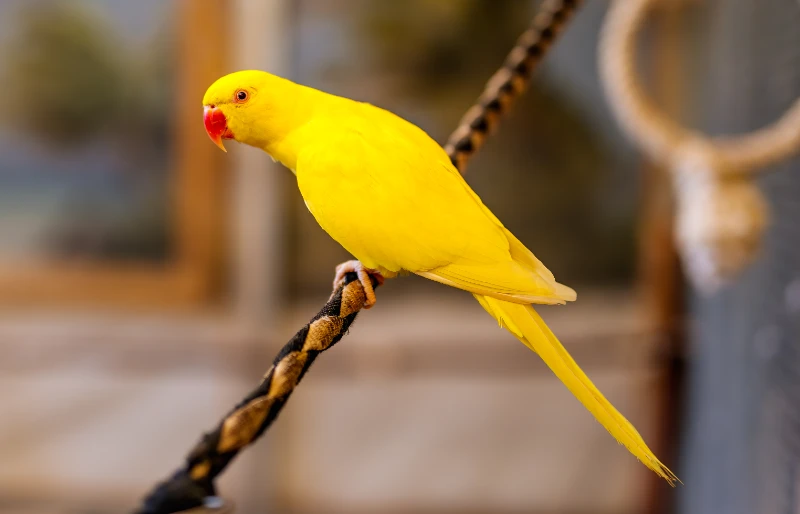
Indian Ringnecks are traditionally a bright lime green with yellow underwings and blue tail feathers. They come in other colors, like blues and yellow, along with cinnamons and albinos. Many of these colors are considered mutations.
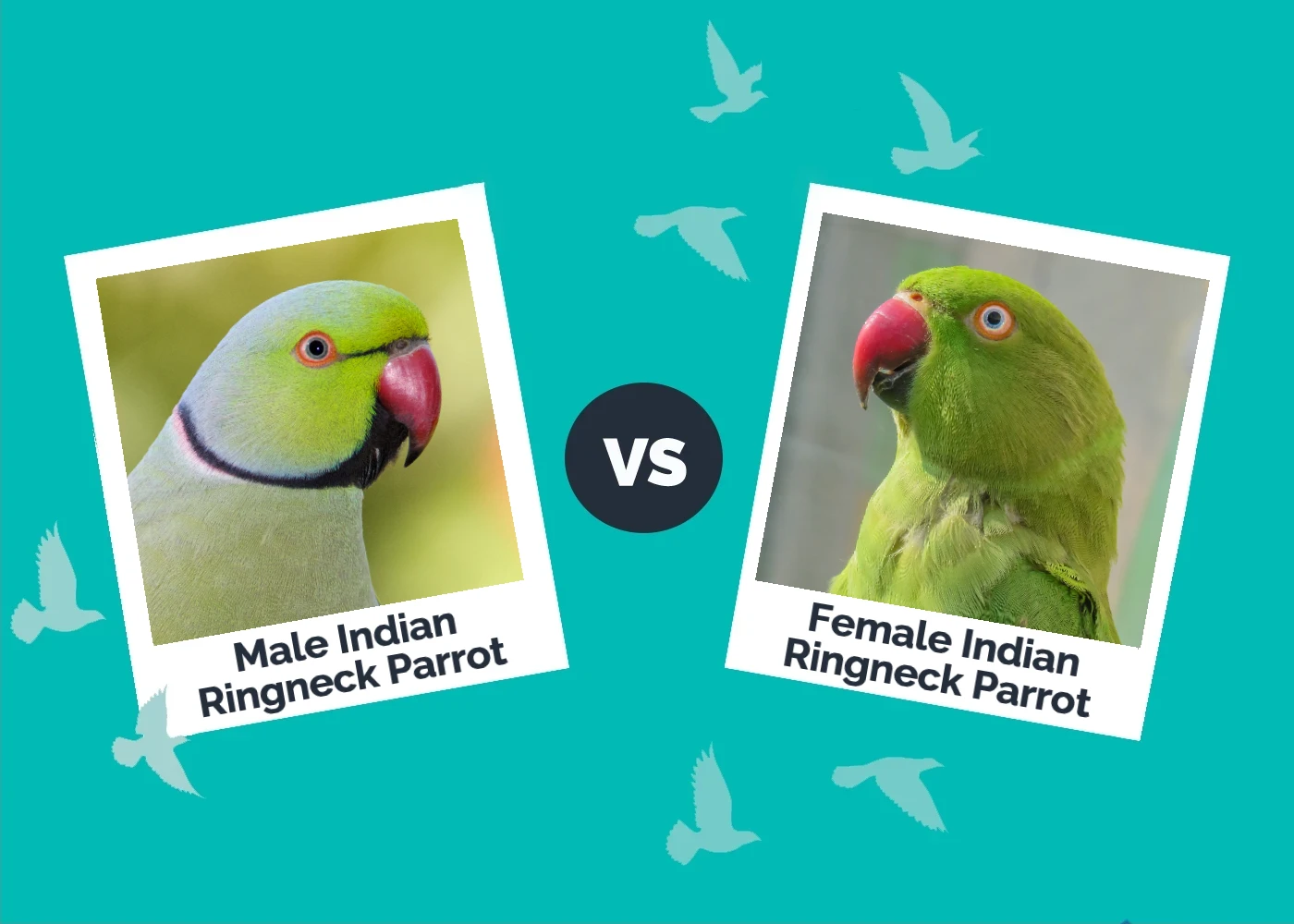
Male Ringnecks have deep red beaks with black facial markings and a prominent ring around their necks (hence the name), usually featuring three colors. They develop the notable black ring by 18 months of age, followed by a blue and pink ring when they are 3 years old.
Personality/Character
Male Indian Ringneck Parrots tend to be loud and talkative. While they aren’t necessarily aggressive, they will show some aggression if they aren’t receiving proper care.
Additionally, if you place a mirror in front of your parrot, they might display mating behavior, which can help you tell the difference between males and females. However, putting a permanent mirror in your parrot’s cage is not always recommended, as it can be a source of stress.
Breeding
Male Indian Ringnecks reach sexual maturity by 2 years of age and are ready to start breeding at this time. Unlike many other parrot species, Ringnecks don’t form mates for life, but it can be easy to pair them up, split them up, and later re-pair them.
When ready to mate, male Indian Ringnecks will open their wings a little and hold them in a way that resembles a heart shape. They bow and eye pin (dilate and constrict the pupils rapidly) the female while vocalizing, moving around her, and occasionally tilting down to touch her head and beak and feed her.

Female Indian Ringneck Parrot Overview
Appearance
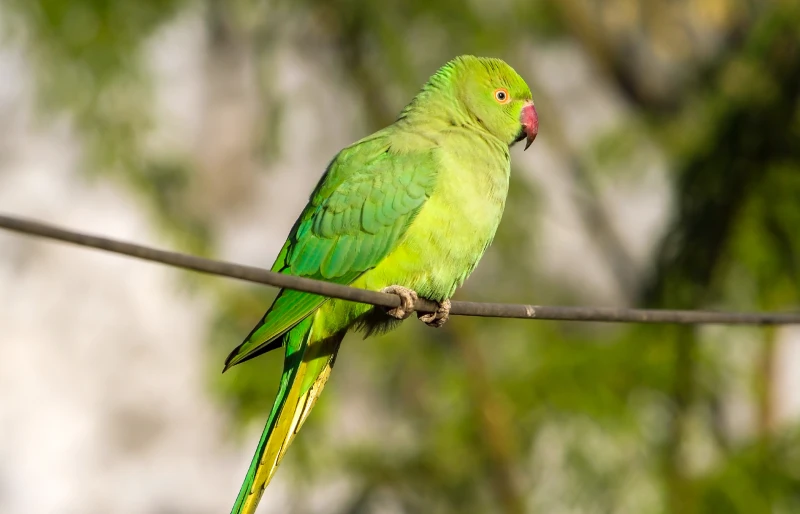
Female Indian Ringnecks won’t be as bright green as their male counterparts. You might notice that the feathers are paler around their necks, but they do not sport the black ring.
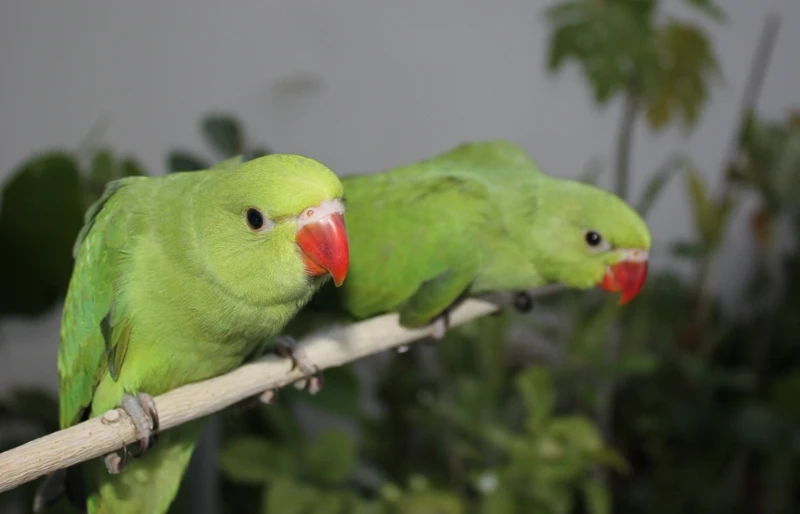
The female Ringnecks’ beaks tend to be somewhat smaller and are a paler red, usually orange, compared to the males.
Personality/Character
Female Indian Ringnecks can also be loud and talkative, but they tend to be quieter than the males. They are also known to be more likely to bite than male Ringnecks—and when these parrots bite, it will hurt!
The females are more likely to bite during the breeding season but are also more inclined to form strong bonds with their owners.
Breeding
Female Indian Ringnecks reach sexual maturity about 1 year earlier than the males, so they can start breeding by the time they are 1 year old.
They are more aggressive than the males during the breeding season, and if she isn’t ready for mating, there’s a chance that the male can be injured. But when she’s receptive and while the male performs his mating ritual, she lies prone with her head tilted up, and she sways from side to side as he dips down to touch her. She will usually make a kind of clucking sound.
Female Indian Ringnecks will lay about two to six white eggs, which they will incubate for about 22 to 24 days. The young are usually ready to leave the nest by the time they are 6 to 7 weeks old.
Indian Ringneck Parrot Health & Care
Grooming
Like any bird, the Indian Ringneck Parrot should be misted with a water bottle only used for this purpose. They should also have a bowl of water for a bird bath, and they need regular nail, beak, and wing trims by your vet.
Housing
These birds need a cage large enough for their tail feathers (Ringnecks can average 16 inches in length, half of which are the tail).
The larger the cage, the better, but if your parrot will spend most of their time outside the cage, the bare minimum should be about 4 to 6 feet long. They also need toys that are made specifically for parrots.
Diet
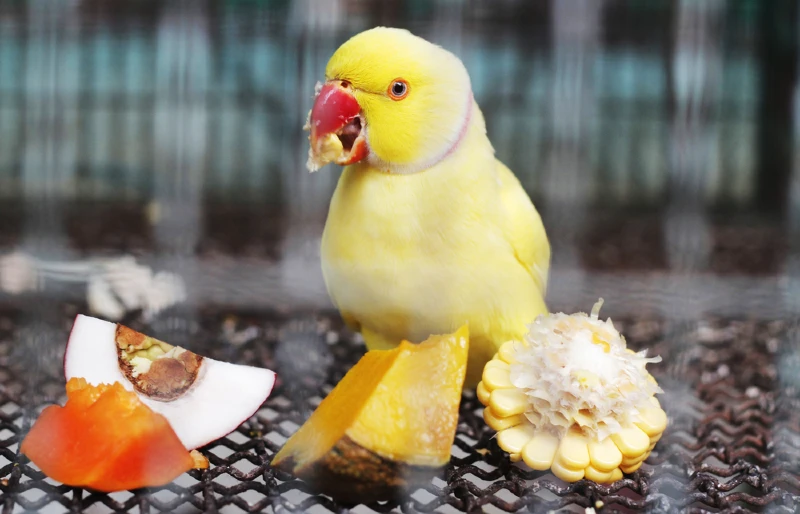
Ringnecks need nutritionally balanced pellets formulated for parrots, but they will benefit from a variety of veggies and fruits. You’ll want to keep the pellets and seeds separate because these birds are known to be picky and smart, and they might forgo the pellets in favor of the seeds.
On average, each bird should be offered ¼ cup of pellets and ¼ cup of fruits and vegetables daily, and they need constant access to fresh and clean water.
Exercise
Indian Ringnecks are active birds, so they’ll need a space for playing and stretching their wings outside their cage for at least 3 hours a day. They will also need chewable toys to exercise their jaw muscles. The perches and other cage accessories should be safe for your parrot to chew on.
These birds will become angry and frustrated if they don't have enough to do. Ensure that they have plenty of puzzles and interactive toys to keep them busy.
Health Conditions
The Indian Ringneck Parrot is a healthy and hardy bird, but they can be susceptible to several common health conditions:
If your parrot is fed a nutritionally balanced diet, is given the right amount of attention and exercise, and is well cared for, there’s a better chance for them to remain healthy. But it’s still good to be familiar with the possible health problems that might affect them.
General Care
The Indian Ringneck is not the best parrot for beginners. They can be challenging because they are quite dependent on their owners, more so than many other birds. Since they are highly intelligent, they need plenty of attention, love, and handling, or they become quite unmanageable.
Not every owner can keep up with their high demands, and they aren’t known to be the most affectionate of parrots either. But if handled correctly, they are quite social and can be charming and sweet companions.
Training
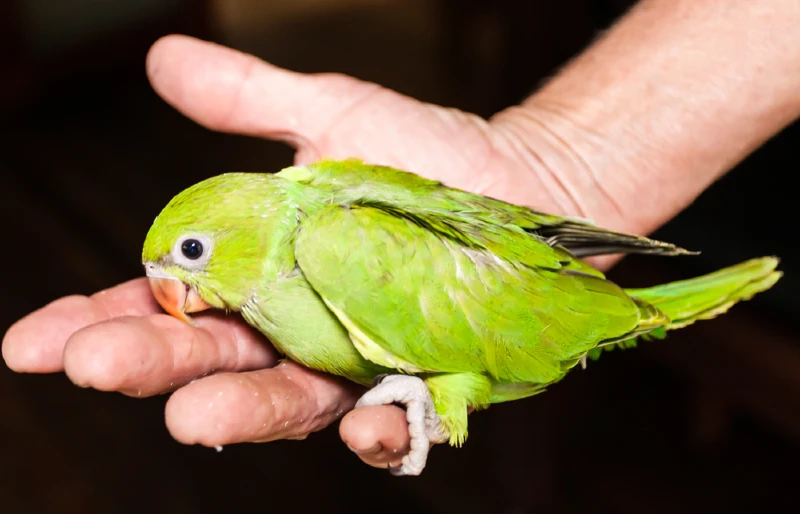
If your parrot is young, they must be handled often to help tame them and form a bond. If they demonstrate any aggression, it needs to be handled by ignoring the bad behavior and using positive reinforcement for good behavior. You shouldn't use punishment; otherwise, they will only learn to fear you and others.
If trained properly, they can grow their vocabulary to 200 words or more. They can start learning to speak between 8 months and 1 year of age. They can also learn tricks, like ringing a bell, untying knots, and picking up items, to name a few.
DNA and Surgical Sexing
It can take about 3 years for these parrots to start to look male or female. The only way to be sure before that time is through DNA testing or surgical sexing.
DNA Testing
Depending on the company, you’ll need to send a feather or clip your bird’s nail for a small blood sample and send it in. The company will send you a kit to complete it, and you’ll be emailed the results, which typically takes about a week. The results can be up to 99.99% accurate.
Surgical Sexing
This procedure is only recommended for healthy birds and for breeders checking that their bird’s reproductive system is in good health. The parrot must be anesthetized, which makes this a risky procedure. The vet performs an endoscopy in the bird’s abdomen in order to look at the ovaries or testicles.
Which Sex Is Right for You?
It is challenging to determine if the Indian Ringneck is male or female until they are about 3 years old, which is when the male forms the telltale ring around the neck. Until then, it will be difficult to determine your bird’s sex, but you can try the DNA test if you don’t want to wait.
The differences between the male and female Ringneck aren’t huge. The females are known to be quieter than the males, but they are also more prone to biting. The male is known to be more easygoing, but the female forms a strong bond. You should bear in mind that we are speaking quite generally here, and each parrot will have their own unique personality.
But if you’re looking for a medium-sized, beautiful parrot that is highly intelligent, needs a tremendous amount of attention and care, and will make a wonderful companion on their own terms, you can’t go wrong with either the male or female Indian Ringneck Parrot.
Featured Image Credit: Left - David Steele, Shutterstock | Right - Linda Bestwick, Shutterstock
Get Hepper In Your Inbox


Pet care tips from our vets and experts, straight to your inbox.
You may opt-out at any time. View our Privacy Policy for more information.

Kathryn was a librarian in a previous lifetime and is currently a writer about all things animals. When she was a child, she hoped to work in zoos or with wildlife in some way, thanks to her strong love for animals. Unfortunately, she's not strong in the sciences, so she fills her days with researching and writing about all kinds of animals and spends time playing with her adorable but terribly mischievous tabby cat, Bella. Kathryn is hoping to add to her family in the near future – maybe another cat and a dog.
Join the conversation
Ask a question, share your story, or send private feedback.