Hepper is reader-supported. When you buy via links on our site, we may earn an affiliate commission at no cost to you. Learn more.
Rose-Ringed Parakeet: Pictures, Personality, Food & Care Guide

In this article
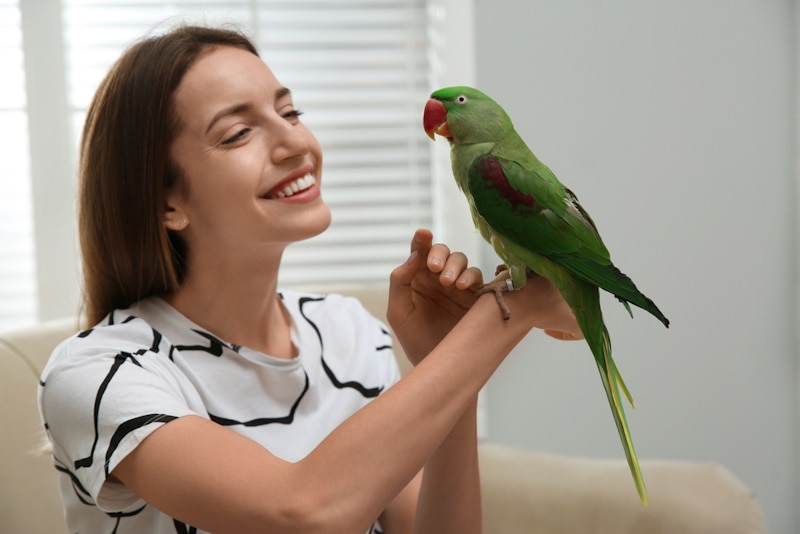
The Rose-ringed parakeet (Psittacula krameri)—also called ring-necked parakeet—is a parrot species native to Africa and the Indian subcontinent. These medium-sized, exuberant birds are popular companions for bird lovers. However, as with any bird species, there's a lot to know about their care requirements, and potential owners should carefully weigh everything before committing to one.
To help you get to know your feathered friend a little better, we've put together this guide on what to expect when caring for a rose-ringed parakeet.

Species Overview
| Color: | Green, color mutations include blue, violet, yellow, grey, white, olive, turquoise, and cinnamon |
| Size: | 16 inches long |
| Weight: | Approximately 4 ounces |
| Wingspan: | 9–6.9 inches |
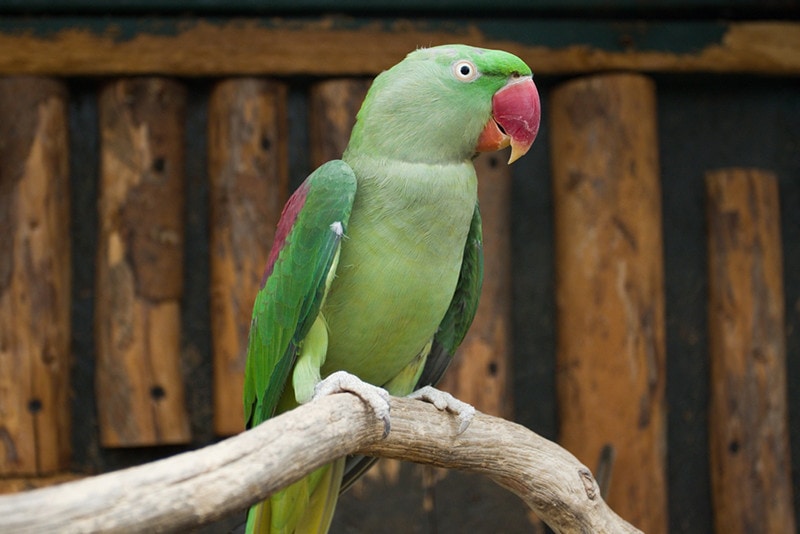
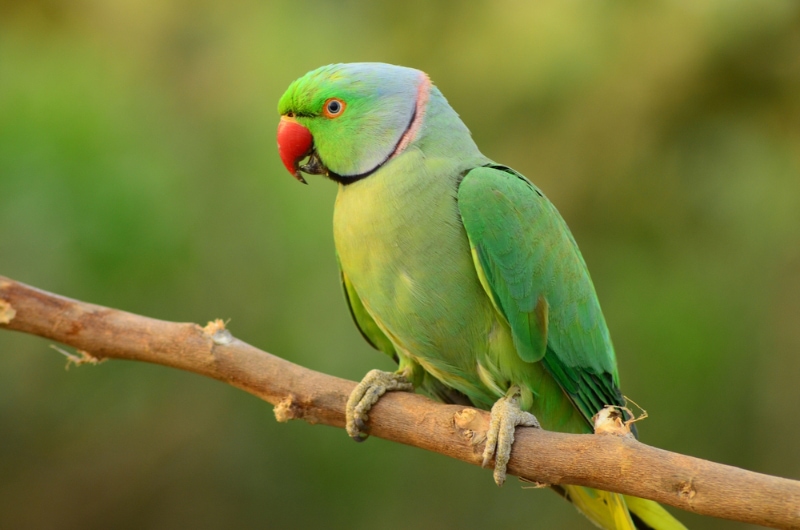
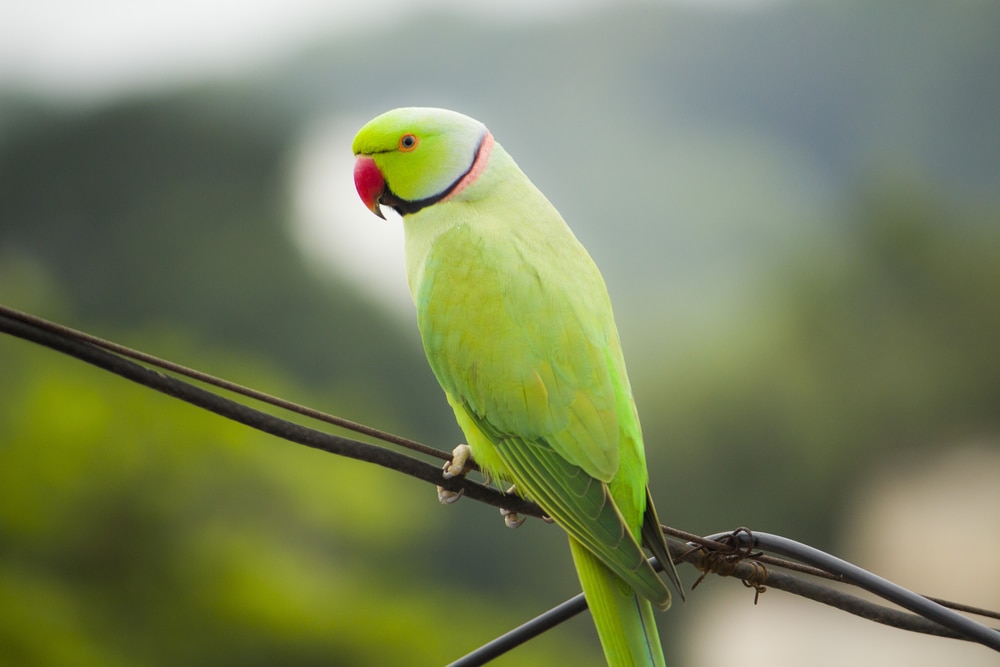
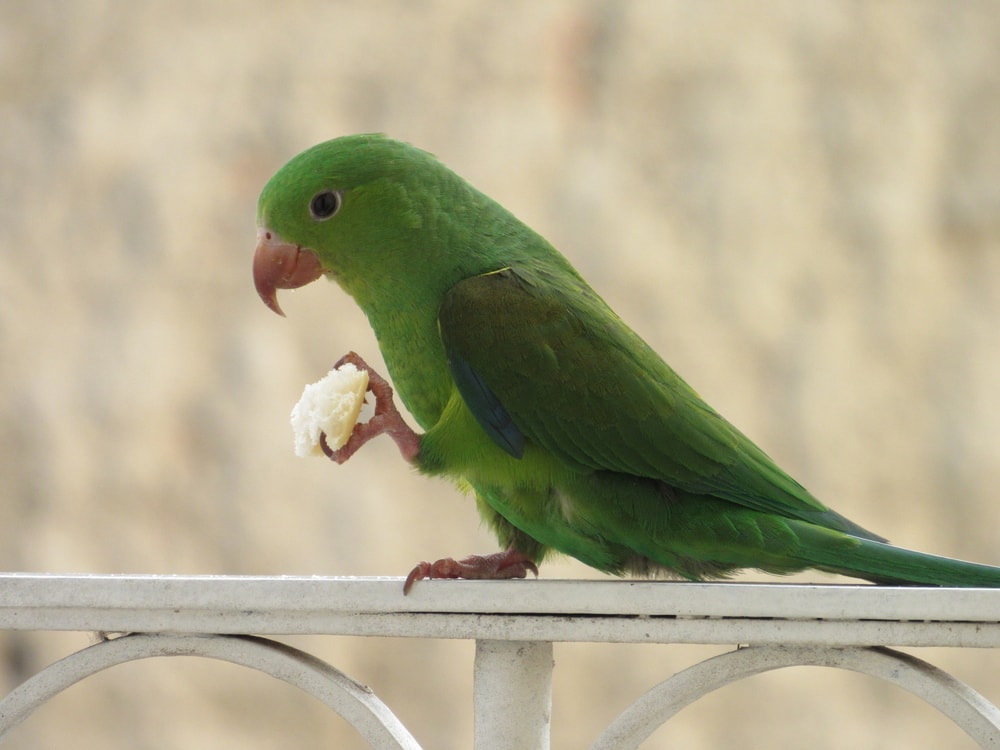
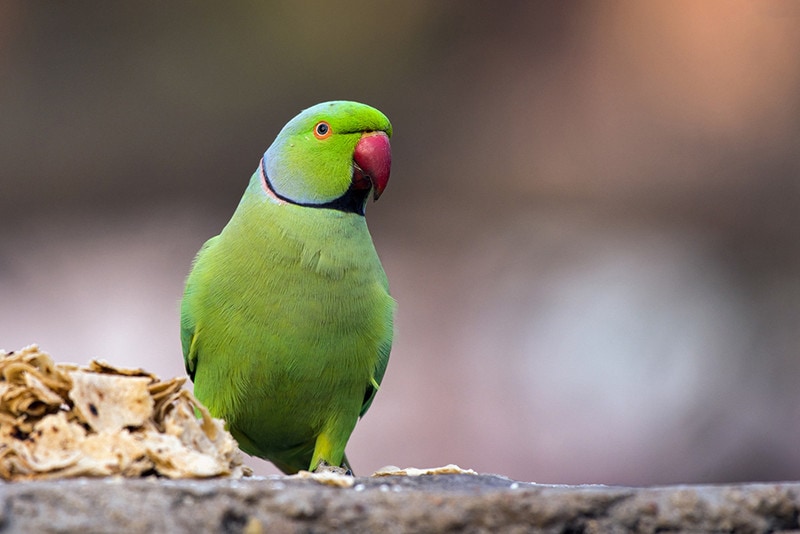
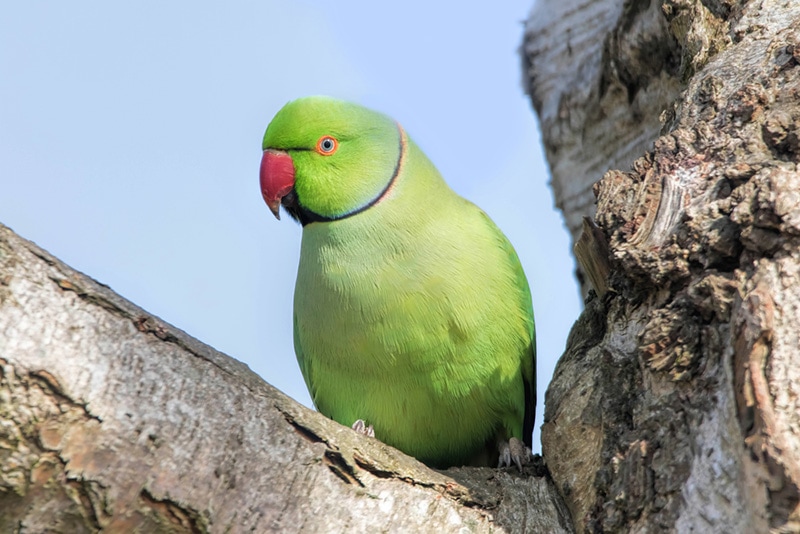
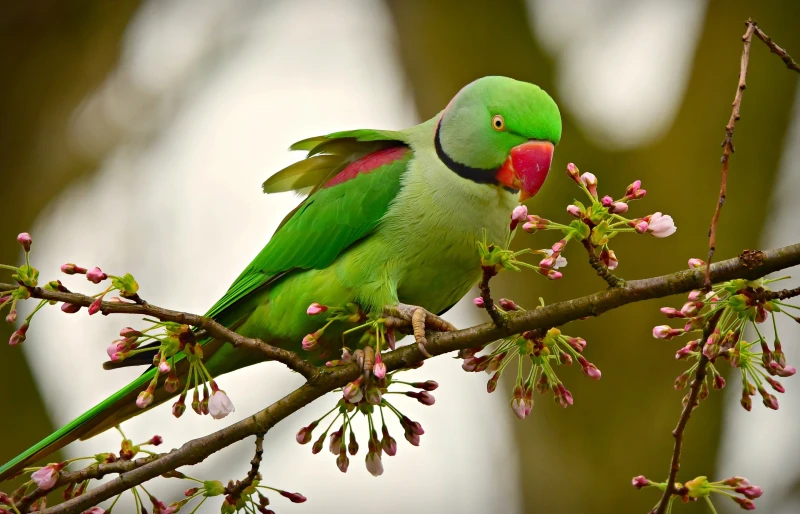
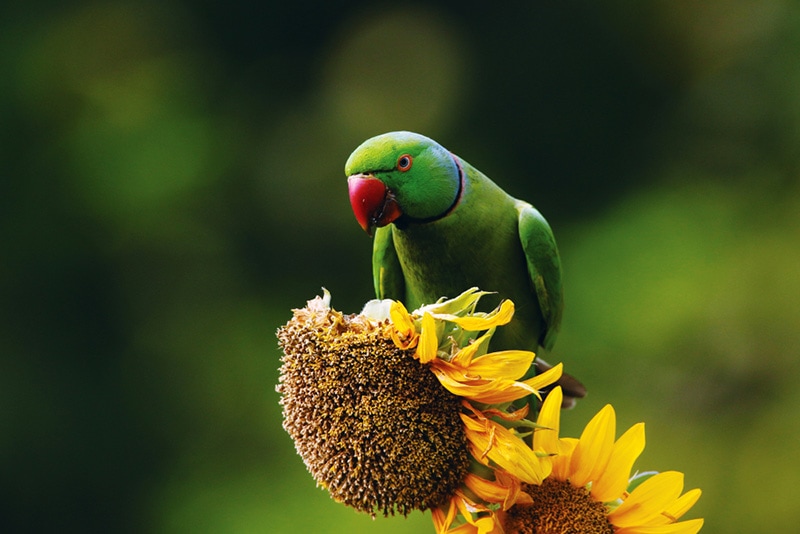
Rose-ringed parakeets are truly stunning birds with their emerald-green bodies, red beaks, blue tail feathers, hints of yellow, and, of course, distinctive pink and black rings around their necks (males only).
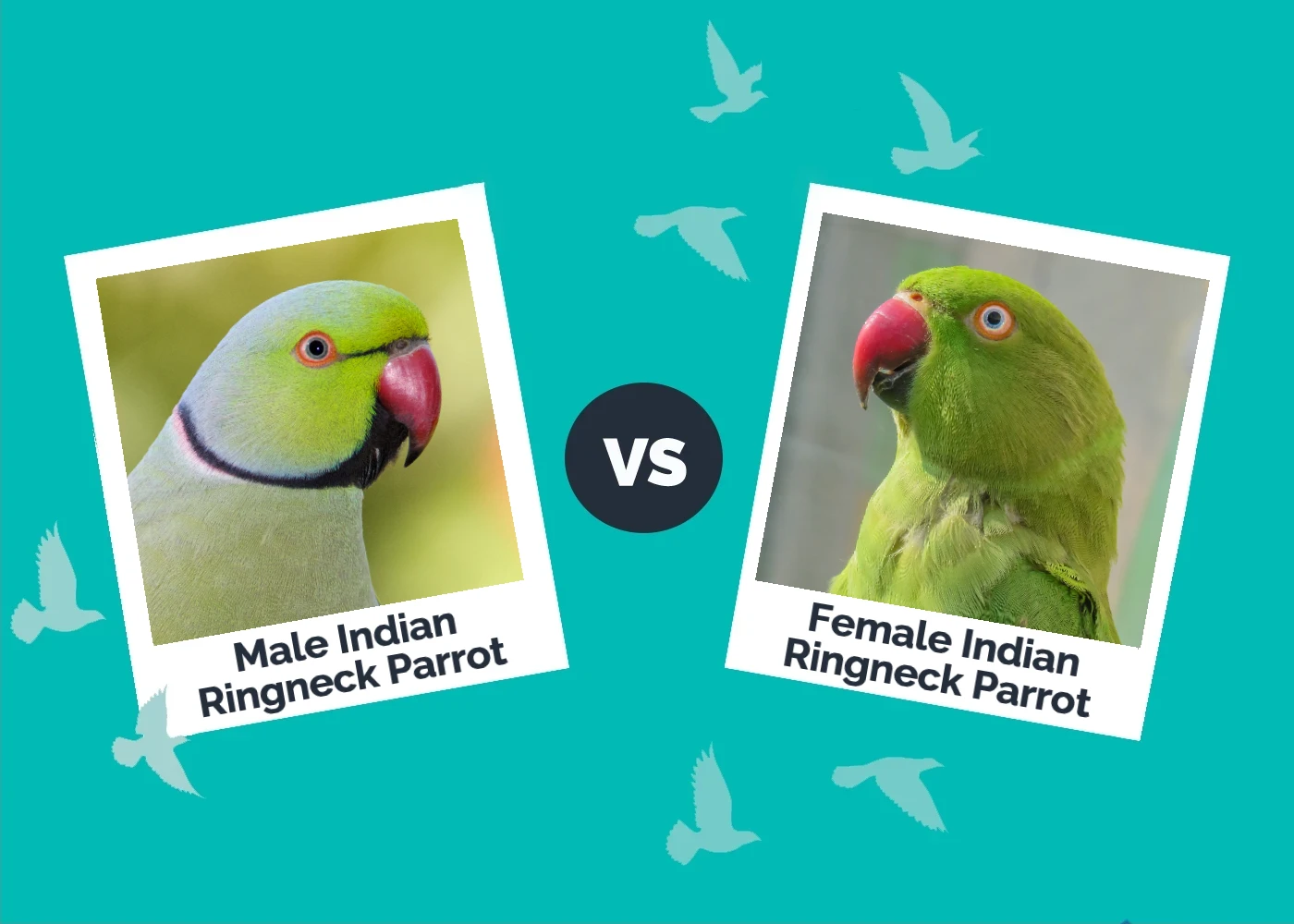
That said, they can come in a wide variety of color mutations, and the coloring differs depending on whether the bird is male or female.
Rose-ringed Parakeet Characteristics
History & Natural Habitat
Rose-ringed parakeets are native to central Africa and parts of Asia, including Sri Lanka, Bhutan, China, Afghanistan, Nepal, and more. Subspecies are the Indian rose-ringed parakeet, boreal rose-ringed parakeet, African rose-ringed parakeet, and Abyssinian rose-ringed parakeet.
In the wild, Rose-ringed parakeets inhabit shrubland, grasslands, rainforests, wetlands, mangroves, and agricultural areas, but they're also well-adapted to urban life and can be found in cities where they've successfully formed feral populations.
These brightly-colored birds go back a long way; they were kept by the ancient Greeks, the Romans, and Indian royalty, who considered them to be sacred.
The early 20th century marked the beginning of a Rose-ringed parakeet breeding boom. This produced various color mutations and made them a popular choice of pet for bird enthusiasts across the globe.
Things to Know When Owning a Rose-ringed parakeet
Temperament
Rose-ringed parakeets are not for the faint-hearted. For one thing, they require lots of enrichment to put their sharp brains to work and release pent-up energy. Without interactive toys, daily out-of-cage flying time, and exploration opportunities (climbing apparatus inside the cage, etc.), they quickly become bored and may even be destructive.
As assertive birds that enjoy a good mental challenge, Rose-ringed parakeets are sometimes labeled as difficult and somewhat demanding, but these birds are more likely to be friendly and well-adjusted if they've been socialized from a young age and are given enough opportunities to work out their physical and mental energy.
If you properly care for and socialize your Rose-ringed parakeet, you can expect them to develop into a vivacious, outgoing, and intriguing companion. They may or may not be affectionate toward you—it depends on the individual bird's personality.
Sounds, Speech & Vocalizations
The Rose-ringed parakeet's vocalizations are best described as high-pitched with a sense of urgency, and the volume can vary depending on the situation. These parakeets aren't afraid to voice their opinion, and they won't hesitate to do so with loud, persistent screeches if they feel the need.
Rose-ringed parakeets are also known for being excellent talkers; with time and training, they can develop a pretty broad range of vocabulary and expressions.
Appearance
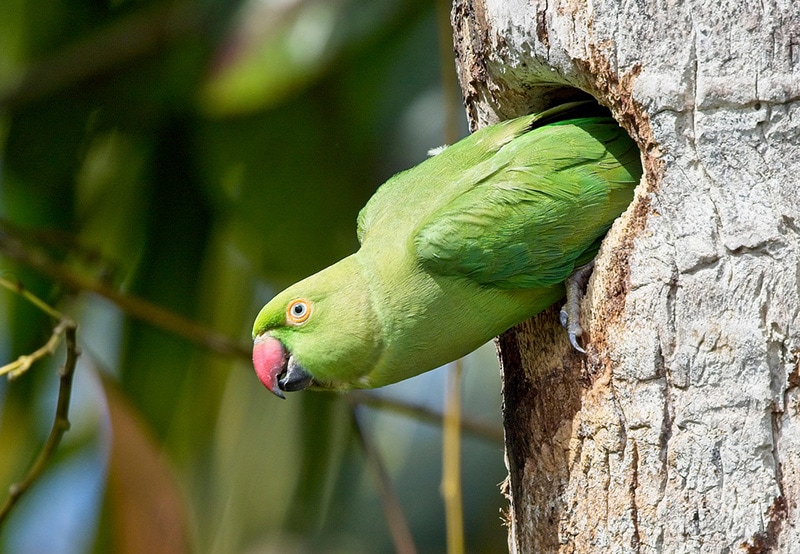
Though there are four subspecies of Rose-ringed parakeets, they all look very similar, the main difference being that the Indian Rose-ringed parakeet and the Boreal Rose-ringed parakeet, both Asian subspecies, are bigger than the other two (African) subspecies.
Male Rose-ringed parakeets are distinguished by their neck markings, which develop over time. The black neck ring is the first to develop at around 18 months, followed by the blue and pink rinks at around the three-year mark. Females (hens) and young Rose-ringed parakeets either have greyish neck markings or don't have them at all.
Wild Rose-ringed parakeets—both male and female—have green bodies, but captive Rose-ringed parakeets come in a wide variety of colors, including:
- White
- Lutino (yellow pigmentation)
- Blue
- Cinnamon
- Violet
- Gray
Caring for the Rose-ringed Parakeet
Though Rose-ringed parakeets are highly sought-after, they're not low-maintenance birds by any stretch and have very specific requirements in order to be happy and healthy. Here are the most important factors to consider before you bring a Rose-ringed parakeet home.
Diet & Nutrition
In captivity, Rose-ringed parakeets require a diet of high-quality commercial parakeet pellets (60–70% of the diet), vegetables, and fruits. Parakeets also eat seeds and nuts, but be careful with the amounts you offer as these are high in fat. Other protein sources, like mealworms, can also be offered occasionally.
Examples of safe vegetables and fruits for parakeets include leafy green veggies, pumpkins, carrots, sweet potatoes, broccoli, bananas, berries, mangos, and kiwis, but this is far from an exhaustive list. Avoid leaving uneaten vegetables and fruits in the cage for too long as this could introduce bacteria to the environment.
Cage/Housing Requirements
It's important to keep Rose-ringed parakeets in pairs due to these birds' highly social natures. Your pair should live in a large aviary measuring at least 3 meters in length and 2 meters in width, but don't feel limited to this—it's even better if you can go bigger.
Be careful with the netting you choose, as parakeets are super smart and will easily chew their way through something too soft. In some parts of the world where these birds are considered an invasive species, it's a strict requirement to ensure your Rose-ringed parakeet cannot escape.
Bear in mind that cleaning up after parakeets can be a challenge if you choose the wrong type of flooring. The SPCA in New Zealand recommends going for a solid floor and lining it with newspaper.
Inside the aviary, you'll need to place items like nesting boxes, multiple perches, and potted trees to offer shade and help your parakeets feel safe and comfortable. It's also a good idea to cover your aviary with shrubbery to provide a more natural environment for your parakeets to feel at home.
If you really can't provide an aviary for whatever reason, the next best thing is a very large cage with plenty of room for your birds to fly and stretch their wings unhindered.
Exercise
One of the reasons Rose-ringed parakeets need such a large living space (with plenty of perches and other items to climb on) is that they're very active birds that need plenty of daily exercise.
In addition to being able to fly within the enclosure, you'll need to let your parakeet out of the cage to fly and explore every day (secure your home first to prevent escapes and potential injuries—ceiling fans and mirrors, for example, are especially dangerous).
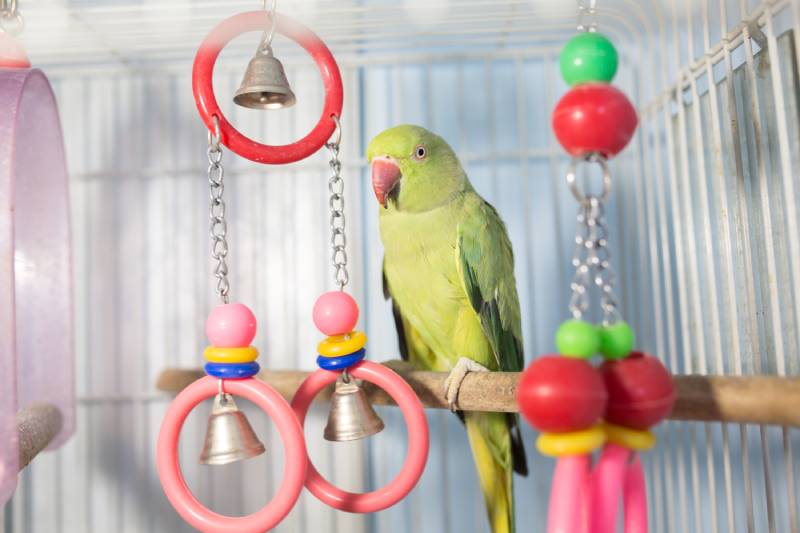
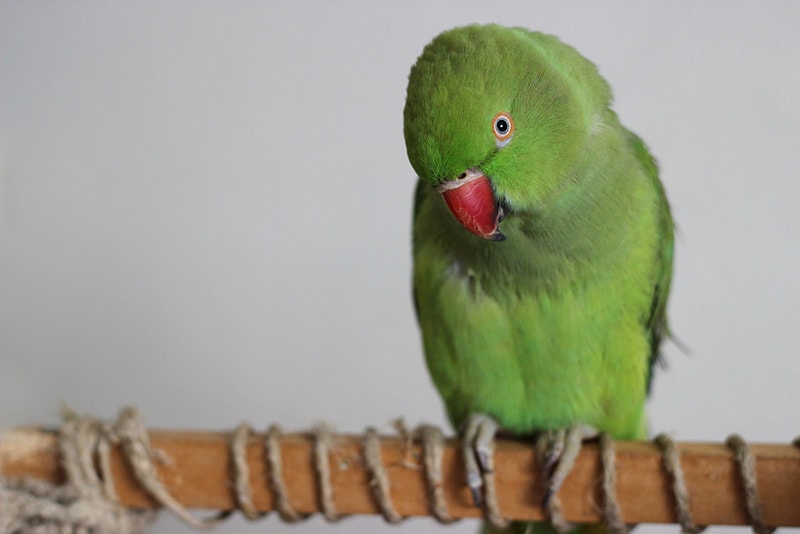
Your Rose-ringed parakeet also needs plenty of mental stimulation to keep them out of trouble. Consider ropes, foraging toys, chewing toys, and puzzle-style toys to keep their minds active. Don't forget to also provide water bowls for your bird to bathe themself daily.
Health & Conditions
PetMD advises getting your parakeet checked out by a veterinarian on an annual basis to make sure they're in good shape. You should also keep an eye out for signs of illness, including changes in bathroom habits (discolored poop, diarrhea, etc.), feather plucking, moist vents, sneezing, breathing with an open mouth, eye or nose discharge or swelling, closed eyes, loss of appetite or reduced appetite, puffed-up feathers, tail bobbing, and more. Consult your vet if something seems off.
On the other hand, healthy parakeets tend to have brightly colored and smooth feathers, a clean nose and eyes, bright eyes, smooth skin, clean vents, and good body condition.
Here are some of the health conditions that can affect parakeets:
3 Little-Known Facts About the Rose-Ringed Parakeet
1. Rose-ringed parakeets have the gift of the gab
We touched on this a little earlier, but did you know that Rose-ringed parakeets can learn to say up to around 250 words?
2. These birds are considered pests in some countries.
Due to the feral populations they form in cities, Rose-ringed parakeets are considered to be an invasive species in several countries, including the US, the Netherlands, and New Zealand. The rose-ringed parakeet enjoys city life because of the lack of predators and how easy it is to acquire food sources (bird feeders, gardens, etc.).
3. They were once sacred in India
Thanks to their powers of mimicry and vocal clarity, Rose-ringed parakeets were once considered sacred in India and were very popular with the royals.
Conclusion
Rose-ringed parakeets are undoubtedly beautiful and intriguing birds, but they need dedicated and patient human companions in order to truly thrive. In short, they're not for everyone, but if you're looking for a pair of plucky, charming, clever, and vivacious companions, rose-ringed parakeets are sure to deliver.
See also:
Sources
https://www.spca.nz/advice-and-welfare/article/caring-for-ring-necked-parakeets
https://www.audubon.org/field-guide/bird/rose-ringed-parakeet
https://www.thainationalparks.com/species/rose-ringed-parakeet
https://hari.ca/avian-care/health-monitoring/symptoms-treatment-bumblefoot-parrots/
https://sightseeingscientist.com/10-interesting-facts-about-rose-ringed-parakeets/
Featured Image Credit: Bappa Pabitra, Shutterstock
Get Hepper In Your Inbox


Pet care tips from our vets and experts, straight to your inbox.
You may opt-out at any time. View our Privacy Policy for more information.
Kit Copson is a freelance writer and lifelong animal lover with a strong interest in animal care. She has parented various furry beings over the years and is currently a proud cat mom of two—one skittish but adorable Domestic Shorthair and very chilled (unless hungry) Siamese and a —and dog mom of one—an adopted Bichon Poodle cross. When not writing about or spending time with pets, Kit can be found doodling in her sketchpad, reading, or more often than not, drinking tea.
Join the conversation
Ask a question, share your story, or send private feedback.