Hepper is reader-supported. When you buy via links on our site, we may earn an affiliate commission at no cost to you. Learn more.
Pocket Beagle Dog Breed: Info, Pictures, Traits & More

Breed Overview
Height:
Weight:
Lifespan:
Colors:
Suitable for:
Temperament:
The only thing cuter than a puppy is another, slightly smaller puppy. Anyway, that’s the thinking behind tiny designer dogs like Teacup Poodles, Teacup Yorkies, and now, Pocket Beagles.
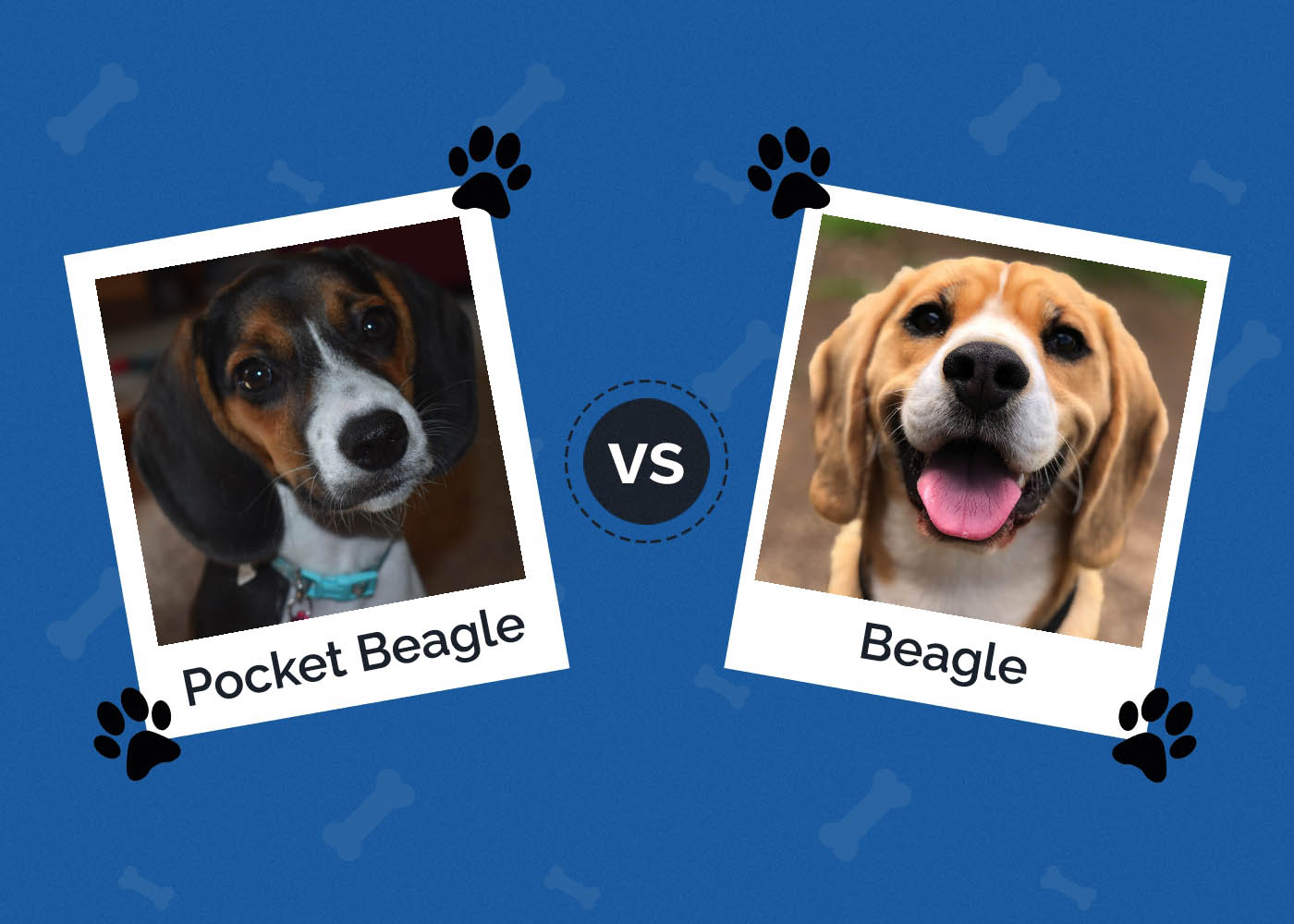
Pocket Beagles are just what they sound like — much smaller versions of regular Beagles. They have most of the same characteristics, only in a much smaller package. However, they also have more health issues, so they’re not necessarily the easiest dogs to raise.
If you’d like to learn more about these wonderful little pups (emphasis on “little”), then the guide below will fill you in on all the information you need to know.

Pocket Beagle Puppies

Pocket Beagle Characteristics
Avoiding puppy mills is good advice regardless of what kind of breed you want to purchase, but it’s especially important with miniature designer dogs like Pocket Beagles.
Many disreputable breeders make these dogs by mixing runts from various litters together. The result is a tiny and adorable pup, but it’s also a dog that’s going to be prone to a host of health issues throughout its life.
Other breeders will combine Beagle runts with smaller dogs from other breeds. There’s nothing necessarily wrong with this, and it can even reduce the risk of medical problems, but they may be selling you a mix at pureblood prices.
If you don’t know the exact genetic heritage your Pocket Beagle has running through their veins, you may not know what to look for in terms of health issues. This could cause you to overlook certain conditions later on in life.


3 Little-Known Facts About the Pocket Beagle
1. They're not the first tiny Beagles to ever exist.
Miniature dogs known as “Glove Beagles” were extremely popular among the British royal family from the 14th to the 16th centuries. They got their name because they were so small they could fit inside a glove.
These dogs were quite a bit smaller than Pocket Beagles, but they never caught on outside of the nobility. As a result, the breed went extinct sometime during the 19th century.
2. Pocket Beagles can pack a lot of noise into a small package.
Like full-size Beagles, Pocket Beagles are capable of baying. If you don’t know what baying is, you will — and so will all your neighbors.
Beagles were bred to hunt in packs, and they’d sometimes get separated from the other dogs or their masters. If they managed to force their prey up a tree while separated from the pack, they’d unleash a deep, powerful howl — a bay — to alert the others to their presence.
Baying can be heard from great distances, and it’s not something that your neighbors will likely appreciate, even if it does come from such an adorable place. If you want to keep a Pocket Beagle in an apartment building, you’ll need to train them to keep their big mouths shut.
3. There are no guarantees when it comes to the size of Pocket Beagles.
Just because you bought a puppy that’s called a Pocket Beagle doesn’t mean that it will end up looking like a Pocket Beagle once it’s fully mature. These dogs sometimes grow to be the size of normal Beagles.
That’s true even if you saw the parents and confirmed they were both Pocket Beagles. All it takes is a single growth spurt to turn your Pocket Beagle into a plain Beagle — but fortunately, plain Beagles are pretty fantastic dogs, too.

Temperament & Intelligence of the Pocket Beagle 🧠
Pocket Beagles were bred to be companion animals, and they usually act as lap dogs. As such, they’re used to spending a lot of time with their humans and can grow to be quite codependent.
At the same time, these pups have a strong independent streak. They may not cuddle with you simply because you want them to, choosing instead to do something else that suits their fancy. This independent streak can be quite fun during training sessions as well.
They’re also not the most outgoing dogs in the world. They warm up slowly to new people, and they prefer to make strangers come to them rather than extending themselves first. Even so, they’re very inquisitive, so don’t be surprised if they decide to sniff your guests while still refusing to let the new folks pet them.
There’s some dispute about the intelligence of Beagles in general. Most canine “intelligence tests” are actually more like tests of obedience, as they measure how quickly a dog can learn new skills and behaviors. Pocket Beagles can pick up new things incredibly fast — but that doesn’t mean that they’ll actually do whatever it is they’ve learned.
It seems safe to say that these dogs are incredibly intelligent but that their independent nature might limit how useful that intelligence is to you. If anything, it might just make them more creative in how they disobey you.

Are Pocket Beagles Good Family Dogs? 🏡
Pocket Beagles tend to be excellent family dogs, and hanging out with people is a big part of what they’re bred to do. They love to sit and soak up attention and affection — up to a point, of course. They can be quite cat-like in this manner.
Their diminutive stature makes them excellent playmates for small children, as they can romp around with them without doing too much damage.
However, your kids need to learn how fragile these dogs can be so that they don’t hurt them accidentally. Teach your children how to play with and handle the dog responsibly.
As mentioned above, many Pocket Beagles are happy to sit in their owner’s lap all day watching TV and eating snacks. Be careful about this, though, as these dogs can sometimes become overprotective of a single member of the family, and that can lead to aggressive resource-guarding issues.
If your family entertains frequently, you may want to consider going with a different pet, as they’re not big fans of having strangers over.
Do Pocket Beagles Get Along with Other Pets? 🐶 😽
Beagles of all sizes are social dogs — they were bred to hunt in packs, after all. This means your Pocket Beagle is likely to welcome new pups into your household without much issue.
However, they may not necessarily be all that interested in playing with them. These dogs live to sniff out their prey, and that will always take precedence over anything else that’s going on — even running around the yard with another pooch.
The Pocket Beagle is also likely to get jealous, especially if you’re allowing them in your lap. It’s important to teach them to overcome resource-guarding behaviors if you’ll have other animals around.
That hunting instinct is important to keep in mind when it comes to bringing home other pets as well. While a Pocket Beagle may not pose as much of a threat to cats as a larger dog would, they may still try to chase them up a cat tree or similar surface. Your cat isn’t likely to enjoy having one of these dogs around.
Smaller pets like hamsters or guinea pigs will be in even more danger. You may be able to mitigate the dog’s behavior through training and socialization, but it’s unlikely you’ll be able to overcome it. The traits simply run too deep.

Things to Know When Owning a Pocket Beagle:
Owning a Pocket Beagle is very similar to owning a regular-sized Beagle, but there are a few differences that you should be aware of.
Below, we’ll walk you through everything you need to know about taking care of one of these tiny babies so that you can keep your dog happy and healthy for as long as they live.
Pocket Beagle Food & Diet Requirements 🦴
Beagles are notorious for eating anything they come across, and Pocket Beagles are no exception. You need to be very careful about what they get into, as they could easily eat something deadly, even if it’s not something you’d generally classify as food.
While these dogs may not be picky about what they eat, you should be. These animals are prone to health issues, but you may be able to sidestep some of the worst conditions if you feed your dog a healthy, balanced diet.
Look for a kibble that’s high in protein, fat, and fiber. Also, make sure it doesn’t have any animal by-products or cheap fillers like corn, soy, or wheat. These add little more than empty calories to your dog’s diet, and little dogs like Pocket Beagles don’t need to be carrying any extra pounds.
A kibble worthy of your Pocket Beagle is likely to be on the pricey side, but believe us when we tell you that feeding them a premium chow is significantly cheaper than paying vet bills.
Be very strict about how much you feed your dog. Offer them portion-controlled meals on a set schedule rather than allowing them to free-feed. These dogs are master beggars, so don’t fall for their puppy dog eyes when their bowl is empty, either.

Pocket Beagle Exercise Needs 🐕
Although they lack the boundless energy that their bigger cousins are known for, these dogs are fairly active. They’ll need a fair amount of exercise if you want to keep their destructive nature at bay.
The good news is that (due to their stubby little legs) it doesn’t take much to tucker them out. You may be able to get away with just taking them for a brisk walk once or twice a day.
All Beagles live through their noses, so anything you can do to incorporate their olfactory senses will go a long way towards lowering their energy levels. You can play hide and seek with treats or simply allow them to wander in new areas (while safely on a leash, of course).
Be careful about how vigorous you allow their exercise sessions to become, though. These dogs have relatively frail frames, and they can be damaged by extremely spirited play. They shouldn’t be allowed to run, jump, or climb stairs too much, especially while their frames are still developing.
Once you’ve tuckered your Pocket Beagle out, they’ll likely be satisfied to laze around the rest of the day. As a result, they’re a good choice for people who believe that the only real marathons are Netflix marathons.
Pocket Beagle Training 🦮
Training can be a mixed bag with Pocket Beagles. They’re smart and can quickly pick up on new commands, but they often choose to ignore their owners rather than comply with their wishes.
This can be especially problematic outdoors. Their powerful noses can pick up scents from great distances, and once an aroma has piqued their interest, all interest in you will go out the window. As a result, you’ll need to make your training sessions as interesting as possible and be ready to abandon them for the day if your dog clearly isn’t into it.
Always use positive reinforcement with these dogs, as punishing them will likely cause them to become even more stubborn and withdrawn. They respond well to treats as training rewards, but be careful not to let them pack on extra pounds as a result of their training.
These pooches have quite the destructive streak, and they especially love digging holes. If you value your lawn, you’ll need to nip that behavior in the bud as soon as you can; otherwise, you’ll have to say goodbye to your love of your grass (or say goodbye to your dog).
If you’re not confident in your training abilities, you can always bring in a professional to help you. However, even the most well-trained Pocket Beagle is likely to have episodes when they ignore anything you say, so professional sessions will only get you so far.

Pocket Beagle Grooming ✂️
Pocket Beagles have a dense, short coat that’s extremely soft to the touch. You don’t have to do much to keep their coat looking and feeling its lustrous best — simply brush them once a week or so. This should also help keep shedding under control.
These dogs don’t need to be bathed often, and you can probably get away with only bathing them if they become visibly dirty. However, if you let them roam around outdoors, they will get visibly dirty often.
Like all Beagles, they have long, floppy ears that require weekly maintenance. Take a damp cloth and clean the inside of their ears and then dry them thoroughly. You should also check their ears for ticks, fleas, and brambles, or other debris.
They’ll need their teeth brushed regularly and their nails trimmed on an as-needed basis. While these tiny pups are easy to physically manipulate, these processes will go much more smoothly if you introduce the dog to them while they’re still young.
All in all, the Pocket Beagle is an easy dog to maintain, and their grooming needs are fairly minimal. However, it’s essential that you don’t overlook them, as each one is extremely important for your dog’s overall health.
Health and Conditions of Pocket Beagles ❤️
While Beagles are relatively healthy dogs in general, Pocket Beagles tend to have quite a few more health problems than their larger cousins.
This is often due to poor breeding practices, as mixing runts from separate litters often leads to dwarfism, which creates a host of issues in turn. Also, since the Pocket Beagle isn’t an officially recognized breed, you don’t really know what you’re getting with one of these dogs, so there might be other bloodlines at work that bring their own health issues along for the ride.
Some of the issues that accompany dwarfism in dogs include respiratory problems, spinal deviations, warped front legs, and difficulty breeding. Tiny dogs are undoubtedly cute, but it’s not fair to them to foist all these medical problems on them just so you can have something adorable to look at.
Many of the health problems that plague this breed are unavoidable, but you might be able to sidestep some of the issues below by doing lots of homework on whichever breeder you’re considering buying from. Getting a healthy puppy with normal bloodlines will go a long way towards creating a healthy adult.
Below, we’ll list some of the problems that are most common to the breed. Keep in mind, though, that since many so-called Pocket Beagles actually have DNA from other dogs mixed in, your dog could be susceptible to diseases that aren’t mentioned here.

Male vs Female
There aren’t many differences between the two genders in this breed. Males are a bit bigger, but the difference is so slight you won’t even notice it (and it’s not like either sex can be called “big”).
Keep in mind, though, that Pocket Beagles are known for having difficulty conceiving and whelping, so if you don’t plan on getting your female dog fixed, you could have a pricy pregnancy on your hands (so get her fixed).

Final Thoughts:
If there’s anything cuter than a Beagle, it’s a Pocket Beagle — a relatively new breed that’s a smaller version of one of the most popular dogs in the world. There’s no denying how adorable these dogs are, and their loyal and loving nature makes them excellent pets.
However, they can be prone to a host of health problems, especially if you buy one from a disreputable breeder. They are also stubborn and independent, and they may present training problems for inexperienced owners.
Assuming you can track down a responsible breeder, the Pocket Beagle is one pet that’s sure to garner you quite a bit of attention. They’re more than just eyeball magnets, though. They’re fantastic dogs that are capable of brightening up whichever lap they’ve decided to sit in at the time.
Featured IImage By: bunthaweekan anpunya, Shutterstock
Get Hepper In Your Inbox


Pet care tips from our vets and experts, straight to your inbox.
You may opt-out at any time. View our Privacy Policy for more information.

Nicole is a lover of animals of all sizes but is especially fascinated with the feline variety. She’s the proud mom of Baby, a Burmese, and works every day so he can relax in the sunshine or by the fire. She’s always had a cat in her home and has spent countless days with others, observing behaviors and softening up even the grouchiest of the lot. Nicole wants to share her kitty expertise with you so you and your cat can live happy, healthy, and care-free.
Join the conversation
Ask a question, share your story, or send private feedback.