Hepper is reader-supported. When you buy via links on our site, we may earn an affiliate commission at no cost to you. Learn more.
Puppy Mill vs. Breeder: How to Spot the Difference
In this article
The glorious day has finally arrived: You’ve decided which dog breed you want and are ready to welcome a rambunctious new ball of fluff into your home! But the most important part of the process is still ahead of you: How do you find the best breeder? Most importantly, how can you be sure your puppy does not come from a puppy mill?
The truth is that it's not as easy as it seems. The main problem is that most puppies bred on puppy farms are then sold in pet stores or online, making it difficult for a potential buyer to spot the difference and make an ethical decision.
We understand that as a dog lover, you want the absolute best for your future furry family member. This guide will enable you to be better equipped when it comes time to choose a breeder, so you don’t unintentionally encourage an unscrupulous puppy mill disguised as an ethical and responsible breeder.

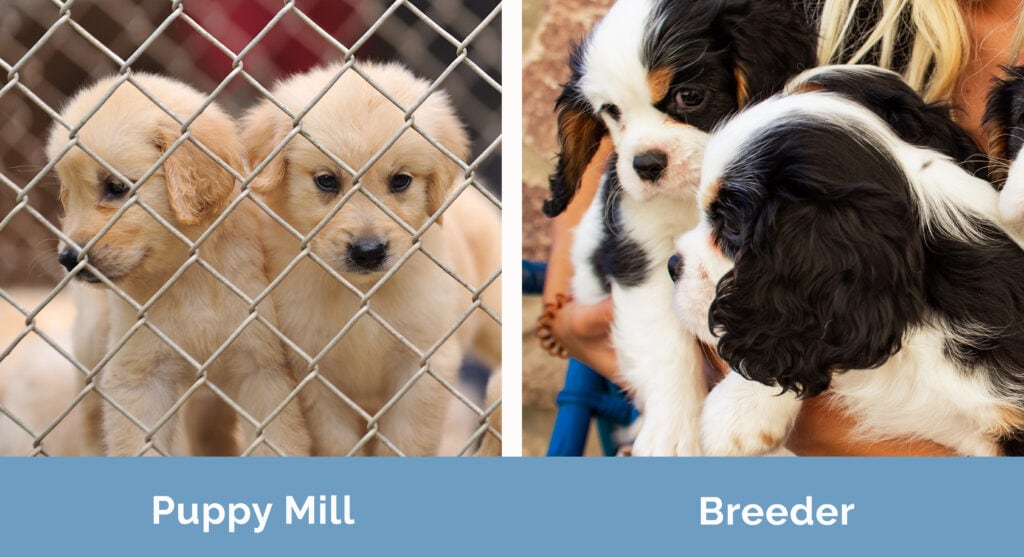
Visual Differences
At a Glance
Overview of Puppy Mills
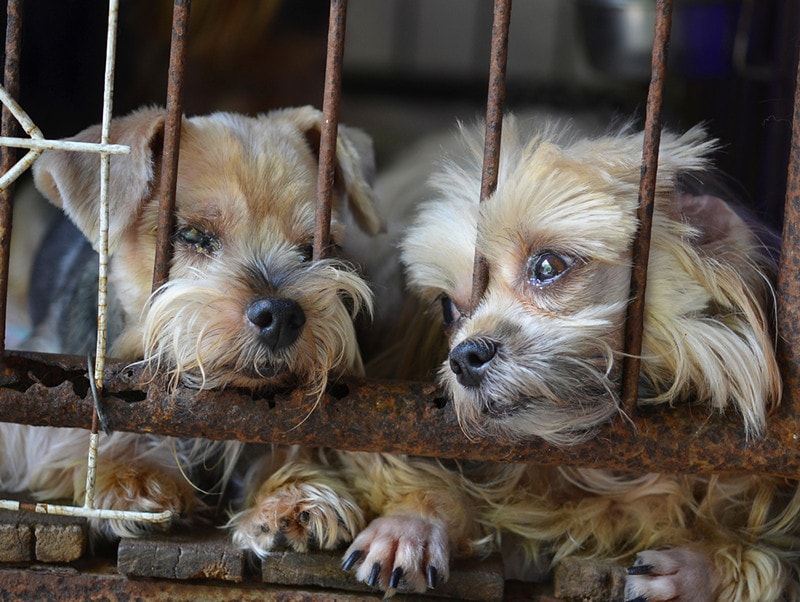
The way that the Humane Society of the United States (HSUS) describes puppy mills leaves no ambiguity: “A puppy mill is an inhumane, commercial dog breeding facility in which the health of the dogs is disregarded to maintain a low overhead and maximize profits.”
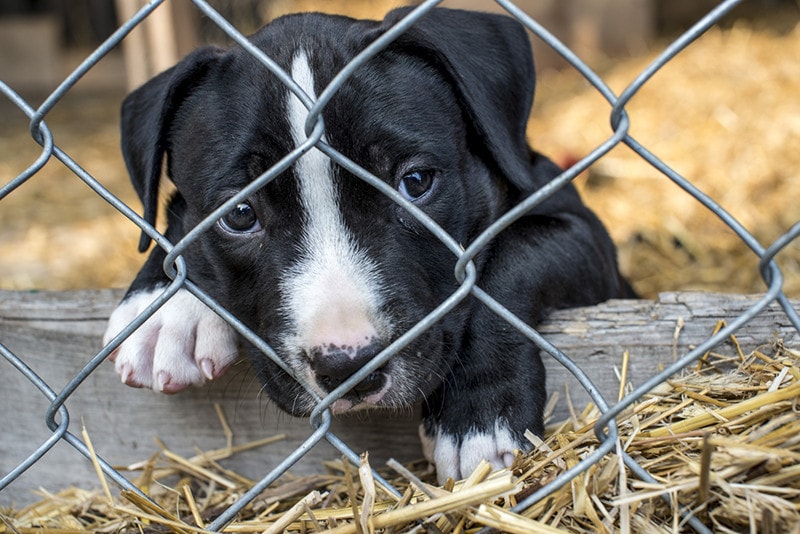
These establishments, also known as puppy farms, often maintain unsanitary conditions and ignore healthy breeding practices. While they may call themselves dog breeders or kennels, their focus is on mass-producing puppies through excessive breeding, disregarding health and genetics.
Most of the female dogs are over-bred until they are no longer useful, enduring cramped spaces and little socialization. Puppies are usually sold to pet stores or online platforms when they’re only 6 to 8 weeks old, despite the high risks of health and behavioral problems. Researchers have found that due to the lack of proper socialization during a critical period of their development, puppy mill dogs may show heightened aggression and fear toward any unfamiliar person or situation, even their owner and family.
The sad truth is that due to these issues, many puppy mill dogs are at risk of being abandoned or euthanized later.
Some people argue about the lower prices and availability of puppies in puppy mills, but while these “advantages” might seem appealing on the surface, the suffering and negative consequences for the dogs can’t be ignored.
Responsible breeders prioritize the health, well-being, and happiness of the dogs and puppies. They want to make sure their puppies find loving homes. While they do want to make some profits, they never want to do so over the well-being of their animals. That’s why it's so important to do your research before adopting or buying a new canine companion, to ensure that you’re encouraging the right people.
Why Aren’t Puppy Mills Illegal?
According to the HSUS, there are over 10,000 puppy mills in the U.S.1 Most claim to be "USDA approved," but just because the facilities are inspected by the USDA, that does not mean the business isn’t a puppy mill.
The Animal Welfare Act (AWA) sets minimum welfare requirements in commercial breeding facilities. But even when breeders fail to meet these standards, there are few revoked licenses or fines imposed on establishments by the USDA, and many puppy mills with a history of violations continue to sell to pet stores. Furthermore, laws surrounding puppy mills vary by state, making the regulatory landscape even less clear.
Pros
- None
Cons
- Dogs and puppies are often housed in miserable living conditions
- Puppies lack proper socialization
- Inadequate healthcare and improper breeding may lead to genetic and health issues
- They perpetuate the exploitation and suffering of dogs
- They use unethical breeding practices

Overview of Breeders

Responsible breeders prioritize the welfare of their dogs above all else. For example, they collaborate closely with vets to ensure their puppies’ health and safety. All their dogs undergo health screenings for specific issues, and they aren't afraid to share their pets' medical records with potential buyers. Above all, they do not breed dogs with health or behavioral problems but instead turn to spaying or neutering.
Good breeders also have solid references and operate on a smaller scale than puppy mills. The puppies are raised in a family environment and socialized from birth. They will also welcome dogs back due to hereditary issues or unforeseen changes in ownership, which is not the case with puppy mill puppies.
Pros
- They conduct thorough health screenings on all breeding dogs to identify potential genetic issues
- Puppies receive early socialization
- Most provide ongoing support and guidance to puppy buyers
- They are committed to the well-being of their animals
Cons
- There are long waiting lists for specific breeds
- Puppies are sold at higher costs
- Puppies are still prone to certain breed-specific issues despite health screenings
- Not all breeders who claim to be responsible actually follow ethical practices

How to Spot the Difference Between Puppy Mills and Responsible Breeders
Unlike puppy mills, good breeders care about where their puppies end up. They will ask you questions to ensure that their pups will be going to a loving home. They invest time, effort, and emotional energy into their puppies' early days.
Here are a few other cues to help you tell the difference:
- Puppy mills often hide in plain sight; they can be disguised as charming pet shops or online sellers. Responsible breeders are more likely to welcome you to their home or kennel to meet the pups' parents and see their living conditions.
- Good breeders will provide health records and vaccinations and will ensure that the pups are properly checked by a veterinarian before going to their forever homes.
- A responsible breeder will be happy to answer your queries about their breeding practices, the puppy's parents, and how they raise their animals.
- When talking to or meeting with a dog breeder, be sure to check all the facts, but also go with your gut. If something feels off, it probably is.
- Most importantly, resist buying a puppy from a pet store. We know how hard it can be, but you must remember that buying this dog will likely only encourage unethical and inhumane breeding practices. It's a heartbreaking cycle that needs to stop.

Conclusion
Choosing between a puppy mill and a breeder isn't a tough call. What is tricky, though, is finding responsible breeders. It’s of the utmost importance to conduct thorough research before and after contacting a potential breeder. Don't be afraid to ask questions, and if you suspect unethical breeding practices, you should contact your local SPCA or Humane Society for advice on what to do next.
If possible, consider adopting your new beloved companion from a local shelter or rescue organization.
Sources
https://www.akc.org/expert-advice/dog-breeding/everything-you-need-to-know-about-breeder-contracts/
https://www.humanesociety.org/resources/puppy-mills-faq#what
https://www.sciencedirect.com/science/article/pii/S1558787817300102?via%3Dihub
https://www.aspca.org/improving-laws-animals/public-policy/usda-enforcement-fiscal-year-2022
Featured Image Credit: (L) TPM-FOTO, Shutterstock | (R) Voltgroup, Shutterstock
Get Hepper In Your Inbox


Pet care tips from our vets and experts, straight to your inbox.
You may opt-out at any time. View our Privacy Policy for more information.

Genevieve, a biologist and science writer, who harbors a profound affection for capuchin monkeys, pumas, and kangaroos. This passion has led her to travel extensively, volunteering and working at wildlife rehabilitation centers in Bolivia, Guatemala, Canada, and Australia. Now residing in Argentina as a Canadian expat, Genevieve enjoys the view of horses and cows greeting her from the vast plains outside her home office window. She proudly cares for three rescued dogs—Lemmy, Nala, and Pochi—and a playful kitten named Furiosa. Sharing her extensive knowledge and love for animals brings her immense joy and fulfillment.
Join the conversation
Ask a question, share your story, or send private feedback.