Hepper is reader-supported. When you buy via links on our site, we may earn an affiliate commission at no cost to you. Learn more.
Rottweiler Growth & Weight Chart (Puppy to Adult)

In this article
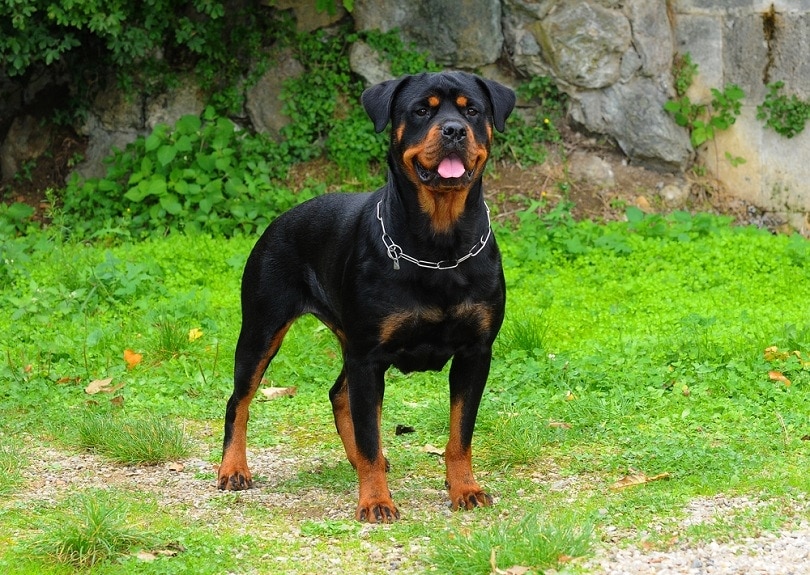
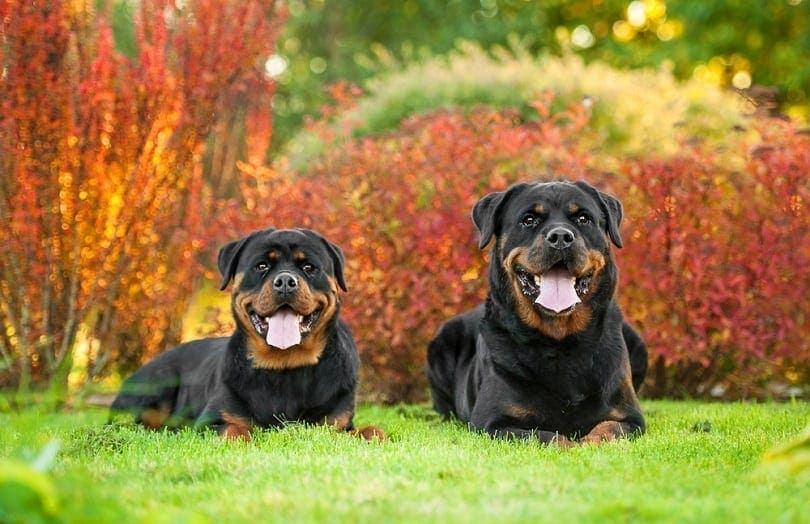
Adult Rottweilers can weigh between 70 and 130 pounds. As a breed, they are prone to obesity and being overweight, so it is important to keep an eye on your Rottweiler’s weight. Although sudden height and weight increases are to be expected in puppies, you should monitor them to make sure your puppy’s growth and development are on track.
Rottweilers are especially prone to hip and elbow dysplasia, as are many large dog breeds, so it is important that you and your vet closely monitor your dog’s development.
Check out our chart below for more on just how big you can expect your Rottie to be as they grow up.

Facts About The Rottweiler
A Rottweiler's weight and height are primarily determined by genetics. Look at the size and weight of the sire and the dam and use this information to determine the likely size of your dog when they are fully grown.
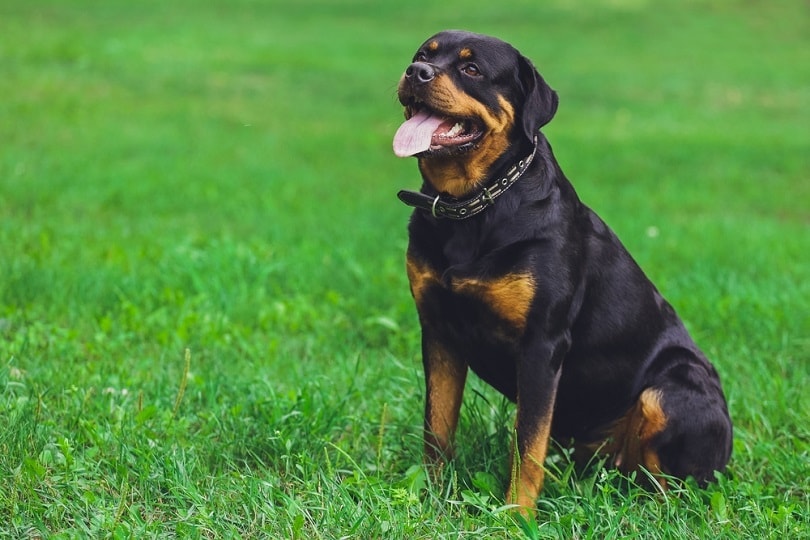
With that said, diet also plays an important part in your Rottweiler’s weight. If you feed your dog an appropriate amount of good quality food, they have a better chance of growing to a healthy weight without becoming too fat or too thin. Finally, exercise plays a role in reaching a healthy weight with plenty of lean muscle and less body fat.
The Rottweiler is a working dog. As such, they have been bred to be active. If they lead a sedentary life, they may be prone to becoming overweight. If your Rottie isn’t a working dog, it will be up to you to ensure they get the proper amount of exercise.
Finally, feed your puppy an appropriate large breed food in the recommended amounts. You don’t want to speed up or slow down your dog’s growth as this can lead to injuries, joint problems and developmental issues.
Rottweiler Puppy Growth and Weight Chart
Below is a growth and weight chart that shows an ideal range for your puppy. There is no guarantee that your Rottweiler’s weight and height will follow this course, and they may be slightly above or below the average for their age.
Male Rottweiler Puppy Growth Chart
| Age | Weight Range | Height Range |
| 8 weeks | 10–15 lbs | 12”–16” |
| 3 months | 35–40 lbs | 18”–19” |
| 4 months | 45–50 lbs | 19″–20” |
| 5 months | 55–60 lbs | 20”–22” |
| 6 months | 65–70 lbs | 23”–24” |
| 7 months | 70–80 lbs | 24”–25” |
| 8 months | 75–85 lbs | 24”–25” |
| 9 months | 90–100 lbs | 25”–26” |
| 10 months | 95–105 lbs | 25”–26” |
| 11 months | 95–115 lbs | 25”–26.5” |
| 1 year | 95–125 lbs | 25”–27” |
| 2 years | 95–135 lbs | 25”–27” |
Female Rottweiler Puppy Growth Chart
| Age | Weight Range | Height Range |
| 8 weeks | 10–14 lbs | 14”–16” |
| 3 months | 28–35 lbs | 18”–19” |
| 4 months | 35–40 lbs | 19”–20” |
| 5 months | 46–55 lbs | 20”–22” |
| 6 months | 55–65 lbs | 22”–23” |
| 7 months | 65–70 lbs | 23”–24” |
| 8 months | 70–75 lbs | 23”–24” |
| 9 months | 70–80 lbs | 24”–25” |
| 10 months | 75–85 lbs | 24”–25” |
| 11 months | 75–90 lbs | 24”–25” |
| 1 year | 80–95 lbs | 24”–25” |
| 2 years | 80–100 lbs | 24”–25” |
You need to take good care of your pet while they are growing, so you can use our calculator tool to help you know how much to feed your pup and keep their well-being:
Dog Calorie Calculator
Recommended Daily Calories

The exact amount of calories an individual animal needs to maintain a healthy weight is variable and influenced by many factors including genetics, age, breed, and activity level. This tool is meant to be used only as a guideline for healthy individuals and does not substitute veterinary advice
The exact amount of calories an individual animal needs to maintain a healthy weight is variable and influenced by many factors, including genetics, age, breed, and activity level. This tool is meant to be used only as a guideline for healthy individuals and does not substitute veterinary advice.

Rottweiler Growth Stages Pictures
Every puppy develops at a different rate, so if your puppy isn’t exactly on the same schedule, that’s okay. Just check with your vet if you have any concerns.
Below, we have included a guide for the various developmental stages of your Rottweiler so you can see what to expect and determine whether your puppy is meeting the expected developmental stages for the breed. This information is meant as a rough guide, so don’t be too concerned if your puppy is a little behind the curve.
8-Week-Old Rottweiler Puppy
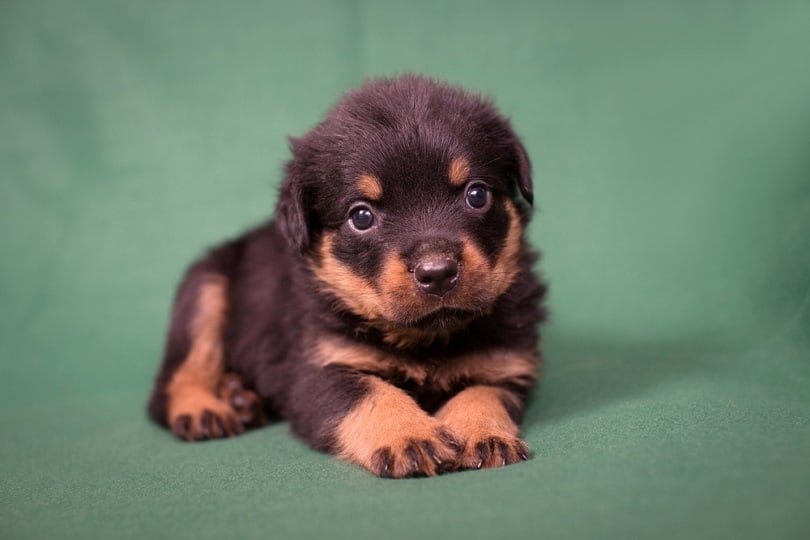
By the 2-month stage, your Rottie should be learning to socialize with others. They should recognize that they are a dog and should learn plenty from their mom. Your puppy will watch how their mom interacts with other dogs, with humans, and in specific situations. They will determine what their mom finds scary, what she finds exciting, and even how she eats, drinks, and performs other actions. They will take most of these lessons through life with them.
At the age of 8 weeks, it is okay to take a puppy away from their mother. At this point, you should take over the role of mother and trainer. Introduce them to new people and new animals. Show them that new surroundings, environments, and conditions are nothing to be afraid of, and try to do this regularly.
3-Month-Old Rottweiler
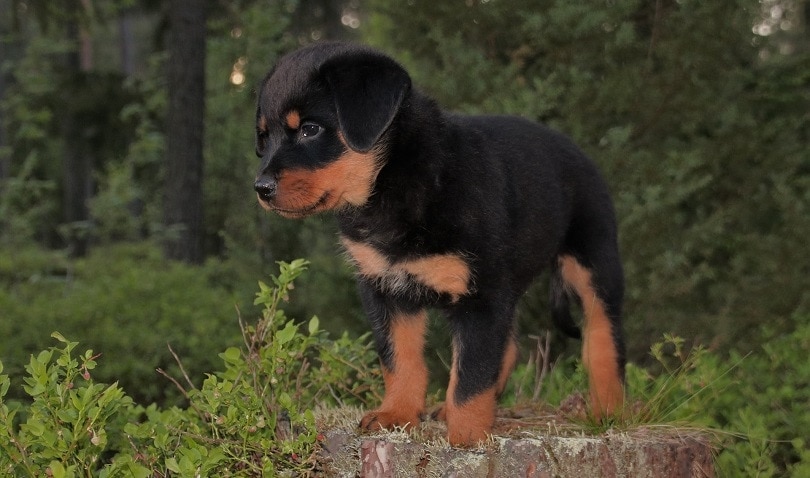
By 3 months, human socialization should be well underway. Your puppy will start to pile on the pounds and grow taller, and you can further their social development by enrolling your dog in puppy classes.
Puppy classes not only enable your dog to meet new people and socialize with other dogs, but they also teach you and your dog the basics of training. You will learn some simple commands, your dog will be taught how to behave in certain circumstances, and you will have a friendly environment where your dog is allowed to meet new people and new dogs and react accordingly.
Many of the situations and responses that your dog experiences by this time will shape how they react in the future. Therefore, try to avoid very scary situations. If your dog has a negative experience with something, for example, they get scared by a car, take things slowly and try to desensitize them to the situation.
4-Month-Old Rottweiler
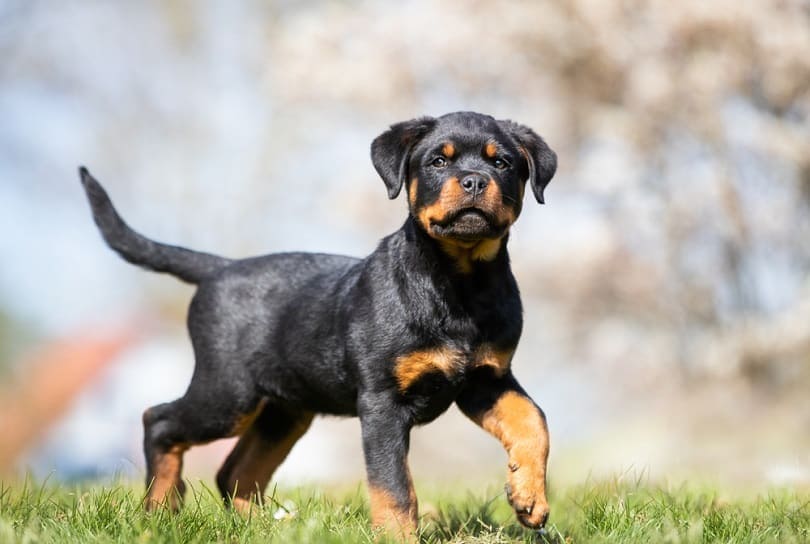
Expect your puppy to test boundaries by this stage. They will want to determine who the pack leader is and will test to see what they can get away with, much like a young child. When it comes to training, you must stick to the rules and boundaries you have set. At this point, if you waver, your puppy will take advantage and try to take charge.
6-Month-Old Rottweiler
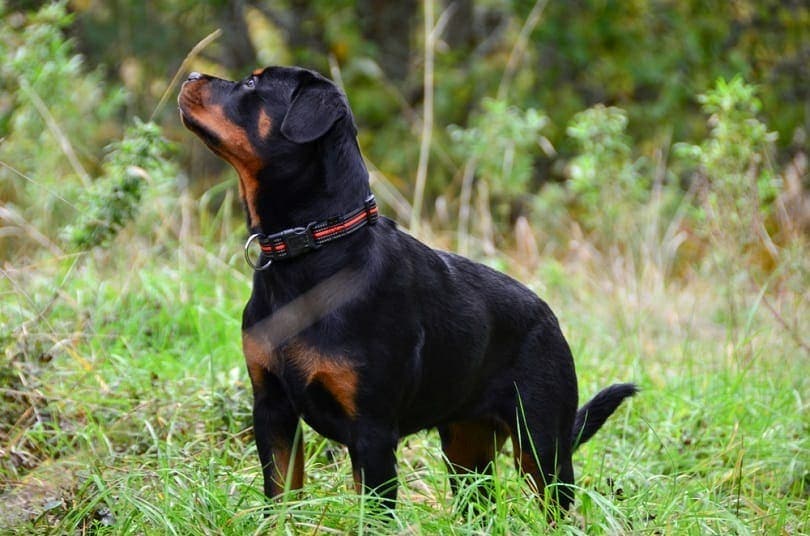
By 6 months, you should be walking your dog outdoors regularly. Introduce them to new experiences constantly. As well as meeting new people, ensure that they have met different types of animals, and are used to being walked at night and during the day. Ensure that they are used to seeing people walk past the windows at home and look for ways to enhance and increase their outdoor exercise.
Consider going to agility classes or enrolling them in some other form of canine sports class. Your dog will benefit, and you will bond even more with your puppy. By 6 months, your Rottie will be around two-thirds of their adult size, but they will still retain their puppy attributes and playfulness.
9-Month-Old Rottweiler
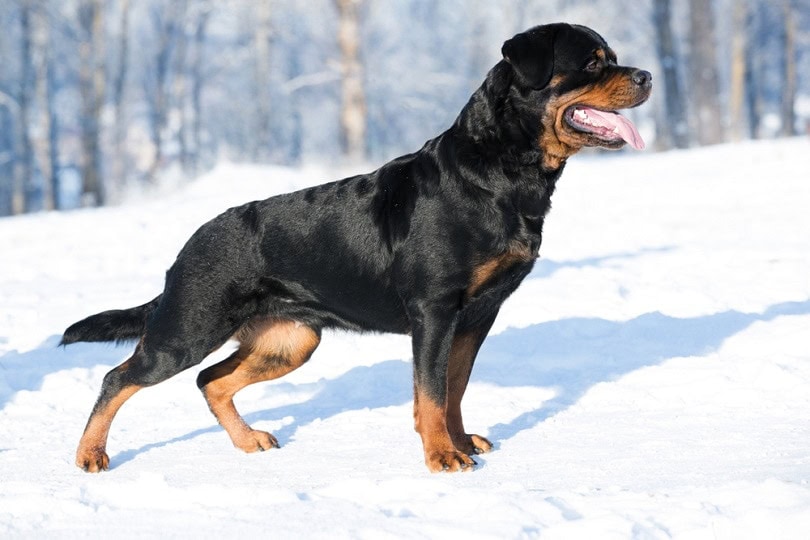
A 9-month-old Rottweiler is similar in development to a teenage human. Although most small breeds would be fully grown by the time they reach this age, the Rottweiler has at least three more months of growth left in them. Your Rottie will have all of their teeth, will be sexually matured, and will be shedding a considerable amount of fur on your furniture, your clothes, and pretty much everywhere.
Although they may display some playfulness, your Rottweiler should be starting to calm down a little by this stage.
1-Year-Old Rottweiler
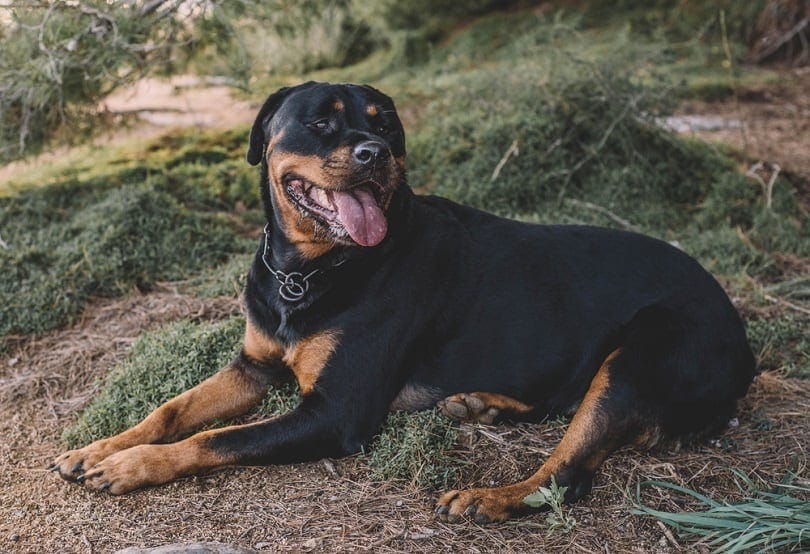
A Rottweiler will reach full height by the time they are 12 months old but will continue to add weight. They can potentially keep putting weight on until they are 3 years old because of their considerable muscle mass. Your puppy will look more like an adult but still can change their physical appearance as well as their size over the next 2 years.
When Do Rottweilers Stop Growing?
Rottweilers reach full height around the age of 12 months. They will continue to put on weight until they are 3 years old. By this stage, their large heads should have stopped growing, and they will only put extra weight on if they are being fed too much, exercised too little, or if they have any associated health issues.
How Does Neutering/Spaying Affect My Dog’s Growth?
There used to be a common myth that desexing a dog would prevent or stunt growth, but it’s actually the reverse that is true. If you spay or neuter a dog too soon, they can continue to grow in height and may grow taller than they would have otherwise. While this might not sound like a bad thing in a breed like the Rottweiler, it can lead to joint and developmental problems.
Dangers of Growing Too Quickly or Stunted Growth
Rottweilers are large and heavy dogs. They are especially prone to joint-related health issues like dysplasia. If your dog is allowed or encouraged to grow too much too quickly, this can put major pressure on the hips and elbows.
If they grow too quickly while the bones are still forming, it means that the additional pressure on their joints can cause misalignment. When the dog reaches adulthood, this can pose problems with their gait, stance, and other physical movements. When they age, this can become arthritic and musculoskeletal pain, but by then it may be too late to fix the problem.
Rottweilers are also prone to certain heart conditions, which can be exacerbated by being overweight and especially by being obese. Ensure that your dog is a healthy weight and does not put too much weight on, too quickly.

Conclusion
The Rottweiler is a large dog breed, so you should expect your puppy to experience some growth spurts like human children do. With that said, you should try to ensure that your puppy experiences slow and steady growth by feeding a proper diet and exercising appropriately. This gives their body, including muscles and joints, the chance to develop at a steady pace and means that they are less likely to suffer joint pains and conditions like dysplasia.
The charts above are meant only as a guide for your Rottweiler’s weight and height, and every dog will develop differently at a varying rate. If your puppy is a long way above or below the guidelines, however, you may want to seek advice from your vet to ensure that they remain healthy.
Related Reads:
Featured Image Credit: Ricantimages, Shutterstock
Get Hepper In Your Inbox


Pet care tips from our vets and experts, straight to your inbox.
You may opt-out at any time. View our Privacy Policy for more information.
Nicole is a lover of animals of all sizes but is especially fascinated with the feline variety. She’s the proud mom of Baby, a Burmese, and works every day so he can relax in the sunshine or by the fire. She’s always had a cat in her home and has spent countless days with others, observing behaviors and softening up even the grouchiest of the lot. Nicole wants to share her kitty expertise with you so you and your cat can live happy, healthy, and care-free.
Join the conversation
Ask a question, share your story, or send private feedback.