Hepper is reader-supported. When you buy via links on our site, we may earn an affiliate commission at no cost to you. Learn more.
Golden Retriever Growth & Weight Chart (With Growth Stage Pictures)

In this article
When it comes to being recognized as the all-American dog breed, the Golden Retriever is in a class of its own. These dogs have long been wildly popular, and for good reason. They’re even-tempered, loyal, affectionate, and extremely intelligent.
Despite the fact that these dogs are so widely owned, many people have little idea of what to expect from their Golden Retriever puppy. This can lead to stressful moments, as they’re never sure if their dog’s growth is “normal” for their age.
To help alleviate that stress, we’ve put together a helpful guide for understanding your dog’s growth. As with humans, there’s a wide range of what’s considered “normal” at any stage of development, so as long as your pup falls within the ranges shown below, you’re probably fine.

Facts About the Golden Retriever
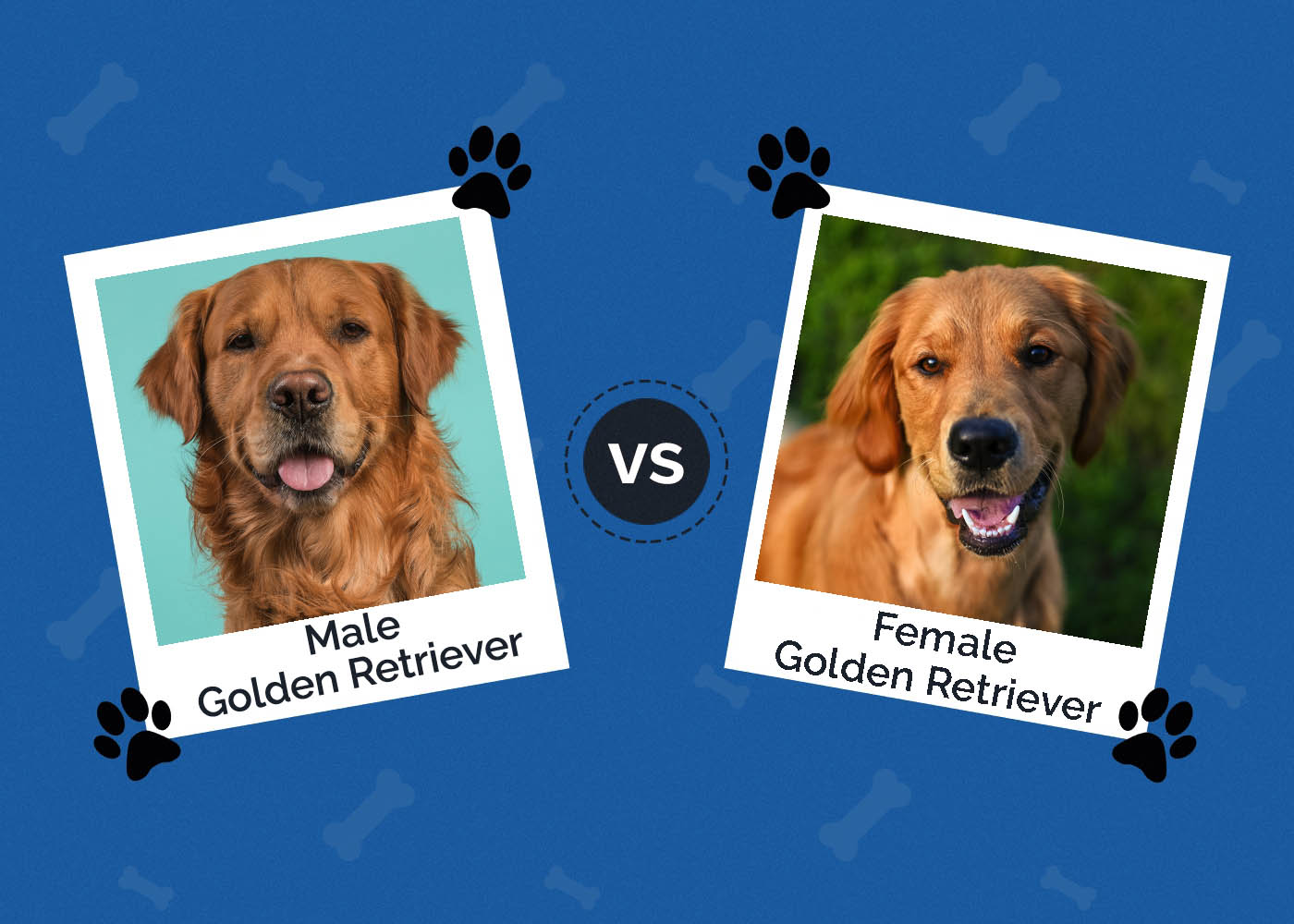
The Golden Retriever is considered a medium-sized dog, but there can be outliers in both directions. Males are typically larger than females once fully grown, but females will reach physical maturity more quickly, so they may be bigger in the early stages of puppydom.
Most Goldens reach their full height by the time they’re in the 9 to 12-month range, but it can take up to 2 years for them to fill out their frames. Don’t be alarmed if your dog seems a bit skinny around their first birthday, as their weight will likely catch up to their height soon enough.
Be careful not to add weight too quickly, however, as this can put undue stress on their developing joints and spinal column. Aim for anywhere from 1.5 to 1.75 pounds per week, especially in the months before their first birthday.
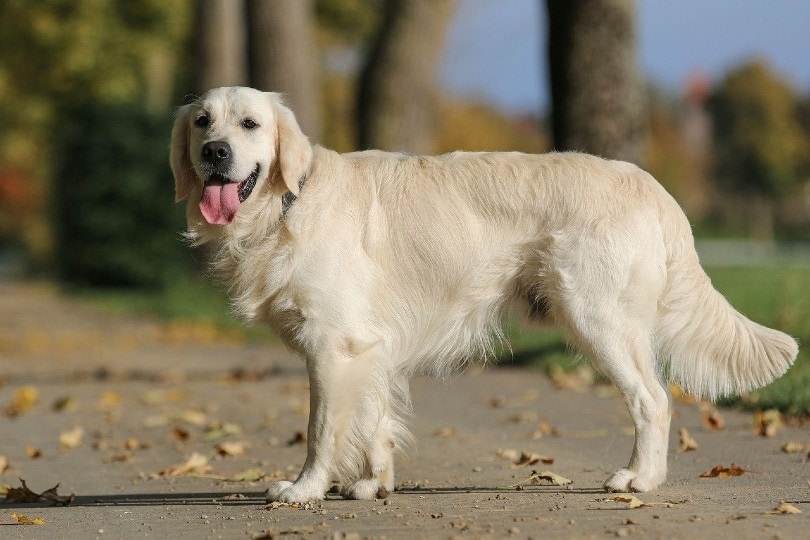
Golden Retriever Growth and Weight Chart
We put together a chart showing the typical height and weight range that most Goldens fall into at various points in their lives.
You’ll notice that these ranges can have extreme variations. Your dog will most likely fall somewhere in the middle of the listed ranges, but if they don’t, it may be something worth talking to your vet about.

Golden Retriever Puppy Growth and Weight Chart (Male)
| Weight Range | Height Range | |
| 8 weeks | 3–17 lbs. | 6”–15” |
| 9 weeks | 5–17 lbs. | 9”–15” |
| 10 weeks | 8–22 lbs. | 10”–15” |
| 11 weeks | 12–25 lbs. | 10”–15” |
| 3 months | 16–43 lbs. | 10”–20” |
| 4 months | 25–44 lbs. | 12”–24” |
| 5 months | 27–57 lbs. | 13.5”–24” |
| 6 months | 29–72 lbs. | 19”–24.5” |
| 7 months | 32–77 lbs. | 19”–26” |
| 8 months | 40–77 lbs. | 21”–26” |
| 9 months | 45–77 lbs. | 22”–26” |
| 10 months | 50–77 lbs. | 22”–26” |
| 11 months | 55–77 lbs. | 22”–26” |
| 1 year | 65–77 lbs. | 22”–26” |
| 2 years | 65–80 lbs. | 22”–26” |

Golden Retriever Puppy Growth and Weight Chart (Female)
| Weight Range | Height Range | |
| 8 weeks | 5–17 lbs. | 6”–15” |
| 9 weeks | 8–17 lbs. | 9”–16” |
| 10 weeks | 19–22 lbs. | 11”–18” |
| 11 weeks | 12–25 lbs. | 11”–18” |
| 3 months | 16–33 lbs. | 11”–19” |
| 4 months | 22–44 lbs. | 12”–22” |
| 5 months | 25–52 lbs. | 13”–24” |
| 6 months | 27–61 lbs. | 15”–24” |
| 7 months | 31–67 lbs. | 16”–25” |
| 8 months | 40–68 lbs. | 18”–25” |
| 9 months | 44–68 lbs. | 20”–25” |
| 10 months | 52–68 lbs. | 20”–25” |
| 11 months | 52–70 lbs. | 20”–25” |
| 1 year | 55–70 lbs. | 20”–26” |
| 2 years | 55–70 lbs. | 20”–26" |
You need to take good care of your pet while they are growing, so you can use our calculator tool to help you know how much to feed your pup and keep their well-being:
Dog Calorie Calculator
Recommended Daily Calories

The exact amount of calories an individual animal needs to maintain a healthy weight is variable and influenced by many factors including genetics, age, breed, and activity level. This tool is meant to be used only as a guideline for healthy individuals and does not substitute veterinary advice

Golden Retriever Growth Stages
While charts help track your dog’s growth, pure numbers may not allow you to visualize what to expect from your dog at any given point in their development.
To that end, we put together a brief look at various stages of your dog’s growth. This will prepare you for what to expect at that phase of development, so there won’t be any surprises—and you’ll know if something is wrong.
8-Week-Old (2 Months) Golden Retriever
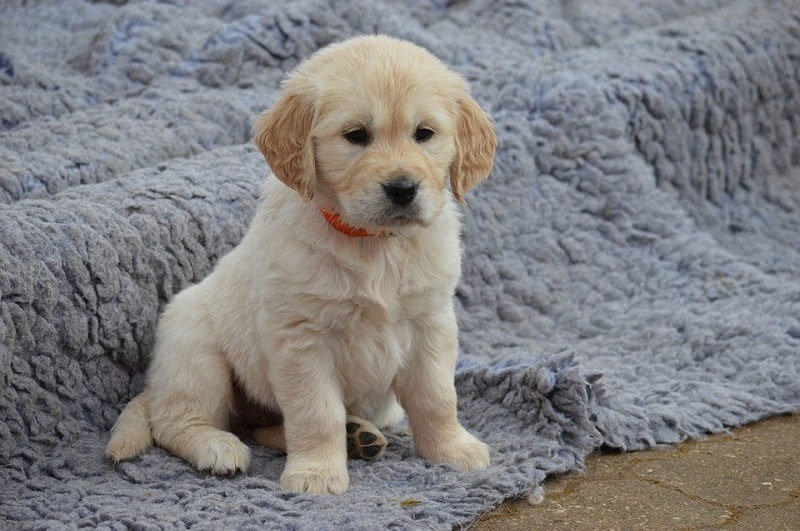
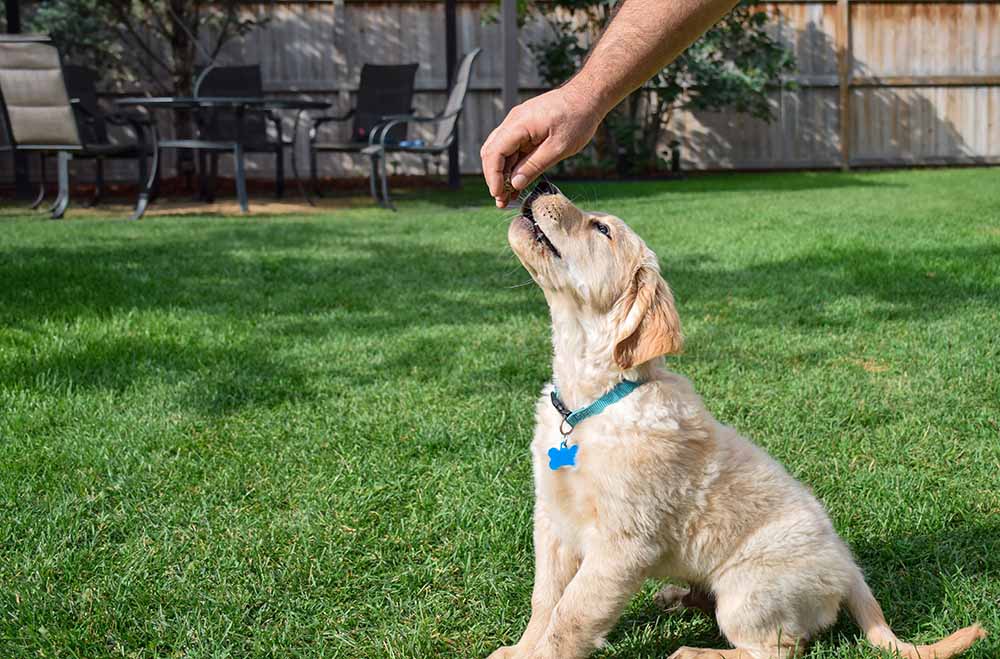
Eight weeks is the recommended age at which a Golden Retriever puppy should be weaned and separated from their mother, so this should be the first week that you bring your new best friend home.
There’s not much to be done at this point beyond letting them be puppies, but you can at least begin the housebreaking process. You can start with other basic commands like “sit” and “stay,” but don’t expect miracles. Their attention spans just aren’t developed enough yet.
At this stage, nipping bad behaviors in the bud is more important than imprinting positive ones. If you let things like nipping or using the bathroom inside become a habit, it will be hard to convince your dog to stop once they’re older.
That doesn’t mean you punish or correct them, though. Instead, just redirect them to positive behavior and reward them accordingly.
By this point, your puppy should have already been given their distemper and parvovirus vaccinations. They should be off mother’s milk and transitioning to puppy kibble as well.
12-Week-Old (3 Months) Golden Retriever
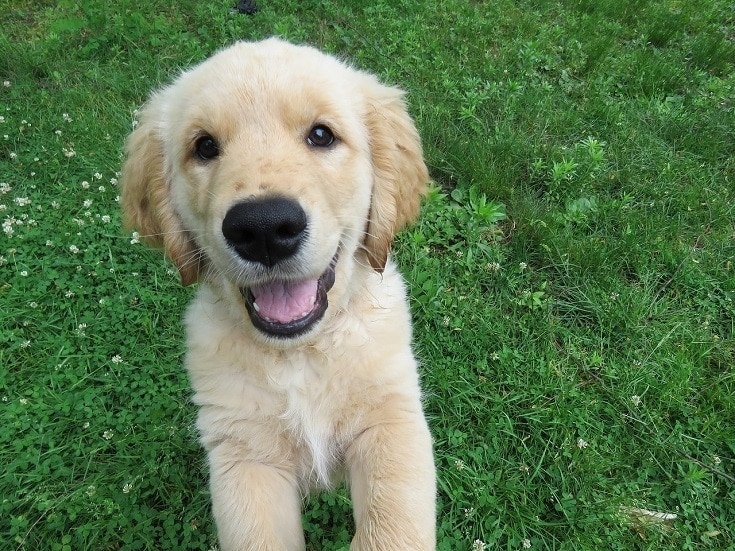
At 3 months old, training should begin in earnest. Your dog’s attention span is still likely to be short, but they’re fully capable of understanding polite behavior.
For example, you shouldn’t expect them to “stay” for longer than a minute or so, but that doesn’t mean they can’t begin to learn the technique. By this point, they should be fully housetrained or close to it.
Your dog will be likely to gnaw and bite on anything they can get their chompers on—including you. Stay calm and redirect their attention to appropriate objects like chew toys.
Your Golden should be fully accustomed to their new kibble at this point, and you should feed them three to four times per day. This is also a good time to introduce grooming practices like brushing, dental hygiene, and nail trimming so they’re well-received when the dog is an adult.
A 3-month-old dog should also get a DHHP booster, which protects them from parvo, distemper, parainfluenza, and adenovirus.
16-Week-Old (4 Months) Golden Retriever

Once your dog reaches 4 months of age, you’ll start to see them transition from a puppy into an adult Golden—physically, at least. They’re still puppies between the ears, and they’re likely to want to play above all else.
You can play with your pup as much as you like, but take care not to put too much stress on their joints. Avoid a bunch of running and jumping, especially on hard surfaces.
Your dog can transition from four meals per day down to three at this point, but the meals should probably be larger. This can cause digestive issues until your dog gets accustomed to it, so be prepared to clean up a few messes.
Training should continue, although your primary focus will likely be convincing your pup to chew on something besides your shoes.
Your dog will need another DHPP booster at this point, as well as a rabies vaccination. Other optional vaccines include Bordetella, Lyme disease, coronavirus, and leptospirosis.
6-Month-Old Golden Retriever

By this point, your dog should have started losing their puppy teeth. This could cause a brief burst of intense biting and chewing, so power through it. Make sure your pup has plenty of chew toys available to them.
Many Goldens look rather odd at this point, as they’ve begun to have the body of an adult dog while retaining the legs and tail of a puppy. They’re also growing a mature coat, which makes them less fuzzy (but no less cuddly).
Their legs won’t necessarily grow at the same rate, so you may have times when their front legs are longer than their hind legs or vice versa. They’ll eventually even out, but until they do, you should be careful not to put too much stress on them. Stairs in particular should be avoided.
Your pup is likely to start asserting itself at this stage and may start to mature sexually if not spayed or neutered. It’s important to be firm with training as if they find that they can walk all over you at this stage, future obedience work will be quite difficult.
There are no vaccinations required at this point. You can also begin to transition your dog down to two meals per day but don’t take them off their puppy kibble just yet.
9-Month-Old Golden Retriever

At 9 months old, your dog is officially a teenager. Congratulations! Everyone knows how much fun it is to raise teenagers, right?
If you haven’t gotten your dog fixed, their hormones will likely be raging out of control. This can lead to undesirable behaviors like aggressiveness, increased tendency to roam, and destructiveness.
It’s important to continue training at this stage but don’t be surprised if your dog is suddenly rebellious and non-responsive. Don’t give up and don’t lose your cool. They’ll grow out of it soon enough, but if you lose their trust at this stage, you may never get it back.
Your Golden should be at their full height or close to it by this stage, but they’ll still be adding weight for several more months. As a result, you may think that your dog is too skinny, but resist the urge to increase their rations. Keep feeding them puppy kibble twice a day according to the manufacturer’s specifications.
Increasing your dog’s exercise levels is a good way to deal with their rebelliousness and rambunctiousness, but continue to avoid excessive running, jumping, or stair usage.
12-Month-Old (1 Year) Golden Retriever
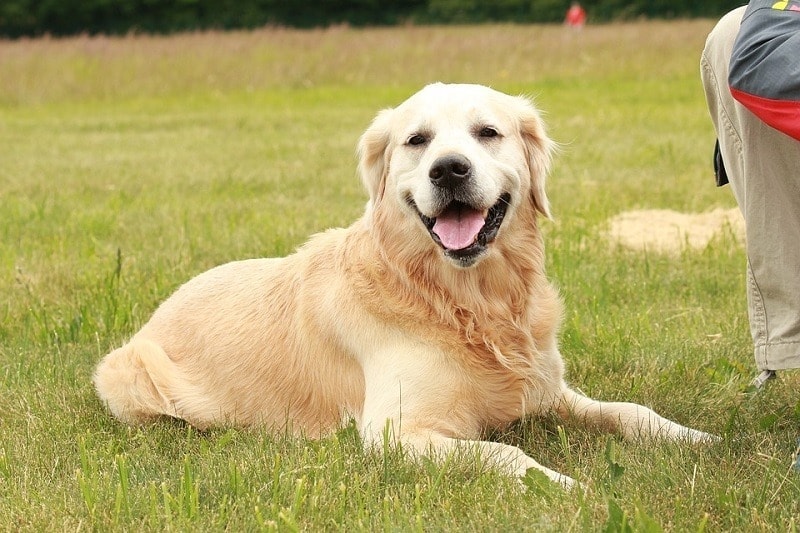
Your dog will stop growing taller at this point, so what you see is what you get. They’ll still look lean and lanky, though, as they’re not done putting on weight.
While most breeds have a puppy coat that they eventually grow out of, Goldens do not. Instead, their puppy coat becomes their undercoat, so you may notice your dog becoming increasingly fuzzy. You’ll likely need to groom them more often too, as their shedding can get out of control.
Your dog will look like an adult at this point, but they’ll still behave like a puppy. This will continue for several years, and many Goldens never fully grow out of it (it’s part of their charm).
The teenage rebelliousness should be wearing off by this point, and your dog is ready to begin training in earnest. A 1-year-old Golden is mature and intelligent enough to handle anything that you want to teach them, so don’t let them off the hook.
They are due for another DHPP and rabies booster at this point. You should still be feeding them twice daily, and they should stay on puppy kibble for at least another 6 months.

When Do Golden Retrievers Stop Growing?
Goldens reach their full height between 9 and 12 months old. Females tend to get there faster, but males will be taller in the end. They’ll keep on adding weight until they’re at least 18 months old, so don’t be alarmed if your dog looks a little thin.
Once they start to fill out, it’s time to switch them from calorie-dense puppy kibble to high-protein adult food. You may also need to cut back on the amount that you feed them.
Many Goldens don’t mature mentally until they’re 2 to 3 years old. It depends on the individual dog, but females generally reach maturity first.
It’s important to understand, though, that many Golden Retrievers never fully grow out of their puppy-like behavior. They’ll still want to play and roughhouse well into their senior years. Even those dogs can be trained to behave politely, though, so don’t let their youthfulness serve as an excuse for misbehavior.
How Does Neutering/Spaying Affect My Dog’s Growth?
Spaying or neutering your dog has its pros and cons. The pros are fairly obvious: less marking, reduced misbehavior, and zero chance of getting an unexpected litter of puppies.
Spaying and neutering can also protect against certain cancers. Dogs can’t get testicular cancer or uterine cysts if those parts have been removed, after all.
The cons aren’t as widely publicized, however. There’s some evidence that fixing your dog too early can increase the risk of hip dysplasia and other skeletal issues. You may want to wait until your dog is at least 12 months old before getting them fixed.
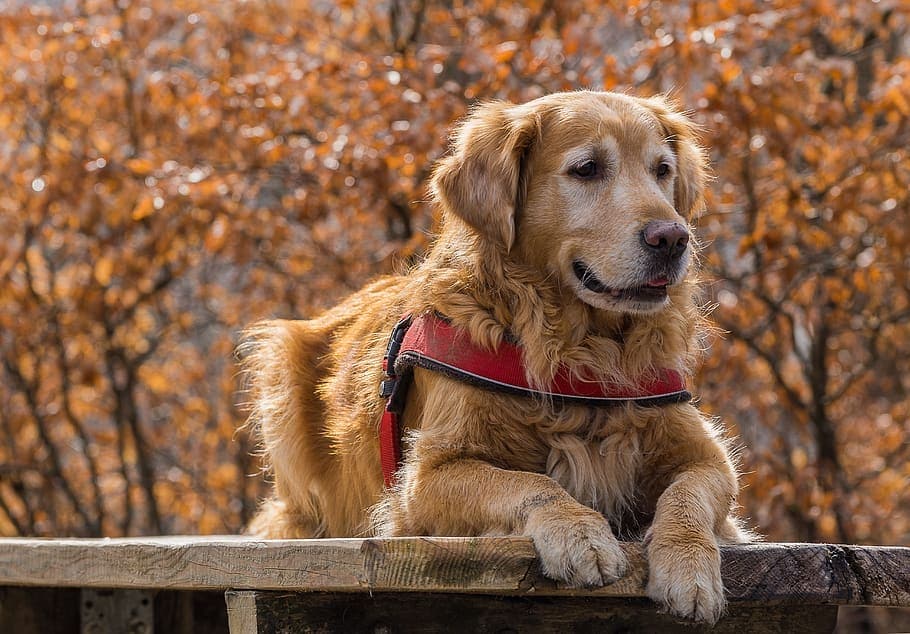
Spaying/neutering often delays the closure of your dog’s growth plates, which can result in them growing slightly taller than they otherwise would. This also leaves the window open longer in which they can suffer skeletal damage, though, so be careful about how active you allow them to be.
Dangers of Growing Too Quickly or Stunted Growth
All dogs grow at different rates, and it’s generally nothing to be too concerned about. However, stunted growth and growing too quickly can cause serious health problems, so you should check with your vet to make sure your dog is growing on schedule.
Stunted growth is usually caused by malnourishment or a medical problem. You should have your pup tested for parasites like hookworm or ringworm, and consider switching them to a higher-quality, calorie-dense food. If left untreated, malnourishment can lead to weak bones, muscles, and immune systems.
As you might expect, growing too quickly is often caused by feeding your dog too much. This can lead to obesity, or it can put excess strain on your dog’s joints, leading to issues like hip dysplasia. Switch to a lower calorie food or reduce your pup’s portion sizes.
Growth Distinctions of Different Golden Retrievers (British, Canadian & American)
There are three basic types of Golden Retriever: British, Canadian, and American.
American and British Goldens are similar. However, American Goldens tend to be less stocky and muscular, instead having a leaner appearance. They may weigh a bit less as well.
Canadian Goldens look a bit different from their cousins, but that’s largely because their coats are shorter and less feathery. They tend to be taller as well, often standing an inch or two higher than their counterparts.
Conclusion
Golden Retrievers make excellent pets, and we understand how hard it is to resist the temptation to bring a puppy home. If you do, though, you should understand what to expect from your new dog.
It’s important to chart their growth over the first few years of their life. Steady growth is what you want to see, without too many peaks or valleys. This sets your dog up for a long, healthy lifespan.
That being said, don’t freak out too much if your dog is an outlier. Every dog develops at their own pace, so as long as you feed your pup an appropriate amount of high-quality puppy kibble and get them vaccinated regularly, you should be fine.
Related Reads:
Featured Image Credit: Olena Brodetska, Shutterstock
Get Hepper In Your Inbox


Pet care tips from our vets and experts, straight to your inbox.
You may opt-out at any time. View our Privacy Policy for more information.

Nicole is a lover of animals of all sizes but is especially fascinated with the feline variety. She’s the proud mom of Baby, a Burmese, and works every day so he can relax in the sunshine or by the fire. She’s always had a cat in her home and has spent countless days with others, observing behaviors and softening up even the grouchiest of the lot. Nicole wants to share her kitty expertise with you so you and your cat can live happy, healthy, and care-free.
Join the conversation
Ask a question, share your story, or send private feedback.