Hepper is reader-supported. When you buy via links on our site, we may earn an affiliate commission at no cost to you. Learn more.
Savannah Cat vs Bengal Cat: Visual Differences & Overview (With Pictures)
In this article
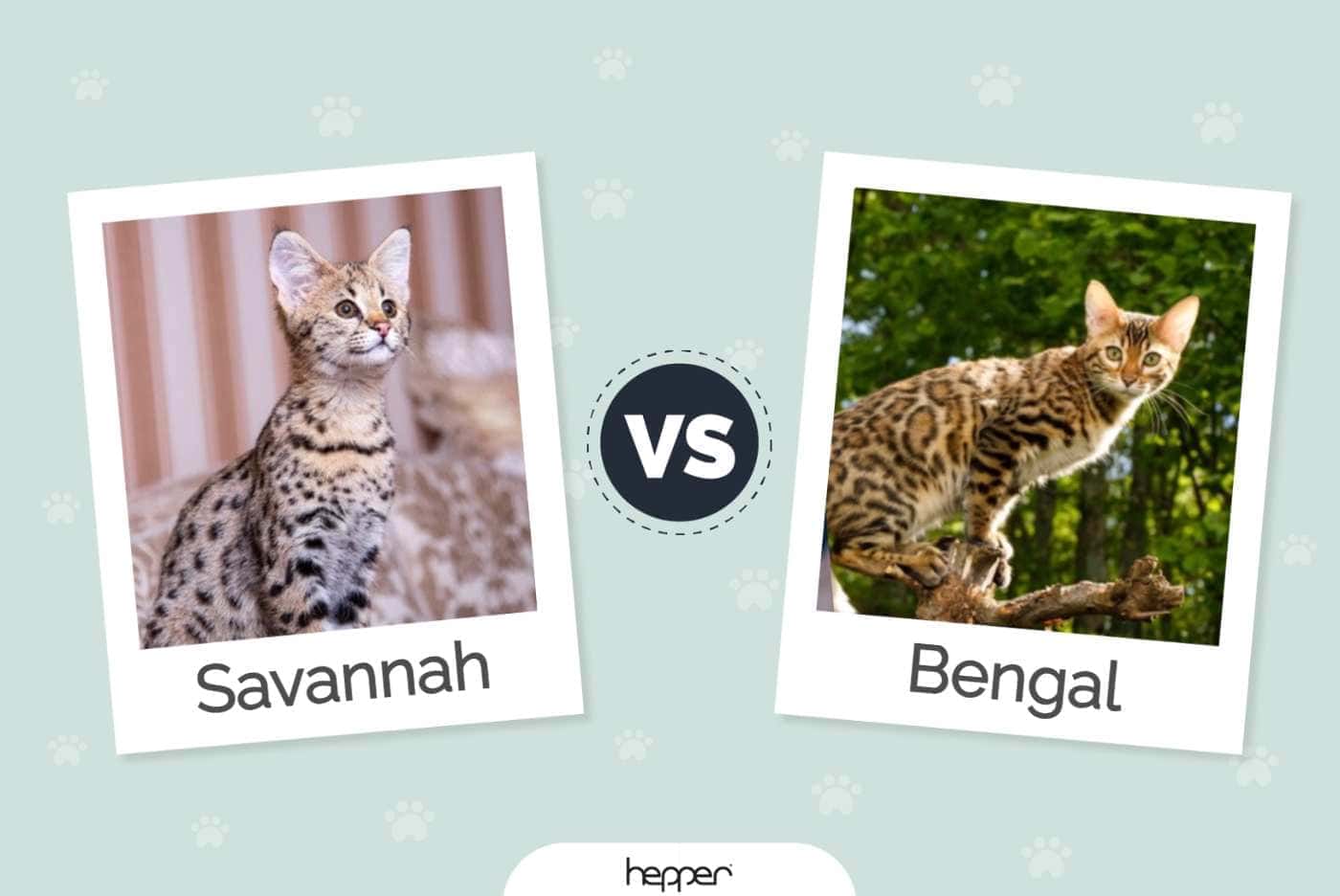
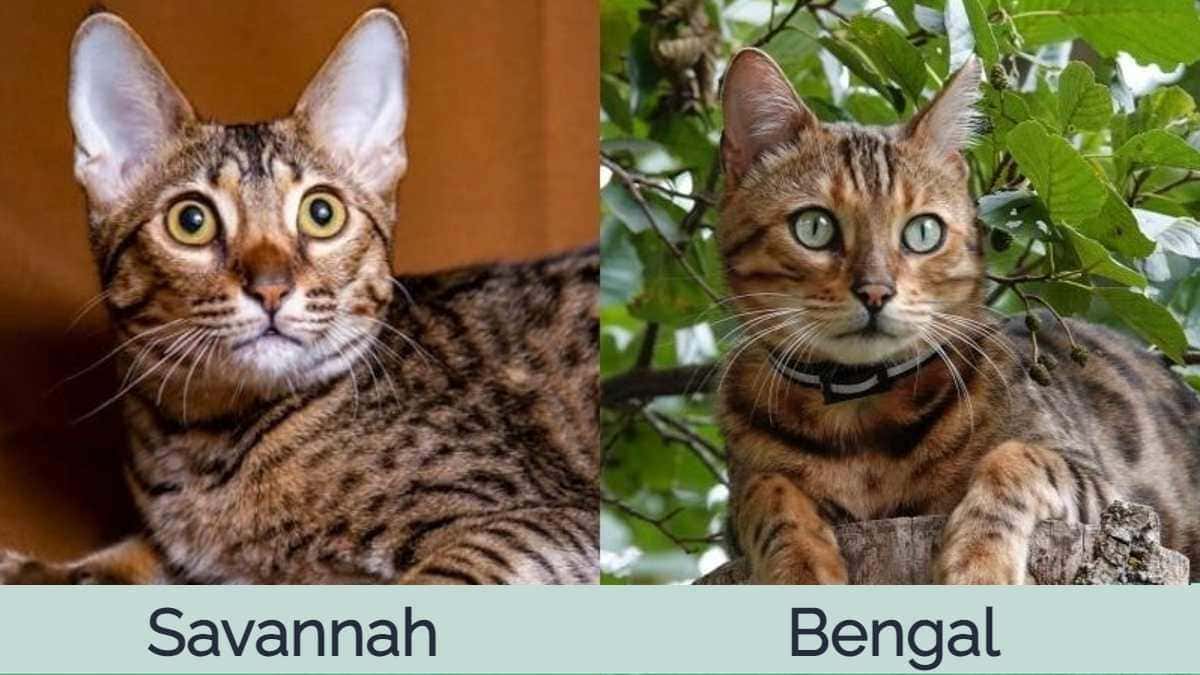
Bengals and Savannah cats have a few similarities, namely that both of their origins involve the crossing of a domestic cat with a wild cat. This means both breeds have unique personalities and appearances; they are also sought-after due to their exotic patterns and colors. While both cats have a somewhat wild appearance, their origins are from two distinct wildcat species, so the two are fairly different in personality, temperament, and care requirements. Savannah cats and Bengal cats are both gorgeous felines, and their respective popularity has been gaining rapidly in recent years. If you’re looking at bringing home one of these beautiful cats but are unsure which to choose, you’ve come to the right place! Read on to learn about their similarities and differences so you can determine which one is right for you.

Visual Differences
At a Glance
Savannah Cat Overview
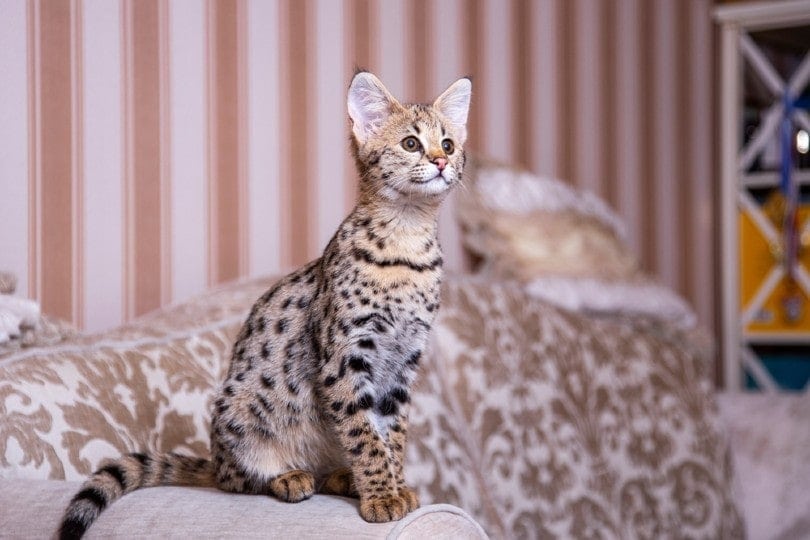
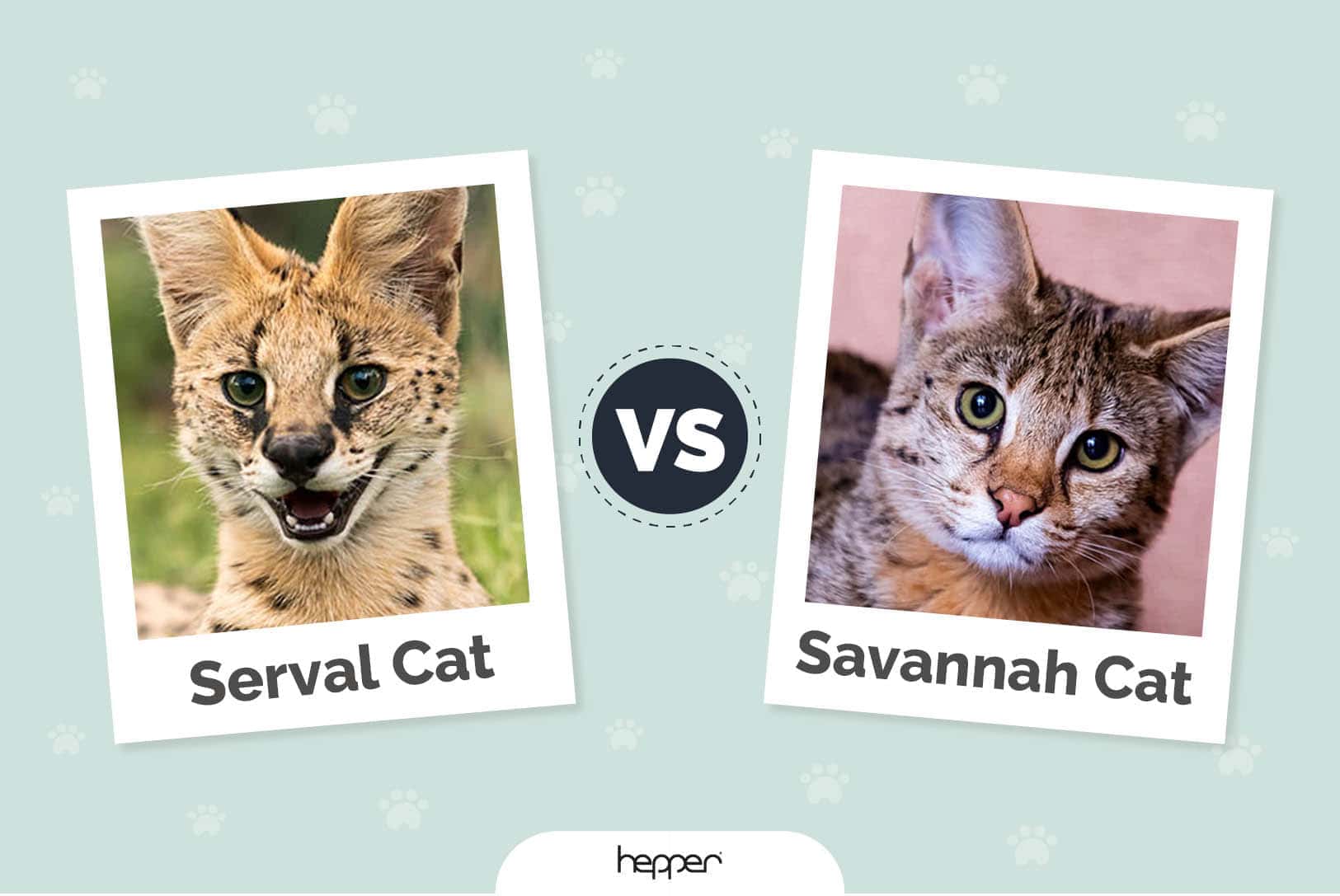
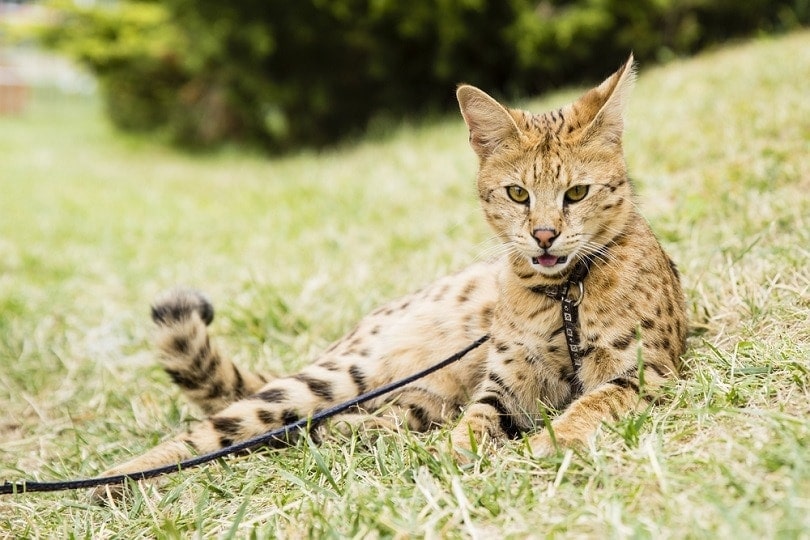
The Savannah cat is a mix between a domestic cat and an African serval. They are one of the largest breeds of domestic cats and were officially recognized by The International Cat Association (TICA) in 2001. The first Savannah cat was bred by Suzi Woods in 1986 when she crossed a male serval with a female Siamese cat. While the breed has recently become popular, they are still somewhat rare and difficult cats to find in the United States.
Characteristics & Appearance
Savannahs are one of the largest of all domestic cats, and their exceptionally long tail makes them appear even larger than they are. They have a distinctly wild appearance due to their serval genetics, but their appearance and size can vary depending on the generation. F1 and F2 Savannah males are typically the largest and most wild-looking due to the strong influence of serval genetics, but both their size and exotic appearance diminish in further generations.
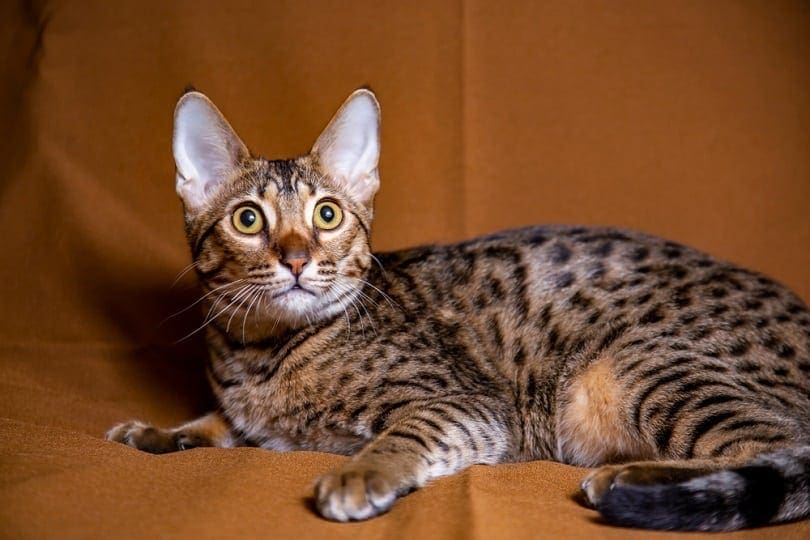
The coat of a Savannah cat should be spotted—like a serval’s—and the TICA standards dictate a spotted coat of brown tabby, silver spotted tabby, black, and black smoke as standard colors. With the mixed genetics of domestic cats, though, Savannahs can also appear in marbled, pointed, or other diluted colorations, albeit unofficially.
Temperament
Despite their exotic appearance and wild origins, Savannah cats are, in general, affectionate and friendly cats that love to be around their owners. They are known for their “dog-like” personality, often following their owners around the home, and are typically easy to train. That said, just like their appearance, their personalities can also vary widely depending on their genetics, so socialization and training are just as important with Savannahs as with any other cat.
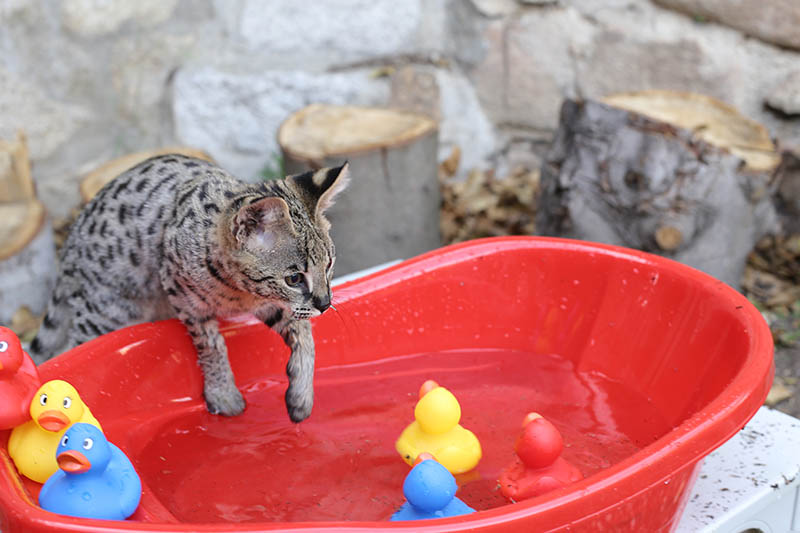
These cats are highly athletic and exceedingly curious. They love to climb and explore and, thus, ideally, need access to the outdoors to stay happy and healthy. Uniquely among cats, Savannahs are known to enjoy water and are often said to enjoy an occasional swim! Of course, they are large, athletic animals, so they are difficult to care for, certainly more so than other domestic breeds.
Bengal Cat Overview
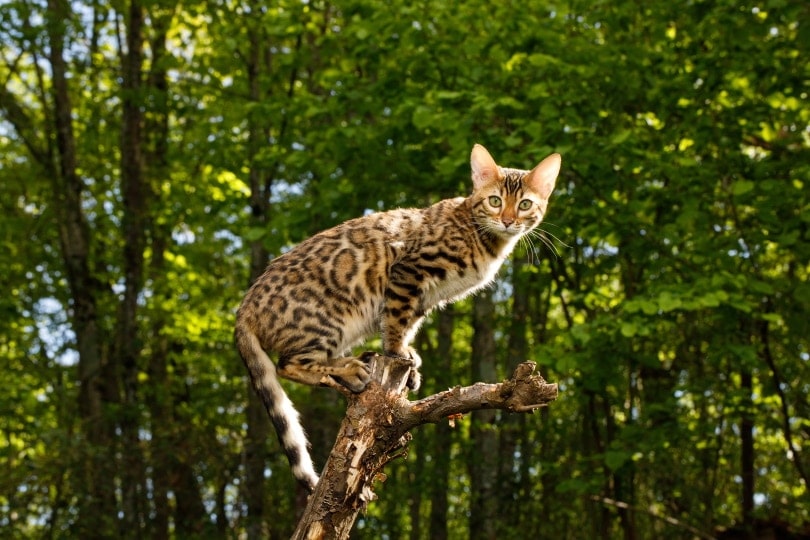
Bengal cats are a mix between a domestic cat, most commonly the Egyptian Mau, and an Asian wildcat. The breed was first created in 1970 when a breeder named Jean Mill from California made the first deliberate cross of an Asian wildcat using a domestic black tomcat. Breeding of these cats only began in earnest several years later, and the Bengal was officially accepted by TICA in 1983.
Characteristics & Appearance
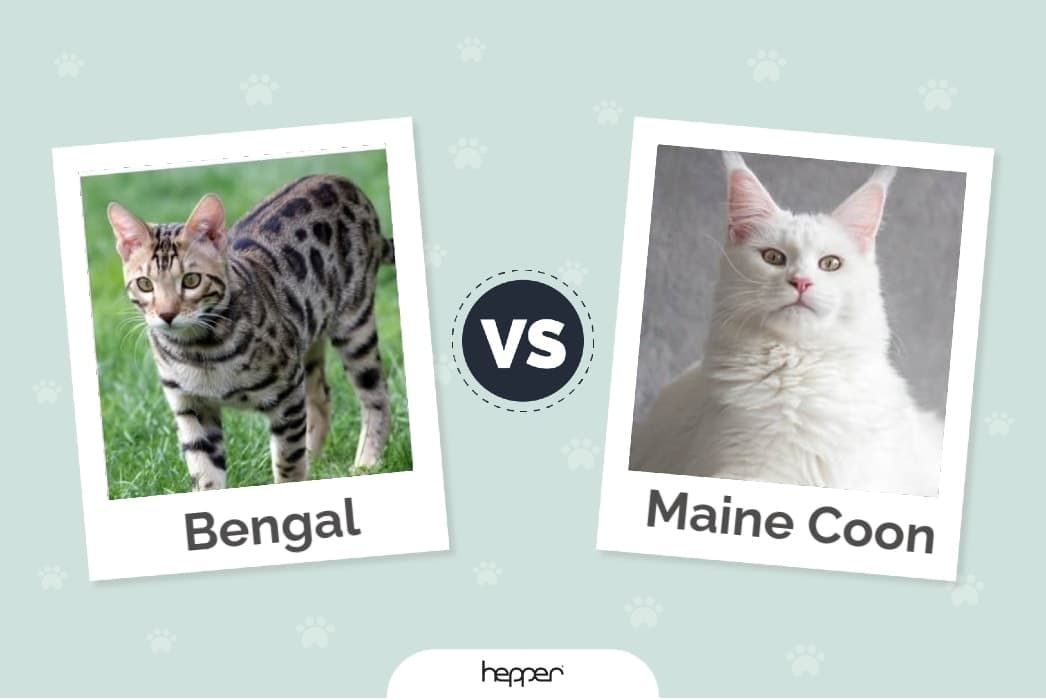
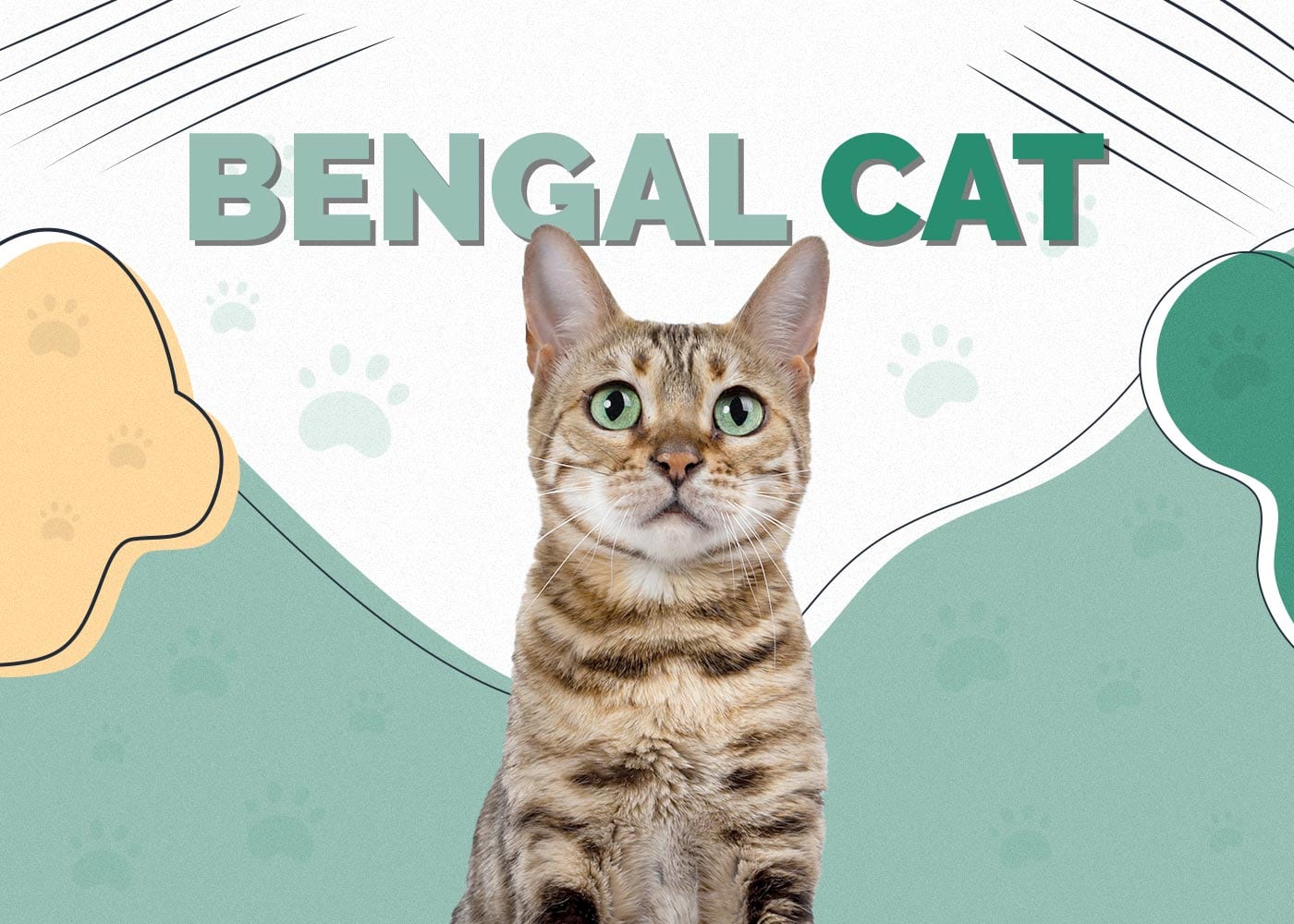
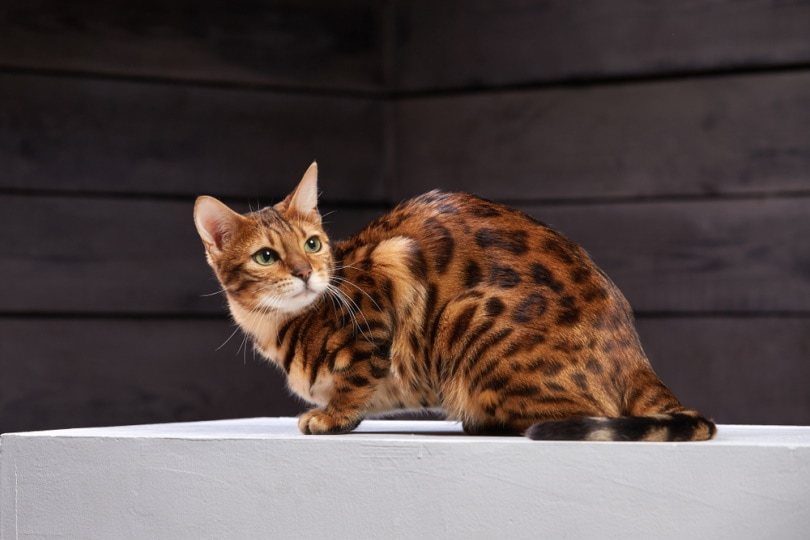
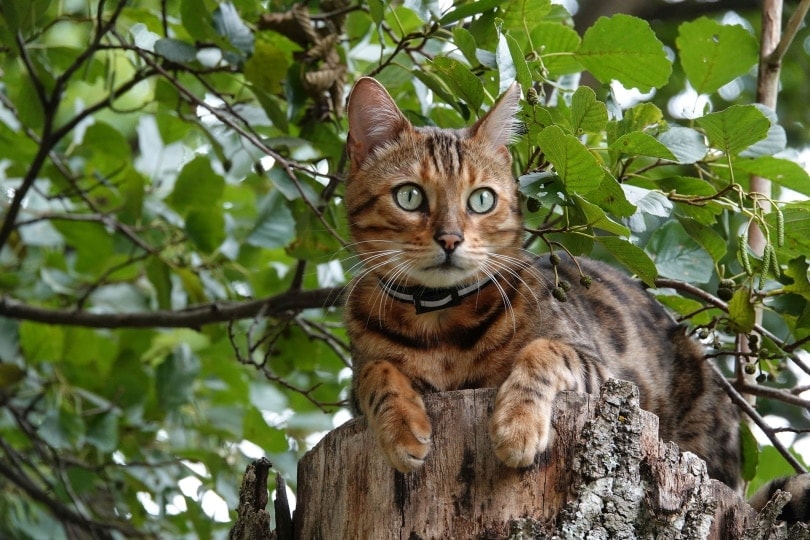
Bengals come in a variety of coat colors, including brown spotted, seal lynx point, sepia, silver, and mink, but all have a characteristic exotic appearance. They also come with marbled coats and are the only domestic cats that have rosette markings. They are lithe, athletic cats, but since Asian wildcats are smaller than servals, Bengals are typically much smaller than Savannah cats. That said, they are muscular cats that weigh a fair bit more than average house cats. They have wide-set, rounded ears and uniquely, have longer back legs than front legs, giving them a powerful stride.
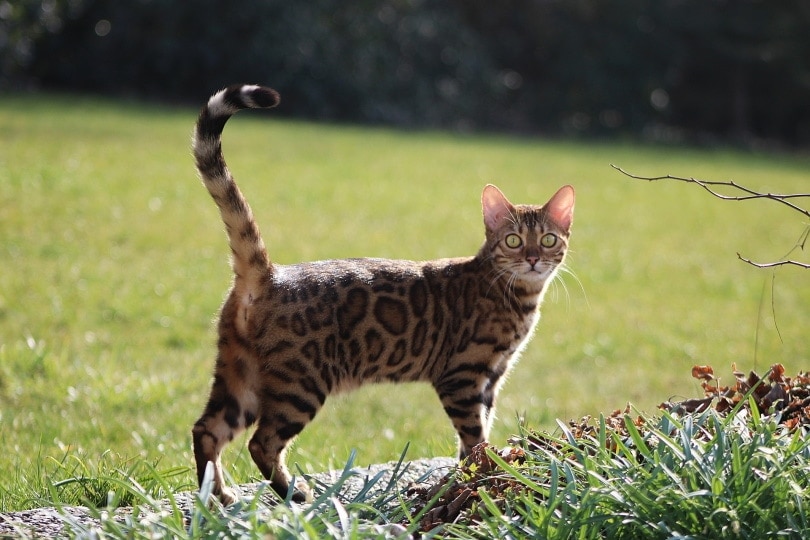
Temperament
Like Savannah cats, Bengals are extremely active and athletic animals and are expert climbers. They are loyal and loving cats, though, and love to be close to their owners as much as possible and become highly attached to their human companions. They do well around other cats and dogs, but like Savannahs, they need early socialization. They are exceedingly curious animals that love to explore, climb, and even enjoy an occasional swim, so they love to spend time outdoors. These intelligent cats need a lot of mental and physical stimulation, though not as much as Savannah cats.
What Are the Differences Between Bengal Cats and Savannah Cats?
While both of these cats have wild origins, there are several distinct differences between the two. First, Savannah cats are far larger than Bengals and thus need more space to play and explore. Second, they are more energetic and active in general, so they require a lot more interaction, socialization, and training, and they are more attention-demanding overall. Savannah cats are often described as “dog-like” in personality and require a lot of interaction to stay happy.
Bengals are also social animals that thrive on human interaction, though they are not as attention-demanding as Savannah cats. Bengals are a lot more vocal and talkative than Savannah cats, a trait that can be a bit overwhelming for some owners. Since they are not much bigger than most domestic cats, Bengals can be kept as indoor cats, don’t need as much exercise or mental stimulation, and are easier to care for overall.

Which Breed Is Right for You?
Both the Savannah cat and Bengal cat are truly beautiful and unique pets, and either one is a great addition to your home. If you’re looking for more of a dog-like cat that follows you around and if you have a lot of room in and around your home, the Savannah cat is a great choice. They do require a massive time investment, though, and live longer than the Bengals, so they are a bigger commitment for the most part.
If you like the exotic appearance of the Savannah cat but don’t have the time or the space to care for it, the Bengal is a wonderful choice. They are not much bigger than most domestic cats, don’t require the attention and space of a Savannah cat, and are much closer to a typical domestic cat in temperament, energy, and size—but with a uniquely gorgeous coat, of course!
Related Reads:
Featured Image Credit: Left: Savannah Cat: Kolomenskaya Kseniya, Shutterstock | Right: Bengal Cat: Seregraff, Shutterstock
Get Hepper In Your Inbox


Pet care tips from our vets and experts, straight to your inbox.
You may opt-out at any time. View our Privacy Policy for more information.

Nicole is a lover of animals of all sizes but is especially fascinated with the feline variety. She’s the proud mom of Baby, a Burmese, and works every day so he can relax in the sunshine or by the fire. She’s always had a cat in her home and has spent countless days with others, observing behaviors and softening up even the grouchiest of the lot. Nicole wants to share her kitty expertise with you so you and your cat can live happy, healthy, and care-free.
Join the conversation
Ask a question, share your story, or send private feedback.