




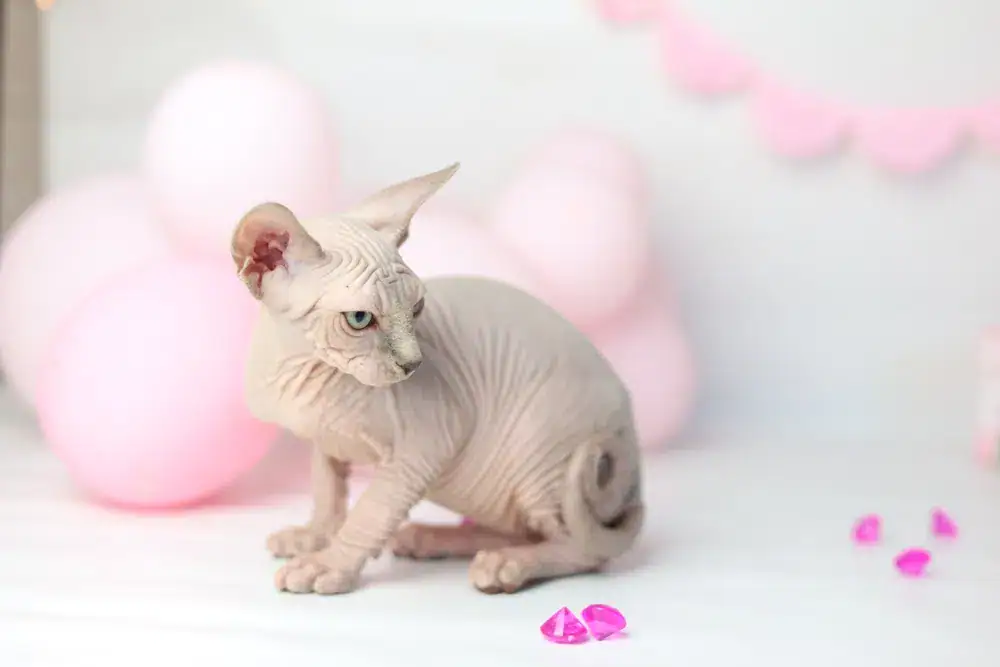
If you’re thinking that a Skinderlop sounds like a mythical creature, you’re not too far off. While the Skinderlop does exist, they’re quite rare and not actually a recognized breed. The characteristic ears of the Scottish Fold combined with the almost hairless Sphynx give rise to a rather peculiar-looking feline. But beneath this adorable gremlinesque exterior lies some worrying facts, so if you’ve been bewitched by the cute and quirky Skinderlop, read on to find out why this is one creature that is best left in fairytales.
History of the Skinderlop
Virtually all modern cat breeds are the result of mixing one or two previously established breeds, either with each other or with a non-pedigree cat that has a desirable physical trait, like the Persian/Ragdoll/Himalayan hybrid known as the Ragamuffin, or the Devon Rex, whose unique features are thanks to the mixing of the Cornish Rex with a non-pedigree kitty who had a natural mutation. In some cases, the genetic mutations that give rise to features that become trademarks of different breeds are fairly harmless, but in other cases, those mutations also result in some significant physiological problems, which we will discuss in a bit more detail further on.
The Skinderlop was created in 2012 with the mating of the Sphynx from Canada with the Scottish Fold, both of which are relatively new breeds themselves. This is not a formally recognized breed, and despite an initial surge in popularity, pressure from animal welfare groups, veterinary professionals, and ethical breeders may stop this hybrid from taking hold.
The Skinderlop Ethical Dilemma
As our understanding of hereditary disease increases, we can no longer turn a blind eye to the serious health implications of selectively breeding animals for aesthetics. In the case of the Skinderlop, BOTH parent breeds are based on genetic mutations that can, and do, negatively impact their health and quality of life.

The Sphynx
Despite the Egyptian name, the Sphynx Cat was created in Canada. Their trademark nakedness originates from a spontaneous genetic mutation that appeared in a domestic shorthair. It is a recessive trait, which means that a kitten must inherit two copies of the Sphynx gene to be hairless. These cats were then mixed with the Devon Rex, whose short and curly coat is also a recessive trait, giving us the bat-eared hairless cat we know today. Genetic testing and selective breeding allowed breeders to identify individuals that carried the appropriate genes until a population of purely hairless cats was created.
Because the Sphynx mutation affects both the skin and hair growth, these cats often suffer from skin sensitivity, sun damage, oily skin, dry skin, and difficulty with thermoregulation, and require special care to ensure they stay healthy and comfortable.
The Scottish Fold
The genetic mutation that causes the cartilage of the Scottish Fold’s ears to fold flat also affects cartilage development throughout the body. Osteochondrodysplasia is a disease that affects the growth and development of cartilage in the ears, bones, and joints. Some cats have relatively mild forms of this mutation, but many suffer from debilitating joint deformity, arthritis, and pain.
Animal welfare groups and veterinarians discourage breeding these cats on ethical grounds. In some countries, the breeding of both the Sphynx and Scottish Fold has been banned.
The Skinderlop
Considering the welfare issues surrounding both the Sphynx and Scottish Fold, you might wonder why anyone would go on to create the Skinderlop. The truth is that some people simply don’t understand the implications of selectively breeding recessive genes and mutations, which is why it is important to share this information to prevent future suffering.
Whilst there will be individuals who appear healthy and happy, the genetics that make the Skinderlop what it is mean that these cats are unavoidably born with health conditions that can cause pain, suffering, and reduced lifespans.
Things to Know About Owning a Skinderlop
Now we’re aware of the many health problems surrounding these funny little cats, much of their care needs to be focused on minimizing risks and providing them with the right diet, exercise, and enrichment to make their lives as enjoyable as possible.
Food & Diet Requirements 🐡
A premium diet is always the best place to start, and for the Skinderlop, that means choosing a food that contains high levels of omega-3 fatty acids to support their skin and joints. Scottish Folds and their relatives should always be fed joint supplements from a young age to help support their cartilage and joints.
Maintaining a lean bodyweight is essential for reducing the wear-and-tear on joints. Additionally, the skin of the Skinderlop makes them susceptible to skinfold dermatitis, and obesity can really exacerbate this problem, so be sure to feed them enough to maintain a healthy body condition, and no more.
Exercise 🐈
Of course, exercise is important, but for the Skinderlop, we need to be cautious. Some cats may seem quite free from joint problems, while others have quite severe joint pain and mobility issues. In both cases, it is important to provide steps, levels, and climbing trees that don’t have big drops. This will help keep them entertained and active while reducing the risk of damage from jumping up and down. These are intelligent cats, so stock up on toys and food puzzles to enrich them mentally and keep them from becoming bored.
Grooming ✂️
You might be thinking that no hair = no grooming, but this is far from the truth. The skin of the Skinderlop is often sensitive, prone to becoming oily, dry, or irritated. It’s important to keep their skin clean and protected, without stripping them of natural oils.
A diet rich in omega-3s will help their skin from within, but your Skinderlop will also benefit from regular cleaning with a damp cloth or pet wipe. A proper bath now and then may also be needed, but it’s important not to overdo it, as this could cause skin irritation.
Pay attention to skin folds and between the toes, and keep their claws short to avoid accidental damage when they are grooming or scratching themselves.
The folded ears of the Skinderlop are another grooming challenge. Wax and discharge that would ordinarily be wiped away when your cat grooms themselves get trapped in the folds of the ears, and this can lead to inflammation and infection. By introducing gentle ear cleaning to your kitten, they will hopefully accept it as part of a weekly routine.
Without insulation of fur, a Skinderlop is really going to feel the cold, so it’s important to provide them with plenty of soft bedding, and many hairless cats enjoy wearing cat sweaters or coats to keep them cozy and clean.

Health Conditions 🏥
In addition to the genetic issues discussed earlier, there are several other health problems to be aware of if you have a Skinderlop cat.
- Skin irritation and infections
- Sunburn
- Ear infections
- Cold sensitivity
- Osteochondrodysplasia
- Arthritis
- Hypertrophic cardiomyopathy
- Hereditary myopathy
Preventive care is always the best way forward, and early detection of illness will improve the chances of a successful outcome. Annual health checks are a good idea for all cats, but for the Skinderlop, they are essential.

3 Little-Known Facts About the Skinderlop
1. The Skinderlop Is Not Hypoallergenic
Some think that being virtually hairless means being hypoallergenic, but this isn’t the case. All cats, even those that are considered to produce lower allergen levels, can set off allergies, because it’s not the fur itself that is the culprit, but a substance known as dander, which is the accumulation of dead skin cells, saliva, urine, and microscopic fecal matter. Therefore, even ‘hairless’ cats produce dander and can cause allergic reactions in susceptible people, and cats with inflamed or irritated skin will usually produce more.
2. The Skinderlop Should Be an Indoor Kitty
Being hairless, the Skinderlop is highly susceptible to changes in temperature, wind, humidity, and UV damage. They do much better if they are kept in relatively stable conditions away from strong sunlight and cold draughts.
3. The Skinderlop Looks Like The Ukrainian Levkoy
The Skinderlop looks very similar to the Ukrainian Levkoy, a breed recognized in Russia and Ukraine, but not yet widely accepted by cat fancier groups in the US. It is the cross between the Scottish Fold and the Donskoy (aka Russian Hairless or Don Sphynx), which, despite looking almost identical, is genetically distinct from the Sphynx. The near-hairlessness of the Donskoy comes from a dominant gene mutation rather than a recessive one.
Final Thoughts
The cross between the Scottish Fold and the Sphynx is known as a Skinderlop. Although these cats may seem cute and quirky, they are inherently plagued by health problems, and many argue that breeding them is unethical.
If you’re still thinking about bringing home a Skinderlop, we encourage you to do your research and perhaps consider some alternative breeds whose physical features aren’t linked with painful health conditions.
Image Credit: Linas T, Shutterstock
 History of the Skinderlop