Hepper is reader-supported. When you buy via links on our site, we may earn an affiliate commission at no cost to you. Learn more.
F1 Savannah Cat: Info, Pictures, Temperament & More

In this article
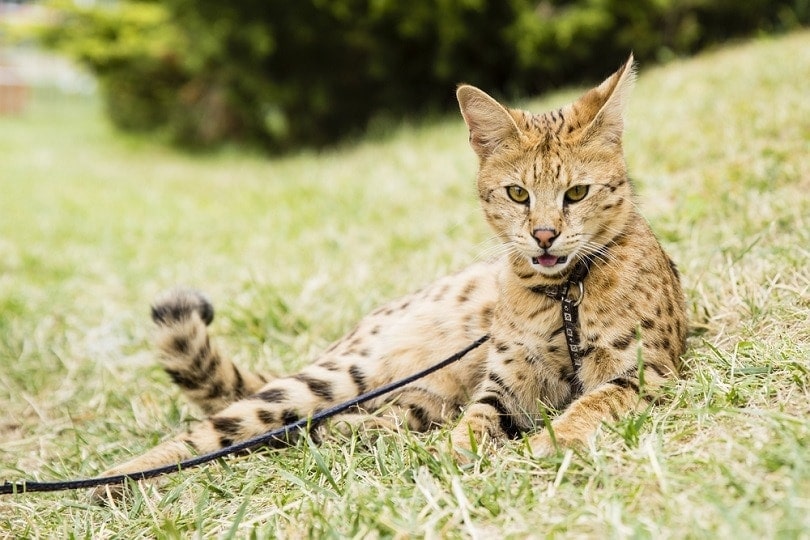
The F1 Savannah Cat is an exotic-looking cat that’s a mix between domestic cats and African Servals. They first appeared in the late 1980s and have quickly gained popularity in the cat community.
There are different generations of Savannah Cats that are categorized from F1 to F5 Savannah Cats. F1 Savannah Cats have the highest percentage of Serval in their ancestry, with an African Serval parent and a domestic cat parent.
Each generation of Savannah Cats varies slightly from the other, and it’s important to understand the special characteristics of the F1 Savannah Cats to know how to care for them properly.

The Earliest Records of F1 Savannah Cats in History
Savannah Cats are a relatively new cat breed. The first F1 Savannah Cat appeared in 1986 and had an African Serval parent and a Siamese Cat parent. After the first Savannah Cat was born, breeder Patrick Kelly and Joyce Sroufe decided to develop a new breed. They started a Savannah Cat breeding program and developed the original Breed Standards for The International Cat Association (TICA).
More Savannah Cats started to appear in the 1990s. While you can find more Savannah Cat breeders than in the past, they’re still relatively rare as it’s particularly challenging to produce a litter of Savannah Cats.
How F1 Savannah Cats Gained Popularity
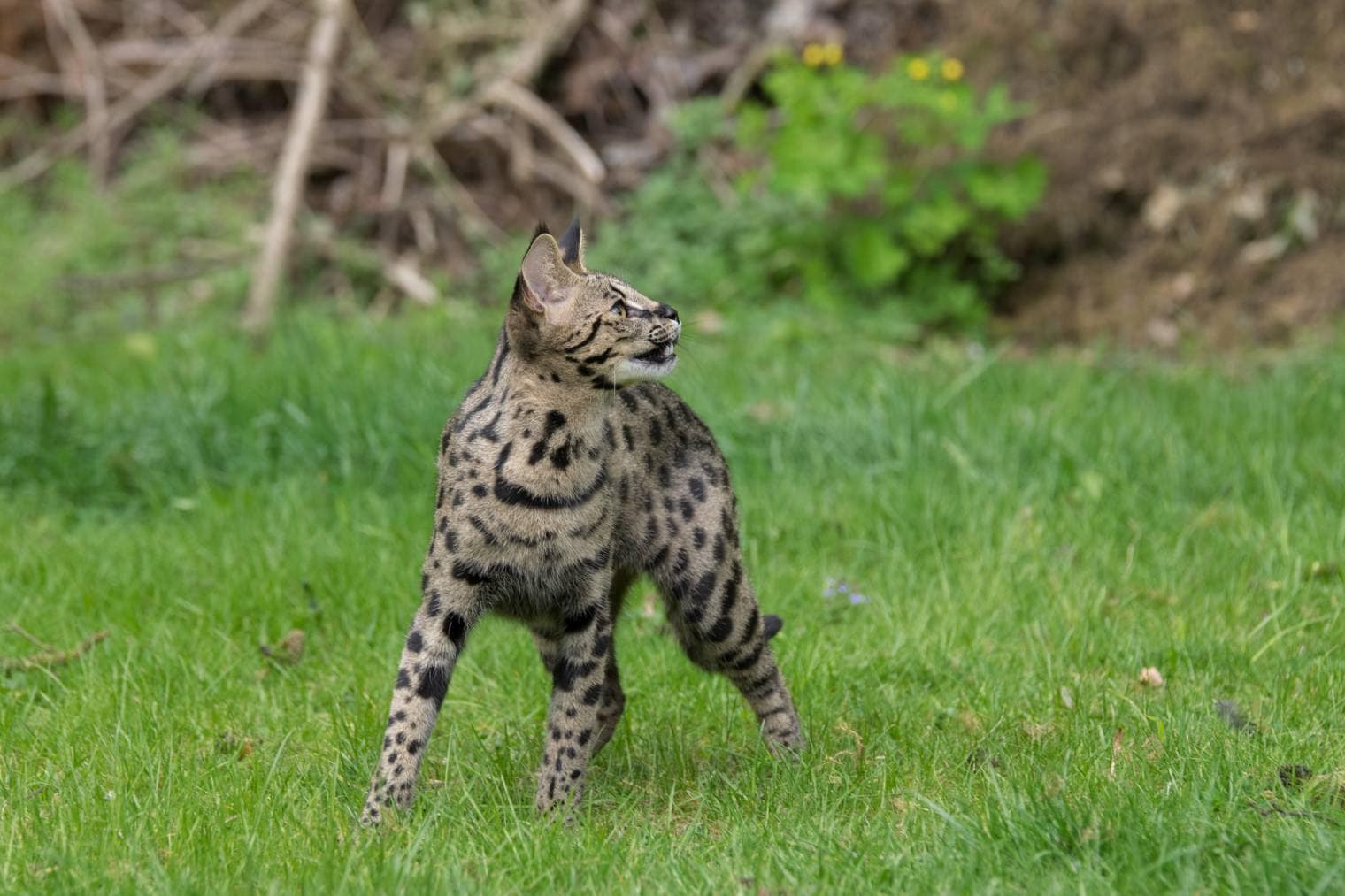
F1 Savannah Cats gained popularity due to their exotic appearance. They’re cats that most closely resemble African Servals and are also very tall and long compared to other domestic cat breeds.
F1 Savannah Cats are also rare because it’s difficult to consistently breed litters with kittens that have the hallmark characteristics of Savannah Cats. They tend to be the most expensive out of all the generations of Savannah Cats.
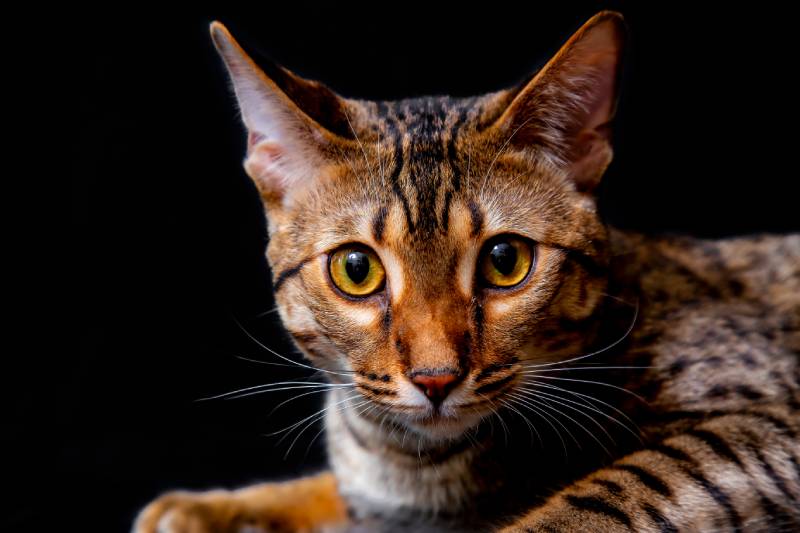
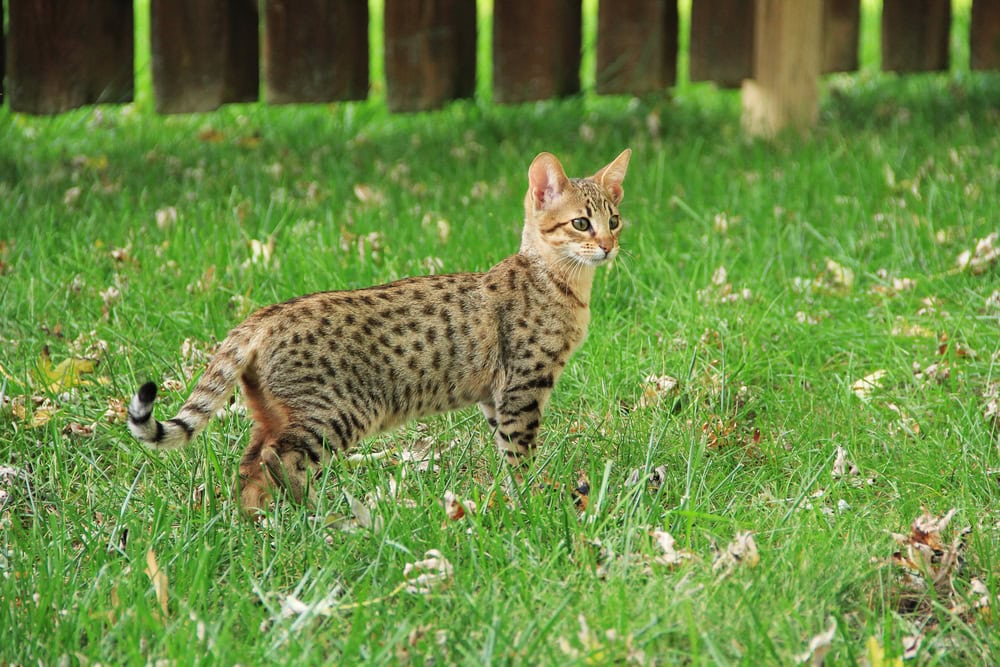
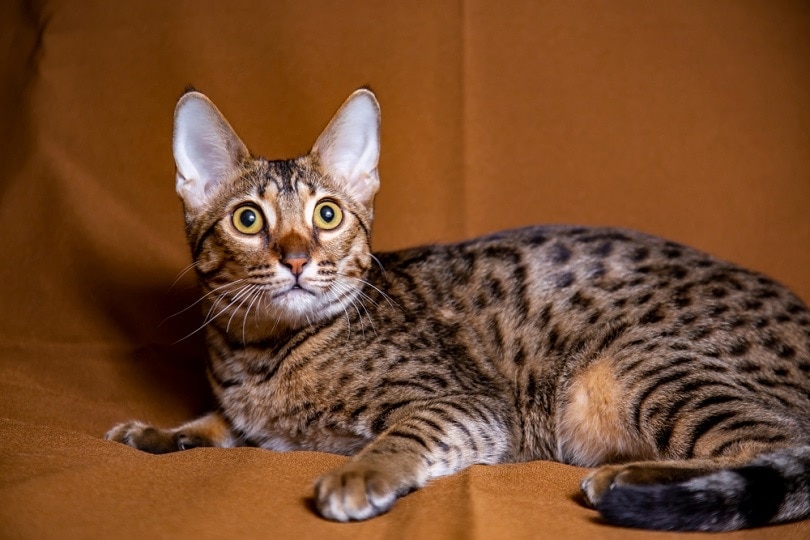
These cats are admired for their beautiful coats. Their coats can range from tawny to smoky, and they have black spots and black bands. F1 Savannah Cats also have large, round ears and a long and lean build.
Formal Recognition of F1 Savannah Cats
Kelly and Sroufe started breeding Savannah Cats, and more litters started to appear in the 1990s. In 2001, TICA accepted the Savannah Cat for registration, and the breed received Championship status in 2012.
The Savannah Cat Association is an organization that was formed to protect the Savannah Cat’s breed standards and educate the public on the breed. You can also find a registry of Savannah Cat breeders if you’re interested in bringing home a kitten.
There’s still much to be known about the Savannah Cat breed. Since it’s a relatively new breed, we’re hopeful to see more information made available as breeders learn more about these cats.
Top 3 Unique Facts About F1 Savannah Cats
1. There are Five Generations of Savannah Cats
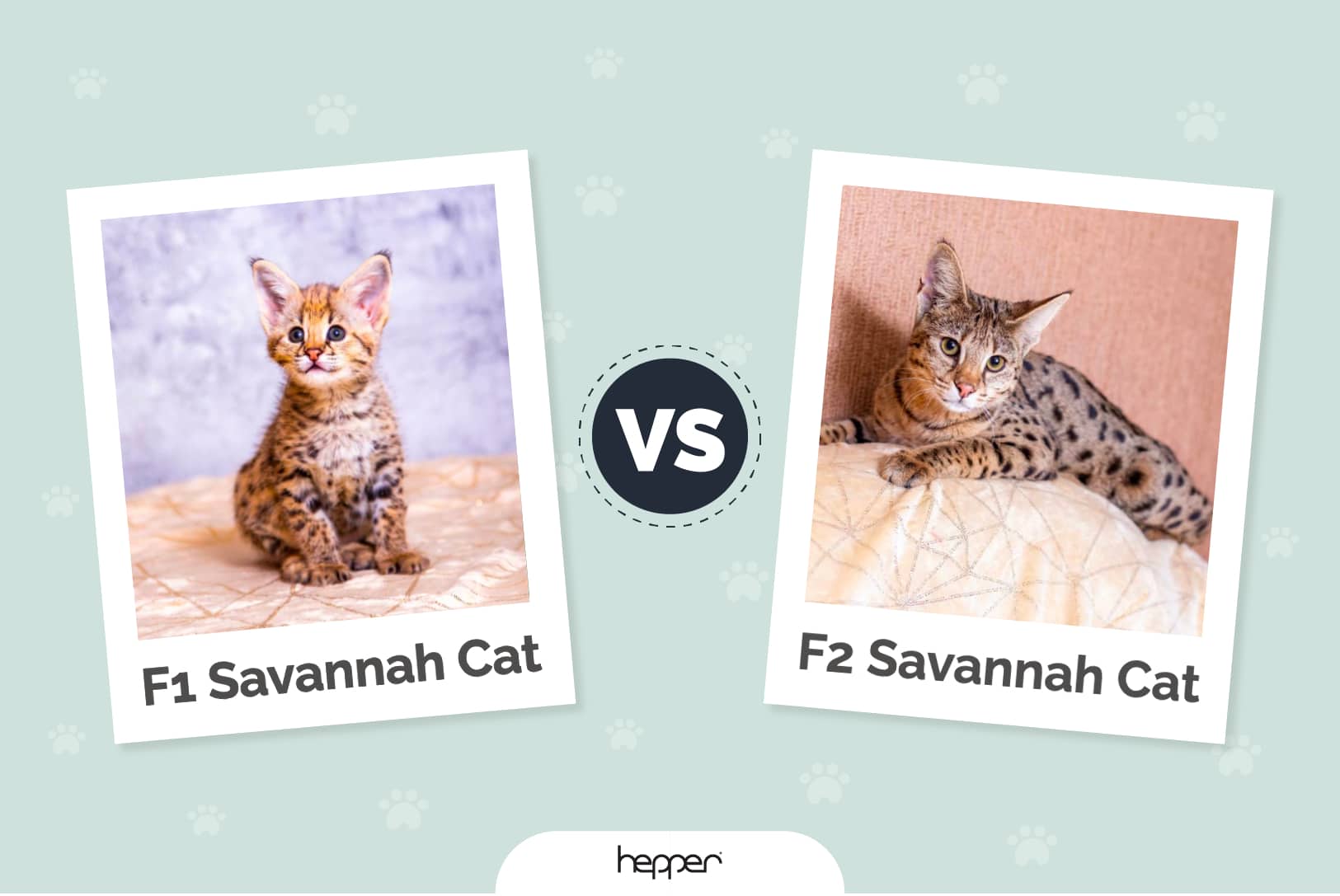
Most breeders will breed up to five generations of Savannah Cats. F1 Savannah Cats are the first generation of Savannah Cats and have one Serval parent and one domestic cat parent. F2 Savannah Cats have a Serval grandparent. The further you go down the generations, the less percentage of Serval is present in the litter of kittens.
Many breeders recommend F4 and F5 Savannah Cats as pets because they have more “domesticated” temperaments. They don’t mind being handled as much and can get along with young children well if they’re properly socialized.
F1 Savannahs are known to be a bit more standoffish towards strangers and typically bond with just one or two people. They may not prefer human companionship as much and may act more independently than other Savannah Cat generations.
2. Some States Don’t Allow F1 Savannah Cats as Pets
F1 Savannah Cats are illegal in some states, while most states allow F4 and F5 Savannah Cats.
F1 Savannah Cats aren’t allowed in the following states:
States will have their own rules and regulations, and some may require permits to bring a Savannah Cat home. So, make sure to check with your local municipality to see if it has specific rules on caring for a Savannah Cat.
3. F1 Savannah Cat Litters Are Difficult to Produce
Part of the reason why F1 Savannah Cats are rare is that it’s difficult to produce a litter of kittens. African Servals and Domestic Cats have different gestation periods, and males can often miss when females are in heat.
Male Savannah Cats are also sterile until the F5 generation, but they’re much smaller than female Savannah Cats in a higher generation. Savannah Cats tend to be picky mates, so females are likely to be uninterested in a smaller mate.
Does the F1 Savannah Cat Make a Good Pet?
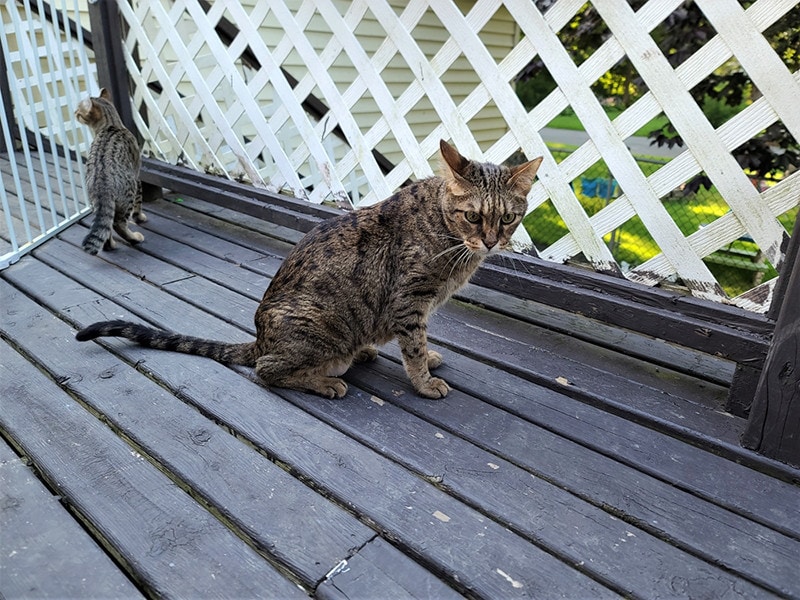
F1 Savannah Cats are known to be more challenging to care for than most other domestic cats. They have a lot of energy and are very athletic. So, you have to be sure to keep all food and any unsafe items in safe and unreachable locations. You’ll also have to spend more time providing exercise opportunities for F1 Savannah Cats.
F1 Savannah Cats also tend to bond with one or two people and are usually aloof with strangers. They may not also be the most suitable playmates for young children because of their size, and they don’t have the most docile temperaments.
If you’re interested in caring for a Savannah Cat, it may be more suitable to bring home an F4 or F5 Savannah Cat because they’re smaller and more sociable, and it’s much easier to care for them.
Final Cats
F1 Savannah Cats are beautiful cats. While they’re admired widely for their appearance, they’re not suitable pets for all people. These cats often require lifestyle changes, and it’s no surprise if you have to allocate more time to exercise and make home modifications to meet their needs for vertical spaces.
F1 Savannah Cats are still pretty rare to see. So, if you’re fortunate enough to cross paths with one, make sure to admire it at a distance that it’s comfortable with and treat it with respect.
Featured Image Credit: Jarry, Shutterstock
Get Hepper In Your Inbox


Pet care tips from our vets and experts, straight to your inbox.
You may opt-out at any time. View our Privacy Policy for more information.
Jessica is a freelance writer who spends most of her day reading and writing while her fluffy Cavapoo, Nora, naps beside her. She loves and appreciates pets and animals because there’s so much to learn from them, and they do so much for people. As a dog mom, she understands the special relationship that pet parents have with their pets. So, she loves sharing helpful information that people can use to better understand their pets. When she’s not writing, you can find her walking dogs, tending to her plant babies, or drinking her nth cup of coffee.
Join the conversation
Ask a question, share your story, or send private feedback.