Hepper is reader-supported. When you buy via links on our site, we may earn an affiliate commission at no cost to you. Learn more.
Scabies in Dogs: Causes, Symptoms, and Care (Vet Answer)


In this article
Scabies, otherwise known as sarcoptic mange, is a skin infestation with the Sarcoptes scabiei mite. Scabies occurs in dogs around the world, and it affects dogs of all ages and breeds.
Fortunately, treatment is usually straightforward, and the parasites can often be eliminated quickly. Many veterinary flea and tick medications are effective at killing Sarcoptes mites and can help prevent scabies if applied regularly as part of your dog’s parasite prevention protocol.

What is Scabies?
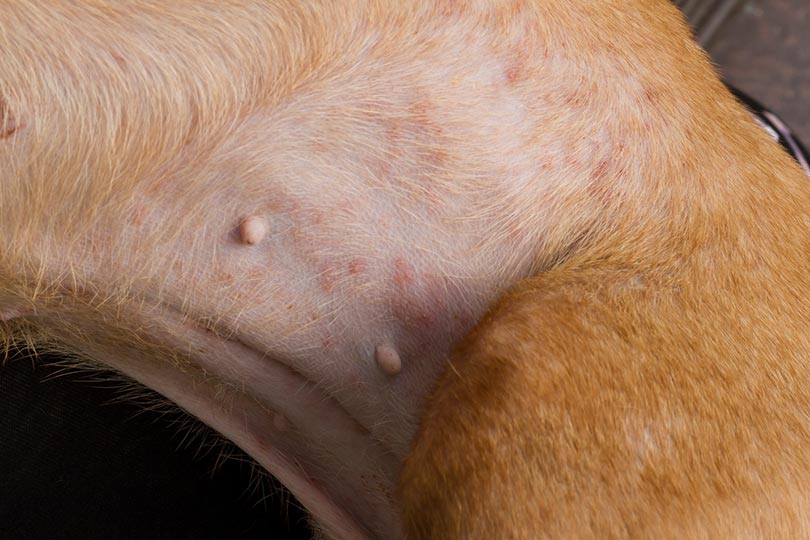
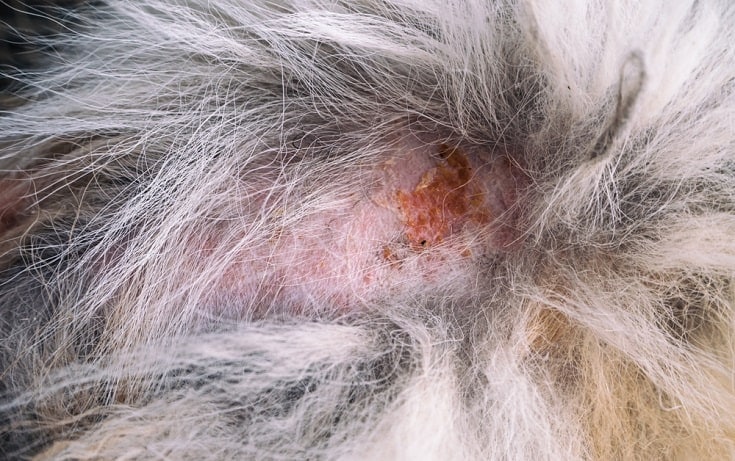
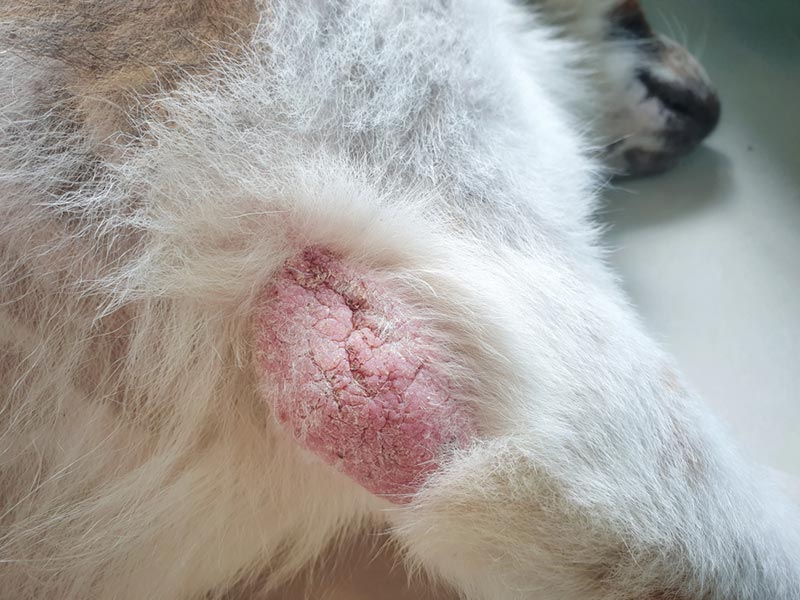
As previously mentioned, the term scabies refers to an infestation of the skin with Sarcoptes scabiei mites. Dogs with scabies are intensely itchy, and classically develop red, scabby lesions on areas of their body with little fur (such as the ears, elbows, and hocks). This microscopic parasite is highly contagious in dogs, and can also be transmitted to people.
What Are the Causes of Scabies?
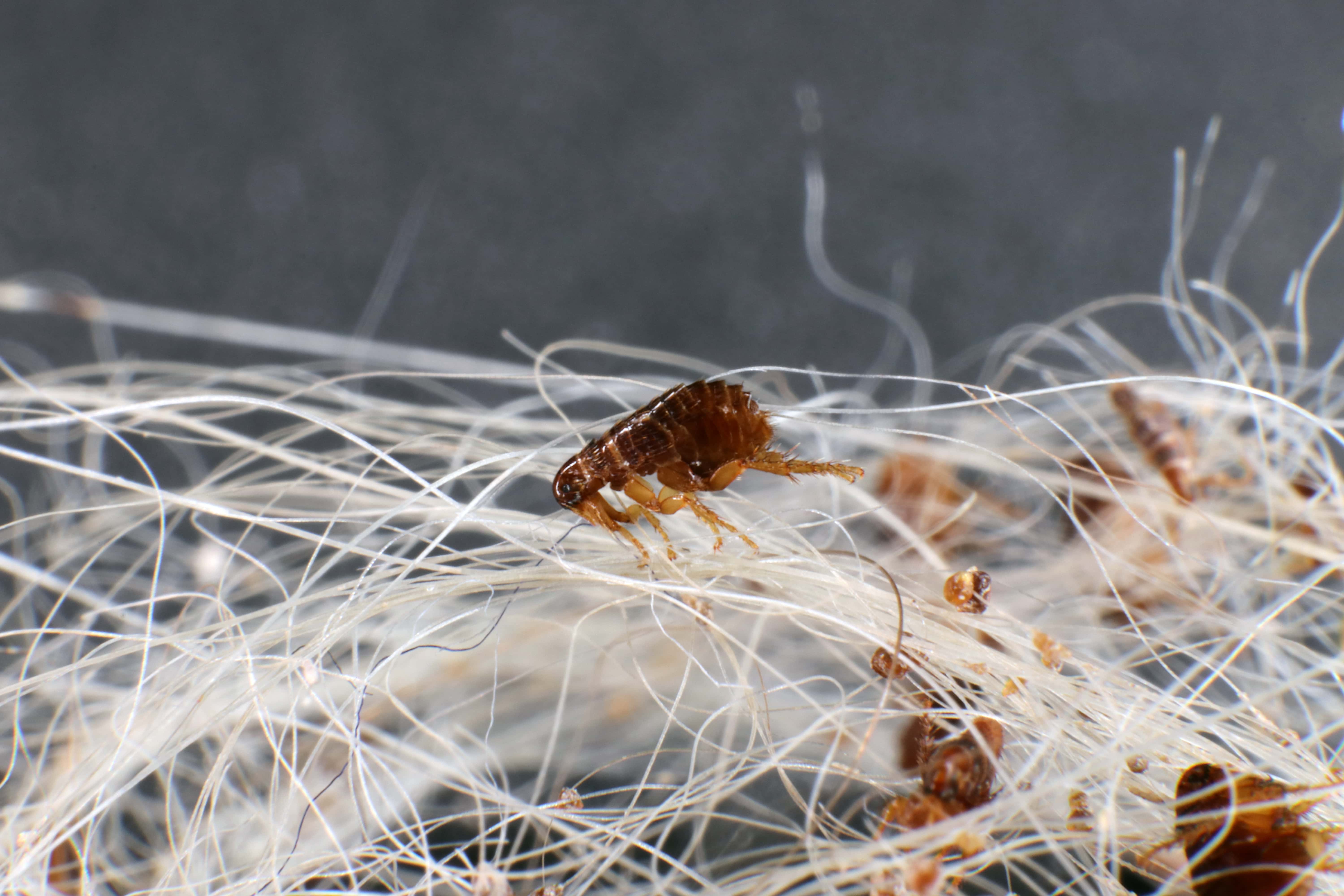
Scabies is caused by Sarcoptes scabiei mites, which are so small that they can only be seen under a microscope. You might find it interesting to know that Sarcoptes mites are related to spiders!
Mites generally complete their life cycle on specific hosts, which their names often reflect. For instance, the dog mite is called Sarcoptes scabiei var. canis.
What Are the Signs of Scabies in Dogs?
The rash associated with scabies is due to the mites burrowing in the skin, which causes irritation and severe itching.
Dogs affected with scabies often show signs such as:
Sarcoptes mites seem to prefer living on parts of the body with little fur—often the ears, elbows, and hocks, as well as the underside of the chest and belly.

How is Scabies Diagnosed?
Scabies can have a similar appearance to other skin conditions. If your veterinarian suspects scabies, they may recommend taking scrapings from affected areas of your dog’s skin to examine under the microscope for mites.
It is important to note that Sarcoptes mites can be tricky to find! Veterinarians often recommend empiric treatment in suspected cases of scabies, even if skin scrapings do not reveal mites. Sometimes a favorable response to treatment is what confirms the diagnosis.
How Is Scabies Treated in Dogs?
Fortunately, treating scabies is usually very straightforward. Many veterinary flea and tick medications are extremely effective against Sarcoptes mites. Some products are given orally as a flavored chew or tablet, while others are in liquid form and applied directly to your dog’s skin. Always follow your veterinarian’s directions to ensure the treatment is safe and effective.
Dogs with scabies often benefit from a short course of medication (e.g., glucocorticoids) to provide relief from itching. Antibiotics may also be needed if a skin infection is present.

Is Scabies Contagious?
Yes! As previously mentioned, scabies are very contagious among dogs. If your dog is diagnosed with scabies, it is important to treat all dogs in your home, even if they are not showing signs. Scabies are typically spread through direct contact with an infected dog.
Mites can survive in the environment for up to several weeks, but they are only infective for a few days. It is a good idea to wash items your dog has been in contact with, but thorough decontamination of your house is not usually necessary.
Dogs can also transmit the infection to people, so be sure to contact your doctor if you have any concerns.
Is Scabies in Dogs Preventable?
Yes! As previously mentioned, many common prescription flea and tick medications also kill Sarcoptes mites. When used regularly, according to the label directions, they can also help prevent scabies in dogs.
Ask your veterinarian for a product recommendation if your pup is regularly in contact with other dogs, for example at:
It may also be a good idea to consider prevention if you live in an area with lots of urban wildlife (particularly foxes or coyotes), or if your dog spends a lot of time in areas where these animals live.

Conclusion
Scabies is a contagious skin condition that can affect any dog. While it can sometimes be tricky to diagnose, treatment and prevention are usually straightforward. If you are concerned that your dog may have scabies, seek veterinary attention right away. Remember that all dogs in your home should be treated, even if they do not seem to be affected, as signs may not appear right away.
Scabies can spread from dogs to people. Fortunately, most people find that their symptoms resolve quickly once the affected dog has been treated. However, if your dog has been diagnosed with scabies, consult your doctor for guidance.
Sources
Featured Image Credit: Visit Roemvanitch, Shutterstock
Get Hepper In Your Inbox


Pet care tips from our vets and experts, straight to your inbox.
You may opt-out at any time. View our Privacy Policy for more information.
Dr. Sharon (as she is known by her clients) has had an intense love for animals for as long as she can remember. She grew up in Guelph, Ontario and fulfilled her childhood dream by obtaining her Doctor of Veterinary Medicine (DVM) degree from the Ontario Veterinary College in 2009. She has since found joy working in a variety of small animal clinics, focusing on cat and dog care. She loves sharing her expertise and empowering pet owners to take the best possible care of their fur babies!
Sharon currently lives in beautiful British Columbia with her husband, daughter, and Parker, her loveable Great Dane. When she’s not at work, she enjoys clogging, photography, and exploring the outdoors with her family.
Dr. Sharon (as her clients call her), was raised in Guelph, Ontario, and has loved animals for as long as she can remember. She fulfilled her childhood dream when she obtained her Doctor of Veterinary Medicine (DVM) degree. Sharon now lives in British Columbia, Canada with her husband, daughter, and Parker, their loveable Great Dane. When she’s not working, she enjoys clogging, photography, hiking, and camping with her family.
Education
Dr. Sharon obtained her DVM in 2009 from the Ontario Veterinary College in Ontario, Canada.
Experience
Dr. Sharon loves sharing her knowledge and empowering people to take the best possible care of their fur babies, which she has been able to do through her work. She has practiced in a variety of small animal clinics since graduating, with a main focus on cats and dogs.
Check out some of our top posts written by our veterinary team:
Why Does My Dog Snore? Should I Act?
My Cat Ate Paint! Our Vet Explains What to Do Now
How Common is Heartworm in Cats? 7 Things to Know About Heartworm Disease
Join the conversation
Ask a question, share your story, or send private feedback.