Hepper is reader-supported. When you buy via links on our site, we may earn an affiliate commission at no cost to you. Learn more.
How Many Fleas on a Dog Is Considered an Infestation? Signs & FAQs


In this article
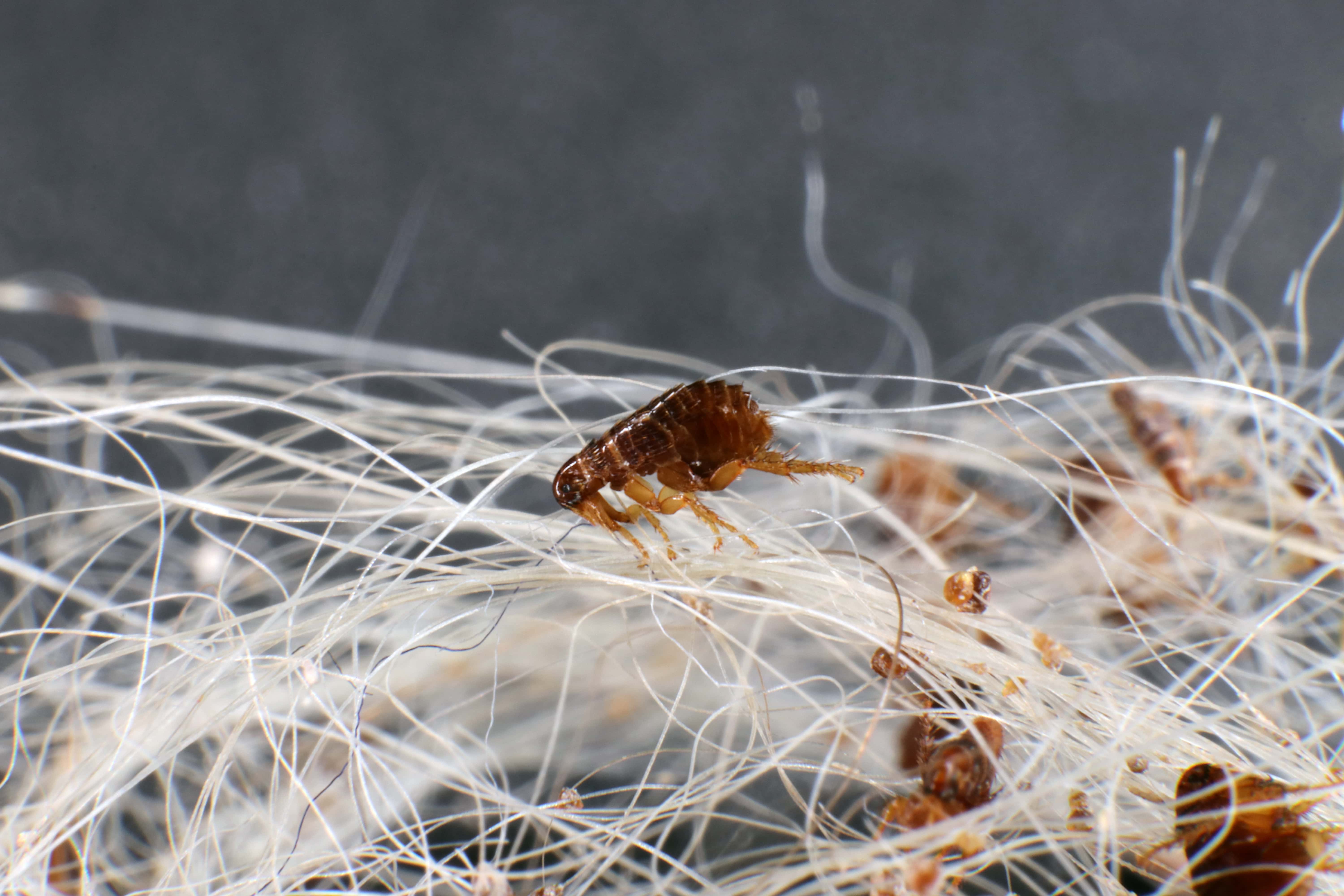
Fleas are always an unwelcome addition to any household. However, you might wonder how many fleas you'd have to see on your dog to consider it a true infestation, and the answer might shock you! Only one flea on your dog could mean an infestation is present since even a single adult flea living on your pup means that 100 immature fleas are likely living in the environment around them.
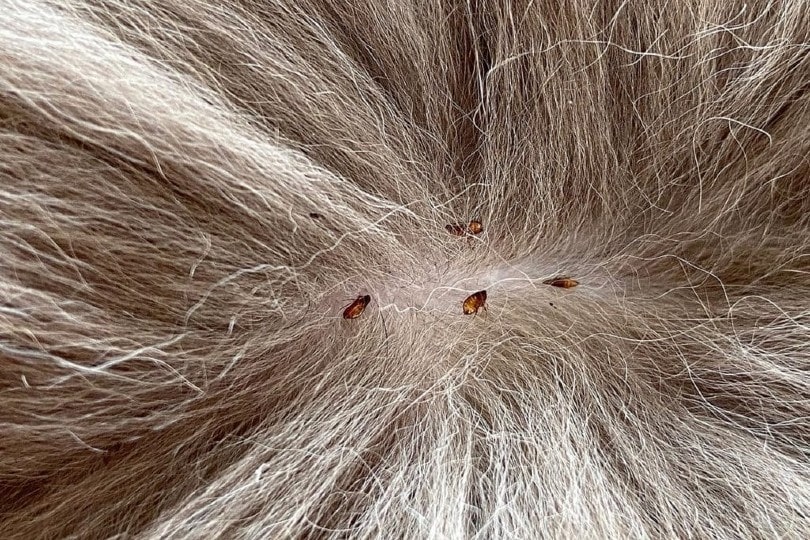
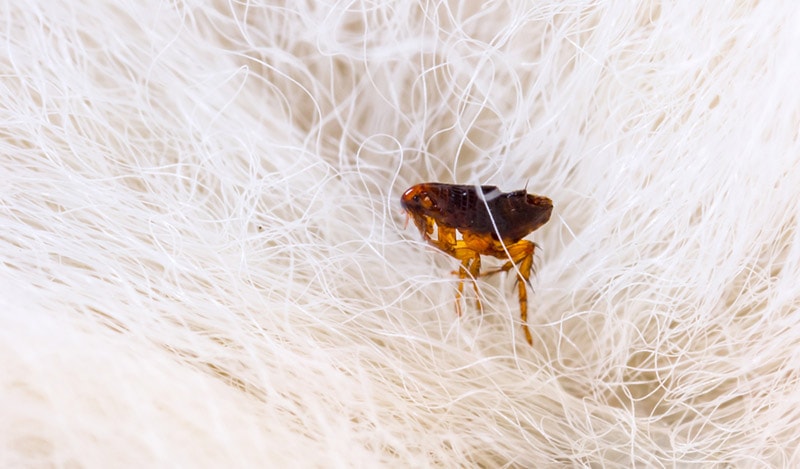
Because of the flea life cycle and how tiny (and crafty) they are, a single flea could realistically mean you already have an infestation in your home. However, you could also see many more, which would absolutely indicate an infestation; up to 300 fleas can live on a dog at once! Plus, only spotting one flea doesn't mean only one is present; fleas are very easy to miss (even on white fur), so there could be a much bigger problem than you first realized.

How Big Is a Flea Infestation?
The definition of an infestation is "the presence of an unusually large number of insects or animals in a place, typically so as to cause damage or disease."1 After reading that, you'd think that only spotting one flea on your dog can hardly be considered an infestation! But that is where many pet owners can be mistaken, as the fleas you see on your pet are only around 5% of the actual number of fleas in the home.
This means that 95% of the flea infestation is contained in the house in adult, larvae, pupae, or egg form. If you start getting bitten yourself (usually on the legs and feet), a large infestation is occurring; fleas don't bite humans unless they have to.
What Are the Signs of a Flea Infestation?
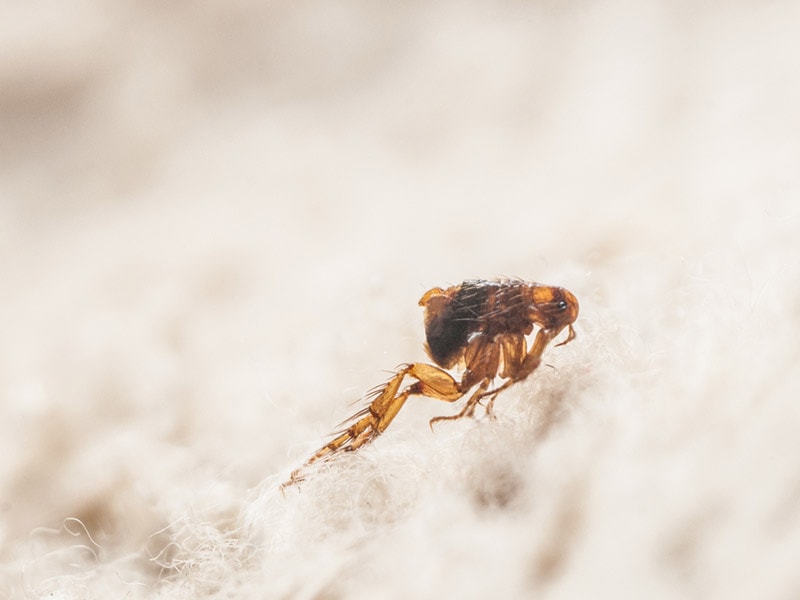
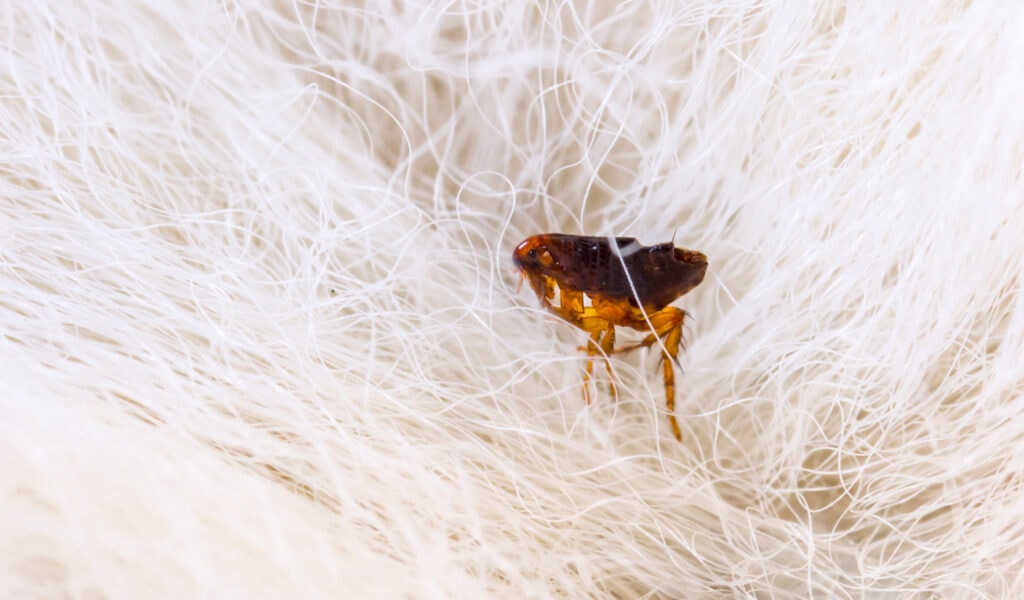
It's unlikely you'd not notice them, but you don't even have to see one flea to have a flea infestation already in progress. Fleas are only ⅛ of an inch long. They are flat and have armored bodies, making them very resistant to being stepped on. They can't fly, instead choosing to use their powerful back legs to spring into the air and land on your oblivious pet. Fleas can be difficult to spot, particularly if your pet has a darker coat or you have dark-colored floors or furnishings.
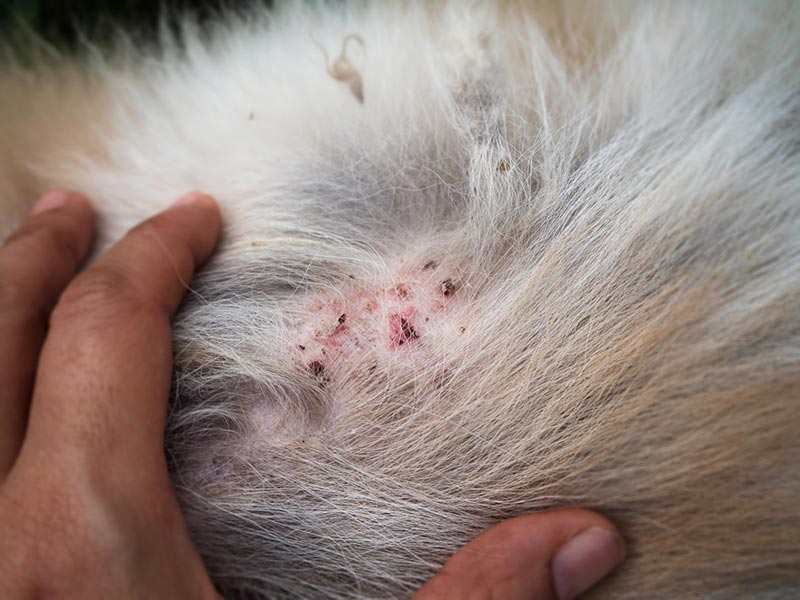
You might notice some other signs of something going on first. For example, your dog might itch and scratch, biting at the area above its tail. This itchy irritation is caused by flea saliva, which produces a histamine reaction in most animals and causes itching and swelling. Some dogs will be allergic to flea bites, meaning just one bite can send them into an itching and biting frenzy.
Hair loss on the neck and lower abdomen can also occur. Scabbing and soreness of the skin are more likely to occur in dogs with flea allergy dermatitis (an allergy to flea bites), but it can show up in any dog infected by fleas.
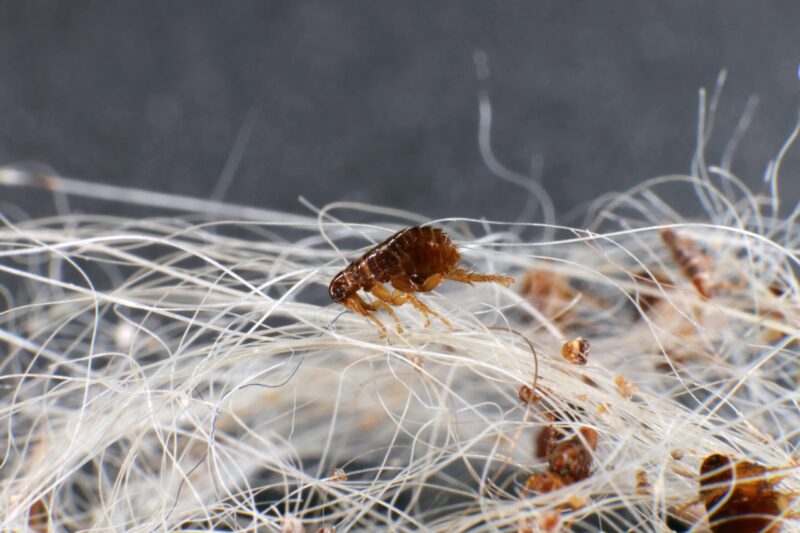
You might also notice flea dirt in your dog's fur.2 Flea dirt (or flea poop) is more likely to show up in areas with less fur or on light-furred pups. Flea dirt resembles tiny coffee grounds and often clumps together, forming small, black-brown granules or crumbs on your dog's skin or bed. If you moisten a paper towel and press it onto the crumbs, they'll stain it red if it's flea dirt (flea poop is digested blood).
Evidence of flea eggs, larvae, or pupae can also be spotted in the home. Eggs will fall off your dog in areas it goes and hatch into larvae that crawl down into carpet fibers or dark cracks and crevices in couches or floorboards.
Are Flea Infestations Dangerous?
Fleas are a nuisance but can also present a real health hazard to people and pets. In some cases, very young and extremely debilitated animals that are severely infested might have a slightly guarded prognosis.
Fleas can also transmit intestinal parasites such as tapeworms to cats and dogs. For example, if a dog eats a flea while grooming, the tapeworm larvae can begin their journey through the dog's digestive system and end up in their intestine, where they will mature and live. Tapeworms steal vital nutrition from the animals they infect, and they can cause weight loss in severe infestations.

Treatment and Prevention of Fleas
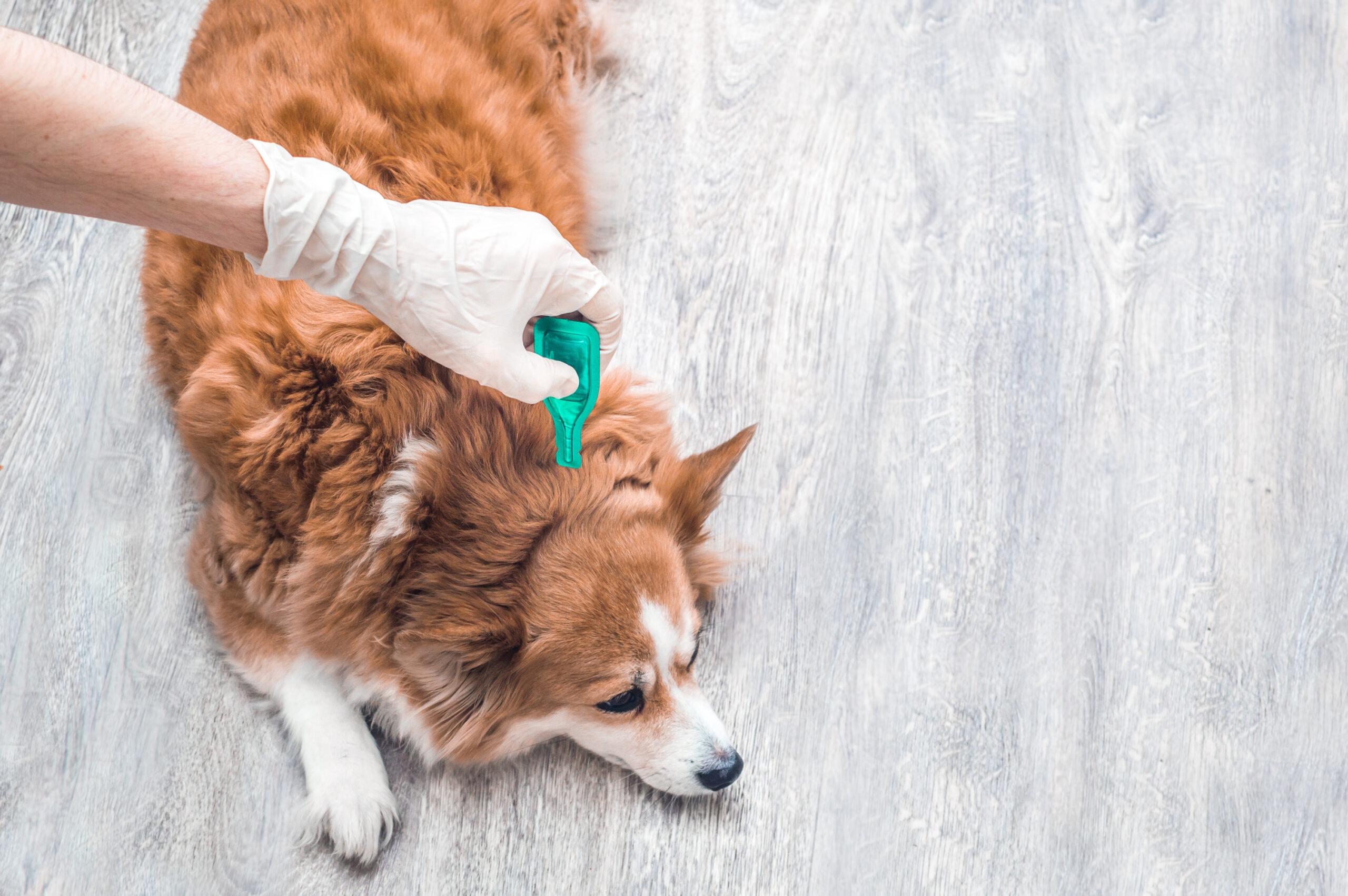
Treating flea infestations in dogs is tricky and requires a veterinarian's input. Your vet will thoroughly examine your dog to ascertain the extent of the infestation, to check for other health issues, and will formulate a treatment and prevention plan for your dog. They may administer topical or oral medication and prescribe other treatments (such as medicated shampoos or sprays) as needed. Your vet will advise you on at-home remedies you may use for your dog while they recover from their problem. These may include baths with a medicated shampoo or grooming sessions with a flea comb.
If you have multiple pets in your house, have them all examined by your vet if you notice fleas on any one of them.Eradication of fleas around your house involves following your veterinarian's treatment and grooming recommendations alongside a thorough disinfection of your home using an appropriate cleaner. These disinfections must be done everyday or every other day.
Fleas are often more concentrated in areas your dog frequently visits, and around couches, rugs, carpets, in floorboards, curtains, and upholstery. These areas often provide fleas with ideal cover, humidity, and hosts to jump onto and feed. Focusing on these areas around your house is a crucial step towards controlling a flea infestation.
Fleas, their eggs, and their larvae present in the environment can be killed by a 1:32 (3%) dilution of a Bleach product. DO NOT USE BLEACH PRODUCTS ON YOUR PET. Bleach products and disinfectants aren't pet or children safe, and caution alongside proper PPE (Personal Protective Equipment) must be worn when using these products. Professional cleaning or the services of a pest controller are also recommended.
How Fast Do Flea Infestations Occur on Dogs?
Flea infestations on dogs (or any animal) can occur very quickly. Each adult female flea can lay between 40 and 50 eggs a day on your dog. These eggs will soon fall off into the environment, hatch, and begin to feed.
The eggs will hatch within 1 to 4 weeks, and the larvae will pupate into adult fleas. These adults are capable of breeding and egg-laying themselves. Within another 4 weeks, you could see 1,250 new fleas in your home!
That is why treating an infestation and taking preventative measures such as monthly prescription flea treatments are so important. Preventing flea infestation from taking hold is much easier and less time-consuming than treating an already flourishing flea population. Also, preventative measures are more affordable than pest control services!

Conclusion
Only one flea is needed to signify an infestation on your dog, and many more fleas could be hiding in the fur or house. Fleas are sneaky and small and go undetected until several feed on your pet and live in the house. Consult with your veterinarian if you suspect a flea infestation on your pup. Proper flea control involves treating your dog and applying preventives as directed by your vet, and disinfecting your house on a routine basis.
“Sources”
https://www.oxfordlearnersdictionaries.com/definition/english/infestation
https://www.martinezanimalhospital.net/95-of-fleas-in-house-arent-on-your-pet/
https://www.healthline.com/health/healthy-home-guide/how-to-get-rid-of-fleas#the-bottom-line
https://www.petmd.com/dog/care/evr_dg_fleas_on_dogs_and_what_you_can_do_about_them
https://www.smalldoorvet.com/learning-center/medical/flea-infestation-dogs
https://www.lakecityhumane.org/post/flea-anemia-more-than-just-a-nuisance
Featured Image Credit: Iryna Kalamurza, Shutterstock
Get Hepper In Your Inbox


Pet care tips from our vets and experts, straight to your inbox.
You may opt-out at any time. View our Privacy Policy for more information.
Beth is a mom to two babies: one with four legs, and one with two. Beth has years of practical experience as a veterinary care assistant, working in both the operating room and in consult, expanding her knowledge to gain certification in her favorite subject: feline behavior and well-being! When she's not writing about her favorite topics (cats, dogs, and creature comforts), she's looking after her two-year-old daughter and her energetic eight-year-old Nebelung, Kiba. When she gets a moment's respite, Beth loves to read fiction books. Horror is her number one genre, with fantasy and rich history being her second option.
Join the conversation
Ask a question, share your story, or send private feedback.