Hepper is reader-supported. When you buy via links on our site, we may earn an affiliate commission at no cost to you. Learn more.
Should You Leave a Light on for Your Dog in the Night? Vet-Reviewed Facts



In this article
Dogs are amazing animals that can do many things better than humans, including seeing in the dark. This causes many people to wonder if they should leave a light on at night when they go to sleep or leave the house. The short answer is yes, even though your dog has great vision in low-light conditions, they can’t see in complete darkness. Leaving a light on for your dog at night, will probably make them feel more comfortable and protected. Keep reading as we explain why.

Can Dogs See in the Dark?
A dog’s vision is much different than ours. Dogs don’t see in black and white, they have color vision but not as rich as ours. They are dichromats, meaning they can see blue but have difficulties distinguishing between red, green, and yellow.
Dogs have a wider visual field compared to humans. Their field of view is around 240 degrees while ours is approximately 180 degrees. Additionally, dogs can see quite well in the dark due to different reasons. They have large pupils and a high number of light-sensitive cells called rods that work extremely well in low-light conditions.
An additional structure behind your dog’s retina, in the back of their eyes, called tapetum lucidum, helps them navigate in the dark. This structure acts as a mirror, reflecting incoming light back towards the light sensitive cells, making it easier for your dog to use all available light so they can see better in dark environments.
Why Do My Dog’s Eyes Glow at Night?
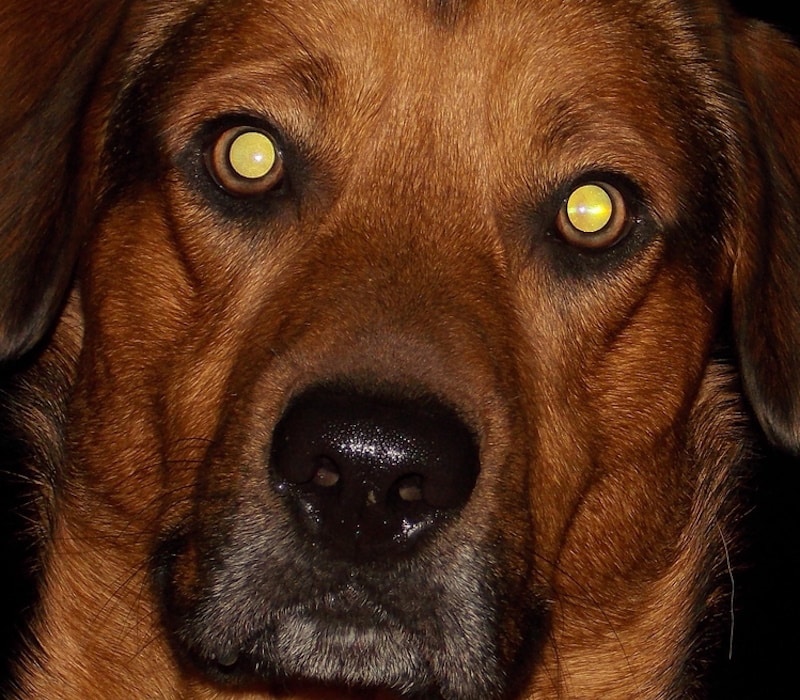
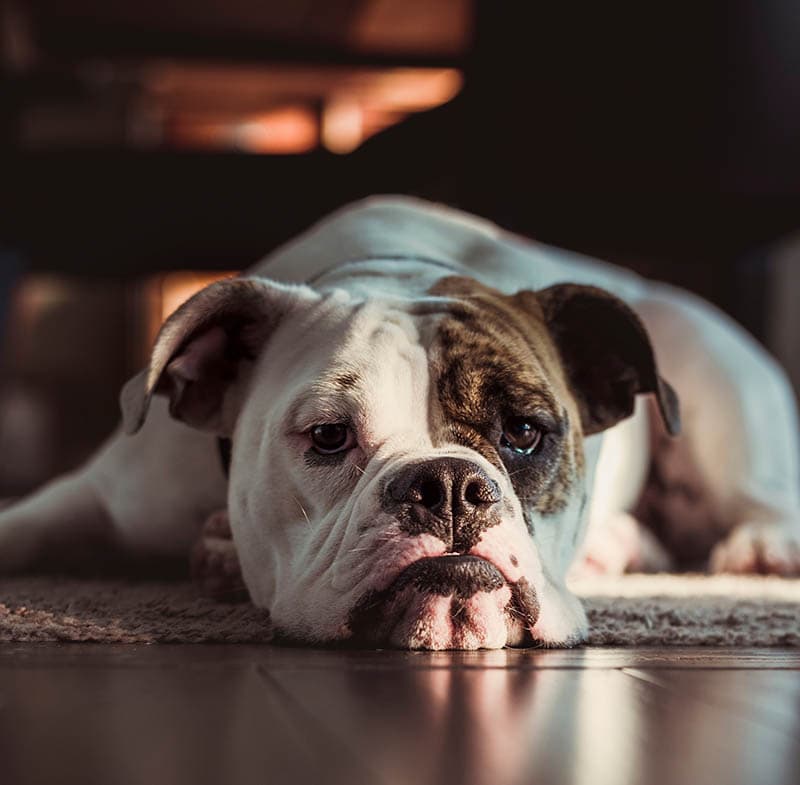
As already explained, dogs and cats have a special layer in their eyes called tapetum lucidum. It sits behind the retina and reflects light so more light is available to the photoreceptors, making it easier for the animal to see in the dark. This reflective layer shines at us through a dog’s pupil when we see a dog at night and will also reflect the light from a photographer’s flash, which can cause a dog’s eyes to glow in pictures.
Do I Need to Leave a Light on for My Dog?
Yes. A dim light won’t do any harm to your dog and might even make them feel more secure. While your dog can see in low-light conditions, they still require a certain amount of light. If it gets completely dark, your dog won’t be able to see, and many dogs can become frightened when they can’t see, so we recommend leaving a light on whenever it gets dark.

What Are Good Lighting Solutions?
Nightlights
Since your dog only requires a small amount of light to see, a small nightlight will work well and won’t use much electricity. Many new lights use LED technology for increased energy savings and lifespan. They may also shut off automatically during the day.
Sensor Lights
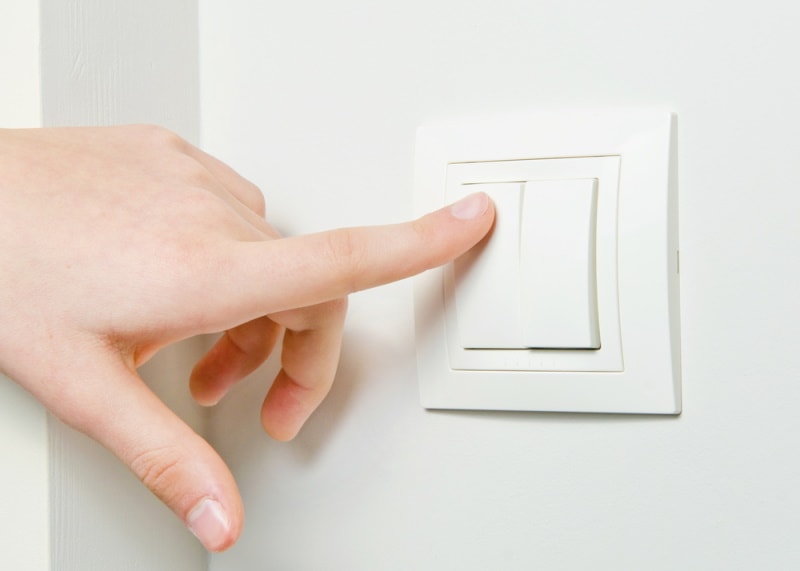
Sensor lights are ideal for providing light at night for your dog. They can detect darkness and turn on automatically, or they may detect motion and turn on when your pet enters the room. Motion sensors are good for areas of your home that don’t see much traffic, as you can save on electricity. Light sensors are best in heavily trafficked areas of the home.
Light Timers
A light timer can also be used to add light to an area. You can set it to turn on and off at a certain time regardless of ambient light or movement, which can help keep the light consistent throughout the day.
Is My Dog Afraid of the Dark?

While many dogs can tolerate complete darkness for a short time and are often comfortable sleeping in darkness, like humans, some dogs can become frightened when they can’t see and can behave unpredictably. So, make sure you always keep a light on if you notice your dog experiencing any of the following signs:
Do Dogs Like to Sleep in the Dark?
Yes. Dogs have a diurnal circadian rhythm, which means they tend to fall asleep when it gets dark. This works as an “inner clock” that controls their sleep/wake cycle and is essential for many body functions. Most dogs keep a schedule similar to their owners and will sleep at night. Dogs often get better sleep in complete darkness, so you won’t need to worry about adding light by their bed, as long as the sun comes up shortly after they wake. Dogs also tend to deal with darkness better when their owners are nearby; they may only get frightened when their owners are at work and the house gets too dark.
Summary
Leaving a little light on for your dog will probably make them feel more comfortable and secure if they need to navigate their surroundings at night. While your dog can see much better than any human in low-light conditions, they can’t see in complete darkness. Dogs need at least a little light, and many dogs can become frightened if you leave them alone and it’s very dark. Adding a small night light is inexpensive and will help your pet feel more comfortable, especially if you notice signs that they are afraid when you are not there, like damaged pillows or hiding.
If you notice that either suddenly or progressively your dog is not as comfortable when it gets dark, you should consult your veterinarian. There are multiple eye conditions that can manifest this way, and the sooner you detect them, the better for your pup’s well-being.
Featured Image Credit: Mylene2401, Pixabay
Get Hepper In Your Inbox


Pet care tips from our vets and experts, straight to your inbox.
You may opt-out at any time. View our Privacy Policy for more information.
Ed Malaker is a veteran writer who has contributed to a wide range of blogs that cover pets, tools, guitars, fitness, and computer programming. When he’s not writing, Ed is usually performing DIY projects around the house or working in the garden. He’s also a musician and spends a lot of time helping people fix their guitars and composing music for independent films.
Join the conversation
Ask a question, share your story, or send private feedback.