Hepper is reader-supported. When you buy via links on our site, we may earn an affiliate commission at no cost to you. Learn more.
Why Do Dogs’ Eyes Glow? Canine Ocular Anatomy & Physiology Explained


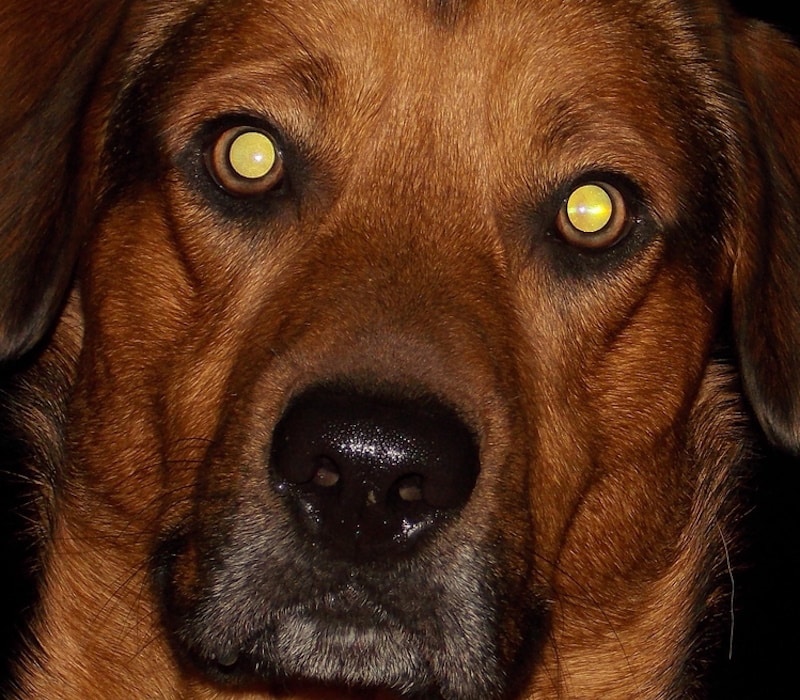
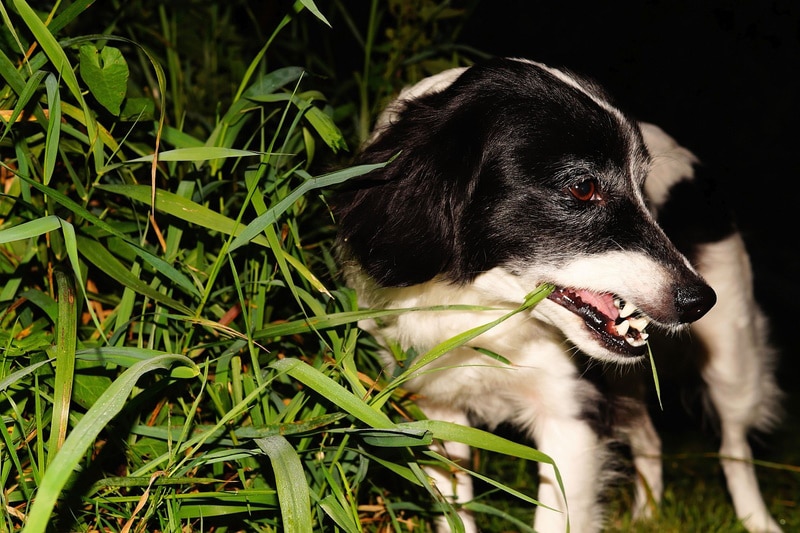
Nothing gives us a better sense of calm than a dog’s company, but if you happen across them late at night, those glowing eyes cutting through the darkness will be enough to startle anyone.
Dogs have this unique light reflection due to a structure in their eyes called the tapetum lucidum.
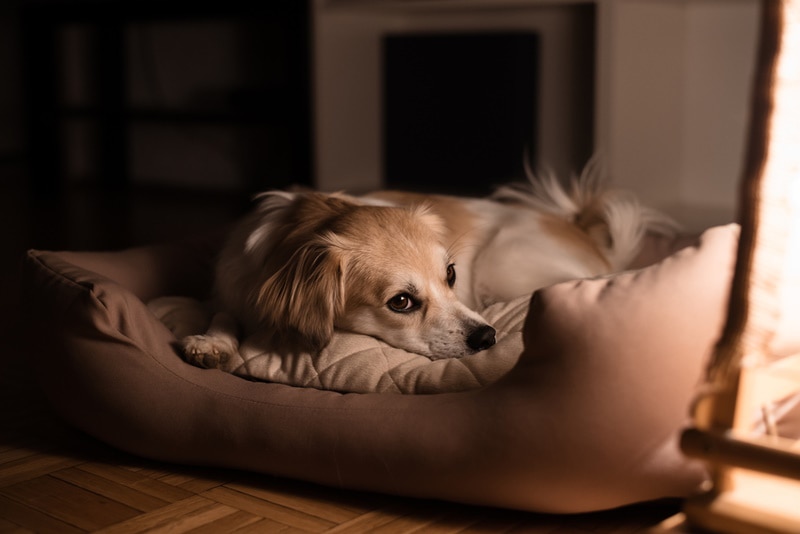
Alongside the extra number of rods in their retinas, the tapetum improves the dog’s low-light vision, an essential advantage for their crepuscular habits. Here, we explore why dogs’ eyes glow and what causes the differences you might notice from one pup to the next.

Why Do Dogs’ Eyes Glow?
As with humans, light enters the dog’s eye through the cornea and passes through the pupil. The iris controls the pupil’s size to manage the amount of light entering the eye. The lens follows, directing the light to photoreceptors in the retina at the back of the eyeball, where light is turned into electrical signals and sent to the brain.
Past the retina, the dog’s eyeballs differ significantly from those of a human’s, as they contain an additional reflective layer called the tapetum lucidum (Latin for “bright carpet”) that boosts the animal’s low-light vision. In dogs, the mirror-like section sits in the choroid vascular layer that is behind the retina, separating it from the sclera and the optic nerve.
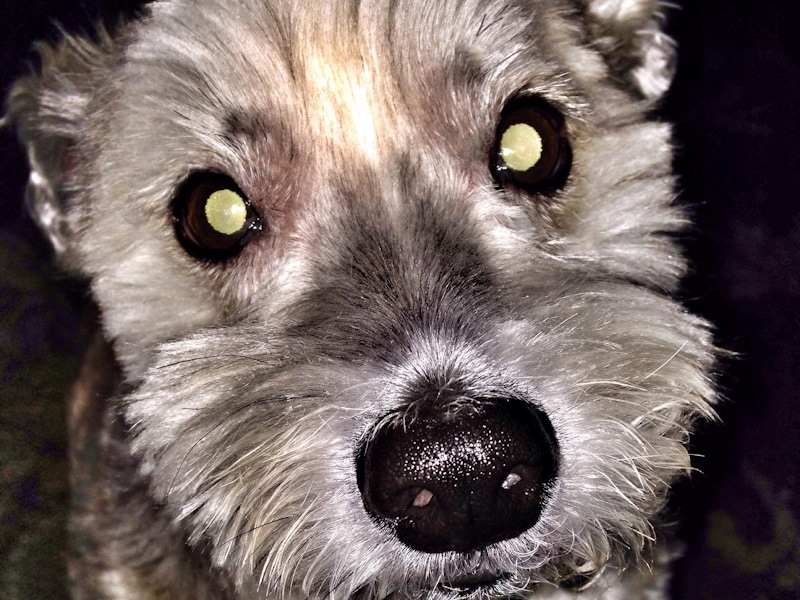
The light entering the eye hits the retina’s photoreceptors, and due to this special structure in dogs’ eyes, the light gets reflected to the photoreceptors to give the cells another chance to absorb it. As a result, dogs can take in and use more light to see, even in dark settings. The glow that we see at night is the light’s reflection in the tapetum at the back of the eye, also called “eyeshine.”
The Tapetum Lucidum in Dogs
The tapetum lucidum is present in various ways in different animals. Many diurnal creatures like humans, squirrels, and most birds don’t need the extra visual sensitivity and lack the tapetum entirely. Other animals, including crocodiles and fruit bats, have a tapetum lucidum within the retina, while ruminants, horses, cats, and dogs have their tapetum in the choroid layer, right behind the retina.
The choroid tapetum can also vary among species. Like many carnivores, dogs have a particular type called a choroidal tapetum cellulosum. It consists of mirror-like crystals called rodlets in a tightly packed cellular configuration.
The tapetum has several layers of these cells, with its reflectivity and the eye’s low-light sensitivity increasing with more layers. In ideal arrangements, five layers provide about 75% reflectance. The tapeta with 10+ layers deliver 100% reflectance.
Layers are densest at the center of the tapetum and taper off toward the periphery. Dogs have 18–20 layers at the center of their tapeta. That may seem like overkill, but dogs don’t have an ideal arrangement, facing interference from poorly oriented rodlets that reflect light inefficiently.
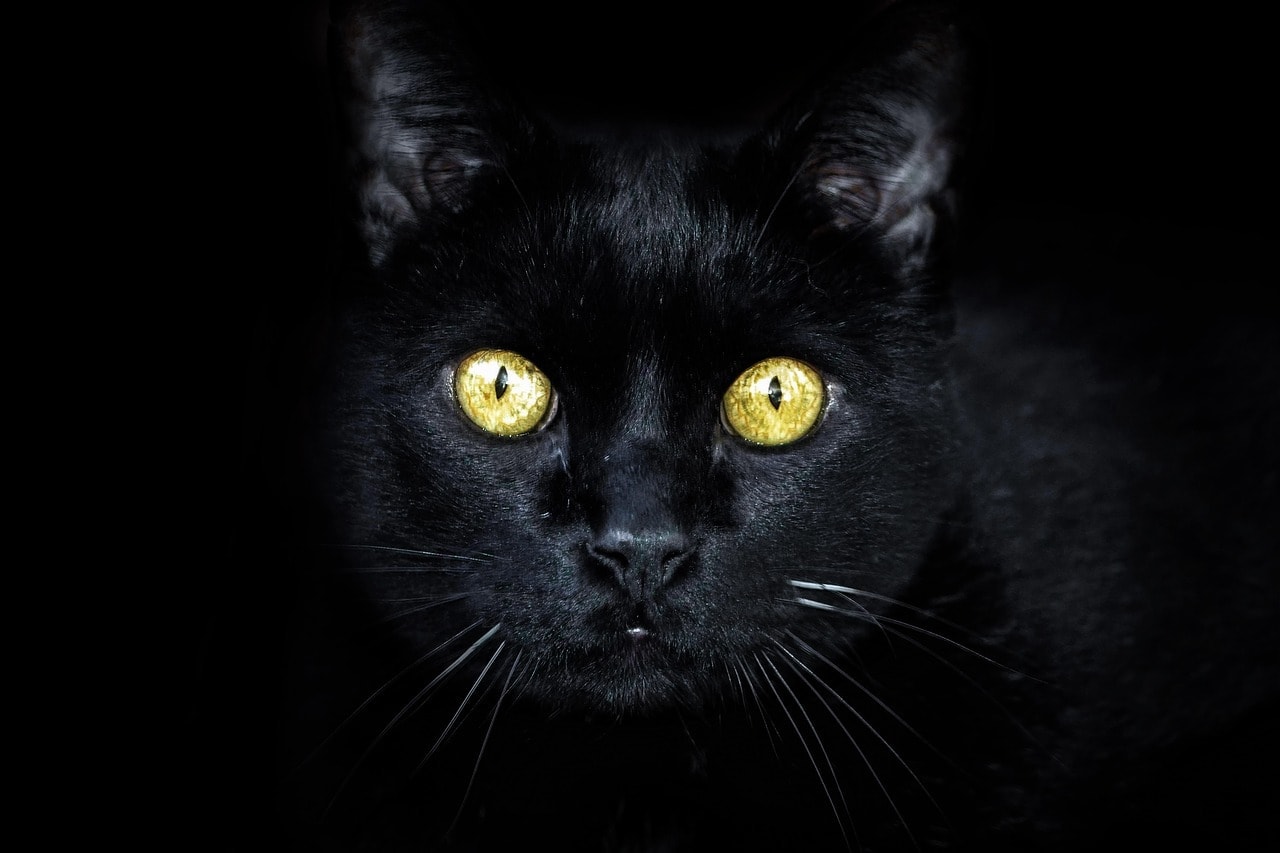
The tapetum thus needs more layers. By comparison, cats have more uniform, precise, and properly angled rodlets, causing their eyes to shine brighter than dogs.
What Color Do Dog Eyes Glow?
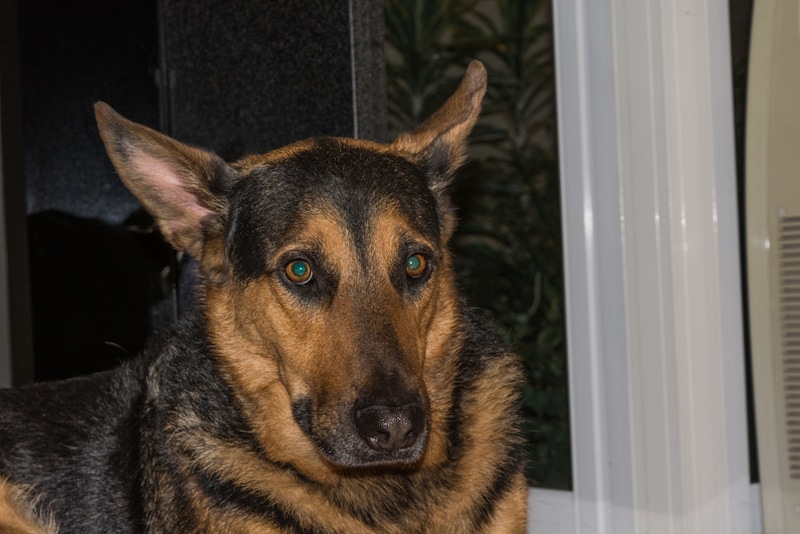
Several factors can impact the tapetal area in dogs and therefore, the hues that the tapetum reflects, including the retina’s pigments, the density of the crystal layers, and the unique minerals that make up the tapetum. For instance, dogs have tapetal cells consisting primarily of zinc cysteine, while cats mostly have riboflavin; while not completely clear, this likely makes them glow different colors.
Factors like coat color and breed affect the color of the tapetum within species. Significant differences exist between breeds. Smaller breeds like Chihuahuas and Papillons have much smaller tapeta, and some dogs lack it entirely.
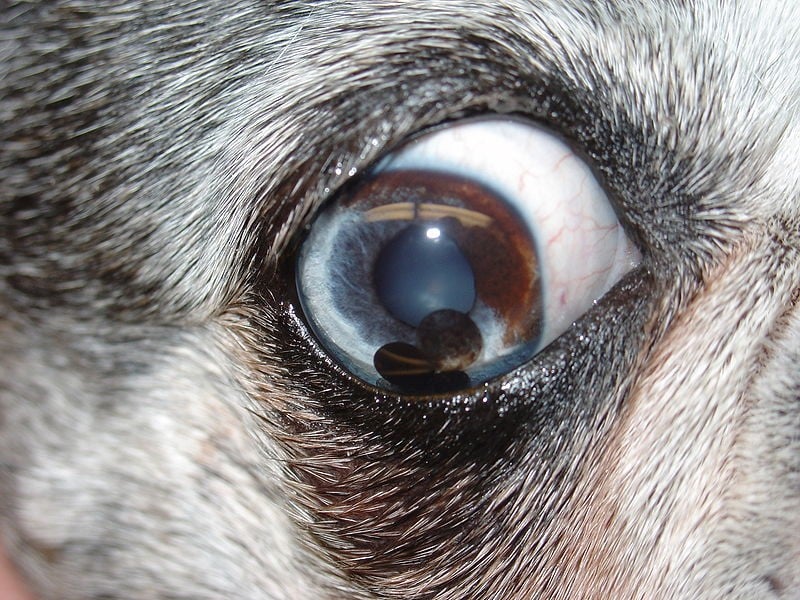
Certain families of Labrador Retrievers have smaller or absent tapeta, and many merle and albino dogs do not have them, instead reflecting red from blood vessels in the back of the eye.
One study documented differences between dogs of different coat colors. The most common color in adult dogs was yellow-green. Brown coated dogs had a more orange-tinted tapetal area, and white or gray-coated dogs more often had green tapeta.
Does the Tapetum Lucidum Change Over Time?
Dogs aren’t born with a fully developed tapetum lucidum, so it is practically unnoticeable for the first 35 days. Before it develops its adult appearance, the tapetal area is purple, turning into pale green until the dog is about 2 to 3 months of age, when it acquires the adult color. Once mature, eyeshine typically doesn’t change much in color or intensity. But age-related degeneration can have some effect, as can external causes, such as diet and medications.
Tapetum colors in dogs transition as the layers develop. Puppy eyes will shift from reflecting dark purples and blues to various yellow greens and green blues as they approach adulthood. The tapetum lucidum finishes developing at around 4 months of age, at which point, the color stays consistent.
Iris atrophy is common in older dogs. As the iris muscles start to thin and have more difficulty controlling the pupil’s size, more light can enter, causing the pupil to be more dilated at all times and the tapetum reflection to be more obvious because more area is seen. Conditions that cause pupil dilation, such as sudden acquired retinal degeneration or retinal detachment, can similarly lead to greater eyeshine in dogs.

Final Thoughts
Now that your dog’s glowing eyes are no longer a mystery, you’ll likely see them in an all-new light. See if you can notice the different colors between dogs, and try to predict their eyeshine based on their coat color and breed. Glowing eyes are one of the countless ways dogs continue to surprise, giving us yet another great reason to appreciate these remarkable pets.
See Also:
Sources
Featured Image By: Kole Wisler, Shutterstock
Get Hepper In Your Inbox


Pet care tips from our vets and experts, straight to your inbox.
You may opt-out at any time. View our Privacy Policy for more information.
Nicole is a lover of animals of all sizes but is especially fascinated with the feline variety. She’s the proud mom of Baby, a Burmese, and works every day so he can relax in the sunshine or by the fire. She’s always had a cat in her home and has spent countless days with others, observing behaviors and softening up even the grouchiest of the lot. Nicole wants to share her kitty expertise with you so you and your cat can live happy, healthy, and care-free.
Join the conversation
Ask a question, share your story, or send private feedback.