Hepper is reader-supported. When you buy via links on our site, we may earn an affiliate commission at no cost to you. Learn more.
Sisal Rope for Cat Trees: 6 Simple Steps for Sizing, Attaching & Replacing
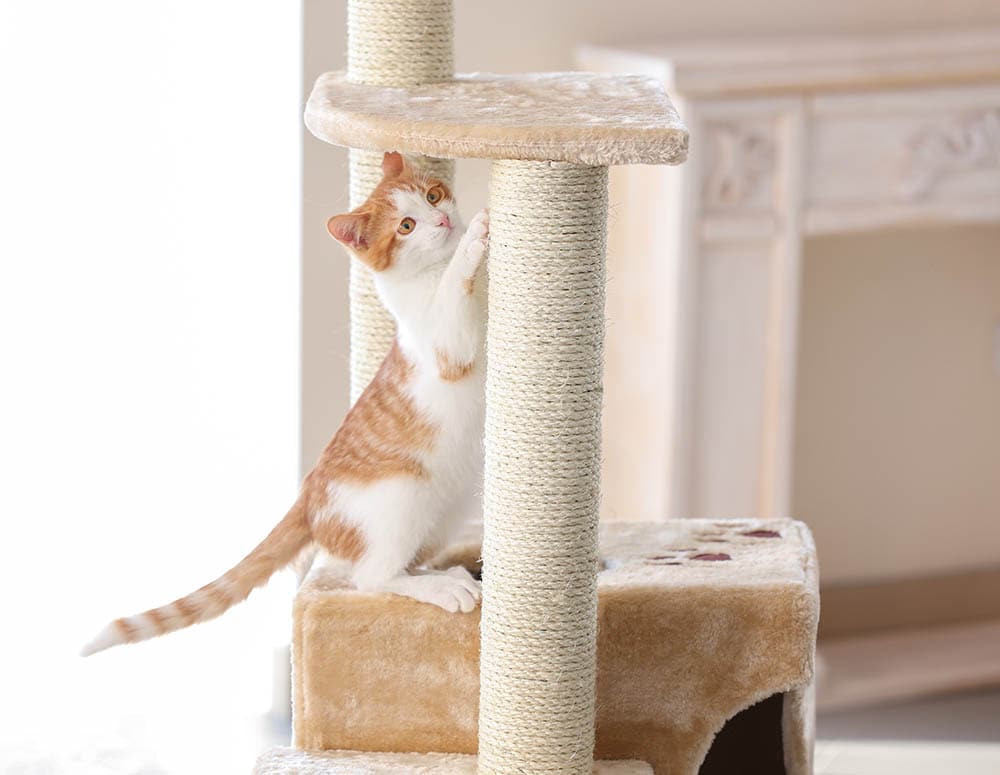
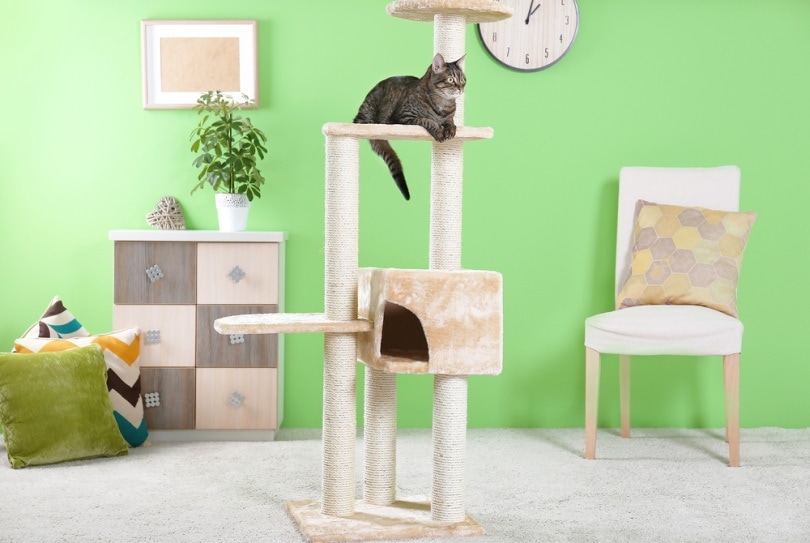
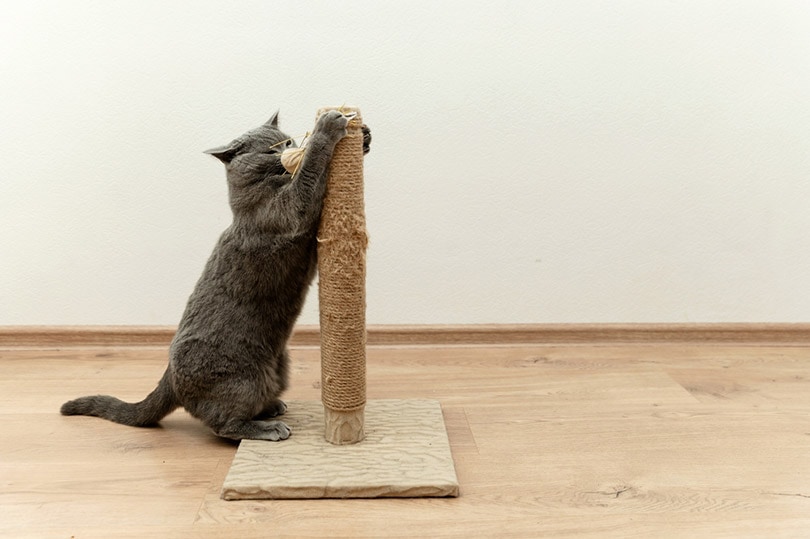
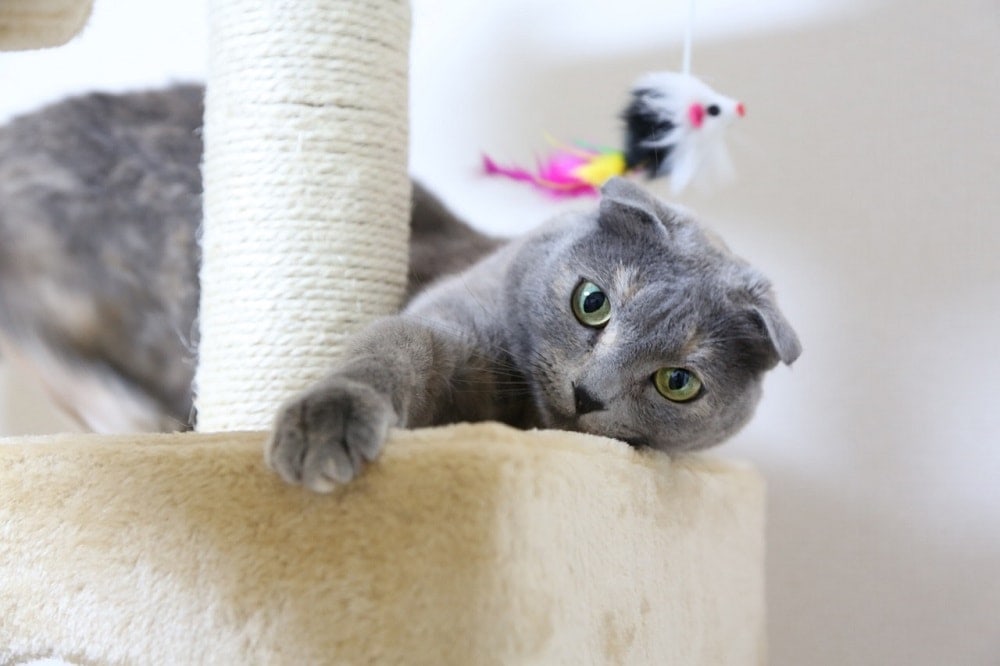
If your cat tree is looking a little ratty, it might be time for a refresh. Sisal-wrapped cat trees are one of the most common types of trees because sisal rope is sturdy, long-lasting, and satisfying to cats looking to sharpen their claws.
But scratching trees don’t last forever. If your tree is still sturdy, but the rope is torn or frayed, you don’t need to buy a new tree. Replacing the sisal rope on your tree is a cheap and easy way to extend its life. This article will help you replace the sisal rope so your cat can continue scratching on their favorite post.

Tools Needed
Here are some of the tools you’ll need:

The 6 Steps for Replacing Sisal Rope
1. Remove the rope from your scratching post.
If your rope is already coming off in places, you may be able to pull it off by hand. If not, use scissors to cut through the rope and get you started. You may need to pull out staples near the top and bottom of the post.
2. Clean the remaining glue and sisal from the scratching post.
Using your fingers or a knife/scissor blade, scrape as much glue as you can from the post. This will create a cleaner surface to apply the new rope.
3. Use glue to attach your cord to the base of the post firmly.
You might want to use staples near the beginning of the cord to further strengthen it.
4. Work your way up the post with the cord and glue.
Apply hot glue in a straight line, with a thicker bead every few inches. Press the cord down over the glue and hold until set. Work your way up the post in a spiral.
5. When you reach the top of the post, cut off any remaining cord.
Tuck the end of the cord snugly into the post and secure it with extra glue or another staple.
6. If using wood glue, allow it to cure for 24 hours or so before use.
Hot glue cures in minutes and should be good to go.
Sisal Rope Sizes
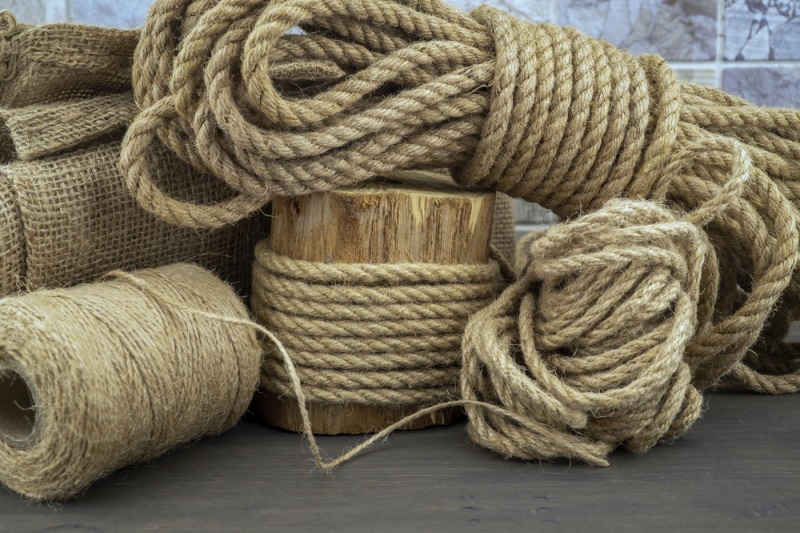
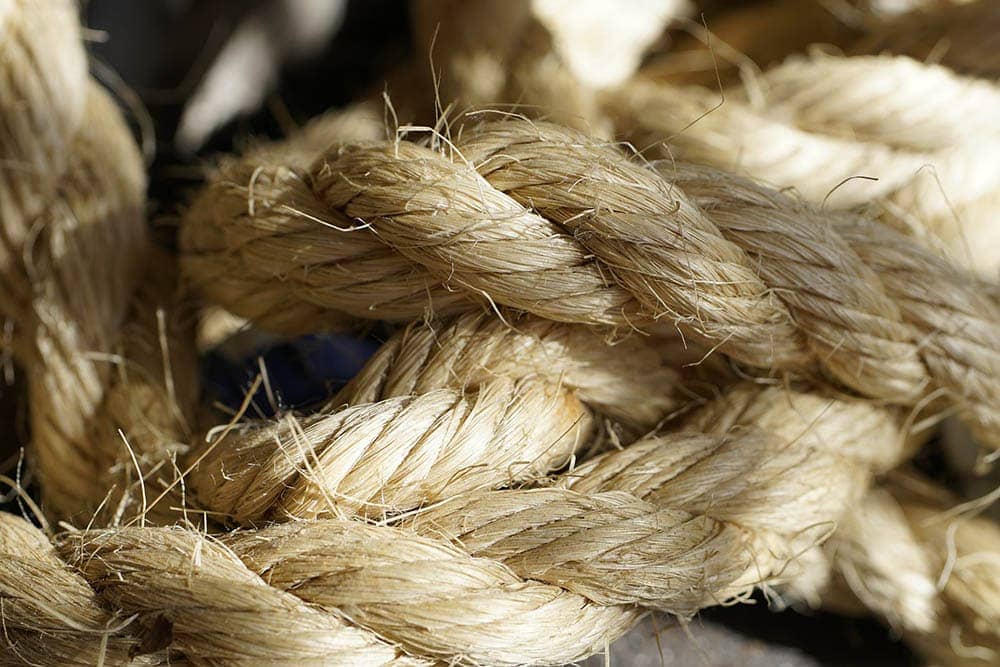
Sisal rope comes in several sizes, but most scratching trees use ¼ inch or ⅜ inch rope. Thicker ropes are likely to be bulky and difficult to work with. You can use thinner sisal rope if desired, but it will use more rope.
How Much Sisal Rope Do I Need?
The best way to know how much rope you need is to measure. Use a flexible measuring tape to measure the circumference of your post, or use a string to find the length and then measure the string if you don’t have a flexible measuring tape. Then measure the height of your post.
If you are using 1/4 inch rope, you will need four layers of rope for every inch of height, so your final rope amount will be: Circumference × Height (in inches) × 4
If you are using 3/8 inch rope, you’ll need four layers for every inch and a half of height. Your final rope amount will be: Circumference × Height (in inches) × 2.67
Best Glue for Sisal Rope Trees
When you replace your sisal rope, you’ll need glue to hold it down. Hot glue is the most common type of glue used in scratching posts because it is non-toxic, sturdy, and can hold to rope, wood, cardboard, and other materials. When using hot glue, be careful as the glue can burn. It usually sets up within a few minutes. If you are worried about using hot glue, non-toxic wood glue is a good alternative. Wood glue doesn’t set up as quickly as hot glue, but it provides a very sturdy bond between the rope and the base.
Or, if you're thinking of getting your cat something a little different, that entices play and looks like a modern piece of furniture in your home, you might think about giving our Hepper Hi-Lo Cat Scratcher a try! Its curved design targets a full range of motion, and with three height configurations and a durable design, you can be sure your cat is getting the exercise, height, and adventure they naturally desire. Click here to learn more about our innovative, functional, and funky, Hi-Lo cat scratcher.

- Premium Materials - Hepper's cardboard scratcher is made with dense, B-flute cardboard, and a metal core. Encased in a 1/2" plywood frame with gloss coating. Stable and beautiful, use after use
- High, Low and Lower - A single cat scratch pad won't keep your cat engaged. 3 unique positions keeps them coming back, and back, and back again. Finally, something to get them away from the couch!
- Activates Muscles - The Hi Lo isn't just a cat nail file to stop the chief cat couch scratcher. The deep cat scratcher wave encourages maximum musculoskeletal activation for a healthier workout
How Often to Replace Sisal Rope
How often you replace sisal rope depends on a lot of factors, especially how heavily your cat uses the post. Most sisal rope posts last between 6 months and 18 months before they need a refresh. You should always replace the rope if it is torn or hanging loose from the post. Loose loops of rope can be dangerous to cats and should be glued down or replaced.
Related Reads:
Featured Image By: Africa Studio, Shutterstock
Get Hepper In Your Inbox


Pet care tips from our vets and experts, straight to your inbox.
You may opt-out at any time. View our Privacy Policy for more information.

Chelsea Flake Mortensen is a writer with a passion for pets. She grew up around everything from cats to chameleons and loves working with all kinds of animals. Chelsea has a BA in English and Creative Writing from Brigham Young University.
Chelsea loves reading, writing, sewing, and board games. She's lived in half a dozen US states and two countries. She is currently living in New England with her husband. Her articles have been featured in various magazines and literary journals for children and adults. Her writing has been translated into over 40 languages.
Join the conversation
Ask a question, share your story, or send private feedback.