Hepper is reader-supported. When you buy via links on our site, we may earn an affiliate commission at no cost to you. Learn more.
What’s the Greatest Material for a Cat Tree? 6 Coverings Compared

In this article
A cat tree is practically a must-have item for any cat owner. But cat trees can be quite pricey; particularly the elaborate ones. Unfortunately, they will eventually wear out, as your cat’s claws tear up the material over time. When this happens, you could shell out a small fortune to replace the entire cat tree, even though only the covering is damaged. Alternatively, you could simply recover the cat tree with new material and have a practically new tree for a fraction of the price. Of course, you could even build your entire cat tree from scratch for far cheaper than purchasing one, provided you have ample DIY skills.
But once you start looking at coverings for cat trees, you’ll realize that picking the right one could be the hardest part of the whole project. Luckily, we’ve narrowed down the many choices to the six most popular options, which we’re going to compare in this article. By the end, you should be well informed about cat tree coverings, armed with enough knowledge to make a competent decision about which is best for your cat’s tree.

Top 6 Materials to Cover a Cat Tree
In truth, you could cover your cat tree in just about anything. From a burlap bag to an astroturf, practically any material could be stretched over its frame. But not every material is well suited for your cat. Some materials won’t hold up long against the damage your cat’s claws can cause. Others may not even be appealing to your cat, which could result in a cat tree that your cat never uses!
These six materials tend to be the most common choices for cat tree coverings, though they’re certainly not equal. While there’s no perfect covering, each of these materials offers some traits that you and your cat can appreciate. Compare each of them to determine which one you think will work best for your needs.
1. Loop Pile Carpet
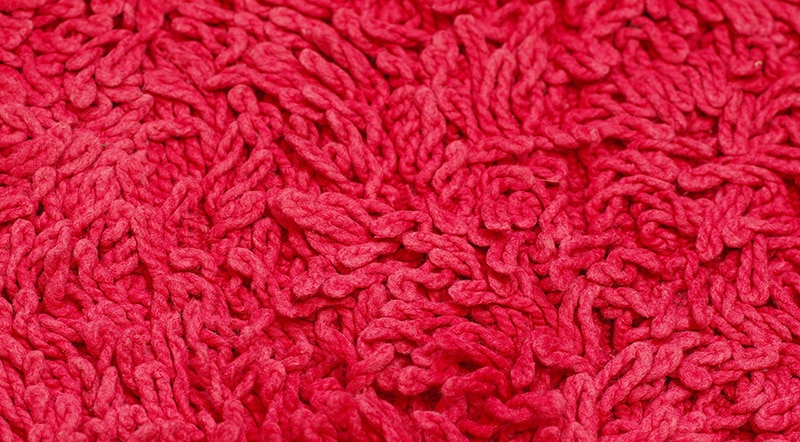
Loop pile carpet is one of the most popular types of carpeting used for flooring in homes. The carpet forms small loops; hence, the name. It tends to be rather durable and cheap, which is why it’s so often used in homes. However, it’s not an ideal material for a cat tree for several reasons.
The main problem with loop pile carpets is the loops themselves. Your cat’s claws can get snagged in these loops, which could end up harming your pet. Despite the affordable and durable nature of loop pile carpet, it’s not recommended as a top choice for a cat tree.
2. Cut Pile Carpet
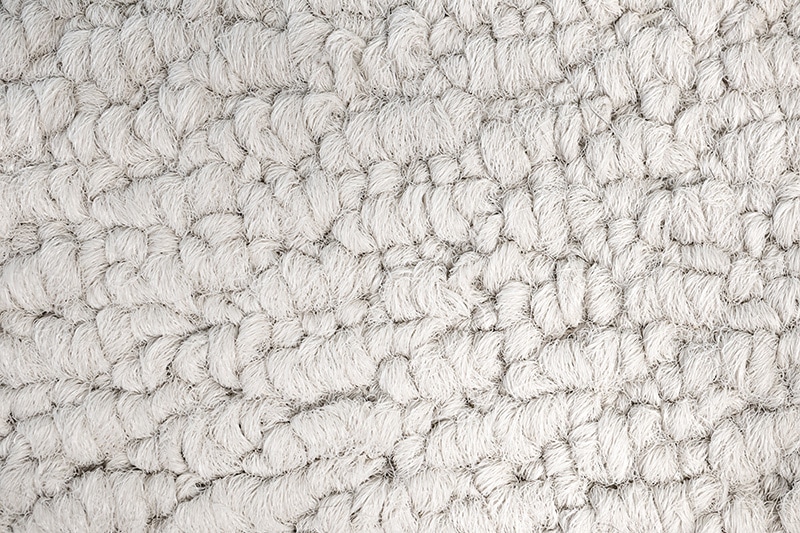
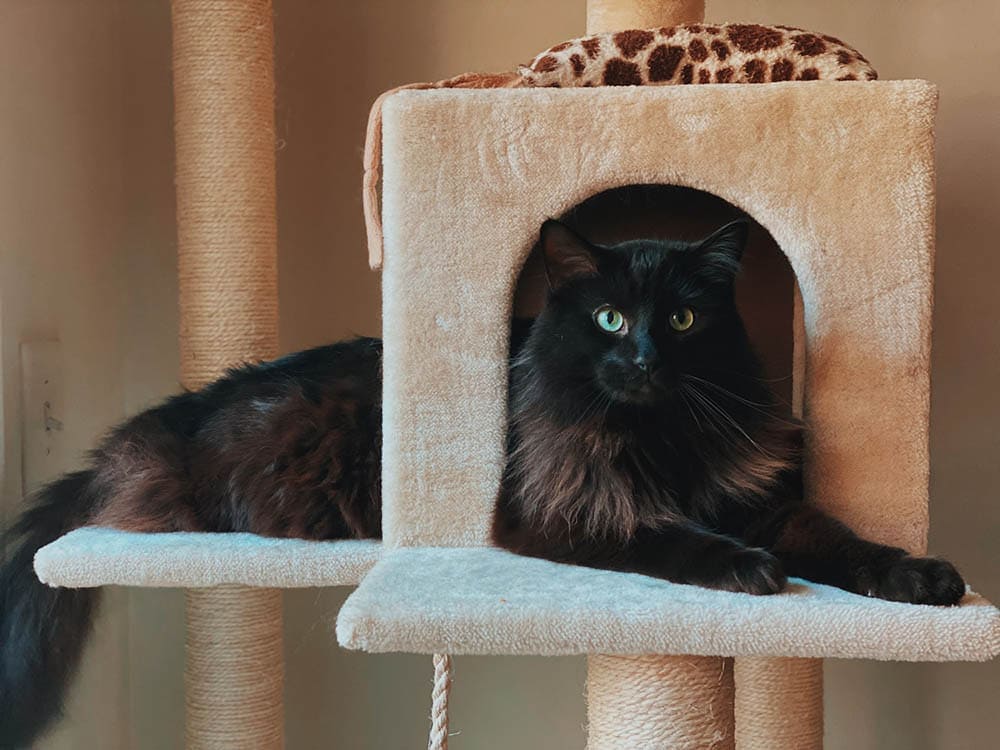
The fibers in cut pile carpet are sheared rather than looped, so your cat’s claws won’t get caught up in the loops. This makes cut pile carpet a much better alternative for cat trees. It comes in different lengths as well, and the shorter lengths tend to work best for cat trees.
When looking at cut pile carpet, you’ll have to consider the twist of the carpet. All cut pile carpets have twists to maintain the carpet’s integrity. Tighter twists make for a more durable carpet. Naturally, for a cat tree that’s intended to withstand a cat’s vicious claws, you want the tightest twists possible for the most durable carpet.
3. Sisal Carpet
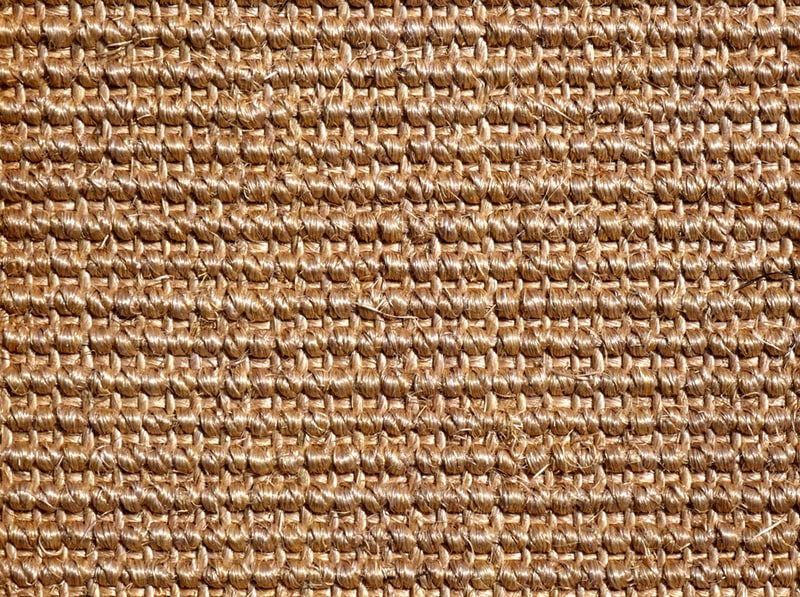
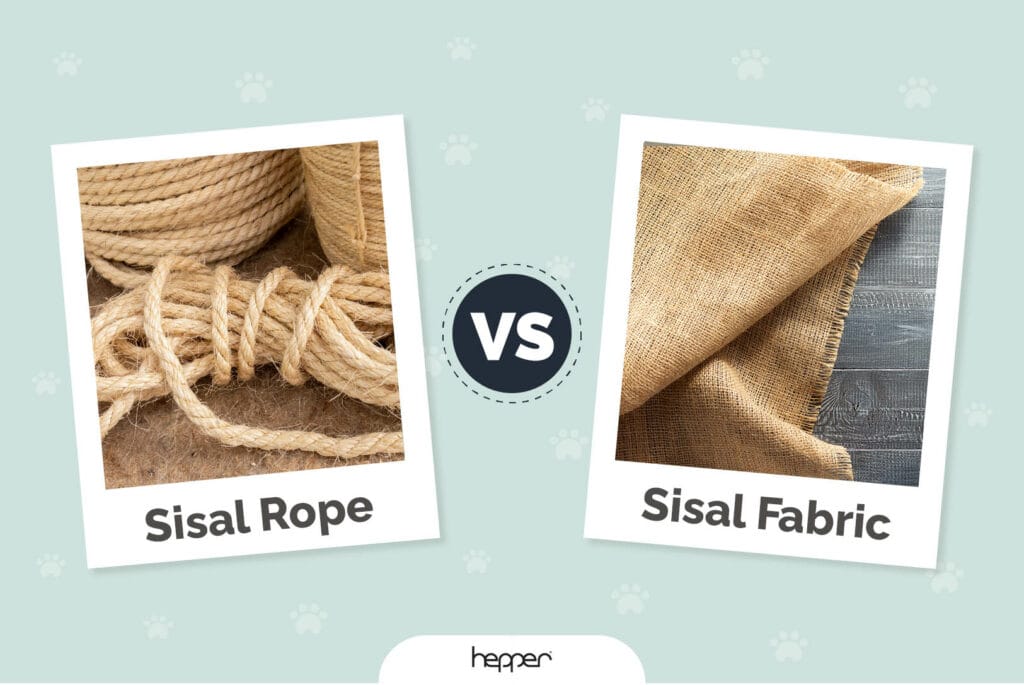
Sisal is considered to be one of the most durable materials available for carpeting, which makes it a great option for covering a cat tree. Additionally, sisal is a natural fiber, so it’s sustainable, renewable, and doesn’t have a negative impact on the environment. Sisal is also non-toxic and doesn’t off-gas any VOCs, so it’s a great option all the way around. Granted, sisal is a bit pricier than some other materials, but considering the longevity it offers, it’s a worthwhile investment.
Related Read: What is the Best Kind of Rope for Cat Scratching Posts?
4. Wool Carpet
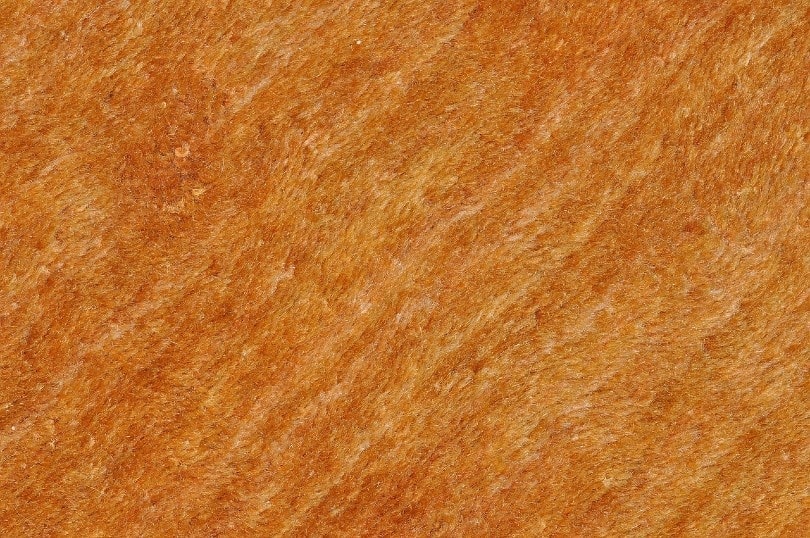
Wool carpet is sometimes used to cover cat trees, though there’s some debate about how suitable this material is. While it is considered non-toxic, many believe it’s unsafe for cats since they tend to chew on it. Still, wool is durable and usually pretty affordable, so you’ll have to determine whether you believe wool is safe for cats or not.
5. Polyester PET Carpet
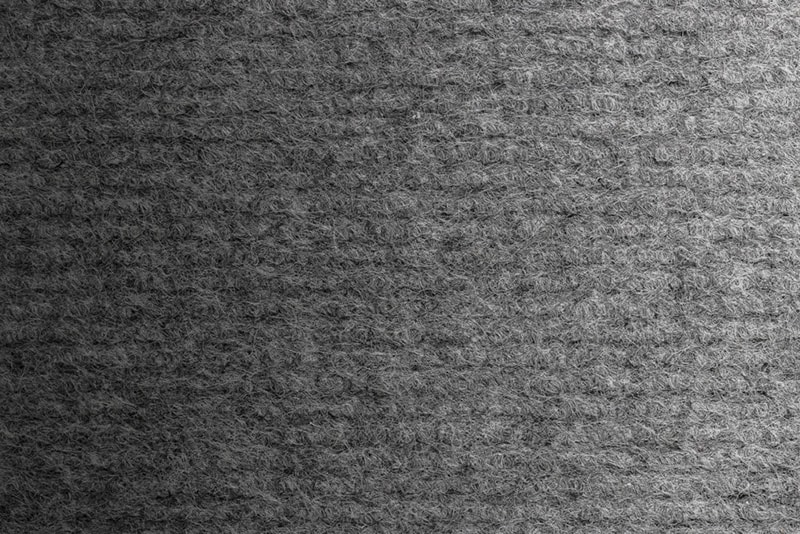
PET carpet isn’t actually made for pets. Rather, PET stands for polyethylene terephthalate, and it’s a polyester fiber that’s produced from recycled plastics. PET carpet is very durable and affordably priced. It’s completely pet-safe and able to withstand the damage caused by cats’ claws. Many consider it to be one of the safest options for pets, and if you can get it at an affordable price, it’s an option we recommend.
6. Faux Fur
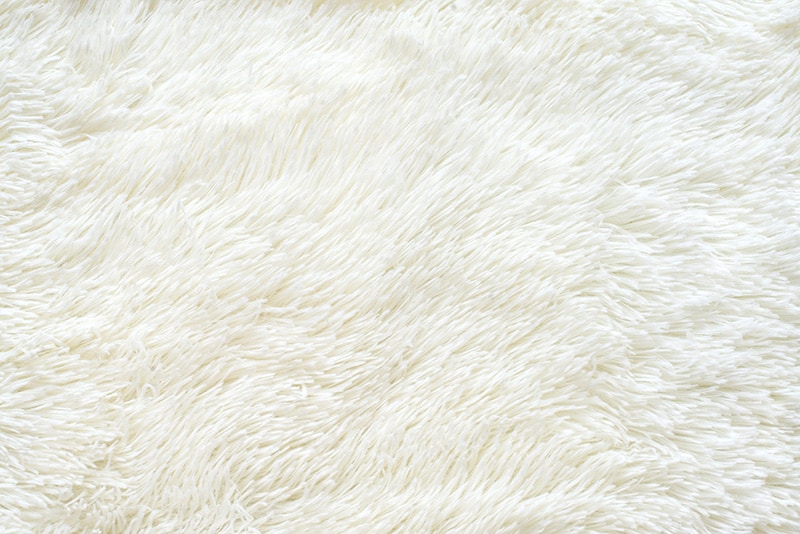
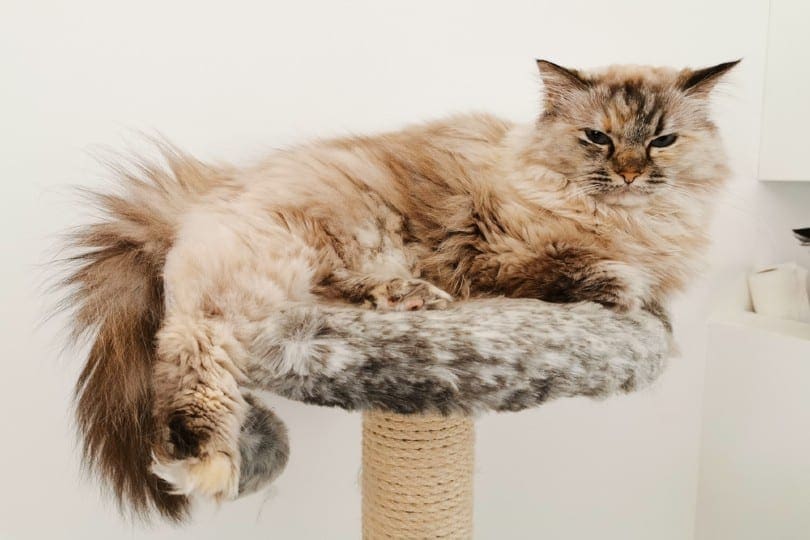
Faux fur has become extremely popular as a covering for cat trees. Granted, it’s not quite as durable as some other materials, especially when it comes to scratching. But cats are definitely attracted to the feel of faux fur, and it’s got a unique and attractive look as well. However, faux fur can be costlier than many of the other materials on this list, and since it’s not quite as durable, you’ll probably be replacing it more often than other materials.

What to Look for in a Cat Tree Covering
Now that you’ve read about some of the most popular and applicable coverings for your cat tree, it’s important to understand what traits you should be comparing when choosing between them. We’ll also discuss a few considerations you should make regardless of what material you ultimately choose, which should help you to be more prepared when you finally make a purchase.
1. Non-Toxic
Your cat is going to be scratching, rubbing up against, and possibly even chewing on the material you use to cover the cat tree. Naturally, this means that the material must be cat-safe, which means finding a non-toxic covering. The coverings on this list are non-toxic, but make sure you double-check any carpeting before you purchase it. You never know what any particular manufacturer is doing differently from the rest.
2. Carpet Length
Even once you decide on a particular material, you’ll have to figure out what length you want. Many materials come in various lengths, but for cats, shorter is generally better. Longer carpets tend to get more tangled in your cat’s claws. Plus, those longer fibers will end up all around your home for you to clean up as your cat slowly rips them out over time.
3. Durability
Cats are not easy on their cat trees. Most double as scratching posts, so you should expect the cat tree to take on substantial damage. The wrong covering material could be damaged beyond use in just a few days. Other materials could last for many months of abuse though, so it’s important to find a material that’s suitably durable for withstanding a cat’s attacks.
4. Color
Your choice of color for your cat’s tree is a purely aesthetic decision, but you’ll have to look at the cat tree all the time, so it’s worth picking a color that doesn’t abhor you. At least try to find something that matches your home’s décor!
5. Price
You’ll notice a pretty substantial price difference between certain materials. Also, consider the length of time that a particular material will last. If a material is expensive but lasts a really long time, it might be cheaper in the long run than a material that’s cheap to buy but needs replacing often.
Conclusion
Like most things in life, you have a lot of options when picking the covering material for your cat tree, but each one is a tradeoff between price, durability, appearance, and more. Luckily, your cat will enjoy destroying most of the materials you might choose to put on its tree; you just might not enjoy replacing them!
Or, if you're thinking of getting your cat something a little different, that entices play and looks like a modern piece of furniture in your home, you might think about giving our Hepper Hi-Lo Cat Scratcher a try! Its curved design targets a full range of motion, and with three height configurations and a durable design, you can be sure your cat is getting the exercise, height, and adventure they naturally desire. Click here to learn more about our innovative, functional, and funky, Hi-Lo cat scratcher.

- Premium Materials - Hepper's cardboard scratcher is made with dense, B-flute cardboard, and a metal core. Encased in a 1/2" plywood frame with gloss coating. Stable and beautiful, use after use
- High, Low and Lower - A single cat scratch pad won't keep your cat engaged. 3 unique positions keeps them coming back, and back, and back again. Finally, something to get them away from the couch!
- Activates Muscles - The Hi Lo isn't just a cat nail file to stop the chief cat couch scratcher. The deep cat scratcher wave encourages maximum musculoskeletal activation for a healthier workout
You might also be interested in:
Featured Image Credit: Veera, Shutterstock
Get Hepper In Your Inbox


Pet care tips from our vets and experts, straight to your inbox.
You may opt-out at any time. View our Privacy Policy for more information.
A true Renaissance man, Dean Eby has worked a variety of hands-on careers, including home building and remodeling, personal training, and now shares his experiences and understanding as a writer. An avid outdoorsman, Dean spends much of his time adventuring through the diverse terrain of the southwest United States with his closest companion, his dog, Gohan.
For Dean, few passions lie closer to his heart than learning. An apt researcher and reader, he loves to investigate interesting topics such as history, economics, relationships, pets, politics, and more.
Join the conversation
Ask a question, share your story, or send private feedback.