Hepper is reader-supported. When you buy via links on our site, we may earn an affiliate commission at no cost to you. Learn more.
Chameleon vs. Bearded Dragon: The Differences (With Pictures)
In this article
Stepping into the amazing world of fascinating reptiles, it is truly easy to be mesmerized by the myriad of colors, shapes, and sizes. Among the most popular and intriguing are chameleons and bearded dragons. These two reptiles often find themselves being compared, given their widespread popularity among enthusiasts. But while they might share a similar habitat, the differences between them are both subtle and significant. Let's delve deep into the world of chameleons and bearded dragons to help you choose your scaly companion.

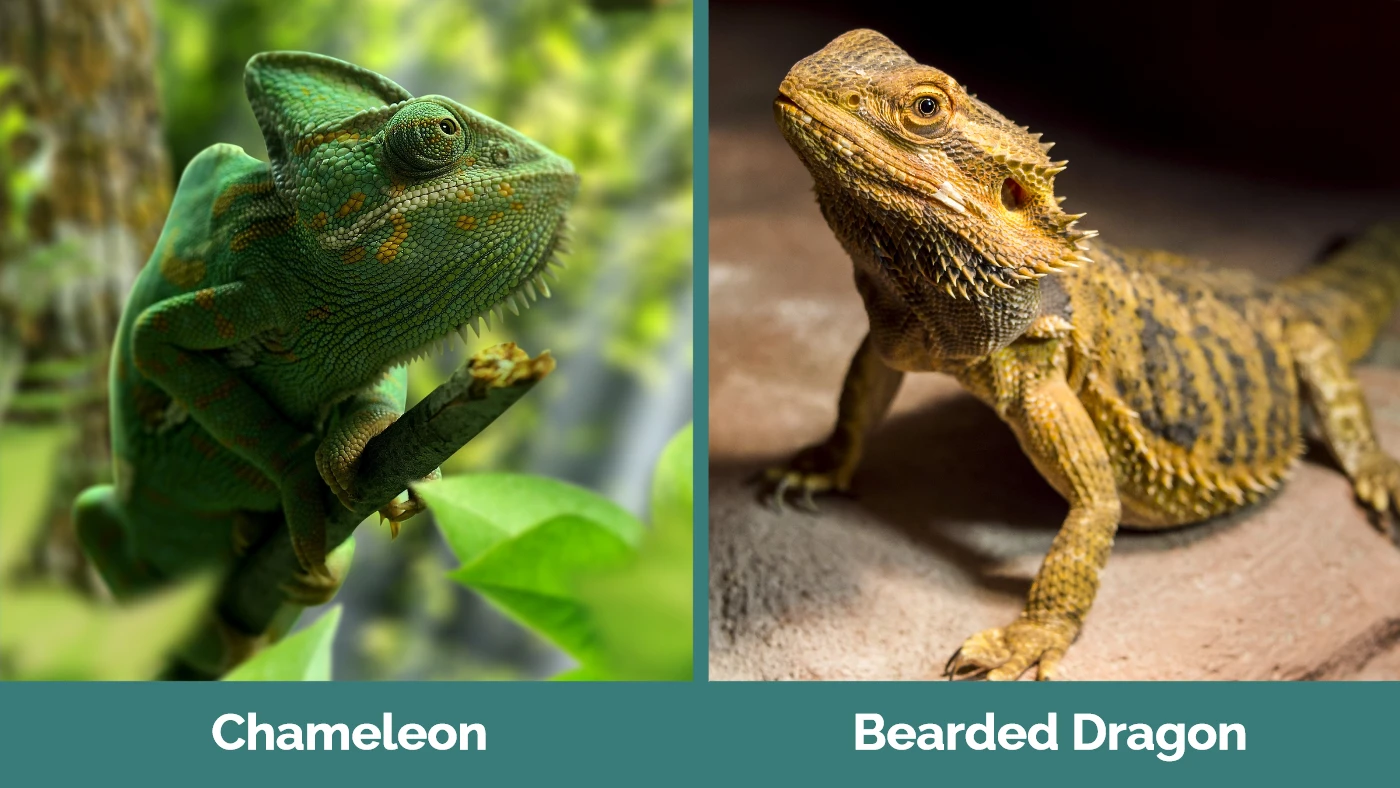
Visual Differences
At a Glance
Chameleon Overview
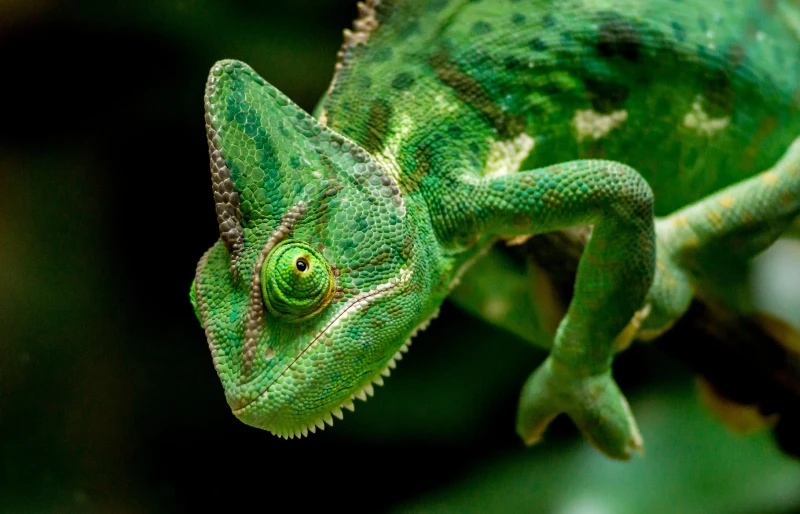
Chameleons, captivating creatures of the reptile world, are renowned for their unique ability to change colors, reflecting their moods, health, and communication needs. They possess a deliberate and often slow-moving nature, with independently mobile eyes and a long tongue tailored for catching insects.
Generally solitary, chameleons are more inclined towards observation than interaction, making them ideal for enthusiasts who appreciate the beauty of nature from a distance. Their care requirements emphasize a controlled environment with specific temperature and humidity levels, and a varied diet predominantly consisting of insects. Given their distinct needs and often shy demeanor, they're best suited for those with a deep understanding of reptile habitats.
Personality / Character
Chameleons are known for their intriguing color changes and deliberate movements. They're generally solitary animals and can be quite shy. Unlike some other reptiles, they are less likely to develop a bond with their owners but are fascinating to observe.
Health & Care
Chameleons require a controlled environment with the right humidity and temperature. Their cage setup should include live plants and ample vertical space for climbing. It's crucial to provide them with varied diet options including insects like crickets, and it is essential to ensure they get enough calcium and Vitamin D.
Exercise
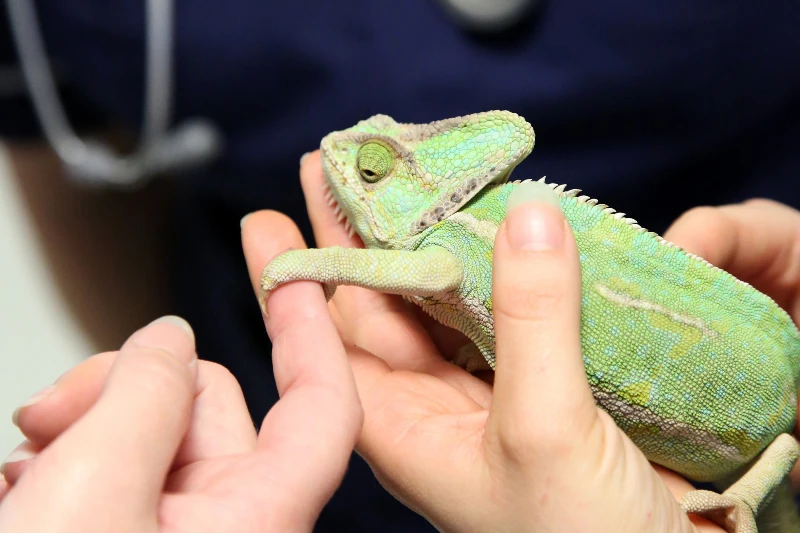
Chameleons aren't the most active reptiles, but they do enjoy their climbing and navigating sessions. Providing a vertically oriented habitat filled with branches, vines, and plants allows them to exercise their climbing skills, mimicking their natural rainforest or desert tree habitats. Regularly rearranging their enclosure can also offer them a fresh environment to explore, keeping their minds and bodies stimulated. It's important to remember, though, that chameleons prefer solitude and can become stressed with excessive handling, so their exercise is best observed rather than interacted with.
Suitable For:
Chameleons are certainly not your typical pet. They are a delight for those who find joy in watching and learning, rather than cuddling and playing. Think of them as the introverts of the reptile world; they thrive in solitude and might just give you the side-eye if you invade their space too often. This makes them a perfect match for seasoned reptile enthusiasts who understand and respect these boundaries.
While a beginner might be tempted by their unique allure, it's essential to recognize that chameleons require a certain level of care and understanding that goes beyond feeding and habitat maintenance. They're not just a pet; they're an experience and are best suited for those who can appreciate their quiet, solitary elegance.
Pros
- Intriguing color changes
- Quiet
- Low exercise needs
Cons
- Requires a very specific environment
- Less interactive
- Can be delicate health-wise
Bearded Dragon Overview
Bearded dragons, affectionately dubbed "beardies" by their many admirers, are the laid-back rockstars of the reptile realm. These Australian natives often showcase their belly-up sunbathing routine, and unlike many reptiles, they genuinely seem to enjoy human company. With their distinctive "beard" puffing up when they're feeling territorial or just want a bit of attention, they've got personality for days.
Their diet is a smorgasbord of greens, fruits, and insects, offering a fun variety of mealtime options. While they do need a spacious tank, some good UV lighting, and a bit of care with their diet, their chill nature and love for a good head pat make them an awesome choice for reptile enthusiasts, from beginners to seasoned pros. And trust us, nothing beats the feeling of a beardie's trusty head bob of approval!
Personality / Character
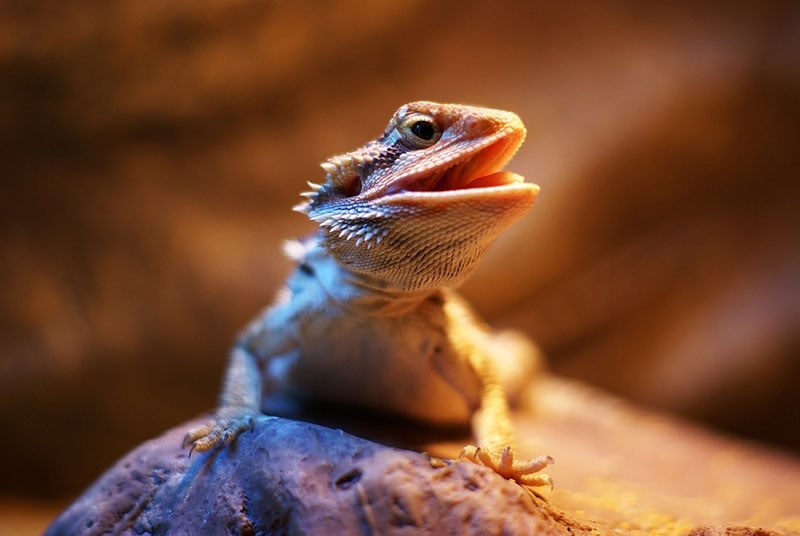
Bearded dragons are sociable and are often found basking in the sun. They have a friendly disposition, often seeking interaction with their owners. Many owners describe them as having a "dog-like" personality among reptiles.
Health and Care
Bearded dragons are hearty reptiles, but they still require attentive care to thrive. Their habitat needs to mimic the Australian outback with the right balance of heat, UVB lighting, and shelter. Their diet, a mix of insects, vegetables, and occasional fruits, should be varied to ensure they get all the essential nutrients.
Regular vet check-ups, coupled with a watchful eye for signs of lethargy, appetite changes, or skin issues, are crucial. With proper care, these affable lizards not only live a healthy life but also develop a strong bond with their owners, showcasing their playful and inquisitive nature.
Exercise
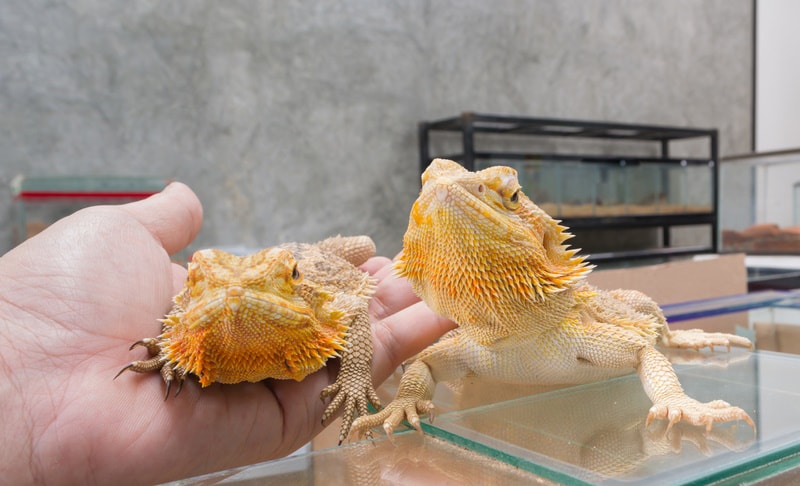
Bearded dragons are more grounded than chameleons and love to roam, bask, and explore. While they aren't overly athletic, they do appreciate some playtime outside their enclosures. Providing them with a safe, supervised area to roam in your home can be a delightful experience for both of you.
Additionally, toys or small obstacles in their habitat can encourage them to move and explore. A gentle interaction, like hand-feeding or letting them climb on you, can also serve as a form of physical engagement, helping to strengthen the bond between you and your scaly friend.
Suitable For:
Bearded dragons are the charismatic stars of the reptile world. Their amiable disposition, often seen with them lazily lounging or curiously exploring, has won the hearts of many. For newcomers to the world of reptiles, bearded dragons serve as the perfect introduction. They are forgiving to the learning curve and are often eager to interact, making them feel less like a pet and more like a scaly companion.
At the same time, their charm is not lost on veteran reptile enthusiasts. Even those with vast experience find joy in the bearded dragon's straightforward care and endearing quirks. Whether you're just dipping your toes into the world of reptiles or have been immersed in it for years, a bearded dragon promises a fulfilling and delightful experience.
Pros
- Friendly disposition
- Sociable
- Relatively easy care
Cons
- Requires a spacious terrarium
- Dietary needs can be highly varied
Which One Is Right for You?
When you're on the cusp of welcoming a reptilian friend into your home, understanding their individual personalities and requirements is crucial. Chameleons are nothing short of mesmerizing. They are like the enigmatic, introverted artists of the reptile world. Owning a chameleon can be likened to having a piece of living art in your home. They require careful observation, patience, and understanding. While they might not be the type to seek out interaction, there's an undeniable joy in watching them thrive and exhibit their natural behaviors in an environment you've lovingly crafted for them.
Bearded dragons, on the other hand, are the extroverted, sun-loving adventurers. They have a knack for making their presence felt, whether it's through their curious explorations or their penchant for basking under the heat lamp. Owning a bearded dragon offers more tactile satisfaction. They are not just creatures to observe from a distance but companions to interact with. Their expressive eyes, head bobs, and gentle disposition make them one of the most sociable reptiles you can own. For those seeking a more hands-on experience where the bond between owner and pet is palpable, the bearded dragon is an undeniable favorite.
Ultimately, the choice between a chameleon and a bearded dragon boils down to personal preference and lifestyle. Do you see yourself as a patient observer, content with watching the subtle shifts of nature, or are you after a more tangible bond, where every day offers a new interaction and learning opportunity? Both reptiles, while different in their quirks and needs, offer profound experiences that can enrich your life. Ensure you're equipped, both in knowledge and resources, to cater to their specific requirements. After all, both these creatures, in their unique ways, will rely on you to recreate a slice of their natural habitat and provide them with a fulfilling life!
See Also:
Horny Toad vs Bearded Dragon: Differences Explained (With Pictures)
Ball Python vs. Bearded Dragon: The Key Differences (With Pictures)
Sources
Featured Image Credit: Left - AQgraphy, Pixabay | Right - Angelaravaioli, Shutterstock
Get Hepper In Your Inbox


Pet care tips from our vets and experts, straight to your inbox.
You may opt-out at any time. View our Privacy Policy for more information.

Melody Russell is an experienced pet enthusiast with a background in the animal care industry. She has worked at a zoo, served as a dedicated pet sitter, and has a passion for breeding and raising leopard geckos. As a versatile freelance writer, she excels in various genres, crafting captivating stories, informative articles, and engaging social media content. You can find her cat page, TheCommonKitties_, on Instagram, where she shares the adorable antics of her beloved feline companions. With her practical expertise and creative flair, she is eager to contribute her skills in pet care and writing to make a positive impact on the lives of animals.
Join the conversation
Ask a question, share your story, or send private feedback.