Hepper is reader-supported. When you buy via links on our site, we may earn an affiliate commission at no cost to you. Learn more.
Puppy’s First Night at Home: 6 Tips to Survive the First 24 Hours
Introducing a new puppy to your family dynamic is always an exciting experience for everyone involved. While there is great fun and adventure to expect, the first 24 hours can be stressful and a bit of a struggle as everyone adjusts to the new family addition. Your new puppy might be cute and cuddly one minute, then decide to tear things up the next minute. They may cry in the middle of the night because they are in unfamiliar territory.
Fortunately, it shouldn’t take more than a day or two for your pup to get comfortable in their new surroundings. Until then, there are a few things that you can do to make surviving the first 24 hours with your new furry family member less stressful and more enjoyable overall. Here are our top six tips.

The 6 Tips on How to Survive the Puppy’s First Night at Home
1. Puppy-Proof Your House
Before bringing your new puppy home for the first time, make sure your house is puppy proofed. If it isn’t, there is a high chance that your pup will get into some kind of trouble before the first day is over. Things that you can do to make sure your house is safe for your new pet include:
- Ensure that all trash cans have lids on them, or place them in places (like the closet or in a cabinet under the sink) where your dog won’t be able to reach them.
- Make sure all power cords are hidden behind furniture or off the ground so your pup cannot chew on them.
- Move all your cleaning supplies to shelves or closets where the dog cannot access them.
- Ensure that all medications are moved off the tables and put away in a medicine cabinet.
- Always keep the toilet lid closed, and ensure that everyone closes it whenever they finish using the bathroom.
- Make sure all low windows are closed so your dog can't escape through them.
- Pick up all small objects off the floor that could be choking hazards, such as paper clips, coins, and rubber bands.
2. Create a Dedicated Sleeping Space
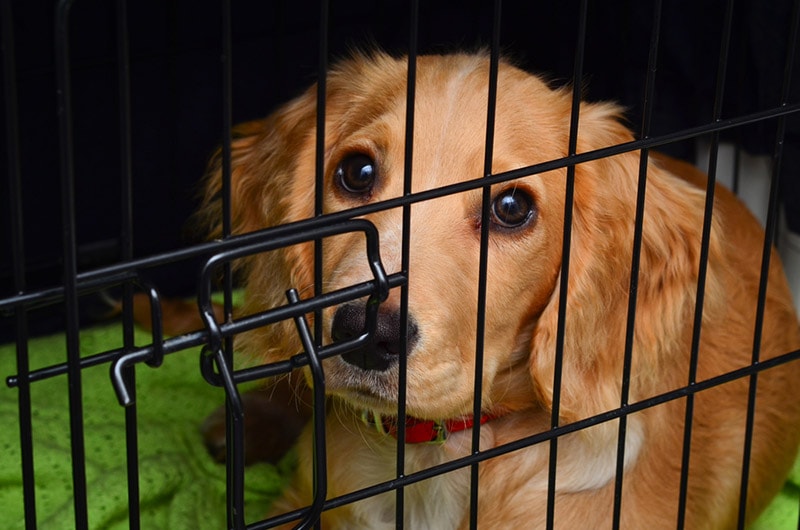
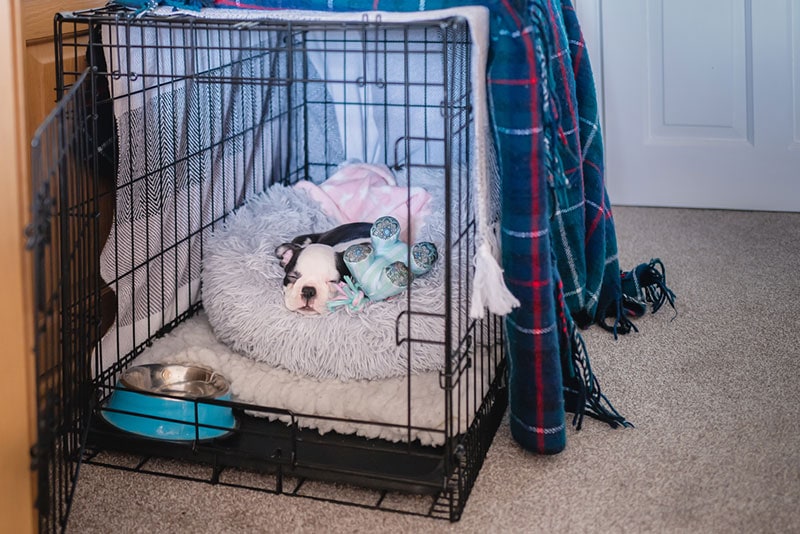
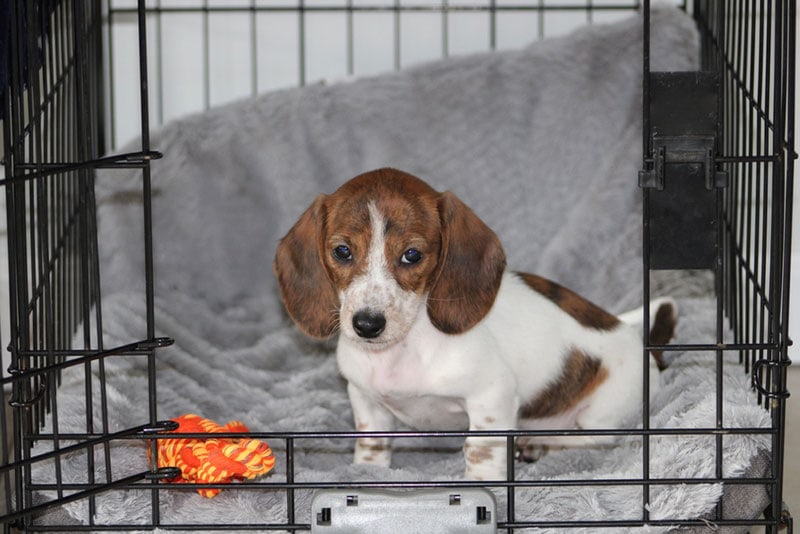
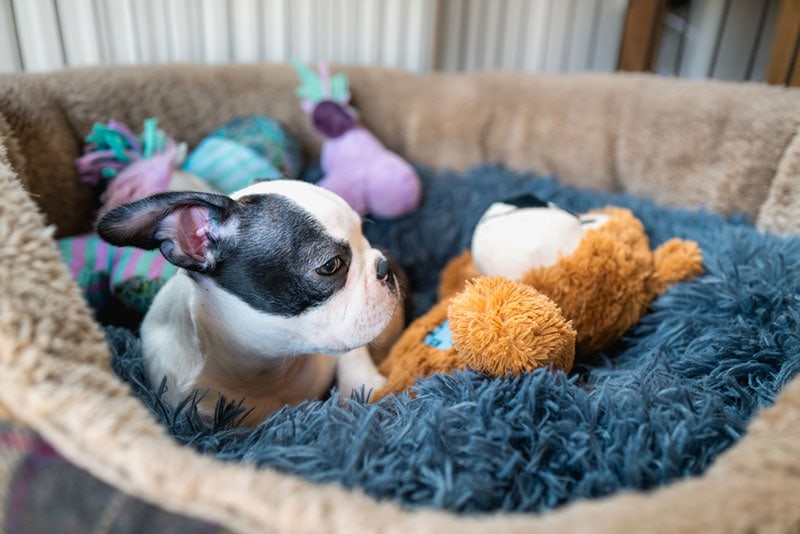
It’s a good idea to set up a crate in your bedroom for your new puppy to sleep in. The crate should provide your dog with a sense of comfort so they don’t feel so vulnerable while everyone is asleep throughout the night. It will also help keep your puppy secure while you’re sleeping so they don’t get into something that they shouldn’t or accidentally injure themselves.
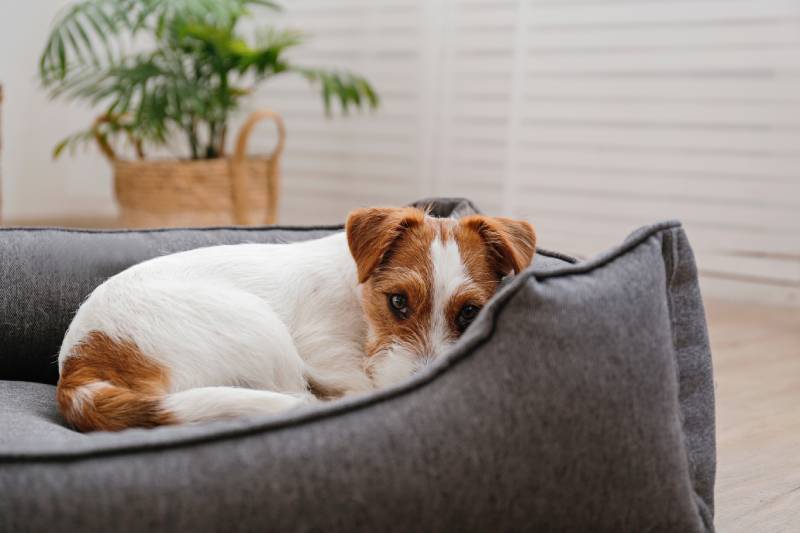
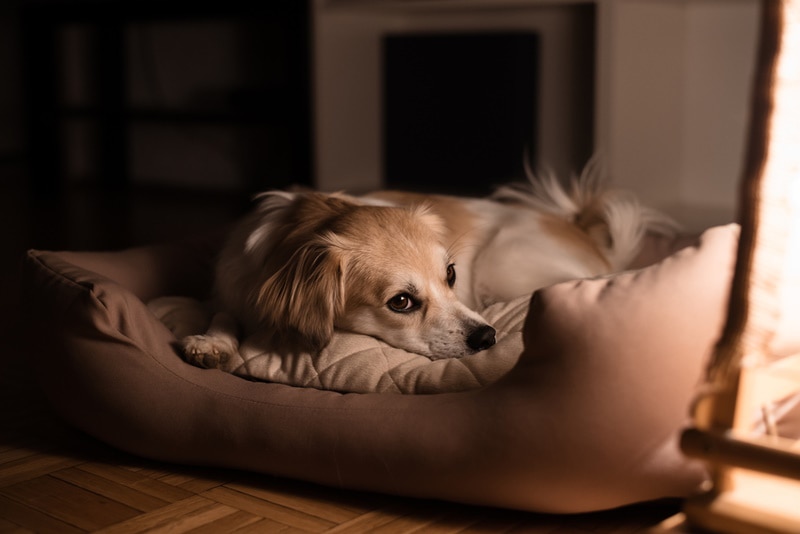
Put a cozy blanket and a squishy toy in the kennel for extra comfort. If you can’t get a crate, you can create a cozy bed for your pup by putting a blanket inside a shallow box. However, this option will not keep the dog secure, so you may want to stay awake or take turns sleeping with someone else in the household to make sure the dog doesn’t end up getting into any trouble, at least for this first night.
3. Personalize Your Puppy’s Sleeping Space
It’s a good idea to put something that has your scent on it inside your puppy’s crate/box so they can sleep on it. Being exposed to your scent while you’re sleeping and not there to hold and interact with your pup will allow them to bond with you, so they feel even closer to you when you wake up to interact with them in the morning.
You can place a small personal item or a piece of clothing like a t-shirt or a sock in with their bedding so they can snuggle up with it. If possible, place something that belongs to each person in your household so the pup can get used to everyone’s different smells.
4. Introduce an Artificial Heartbeat to the Sleeping Space
Puppies tend to snuggle up and listen to their mother’s heartbeat when they sleep, so introducing an artificial heartbeat to their sleeping space can help ensure that they feel comfortable and don't end up crying out of fear during the night. You can find snuggly toys with built-in “heartbeats” that are battery operated and machine washable.
Alternatively, you can use an old analog clock, as that will mimic the sound of a heartbeat. Just place it next to your puppy’s kennel, and turn it on when it’s bedtime. The noise might annoy you, though, so be prepared to wear a pair of earbuds, or place the pup’s crate right outside your bedroom door, where the noise won’t be so loud.
5. Make Interaction Before Bed a Priority
To make sure your new puppy feels confident and sleeps well throughout the night, spend at least half an hour interacting and playing with them before you put them in their crate or sleeping space. This will help them burn pent-up energy so they can fall and stay asleep more easily. The interaction will also give your new dog a chance to know you better so they are more comfortable with you when it’s time to wake up in the morning.
Keep in mind that you don't want to rile up your puppy right before bed, as this could have the opposite effect to what you're looking for. Good ways to interact before bed include playing with a puzzle toy, walking around the house to sniff things out, playing hide-and-seek with treats, and practicing basic obedience commands.
6. Set Alarms for Nighttime Bathroom Breaks
Puppies have a hard time holding it when they have to use the bathroom. Therefore, it’s a good idea to set your alarm for every 3 to 4 hours after going to sleep so you can take them out for a bathroom break. If they whine during the night, it could mean they need to use the bathroom, so be prepared to get up multiple times, at least the first night that you spend together. After a while, you will get to know your dog’s schedule and can work around it without losing too much sleep.

Conclusion
Bringing a new puppy home should be a joyous occasion, but it's easy for stress to enter the picture if you're not properly prepared. Hopefully, the tips and tricks outlined here will help make the process of introducing your new pup to their forever home an enjoyable one. Make sure you get the entire family involved for the best results.
Featured Image Credit: Christine Bird, Shutterstock
Get Hepper In Your Inbox


Pet care tips from our vets and experts, straight to your inbox.
You may opt-out at any time. View our Privacy Policy for more information.

Rachael has been a freelance writer since 2000, in which time she has had an opportunity to research and write about many different topics while working to master the art of fusing high-quality content with effective content marketing strategies. She lives off the grid in Hawaii with her husband, her garden, and her rescue animals including 5 dogs, a cat, a goat, and dozens of chickens. She is an artist at heart and loves to read, paint, and make jewelry in her spare time. As a vegan, Rachael is obsessed with helping animals in need both in her community and anywhere in the world where she feels she can make a difference. Animals also happen to be her favorite topic to write about!
Join the conversation
Ask a question, share your story, or send private feedback.