Hepper is reader-supported. When you buy via links on our site, we may earn an affiliate commission at no cost to you. Learn more.
61 Types of Persian Cat Colors (With Info & Pictures)

In this article
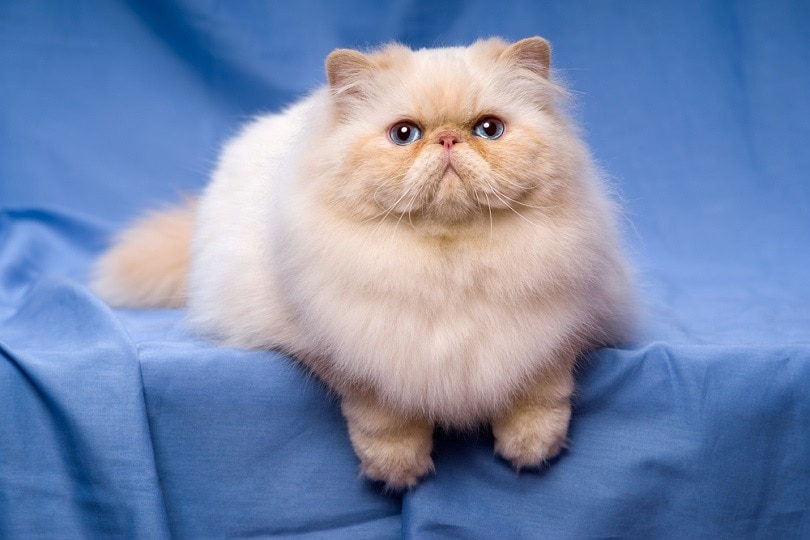
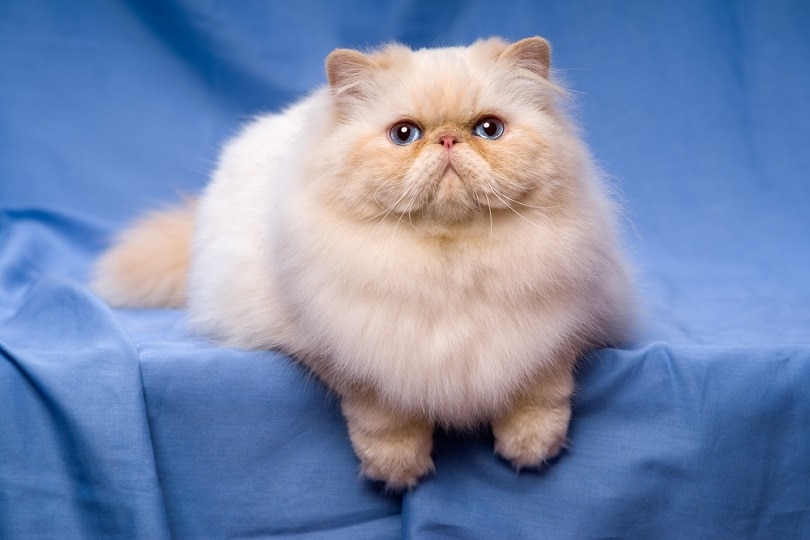
Persian cats are one of the most popular cat breeds in the world, and they have been for a very long time. Known for their luxurious long coats and sweet personalities, Persian cats have gone through many changes over the years. For instance, that trademark flat face is a more recent addition that wasn’t part of the breed when it was first originating.
Today, the Persian breed is diverse, and there are seven different divisions of Persian cats that are recognized by the Cat Fanciers’ Association, adding up to more than 60 different colors that you can get a Persian cat in.

Solid Division
Persian cats of the solid classification sport only a single coat color that’s uniform all over. White solid-colored Persians can have three different eye colors: copper, blue, or one of each. Other solid-colored Persians all have copper eyes. Some colors, such as blue, white, and black, are rather commonplace among the breed, while chocolate and lilac are much rarer, having been produced by mixing with Himalayan Persians.
White
Black
Blue
Chocolate
Cream
Lilac
Red
Silver and Gold Division
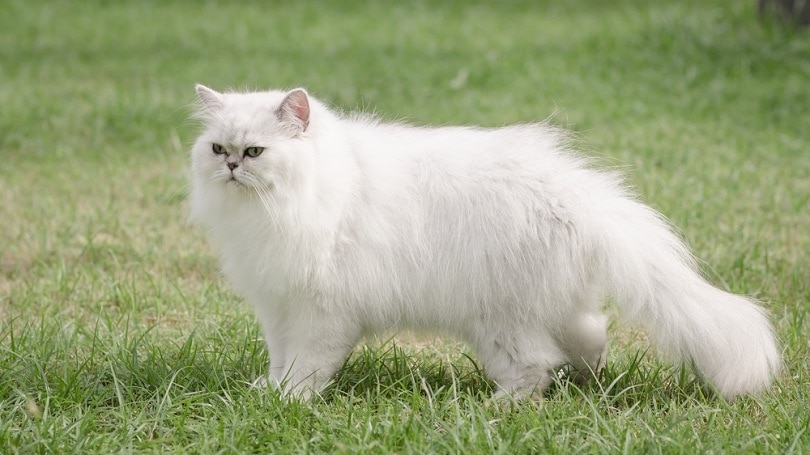
Silver and gold Persians are some of the most exquisite specimens in the breed. They come in chinchilla and shaded varieties. Shaded Persians appear to have even black shading over their darker parts. Chinchilla Persians are a brilliant white with black tipping. The eyes of silver or golden Persians are green or blue-green with black rims.
Shaded Golden
Shaded Silver
Chinchilla Golden
Chinchilla Silver

Smoke and Shaded Division
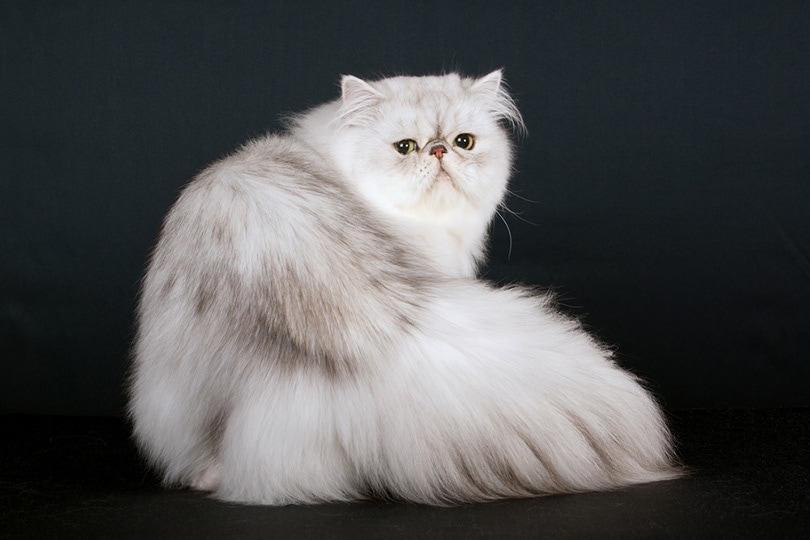
Smoke Persians are a sight to behold. When the cat is still, it appears to have a solid-colored coat. However, once the cat starts to move, the coat opens up, showing the stark contrast of a bright white undercoat. Cameo, shell, and shaded Persians display coats that have multi-colored hairs with tips that are a separate color from the contrasting undercoat.
Black Smoke
Blue Smoke
Blue-Cream Smoke
Cream Smoke
Cameo Smoke (Red)
Cream Shell Cameo
Cream Shaded Cameo
Shaded Cameo
Shell Cameo
Tabby Division
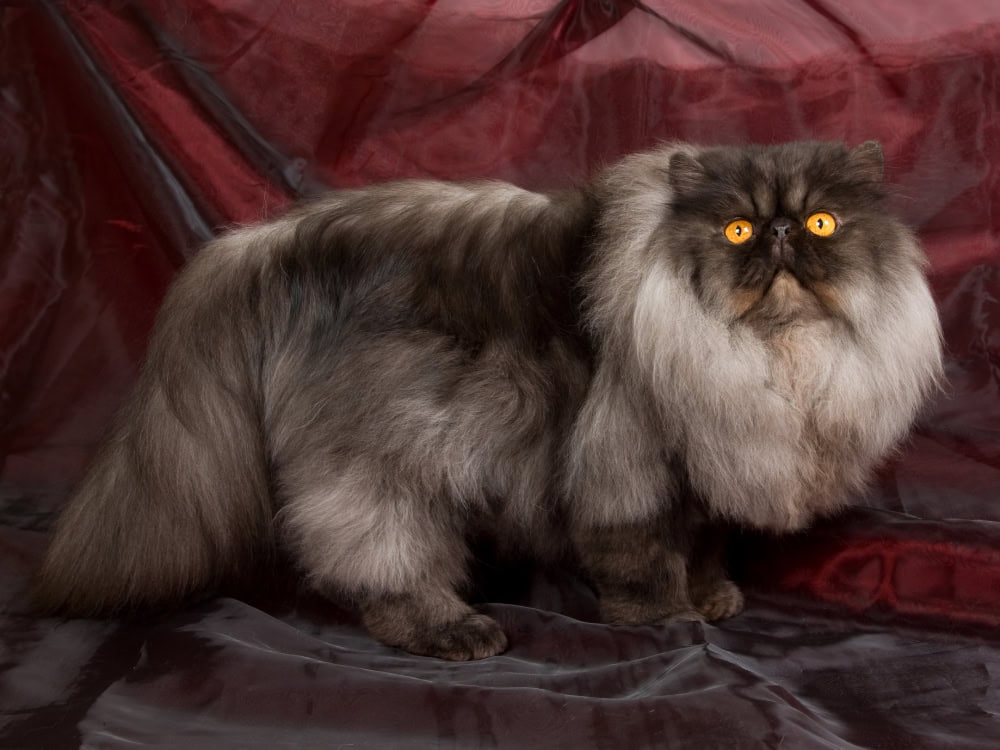
There are three patterns recognized in the tabby division, which are patched, classic, and mackerel. Classic tabbies have bull’s eye markings on their sides. Mackerel Persians have narrow pencil-like stripes that run around their bodies. Patched tabbies are mackerel or classic tabbies with the addition of red patches. Patched tabbies do not come in red, cream, or cameo. Silver tabbies can have green, hazel, or copper eyes, but all other tabby Persians have copper eyes.
Blue
Blue-Silver
Brown
Cameo
Cameo-Cream
Cream
Red
Silver
Particolor Division
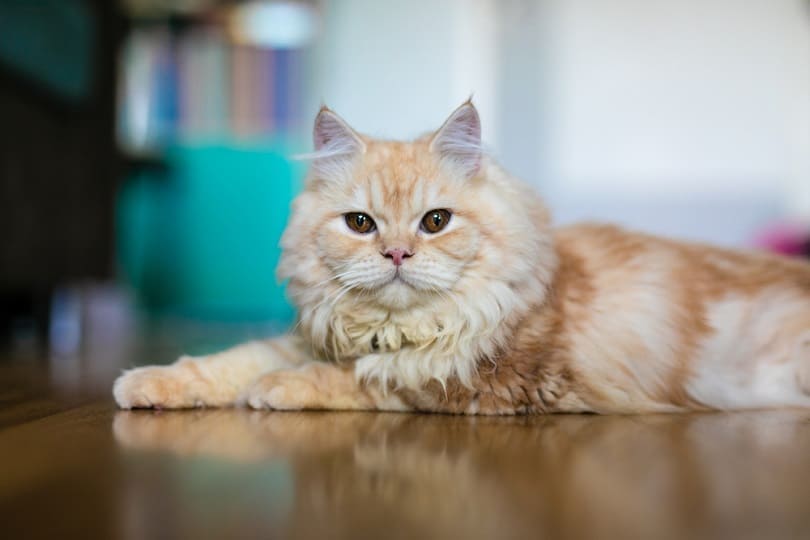
Tortoiseshells are black with large red patches. The cream varieties have muted coloring that makes them appear soft, while the tortoiseshell variations are vibrant and eye-catching. All particolor Persians exhibit copper eyes.
Blue-Cream
Chocolate Tortoiseshell
Lilac-Cream
Bicolor Division
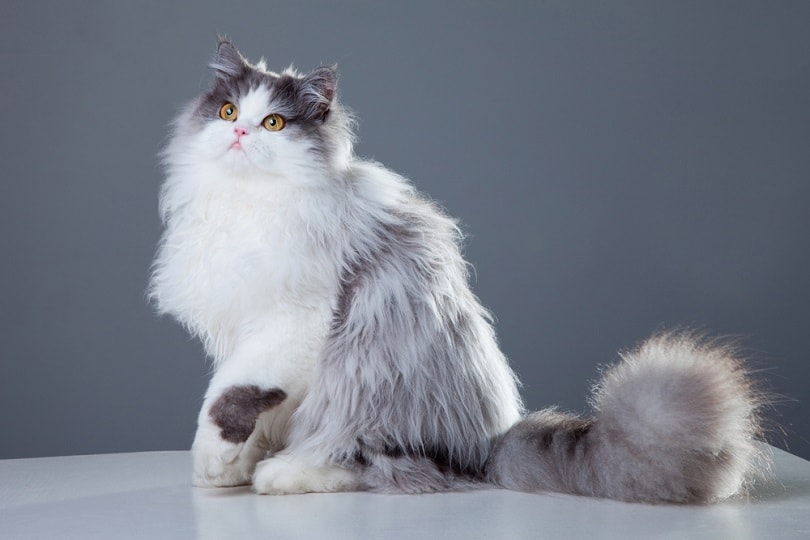
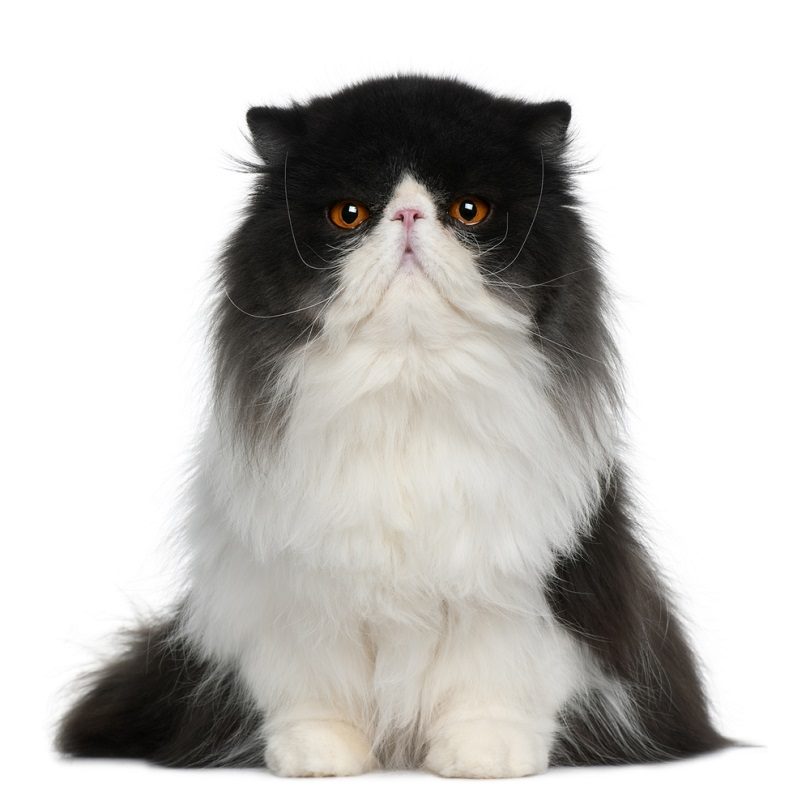
There are just two patterns in the Bicolor division, though they can display a range of colors. Van Persians have white coats with up to two spots of color limited to the head, limbs, and tail. Classic Persians are bi-colored. They usually have color on the top while their bellies and legs are white. Calico Persians have patches of black and red strewn over a white base coat.
Black and White
Blue and White
Red and White
Cream and White
Chocolate and White
Lilac and White
Calico
Chocolate Calico
Lilac Calico
Dilute Calico
Himalayan Division
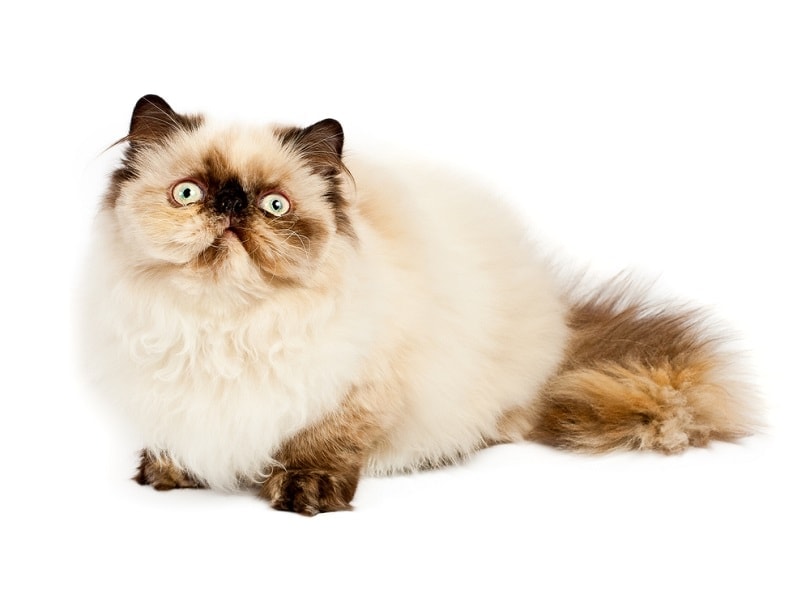
Himalayan Persians were created by crossing Siamese cats with Persians to bestow the Siamese color pattern on Persian cats. Eventually, they were accepted as a Persian variation, rather than a cross or a separate breed. The Himalayan division is one of the largest and most diverse, but all members must exhibit bright blue eyes. All Himalayan Persians display base coats that range from white to fawn with coloring restricted to the points.
Blue Point
Blue-Cream Point
Chocolate Point
Chocolate-Tortie Point
Cream Point
Flame Point (Red)
Lilac Point
Lilac-Cream Point
Seal Point
Tortie Point
Seal Lynx
Blue Lynx
Cream Lynx
Tortie Lynx
Red Lynx
Blue-Cream Lynx
Lilac Lynx
Chocolate-Tortie Lynx
Lilac-Cream Lynx
Conclusion
Though all of these cats are considered Persians, they span a wide range of appearances, making the Persian breed one of the most diverse in the domestic feline world. Whatever your preference, you can almost certainly find it among the varied selection of colors and patterns that come on Persian cats.
Featured Image Credit: Dorottya Mathe, Shutterstock
Get Hepper In Your Inbox


Pet care tips from our vets and experts, straight to your inbox.
You may opt-out at any time. View our Privacy Policy for more information.
A true Renaissance man, Dean Eby has worked a variety of hands-on careers, including home building and remodeling, personal training, and now shares his experiences and understanding as a writer. An avid outdoorsman, Dean spends much of his time adventuring through the diverse terrain of the southwest United States with his closest companion, his dog, Gohan.
For Dean, few passions lie closer to his heart than learning. An apt researcher and reader, he loves to investigate interesting topics such as history, economics, relationships, pets, politics, and more.
Join the conversation
Ask a question, share your story, or send private feedback.