Hepper is reader-supported. When you buy via links on our site, we may earn an affiliate commission at no cost to you. Learn more.
10 Interesting Types of Bicolor Cat Breeds (With Info & Pictures)
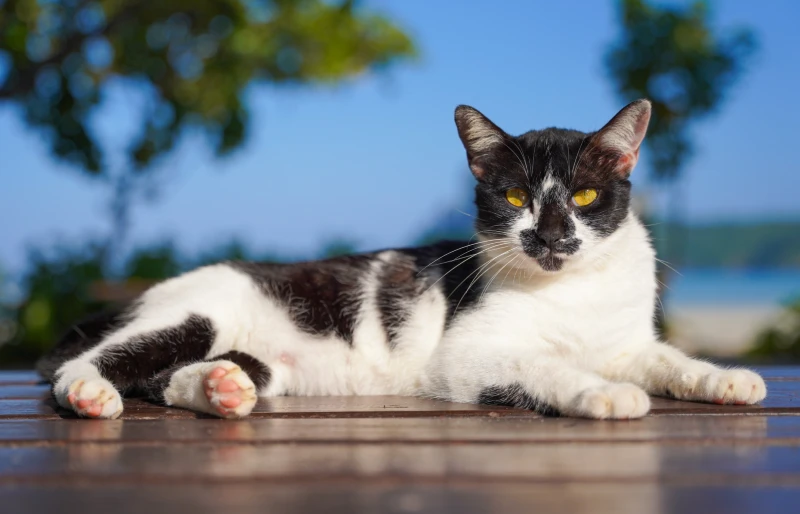
A bicolor cat has some degree of white spotting alongside its primary fur color. The amount of white coloring can vary from minimal to almost completely white. Bicolor cat colors can occur in many different breeds, some of which we’re going to take a closer look at today. Keep reading to learn more about the genetics behind bicoloration and about 10 different breeds that often have bi-color patterning.

The 10 Types of Bicolor Cat Breeds
1. Seychellois Cat
Breed Overview
Origin:
Weight:
Lifespan:
Temperament:
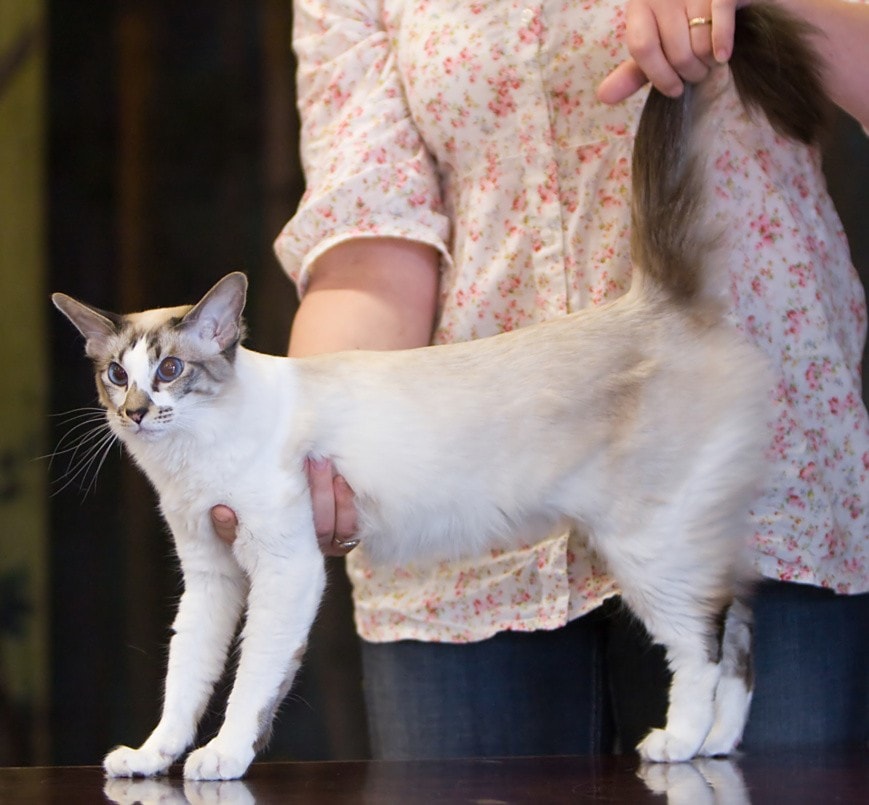
The Seychellois is an exceedingly rare and relatively new cat breed. They are the result of breeding bicolored Persians with Siamese and Oriental cats, but they tend to be very similar in appearance and personality to the Siamese. Any bicolored Siamese or Balinese is technically considered a Seychellois. This breed is known for being vocal and very affectionate. They have a white base color but can come with tortie or tabby color points.
2. Turkish Van Cat
Breed Overview
Origin:
Weight:
Lifespan:
Temperament:
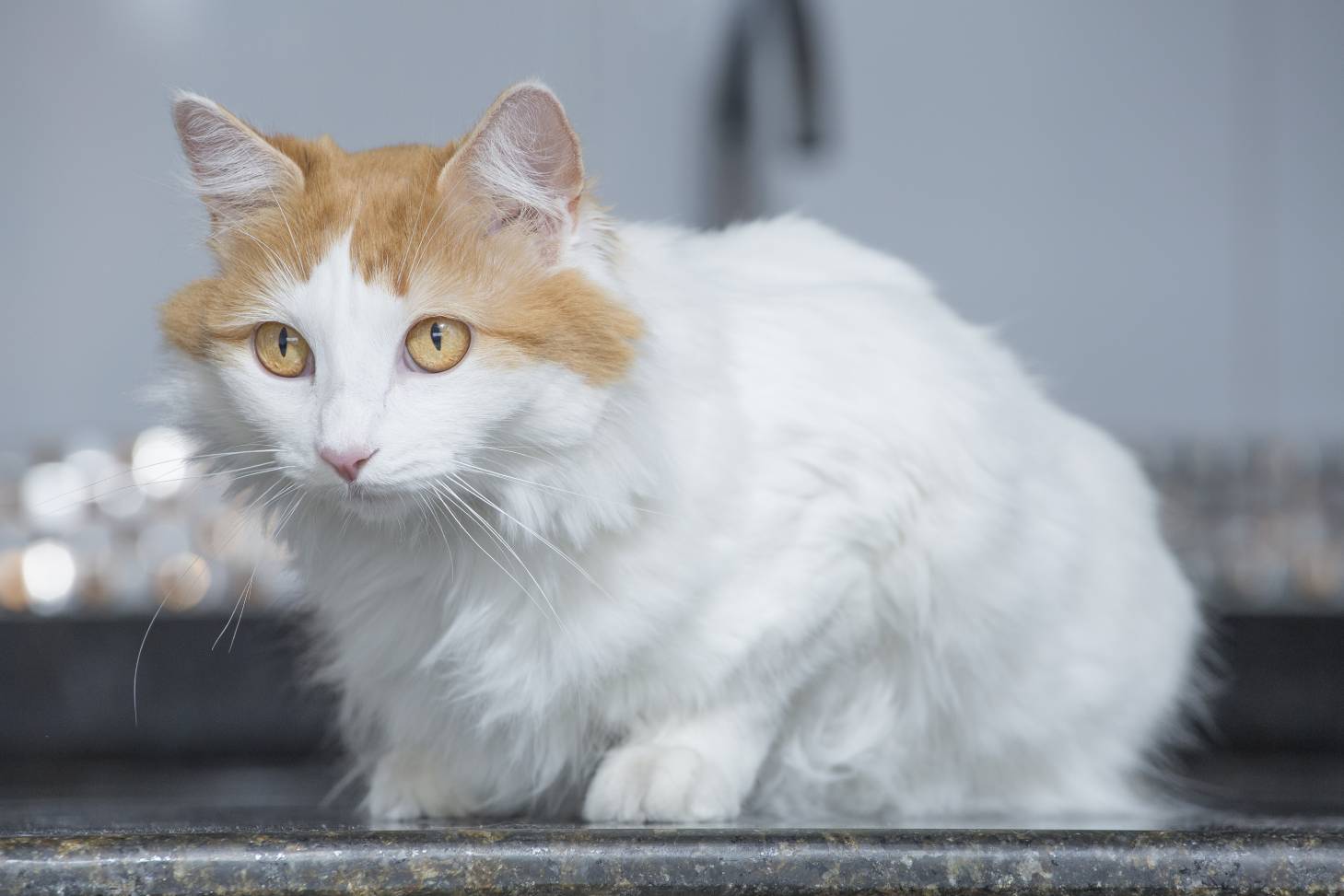
The Turkish Van Cat is a rare cat breed that’s easy to distinguish, thanks to its unique pattern. The Van pattern, which is named after the breed itself, restricts the colored points to the head and tail. The rest of the cat is white. Turkish Vans have blue or amber eyes, though they can also be odd-eyed (one blue eye with one green, yellow, or brown eye). This breed is known for its mischievous tendencies and love of water.
3. Turkish Angora Cat
Breed Overview
Origin:
Weight:
Lifespan:
Temperament:
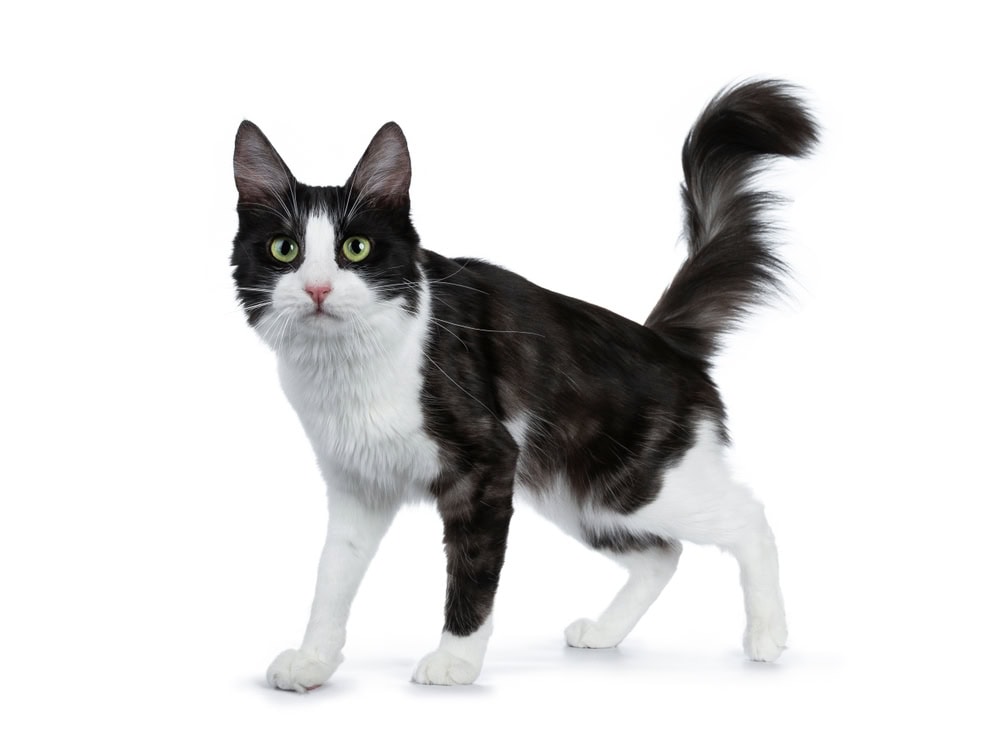
The Turkish Angora Cat is a natural breed that originated where modern-day Turkey is. This breed is known for its long shimmery white coat and fluffy tail. They can display a wide variety of coloring, including bicolor, tabby, black, and smoke color. Turkish Angora eyes run the gamut from blue, green, amber, and yellow, and can even be heterochromatic. This breed is known for its sweet, intelligent, and loyal personality. They are easy to train and seem to bond with one member of their family.
4. Oriental Bicolor Cat
Breed Overview
Origin:
Weight:
Lifespan:
Temperament:
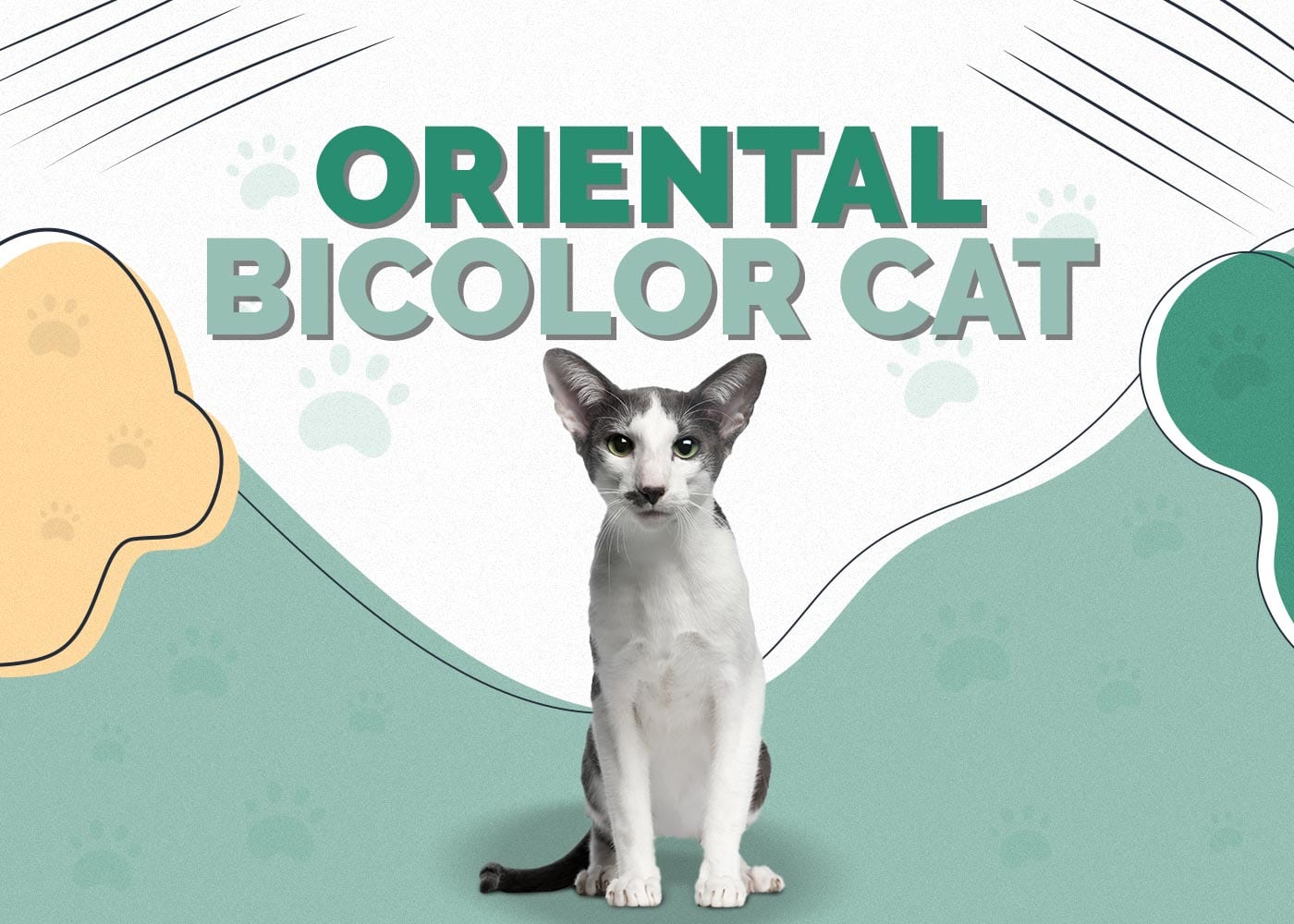
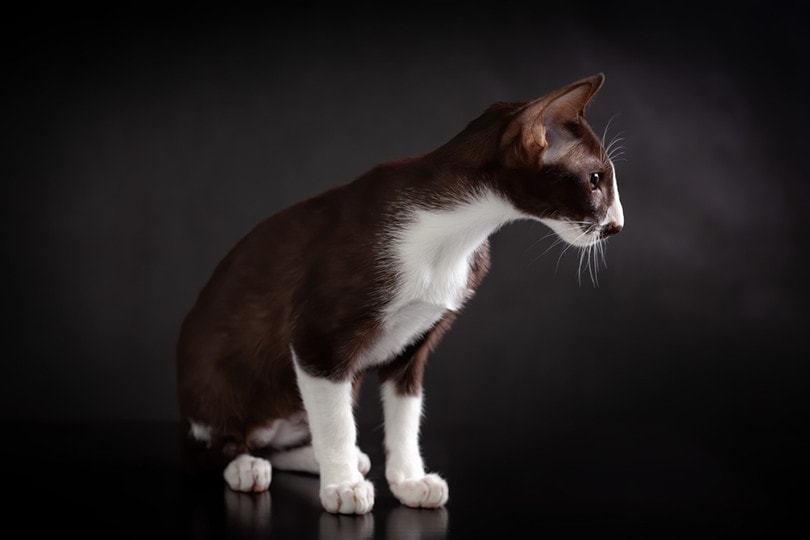
An Oriental bicolor cat is any cat of Oriental type with any pattern with white areas on its coat. They always have green eyes, except for the color point variety, which will have blue eyes. In most Oriental bicolor cats, the white spotting will appear on the legs and understand more often than on the back. This breed is known for its adaptability as well as its social and friendly nature. These cats crave attention and love to cling to their owners after a day of being alone.
5. British Shorthair Cat
Breed Overview
Origin:
Weight:
Lifespan:
Temperament:
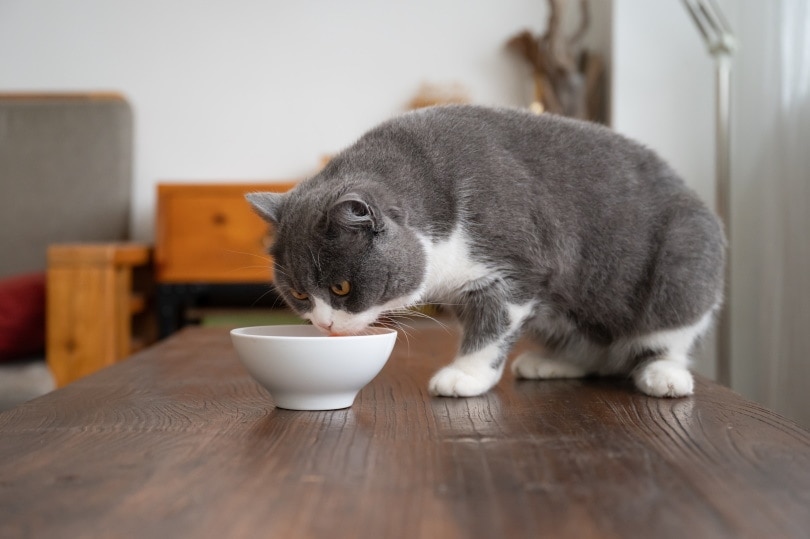
The British Shorthair cat can be found in a wide variety of colors such as red, cinnamon, chocolate, blue, or black. They can also display a range of patterns such as tortoiseshell, tabby, and color points. This breed is known for being reserved and not always underfoot or demanding your attention. They are still affectionate but manage to strike a balance between clinginess and cuddly. They are loyal to their entire family and often don’t bond with one particular person.
6. Cornish Rex Cat
Breed Overview
Origin:
Weight:
Lifespan:
Temperament:
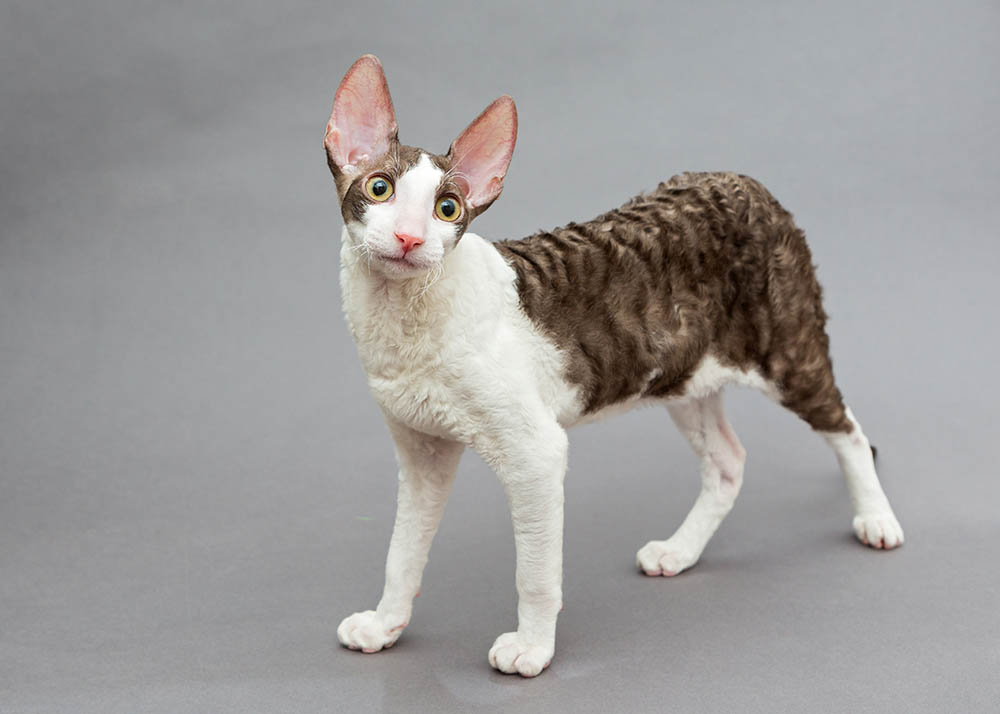
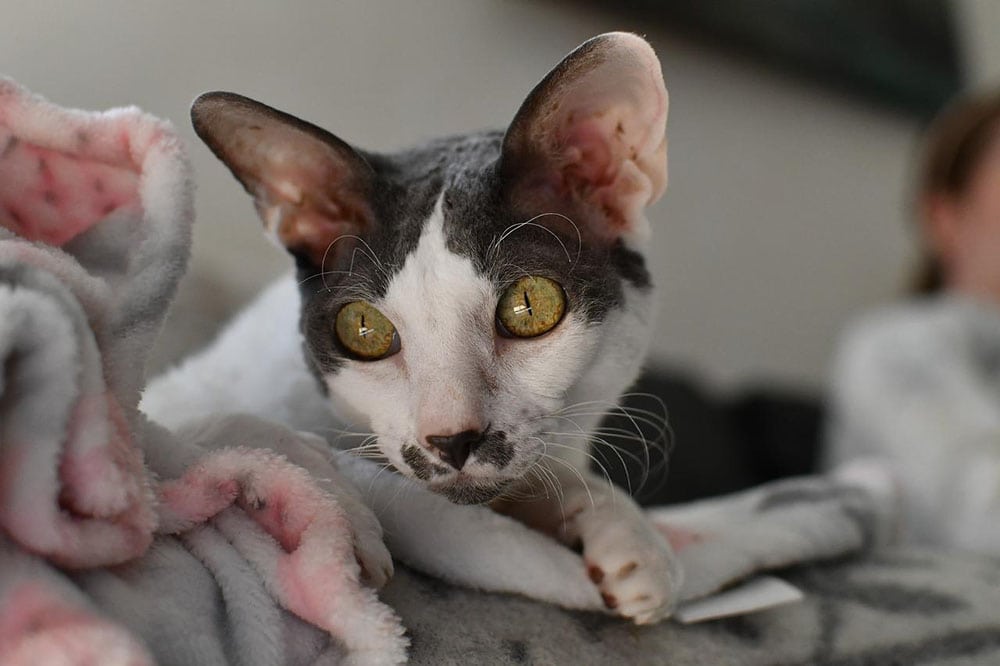
The Cornish Rex Cat has a curly coat that sets it apart from other cat breeds. It has a wide variety of colors, including chocolate, silver, pure white, and red. Cornish Rexes can also be found in patterns such as tabby, tortoiseshell, calico, and bicolor. This breed is known for its outgoing nature and high energy needs. They’re very active and are likely to get along with any human or pet you have in your home.
7. Cymric Cat
Breed Overview
Origin:
Weight:
Lifespan:
Temperament:
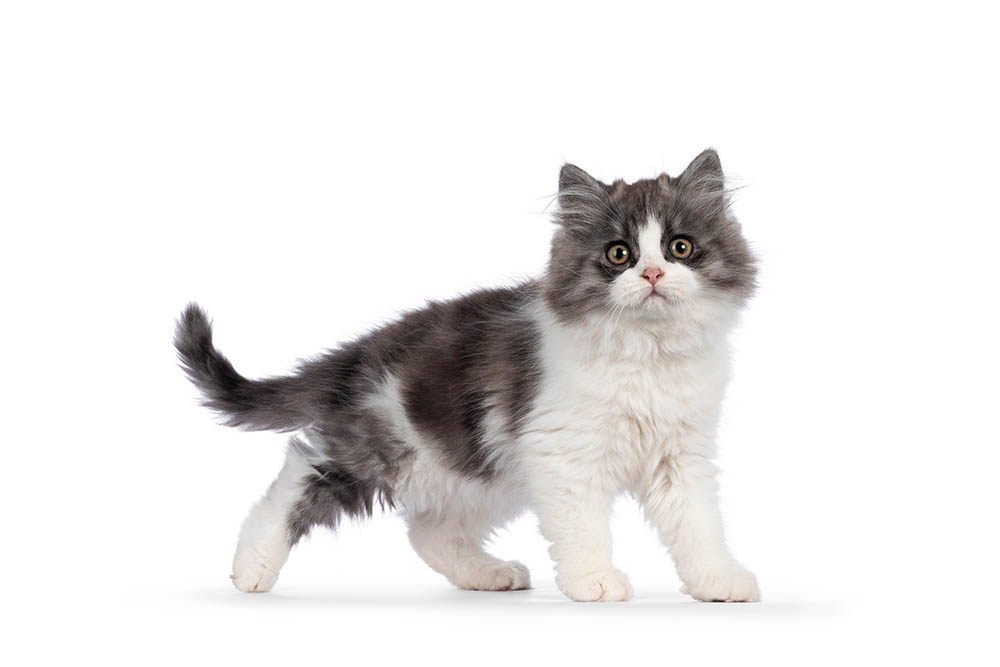
The Cymric cat is a long-haired Manx. Most Cymric cats are easy to recognize, thanks to their clear lack of a traditional tail. That said, four different tail types are recognized amongst this breed: rumpy (tailless), rumpy-risers (short tail nub), stumpies (tail stump up to 1/3 the length of a normal tail), or longies (tails almost as long as normal tails). Cymric cats can showcase a wide variety of patterns aside from bicolor, including tricolor, ticking, or tortoiseshell. This breed is known for its placid and sweet temperament.
8. Maine Coon Cat

Breed Overview
Origin:
Weight:
Lifespan:
Temperament:
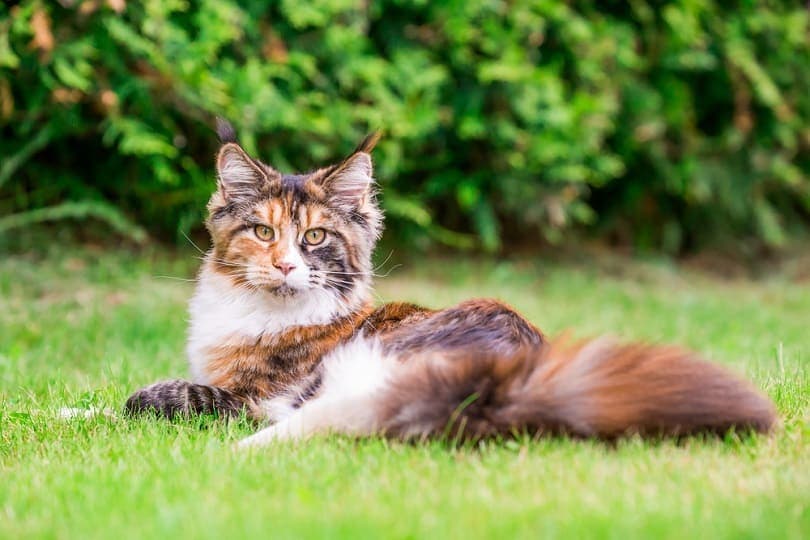
Maine Coon Cats are a large and muscular breed that can showcase nearly any color or pattern on their heavy and shaggy coat. Bi-color or van-colored Maine Coons may have blue or odd-colored eyes, while other colors and patterns may display green, gold, or copper eyes. This breed is known for its good-natured and playful attitude. They don’t demand attention from their family members, but they do tend to enjoy being near you. They’re excellent mousers and love to play fetch and climb.
9. Persian Cat
Breed Overview
Origin:
Weight:
Lifespan:
Temperament:
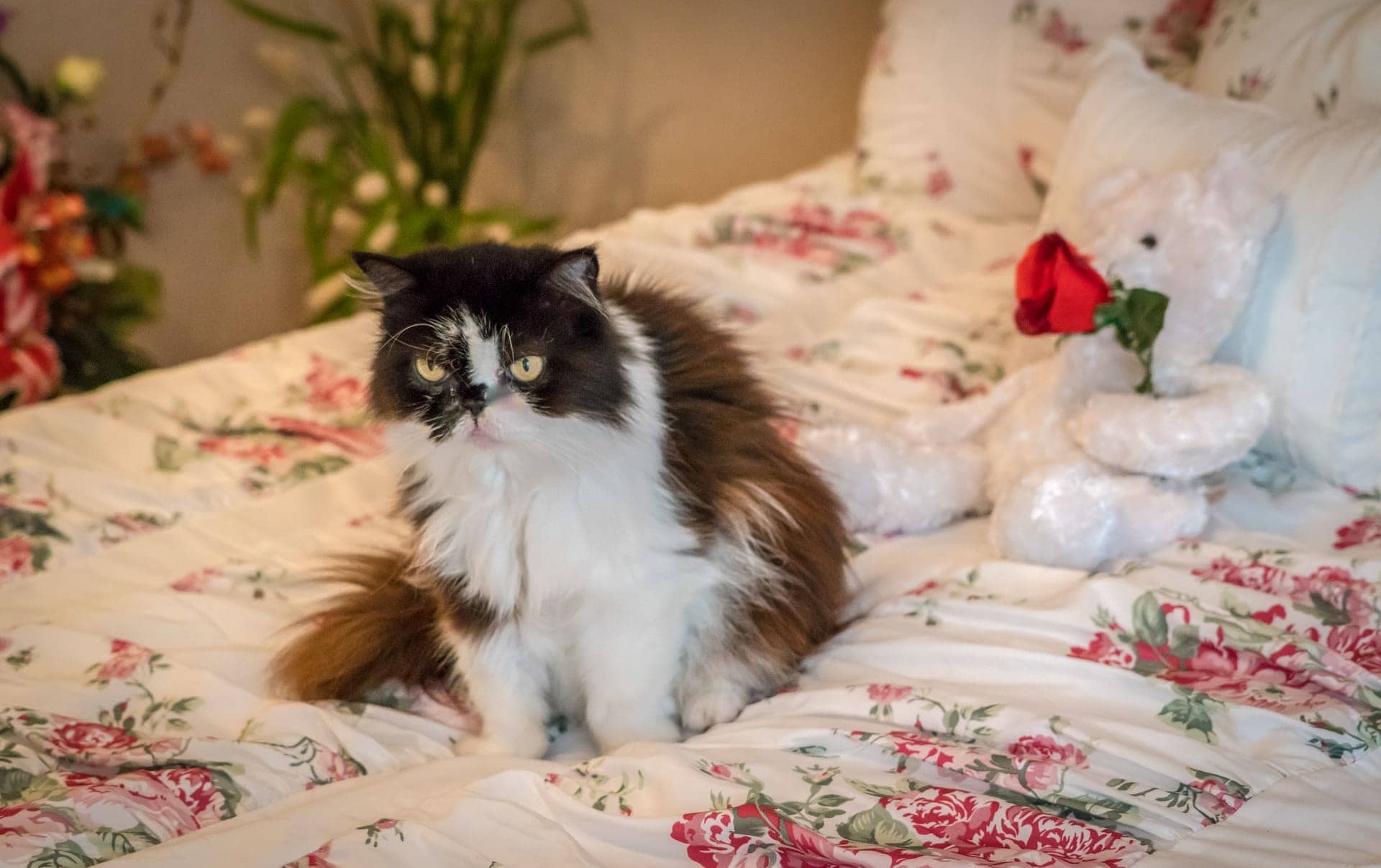
Persians cats are a beautiful and heavily-boned breed. They have short and thick bodies with silky and soft fur. Persians are found in all sorts of colors, including blue-cream, calico, seal, white, cream, and lilac, as well as various patterns including bicolor, tricolor, tabby, shaded, and points. The Persian is known for its laid-back personality that’s prone to short bouts of kitten-like energy. They’re great lap cats (on their own terms) and tend to get along swimmingly with everyone.
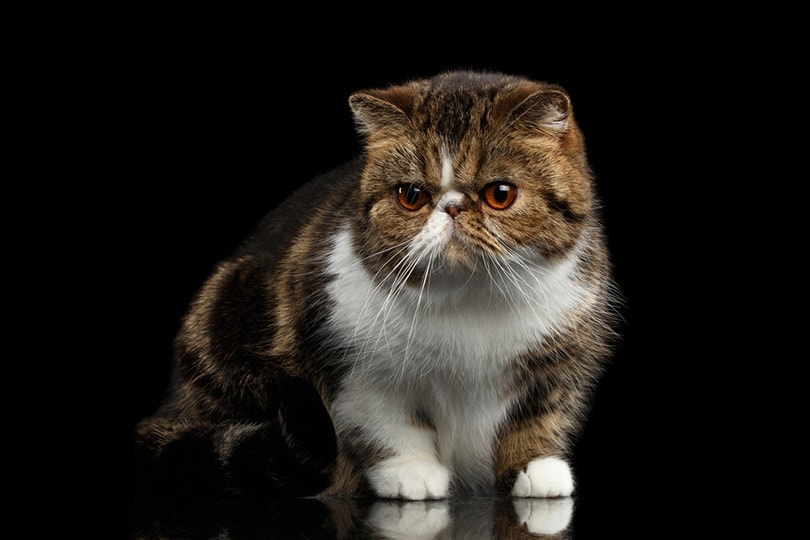
10. Exotic Shorthair Cat
Breed Overview
Origin:
Weight:
Lifespan:
Temperament:
The Exotic Shorthair cat breed was developed to be a short-haired Persian. This breed is a lot like the Persian, including its unique facial structure and its temperament. The Exotic Shorthair meets every standard for the Persian breed aside from its cot length and density. They are found in all the same colors and patterns as Persians. This breed is known for its warm and loving nature and easygoing attitude.

Bicolor Cat Genetics
The color of a cat’s coat is defined by less than ten genes. Their fur length, tail type, and fur style are all controlled by another ten genes.
Cats that have white coloring in their coats have a “white-spotting gene.” This gene seems to prevent their coat from forming color in patches throughout the cat’s body. The variation of white spotting can be measured on a scale from 1 (low amounts of white) to 10 (high amounts of white). This scale can be further divided into three grades: low, medium, and high.
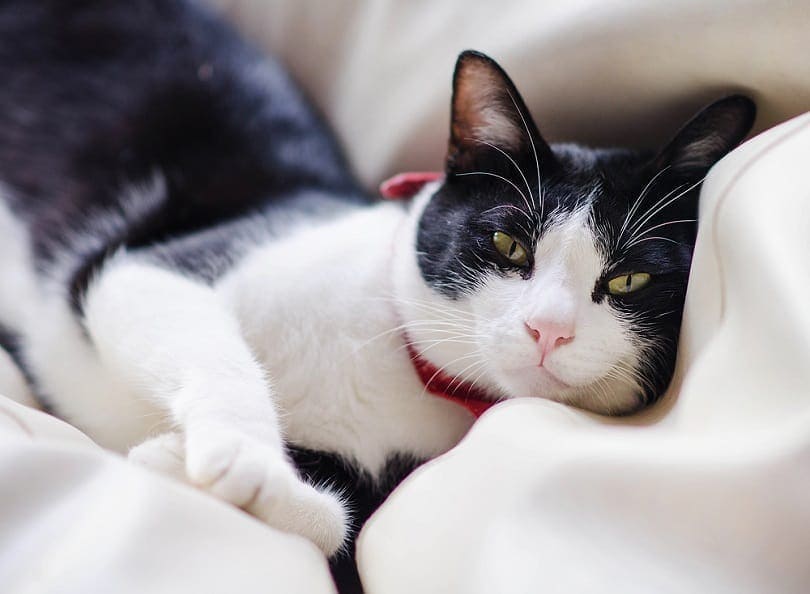
Low-grade means less than 40% of the coat is white. Cats with low-grade white spotting often showcase locket or tuxedo patterns. The locket pattern involves a single small white patch on the chest. The tuxedo is the most well-known bicolor variation. It is marked by white coloring on the belly, chest, and paws.
Medium-grade means 40–60% of the coat is white. Cats with medium-grade white spotting showcase “true bicolor” and mask-and-mantle patterns. A true bicolor coat has an equal ratio of white and pigmented coloring. Cats with mask-and-mantle patterns appear to be wearing a mask and cape. The white coloring is found on their legs, shoulders, underside, and much of their face.
High-grade means more than 60% of their coat is white. Cats with high-grade white spotting showcase patterns like cap-and-saddle, harlequin, and van. Cap-and-saddle coloring is similar to mask-and-mantle but is found in smaller patches. The “cap” is a colored patch of fur on the ears and top of the head. The “saddle” is a colored portion of fur on the cat’s back where a horse saddle would lay. Cats with the harlequin pattern are predominately white with random spots of coloring most often found on the body, legs, and tail. The van pattern is found when the coloring is found on the head of the cat and tail only.
Are There Other Bicolor Pattern Variations?
There are several other bicolor pattern variations that you might see in cats.
Mitted cats have white coloring throughout their feet and legs. If the white color ends at the ankle, the pattern is known as “mitts” or “gloves.” If the white coloring extends above the ankle, but below the knee, the pattern is called “socks.” If the coloring extends beyond the knee, the pattern is then known as “stockings.”
Moo cats are mostly white but have black spots throughout their coats.
You might sometimes see cats with a unique coat coloration similar to tortoise shell except it has white fur whereas a tortie would have orange. This actually isn’t considered to be a variation of bicolor, however, but instead, a condition known as vitiligo.
Vitiligo is an autoimmune condition that can affect animals and humans. It causes skin cells to lose their ability to produce melanin, the pigment that gives skin its color. There are two types of vitiligo: focal (affects only one area) or generalized (can cause multiple white patches in random patterns). Generalized vitiligo in cats can be so extensive that it causes a cobweb-like appearance of white fur.
Conclusion
We hope you’ve learned a little more about the genetics behind white spotting and coloration grades by reading our blog. The gene that causes white spotting doesn’t seem to discriminate since colors can be found in many different cat breeds and in countless different patterns and colors.
See Also:
Sources
Featured Image Credit: Okssi, Shutterstock
Get Hepper In Your Inbox


Pet care tips from our vets and experts, straight to your inbox.
You may opt-out at any time. View our Privacy Policy for more information.

Chantelle's life revolves around two passions: writing and animals. Raised on the prairies of Canada amidst a menagerie of pets, she now lives with five cats, two guinea pigs, and a bearded dragon. Together with her husband and child, Chantelle delights in being an exemplary animal parent, going as far as installing wall-mounted cat shelves to give their cats an indoor playground. When she's not cozying up with her cats or snapping their amusing antics, she enjoys venturing into the Rocky Mountains, binge-watching her favorite Netflix shows, and indulging in spontaneous reading adventures.
Join the conversation
Ask a question, share your story, or send private feedback.