Hepper is reader-supported. When you buy via links on our site, we may earn an affiliate commission at no cost to you. Learn more.
20 Syrian Hamster Types: Coats, Patterns & Colors

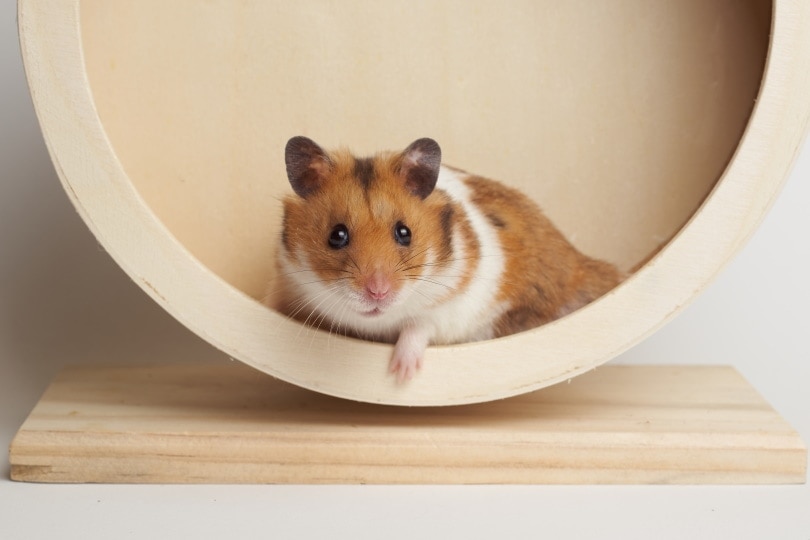
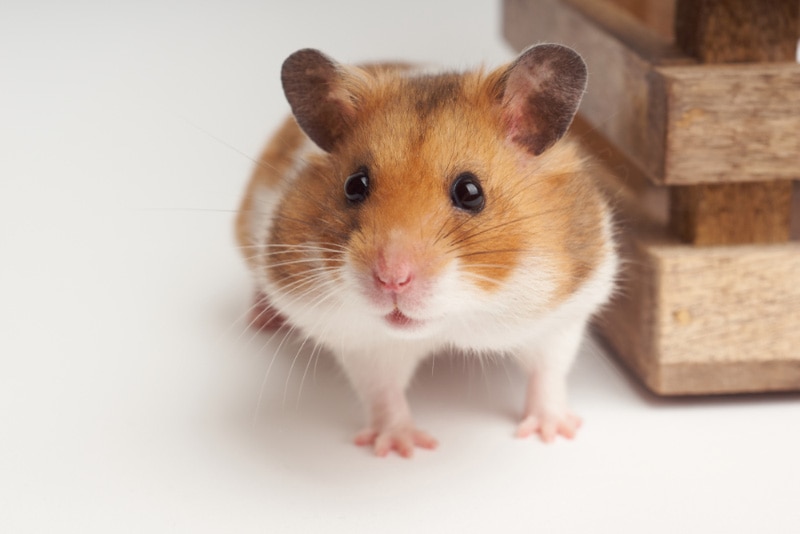
Syrian hamsters—also known as “golden hamsters”—are hugely popular family companions for their compact size, adorable appearance, and sociability (when properly cared for and handled gently, of course). Syrian hamsters are also fascinating to observe and incredibly diverse, coming in various coat lengths, textures, colors, and patterns.
If you’re curious to learn more about the different types of Syrian hamsters or want to find out what type yours is, we hope this guide can shed some light.
We’ve divided the guide into categories:

How Are Syrian Hamsters Classified?
The Syrian hamster (Mesocricetus auratus) is the largest of the hamster species at around 6–8 inches in length. A rodent, the Syrian hamster originated in the Syrian deserts where it was well-adapted to surviving in arid conditions.
To do this, wild Syrian hamsters (which are actually quite rare now as a consequence of habitat loss) tunnel into cool, humid spots and live inside them. As pets, Syrian hamsters tend to live for around 2–3 years.
Appearance-wise, Syrian hamsters have almond-shaped eyes, rounded ears and bodies, and short, blunt tails. Females are typically bigger than males.
The 4 Syrian Hamster Coat Types
1. Short-haired

Some Syrian hamsters have short, smooth coats. These types of coats are very low-maintenance for hamster parents because they don’t get tangled or dirty easily. Syrian hamsters can only have long or short hair, not medium.
2. Long-haired
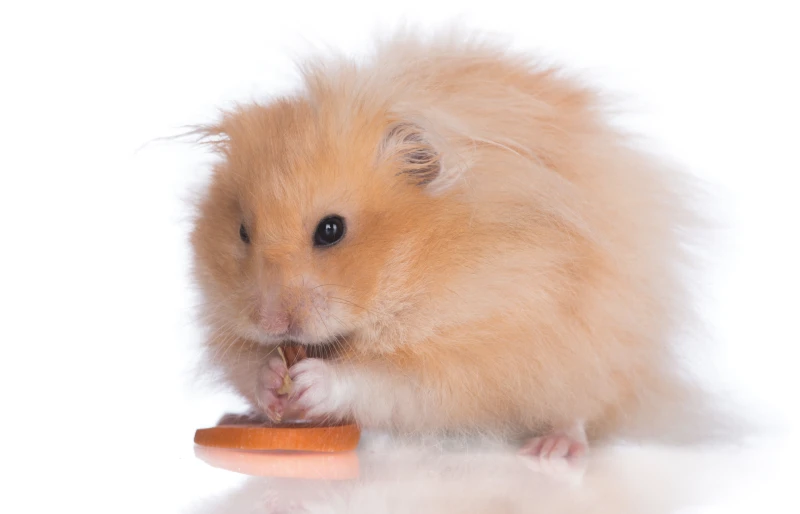
A recessive gene is responsible for producing hamsters with long hair (sometimes called “teddy bear hamsters”). Some long-haired hamsters have what’s called a “skirt”, whereas some just have tufts. Long-haired female hamsters have shorter coats than males. This type of coat requires some extra care and consideration.
Not only do long-haired hamsters need to be gently brushed weekly with an appropriately sized brush, but more thought needs to go into the type of bedding because some types can get tangled up with the hair.
3. Satin
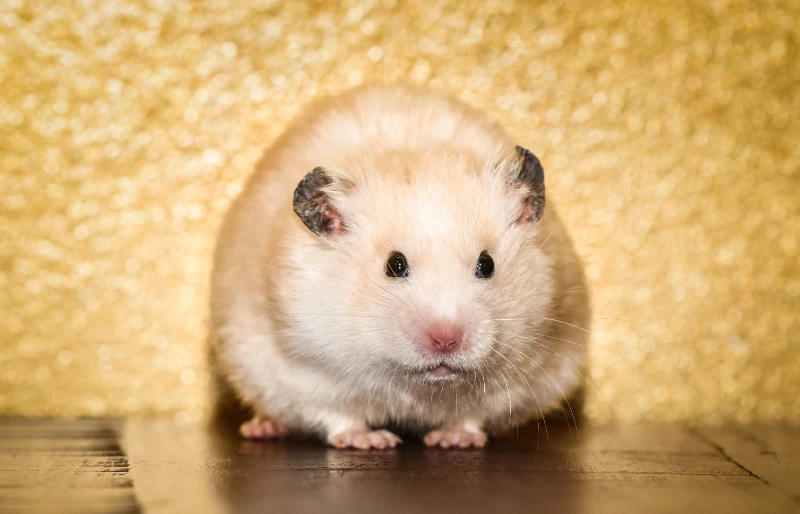
These kinds of hamsters are produced when they inherit the satin gene, which is dominant. This coat type is so named because it’s very fine, soft, and shiny because the hollow hairs reflect the light. Satins shouldn’t be bred together because the litter will have very sparse, thin hair.
4. Rex
Rex hamsters are especially fascinating because they have wiry, curly, or wavy coats. Even the whiskers are curly. This occurs when a hamster inherits the recessive rex gene, and it’s unwise to breed two rexes together due to the risk of eye conditions.
The 5 Syrian Hamster Patterns
1. Banded

This type of hamster is very common and is distinguished by a wide band running around the middle. The length of the band can vary, and mothers with “perfect” bands (a band that’s a third of the length of the body) don’t always pass this trait on to their offspring.
2. Roan
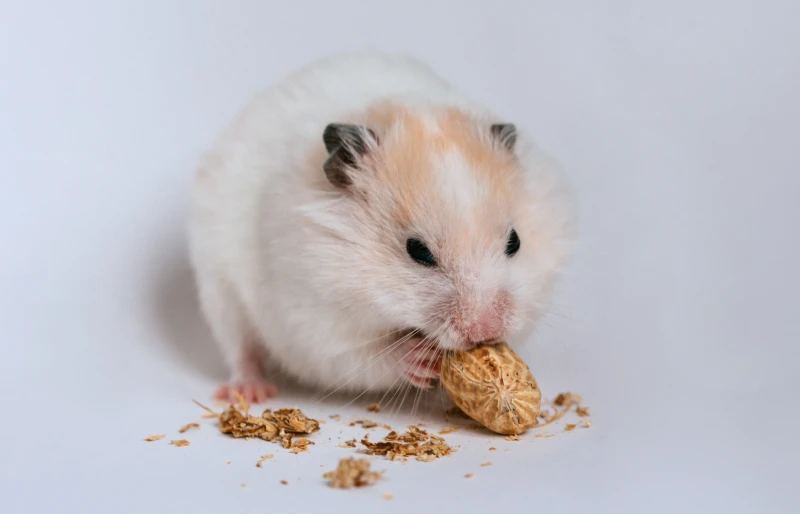
Hamsters with the Wh (anophthalmic) gene have a roan coat pattern. Roan hamsters are white with color (in lighter shades than non-roans) on their heads that spreads down the body and gets lighter as it does so. The amount of color present varies by hamster. Two roans shouldn't be bred together because this practice can produce eyeless whites.
3. Dominant Spot
These hamsters are white with color patches distributed evenly but randomly. How many patches a hamster has can range from just a few to several, with some appearing almost completely covered in color patches. The color patches are often golden, yellow, black, or cinnamon, but others are possible.
4. Piebald

A Piebald hamster looks like a hamster with the dominant spot pattern, but a piebald’s base color sits under white patches rather than yellow, golden, cinnamon, black, or patches in another color.
5. Tortoiseshell
A tortoiseshell hamster’s base color sits under distinctive yellow patches in varying shades depending on the base color. The darker the base color, the darker the yellow spots will be. Some tortoiseshell hamsters are classified as “tortoiseshell and white”, which means they have white patches as well as yellow ones. Male hamsters cannot be tortoiseshells.
The 11 Common Syrian Hamster Colors
1. Golden
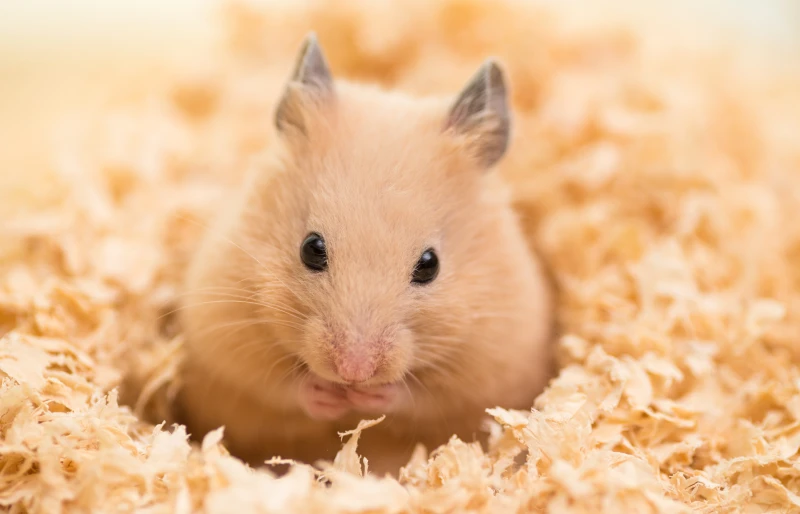
This is one of the most recognizable Syrian hamster colors (they are often referred to as “golden hamsters”, after all). The hairs are only tipped with gold/ginger, though—the base of the hair is grey. They also have white crescents and black cheek flashes.
In addition to standard golden, another golden shade is possible: umbrous golden. Umbrous golden-colored hamsters have a smokier color than standard goldens, including on the cheeks and belly.
2. Cream
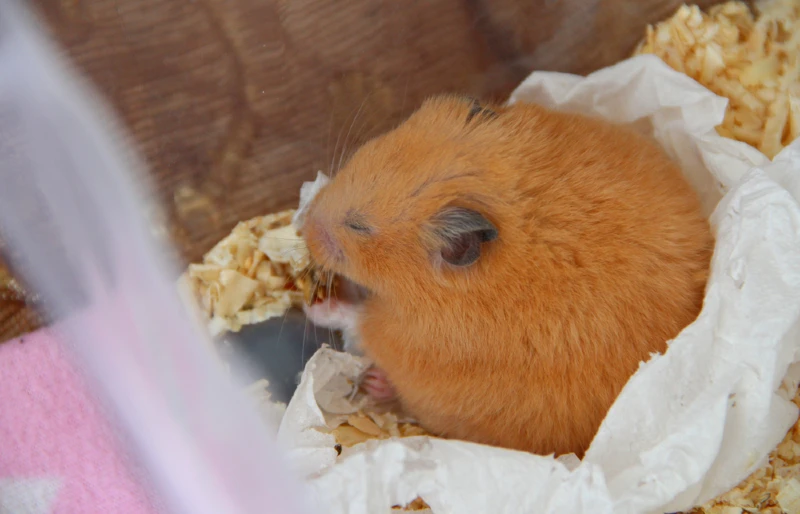
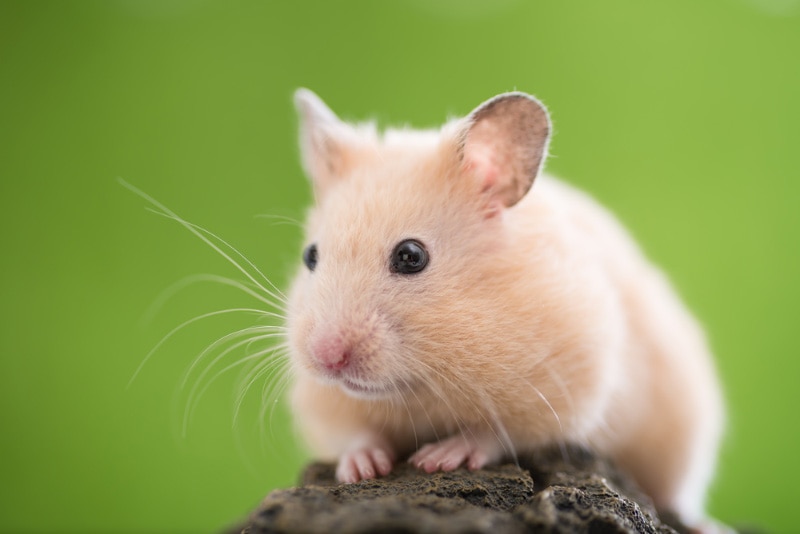
Cream-colored Syrian hamsters have light orange/apricot-colored coats. They come in both black-eyed and red-eyed varieties. Black-eyed creams have gray ears, whereas red-eyed creams have pink ears. Both darken with age, but red-eyed creams become a darker apricot color than black-eyed creams.
3. Black
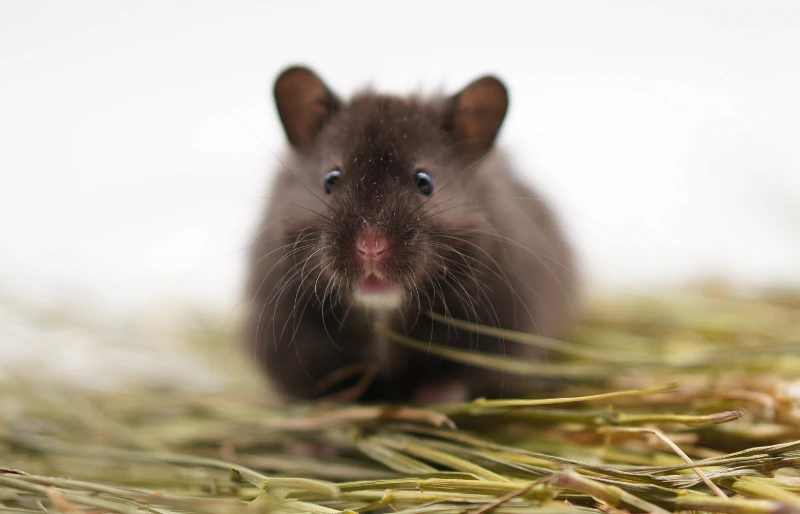
In addition to having a black coat, these Syrian hamsters have black eyes and ears, but they take on a browner shade with age. They have pink feet, and white may be present on the tummy and/or chin.
4. Gray
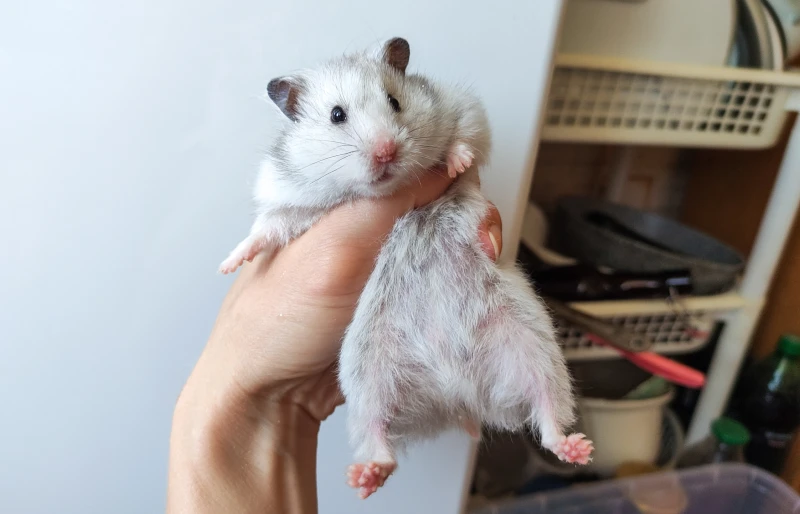
Gray Syrian hamsters come in light, dark, and silver shades, but have black markings on the cheeks and black eyes. Some are a mixture of gray and cream.
5. Sable
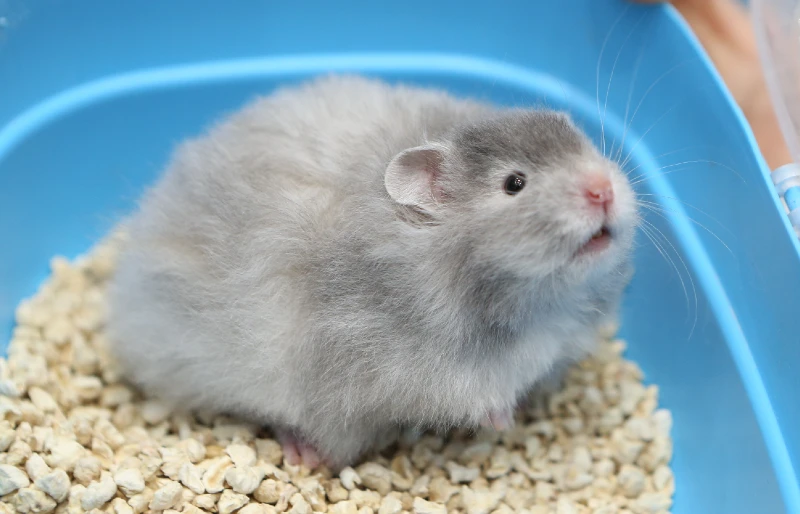
These hamsters have cream hairs with sooty or smoky colored tips which take on an orange/apricot tone as the hamster gets older. This coloring happens because of the umbrous gene. They have black eyes with cream rings around them and gray ears.
6. Cinnamon
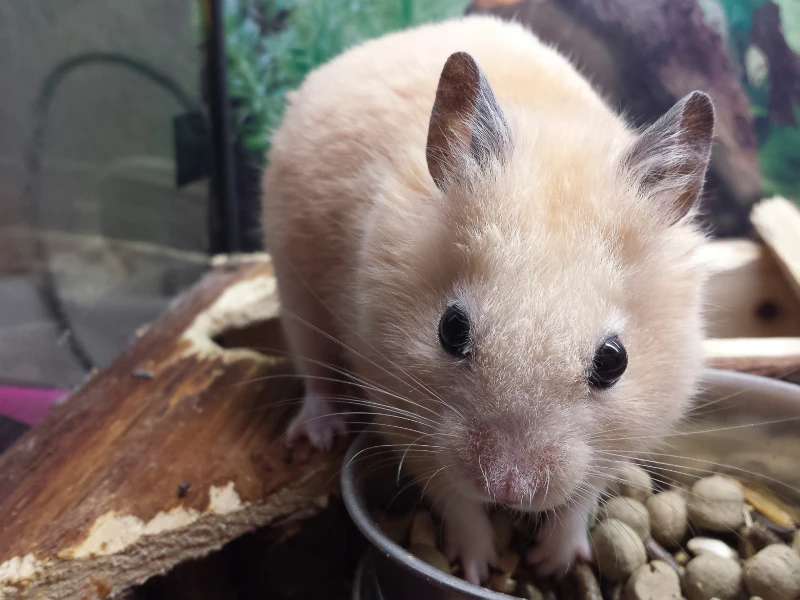
A hamster that inherits two copies of the p recessive gene is cinnamon-colored. Cinnamon hamsters have gray/slate-colored base hairs and an orange topcoat that becomes more pronounced with age. The markings on the cheeks (crescents) are ivory-colored, as is the belly.
7. Chocolate
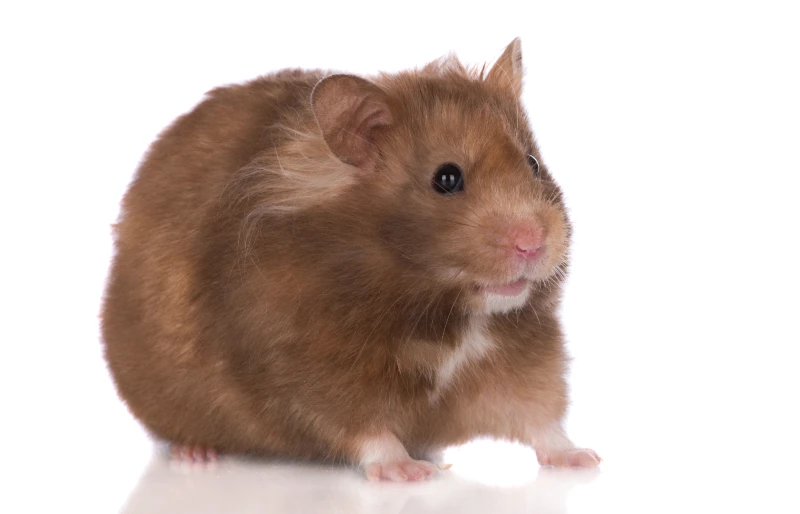
Chocolate hamsters’ coats are simply a rich, deep brown shade, and the ears are the same color. The eyes are black, and the paws are pink.
8. Mink
Mink describes a beige-colored hamster that takes on a warmer orange tone with age. They’re basically red-eyed creams that received the umbrous gene. Sable-colored hamsters, which have black eyes, also inherit the umbrous gene, which distinguishes them from standard black-eyed creams.
9. Yellow
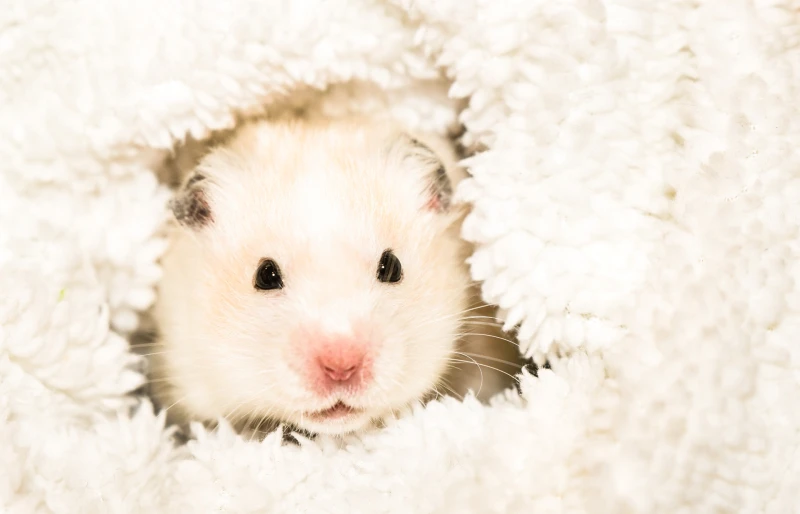
Yellow is similar to golden, but lighter, so be sure to look closely to determine the true color. Yellow hamsters are black-eyed and have white cheek crescents and black cheek flashes.
10. Yellow-black
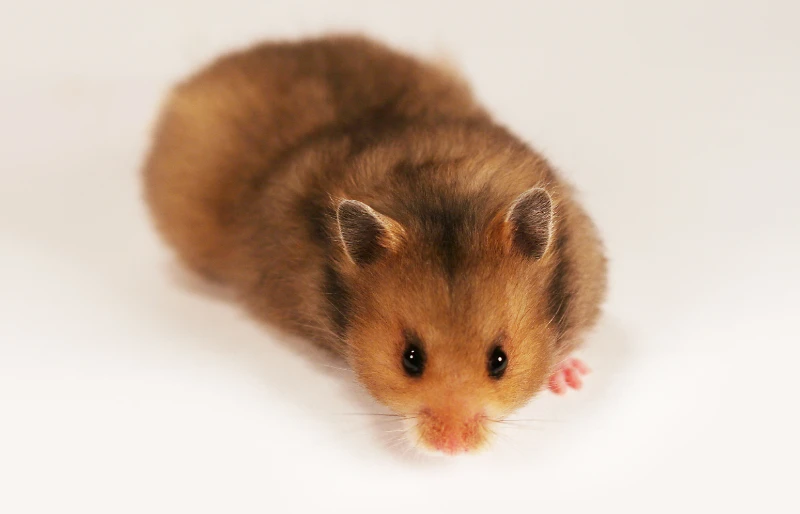
Yellow hamsters with black tipping are referred to as simply “yellow-black”. The black tipping gets darker when the hamster is around 2 months old, but the yellow underneath is still very noticeable.
11. White
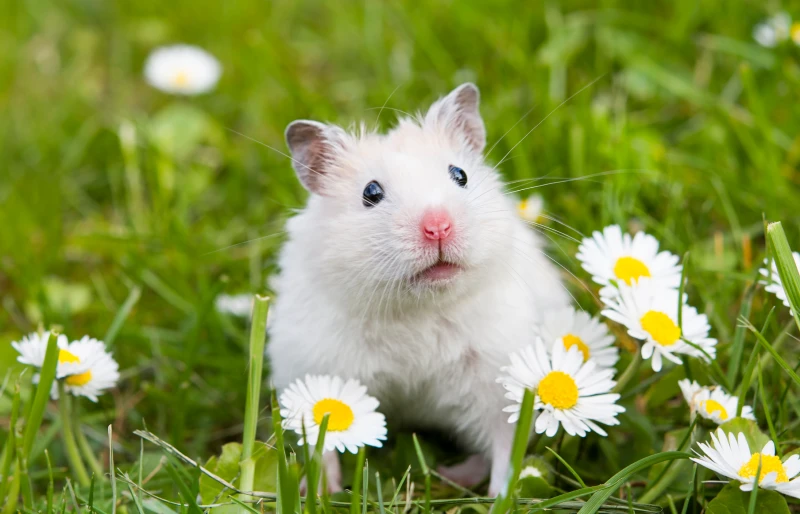
Entirely white hamsters come in three varieties: dark-eared, flesh-eared, and black-eyed. Flesh-eared whites, which have pink eyes and ears, look similar to albinos and are often confused for them, but they’re not the same as albinos. The gene they inherit (acromelanic) is different from the gene inherited by albinos.
Are Syrian Hamsters Friendly?
It depends on whether or not they’ve been socialized from a young age. Hand-taming a Syrian hamster is incredibly important, as these are territorial animals and may bite or become fearful if they don’t get used to human presence and contact.
If you take the time to properly socialize your hamster and handle them with respect at all times, they’re far more likely to grow up to be friendly, confident, and companionable. Some will even climb onto your hand—especially if you entice them with a tasty treat—or fall asleep in your lap. At first, you might want to try simply sitting close to your hamster’s cage, talking to them softly to let them get used to your presence.
When your hamster is more comfortable with your presence, hand-feeding healthy treats is a great way to help your hamster perceive you as a bringer of goods rather than a threat. Start by holding treats out with the tips of your fingers so that your hamster can take them without biting you by mistake. Then, you can progress to putting treats on your palm to get them to sit on it.
A final few words of advice: If you truly value the integrity of your fingers, never start by sticking your hand straight in the cage and picking your hamster up without taking the time to hand-tame them. This not only frightens the hamster and may lead to them not trusting you in the future, but you could also end up with a nasty bite.
Final Thoughts
There aren’t different breeds of Syrian hamsters, but there are certainly plenty of varieties. This accounts partly for why these little fuzzies are so popular.
Please take note that, if you’re considering bringing home a hamster for your children, these animals are actually not well-suited to being pets for very young children. Children interacting with hamsters should be old enough to be able to handle them confidently and respectfully under supervision.
Sources
Featured Image Credit: Johannes Menge, Shutterstock
Get Hepper In Your Inbox


Pet care tips from our vets and experts, straight to your inbox.
You may opt-out at any time. View our Privacy Policy for more information.
Kit Copson is a freelance writer and lifelong animal lover with a strong interest in animal care. She has parented various furry beings over the years and is currently a proud cat mom of two—one skittish but adorable Domestic Shorthair and very chilled (unless hungry) Siamese and a —and dog mom of one—an adopted Bichon Poodle cross. When not writing about or spending time with pets, Kit can be found doodling in her sketchpad, reading, or more often than not, drinking tea.
Join the conversation
Ask a question, share your story, or send private feedback.