Hepper is reader-supported. When you buy via links on our site, we may earn an affiliate commission at no cost to you. Learn more.
What Is Fish Meal in Dog Food? Is It Good for My Dog?



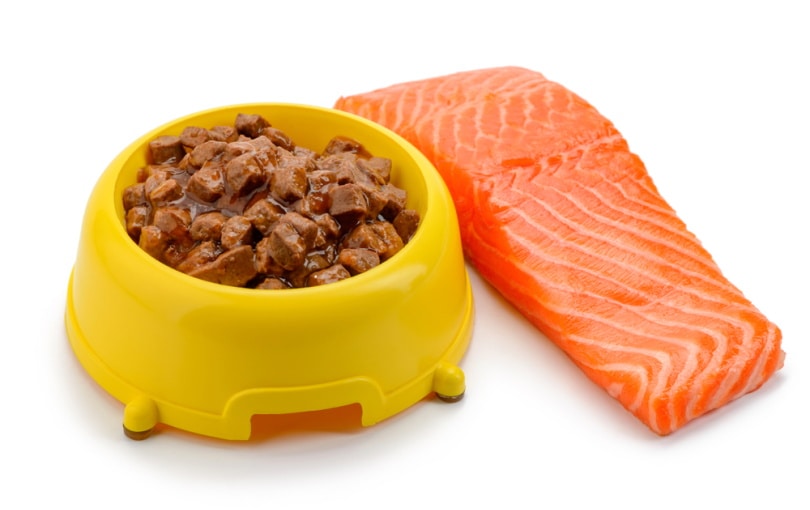
It behooves dog owners to read what ingredients are in their diets. Some diets, especially those that are grain-free and contain legumes and peas, might carry health risks in some breeds. While you may often see it in cat products, you may not see fish or seafood for canines nearly as much. It’s not that your pup won’t eat it. The pungent smell will likely attract its attention. However, you may wonder whether fish meal is safe for your dog.
The answer is yes. It’s also quite nutritious for dogs.

Making Fish Meal
Using fish meal isn’t new. You probably have eaten it yourself—indirectly. It’s a common feed ingredient for livestock and farm-raised fish. It’s also used as a fertilizer. According to the University of Florida Extension Service, most sources of fish meal are sustainable products and don’t negatively impact the environment or contribute to overfishing.
The manufacturing process may sound unappetizing, but it doesn’t detract from its nutritional value. It comes from managed fish stocks, wild-caught commodity species, and by-catch. The fish—bones and all—is ground up into a powder. Liquids are separated by pressing and drying as needed. The production continues with various methods, yielding different forms depending on the use.
These methods concentrate on the vitamins and minerals fish meal offers. It ensures that it remains free from mold or other contaminants. The process also makes it affordable to produce for ramping up the nutritional value of livestock and domestic pet foods.
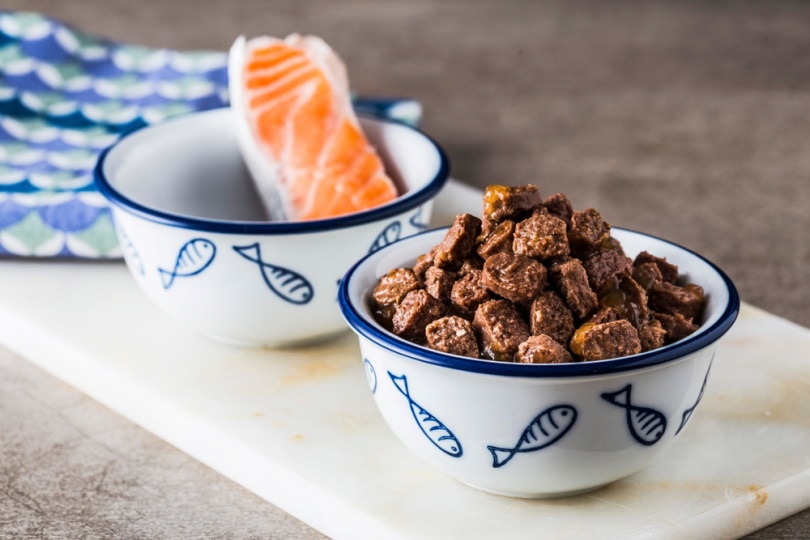
The Association of American Feed Control Officials (AAFCO) Model Regulations state that manufacturers must specify the mammalian species. However, those exact requirements don’t exist with fish meal. You’ll often see fish meal labeled without a specific type. It may contain more than one species. The ones it does have are usually short-lived, marine varieties.
The advantage of these sources is that it makes concerns about mercury concentration that you’d rightly have with long-lived varieties, such as shark and tuna, negligible. The species most often used in fish meal include:
- Smelts
- Shads
- Herrings
- Mackerels
- Anchovies
- Krill
- Salmon

Nutritional Value of Fish Meal
Determining the nutritional value of fish meal for your dog begins by understanding what your pet needs from its food. Puppies and pregnant dogs need at least 22% protein by volume, with the minimum for adults, 18%. The requirements for fat are 8% and 5%, respectively. The AAFCO doesn’t set values for simple carbohydrates, although you will see figures for fiber on pet food labels.
The caloric needs of dogs are variable. We can make generalizations that pets kept indoors may need less energy than active ones. It also varies by breed, life stage, and age. The Association for Pet Obesity Prevention has daily caloric recommendations for dogs and cats based on weight, assuming indoor pet activity.
It’s worth noting that even a 90-pound canine needs fewer calories per day than an adult human. We’re talking 1,350 versus 2,000 based on the organization’s figures. It’s helpful to keep these numbers in mind when choosing a pet food. Let’s see where fish meal stacks up in meeting your pup’s nutritional needs.
Protein Content
We can talk about protein in terms of the percentage contained in different foodstuffs. However, that doesn’t speak to its digestibility and quality. Proteins consist of building blocks called amino acids. There are up to 22 used in making these nutrients. However, humans and dogs only need 20 of them. Our respective bodies can synthesize many of them from the foods we eat.
However, the diet must supply 10 of these building blocks that dogs can’t produce themselves, making them essential amino acids. On the other hand, humans need only nine. Fish meal provides all 10 that canines require. It’s worth noting that it also satisfies the nutritional needs of farm-raised fish, which all may get the meal as part of their diet.
Some pet food manufacturers use plant sources for some of these essential amino acids. However, fish meal offers a more easily digestible source even when compared to high-protein foods like soybeans. Remember that dogs are essentially carnivores that have adapted to the inclusion of human-sourced foodstuffs in their diet. Plants are harder for dogs to digest than meat-based foods.
As an ingredient, fish meal contains 60% and 72% crude protein, making it an excellent choice for commercial pet foods.

Fat Content
Of course, the fat content of fish meal is variable, depending on the source. It can have up to 20% by weight. However, it’s worth delving into the types it contains. This ingredient is rich in polyunsaturated fatty acids (PUFA), particularly omega-3 and omega-6 fatty acids. These nutrients are essential for the synthesis of blood proteins and cell membranes, including those of the brain.
Fish meal also wins on the digestibility front with an ingredient that your pup’s digestive system can easily metabolize. It also supports proper immune system functioning.

Caloric Content
As you may surmise, fish meal contains some oily varieties. That may raise concerns about its caloric content. However, the fat in this ingredient provides a ready source of energy, especially important for active and growing dogs. Remember that a diet low in fat is equally as detrimental to your pup’s health as one that is high in this nutrient.
If your pet’s diet doesn’t supply enough energy or protein, its body will break down body tissue to satisfy its nutritional needs.

Benefits of Fish Meal
As you’ve seen, fish meal has a lot going for it on several fronts. It consists of forage and so-called industrial species that people don’t often eat, so it doesn’t tax the fisheries unduly. It’s relatively inexpensive to produce, making it an affordable addition to your dog’s diet. That’s good news for pet owners who want to provide the best for their canine companions.
Dogs score, too, with an easily digestible ingredient with several health benefits. While you might not like the strong odor of fish meal, your pup will enjoy it. A finicky pet might find it more enticing. It also offers an alternative protein source if your pooch can’t eat chicken or beef, two of the most common allergens.

Meats, Meals, and By-Products! Oh, My!
We must address the elephant in the room when it comes to an ingredient like fish meal and animal by-products. Unfortunately, many manufacturers try to downplay the nutritional value of these foodstuffs with marketing claims that they are inferior. The AAFCO stands by its safety for pet consumption. Furthermore, the organization regulates these ingredients, ensuring their quality.
Bear in mind that fish meal is a rendered product. This process is necessary to prevent contamination. It makes these ingredients safer than raw diets, which carry the risk of food-borne illnesses. The best indication of a dog food’s health value is a statement denoting the product as complete and balanced. Then, you’ll know it meets the AAFCO’s nutritional standards.
Final Thoughts
Sadly, the term “fish meal” has negative connotations that are unworthy of this highly nutritional ingredient. It offers benefits to pets and consumers that make it an excellent addition to any diet. The most important thing is that your pup gets the proper diet for its size, life stage, and activity level. Fish meal can help affordably meet these needs.
See Also:
Sources
Featured Image By: Caftor, Shutterstock
Get Hepper In Your Inbox


Pet care tips from our vets and experts, straight to your inbox.
You may opt-out at any time. View our Privacy Policy for more information.
Chris is an experienced pet writer specializing in science topics, with a particular passion for health and the environment. She has been a writer for over 15 years and lives with her husband and three cats in Michigan.
Beyond writing about cats and dogs, Chris loves to learn about wine. She has WSET 1 and 2 certifications and is currently pursuing her Certified Wine Specialist Award (CSW).
Join the conversation
Ask a question, share your story, or send private feedback.