Hepper blog

Search our database of over 9,984 posts with up-to-date information from our experts and veterinarians.

Hepper is reader-supported. When you buy via links on our site, we may earn an affiliate commission at no cost to you. Learn more.

What Is Taurine in Dog Food? Vet-Reviewed Info to Know

By Nicole Cosgrove · Reviewed & fact-checked by Dr. Paola CuevasVet Approved
Dr. Paola Cuevas
Reviewed & Fact-Checked byDr. Paola CuevasMVZ (Veterinarian)
Paola Cuevas is a veterinarian and animal behaviorist, with over 18 years of experience working with a variety of species. Her passion is animal welfare and focuses on the importance of preventive medicine. Paola has skills in the fields of nutrition, microscopy, clinical pathology, diagnostic imaging, and endoscopy as well as extensive experience in animal training through positive reinforcement. As our in-house veterinarian, Paola is very happy to share her knowledge and experience with our readers and hopes to be helpful with any issue presented by your non-human family members.View authorThe information is current and up-to-date in accordance with the latest veterinarian research. Read about our vets
Share
Ask us a question in the comments
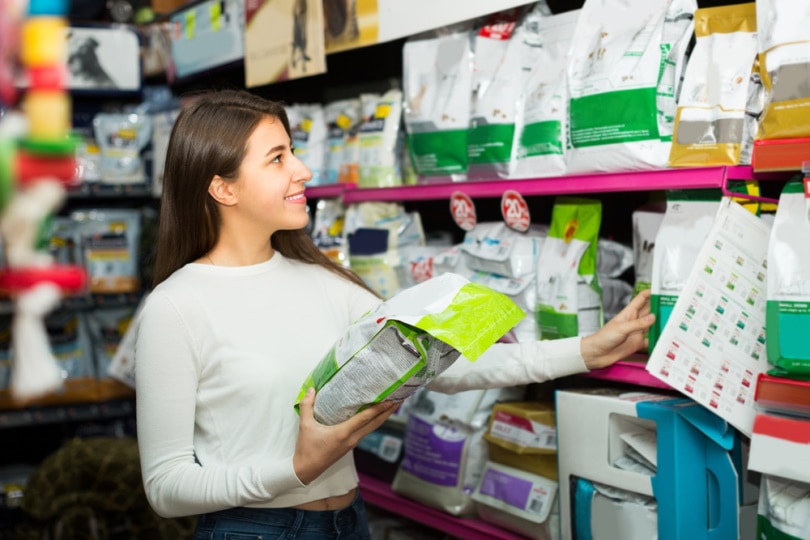
Woman in store shopping for pet food

Taurine is one of several amino acids your dog needs to stay healthy. A taurine deficiency can lead to canine cardiac, eye, and urinary problems. Dogs should get enough taurine from their food, but some may need supplementation. Learn more about how taurine affects your dog’s health and when to see a veterinarian.

Does My Dog Need Taurine?

Yes. Dogs, cats, and even humans need taurine to stay healthy. Animal proteins like poultry, beef, and lamb naturally contain taurine. While dogs have certain taurine requirements, it is not considered essential for dogs because unlike cats, they can produce it themselves. However, this is only possible if they are fed the right amino acid precursors: cysteine and methionine. This is why it is vital to look into the type of the protein in your dog’s food because not every protein meets a dog’s nutritional needs. For instance, plant-derived proteins do not provide taurine nor the amount of methionine and cysteine that dogs need to synthesize it.

More protein isn’t necessarily better, though; it's the quality of the protein that needs to be examined. While the American Association of Feed Control Officials (AAFCO) does not require that dog foods add taurine, some brands do supplement it. It's worth checking the ingredient list of your dog’s food formula, not only the guaranteed analysis.

The food should contain animal muscle and organ meats to ensure their taurine content. Avoid dog foods with legumes, such as peas, that are too high on the ingredient list, as that indicates that more of the total proteins are derived from plants. Always talk with your veterinarian if you have any questions about your dog’s diet.

Canine Taurine Deficiency Signs
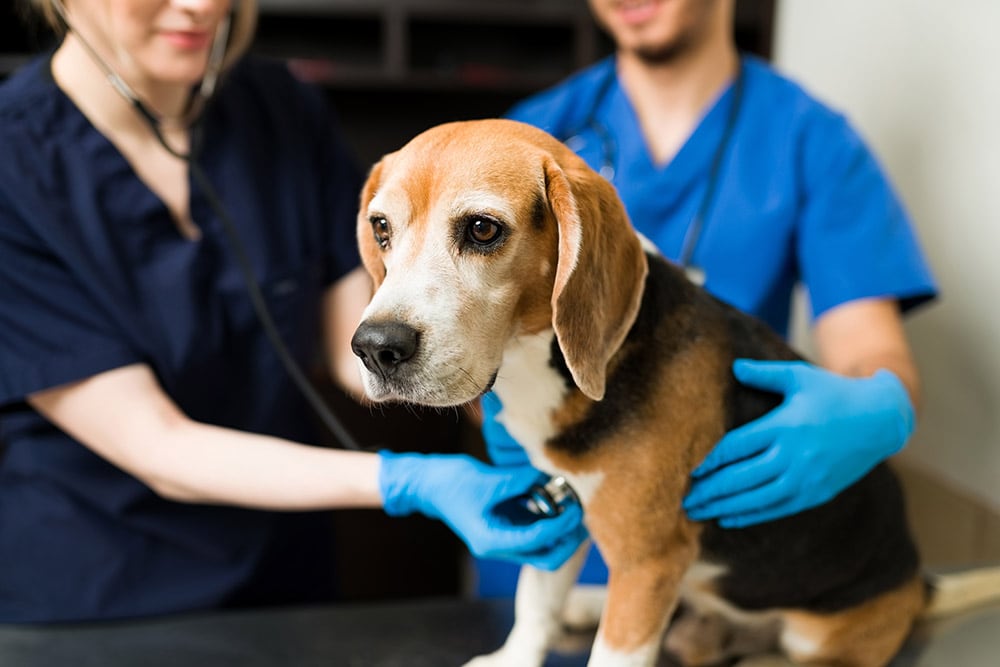
Beagle dog at the veterinarian
Image Credit: Beach Creatives, Shutterstock

Research links taurine deficiency to several canine health problems, including dilated cardiomyopathy (DCM). Dogs with DCM experience thinning of the cardiac muscles, resulting in an enlarged heart chamber.

More research is needed to officially determine if an insufficient taurine intake causes DCM or if dogs with DCM have difficulty synthesizing or absorbing taurine. What we do know is that there was an issue related to diets with a high amount of legumes.

Veterinary Tests for Canine Taurine Deficiency

Your vet will perform a physical exam if they suspect your pup has a taurine deficiency. They will also ask about your dog’s medical history and lifestyle. Blood and urine tests can confirm or rule out a taurine deficiency.

If your dog needs to increase their taurine intake, your vet may prescribe supplements and recommend a different dog food brand.

Cat Food Has Added Taurine, So Can I Feed Cat Food to My Dog?
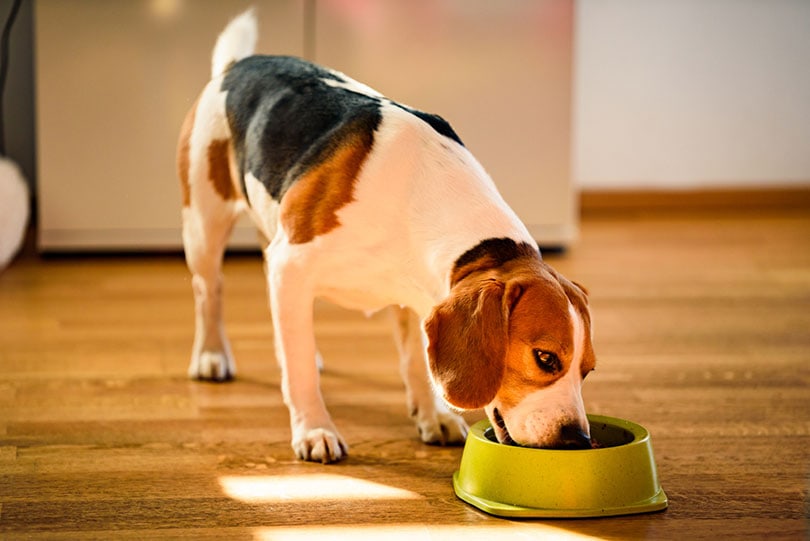
senior beagle dog eating food from the bowl
Image Credit: Przemek Iciak, Shutterstock

Cats and dogs are both furry, loveable housemates, but that’s where the similarities end. The two species have different nutritional needs. The AAFCO’s guidelines do require added taurine in cat food. However, this doesn’t mean that cat food is safe for your dog to eat and vice versa.

Cat food is not an appropriate way to supplement your dog’s diet; it can’t provide your dog all the necessary nutrients, and you may encounter other health problems.

In Conclusion

Taurine is one of several amino acids your dog needs to stay healthy. Many dogs get enough taurine from their food and do not require a supplement. While the AAFCO requires cat food to contain certain minimal taurine levels, the organization does not impose the same guidelines for dog food. Dogs and cats have unique nutritional needs. Consult your vet if you’re worried about your dog’s taurine intake or ability to metabolize the taurine naturally found in their food.

Sources

Featured Image Credit: LADO, Shutterstock

Get Hepper In Your Inbox

Pet care tips from our vets and experts, straight to your inbox.

List

Select all that apply.

You may opt-out at any time. View our Privacy Policy for more information.

Nicole Cosgrove
Authored by

Nicole Cosgrove

Join the conversation

Ask a question, share your story, or send private feedback.
Rate this post
Required to post. Only our editors see your rating.
Who should see this?

A human reviews every comment before it appears. Your email is never published.

Picked to go with this article

Cat Food vs. Dog Food: Main Differences Explained

Cat Food vs. Dog Food: Main Differences Explained

At first glance, the only obvious differences between cats and dogs are their mannerisms and appearance. Their differences go deeper than that, though, and inc…

Nicole Cosgrove
By Nicole Cosgrove ·
Can Dogs Eat Lentils? Vet Approved Nutrition Facts & Safety Guide

Can Dogs Eat Lentils? Vet Approved Nutrition Facts & Safety Guide

If you read the ingredients on the label of just about any boutique dog food, you will likely see many common human foods, including blueberries, cranberries,…

Chris Dinesen Rogers
By Chris Dinesen Rogers ·
Does My Dog Need Grain in Their Diet to Stay Healthy? Vet-Reviewed Facts & FAQ

Does My Dog Need Grain in Their Diet to Stay Healthy? Vet-Reviewed Facts & FAQ

As facultative carnivores, dogs can digest and obtain nutrients from various sources, including animal protein. grains, fruits, vegetables, and even some root-…

Lorre Luther
By Lorre Luther ·
Are Cats Obligate Carnivores? Vet-Approved Facts & Recommendations

Are Cats Obligate Carnivores? Vet-Approved Facts & Recommendations

Plant-based diets are popular with people, and many dog owners are interested in adding more fruits and vegetables to their dog’s diet. But, before you think a…

Oliver Jones
By Oliver Jones ·

Keep reading

More stories you might like

What Is Blood Meal in Dog Food? Vet-Reviewed Nutrition Facts

As a dog owner, you certainly want to feed your furry friend nothing but good dog food that’s healthy and safe. Because dogs are popular pets, there are many d…

Nicole Cosgrove
By Nicole Cosgrove ·
What Is Blood Meal in Dog Food? Vet-Reviewed Nutrition Facts

Thiamine Deficiency in Dogs: Signs, Causes & Care (Vet Answer)

Thiamine, otherwise known as B1 vitamin, is something that needs to be supplemented through your dog’s diet. With the development of many, well-balanced commer…

Dr. Kim Podlecki
By Dr. Kim Podlecki ·
Thiamine Deficiency in Dogs: Signs, Causes & Care (Vet Answer)

10 Ingredients to Avoid in Dog Food: Vet-Approved Facts & FAQ

Many pet owners tend to not read the ingredient labels on their pets' food. But more people are starting to become more aware of what should and shouldn’t be i…

Kathryn Copeland
By Kathryn Copeland ·
10 Ingredients to Avoid in Dog Food: Vet-Approved Facts & FAQ

Do Dogs Need Supplements? Vet-Approved Facts & Tips

One of the most important jobs that we have as dog owners is keeping our pets healthy throughout their lives. Going on walks together, playing in the house, of…

Rachael Gerkensmeyer
By Rachael Gerkensmeyer ·
Do Dogs Need Supplements? Vet-Approved Facts & Tips

What Are BHA and BHT in Dog Food? Vet-Reviewed Preservatives & Canine Safety

Have you ever looked at the ingredients in your dog’s food? There are items like chicken, by-product meal, and so on. We may know what some of the ingredients…

Nicole Cosgrove
By Nicole Cosgrove ·
What Are BHA and BHT in Dog Food? Vet-Reviewed Preservatives & Canine Safety

Is There Horse Meat in Dog Food? Myths Unveiled & Vet-Reviewed Info

The infamous 2013 horse meat scandal in Europe inadvertently made a lasting impact on the pet food industry.1 Despite the amount of time that has passed since…

Jessica Kim
By Jessica Kim ·
Is There Horse Meat in Dog Food? Myths Unveiled & Vet-Reviewed Info

Is Grain-free Dog Food Bad for Dogs? Vet-Approved Facts to Know

For the past fifteen years, grain-free specialty diets have been hitting the shelves out of concern over a growing number of dogs suffering from food sensitivi…

Brooke Bundy
By Brooke Bundy ·
Is Grain-free Dog Food Bad for Dogs? Vet-Approved Facts to Know

What Is Dog Food Made Of? 7 Typical Ingredients (Vet-Reviewed)

If you have a dog, you very likely feed them specific dog food of some sort. While all dog food has different ingredients, there are a few ingredients that are…

Kristin Hitchcock
By Kristin Hitchcock ·
What Is Dog Food Made Of? 7 Typical Ingredients (Vet-Reviewed)