Hepper is reader-supported. When you buy via links on our site, we may earn an affiliate commission at no cost to you. Learn more.
What Were Mastiffs Bred For? Breed History Explained


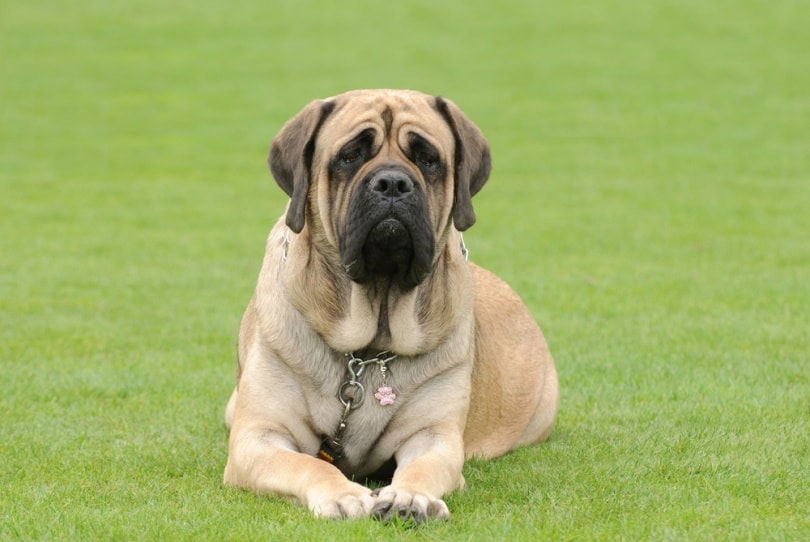
The Mastiff is a popular and well-known dog breed that has been around humans for thousands of years. This noble-looking dog has been a fan favorite all throughout history for many reasons. They’re reliable, brave, loyal, and they’re known to be good-natured and doting to their family members. As a general overview they were trained them to become guard dogs and war dogs.
Here’s a brief history of the Mastiff and the interesting relationship this breed has maintained with humans.

Ancient Civilization
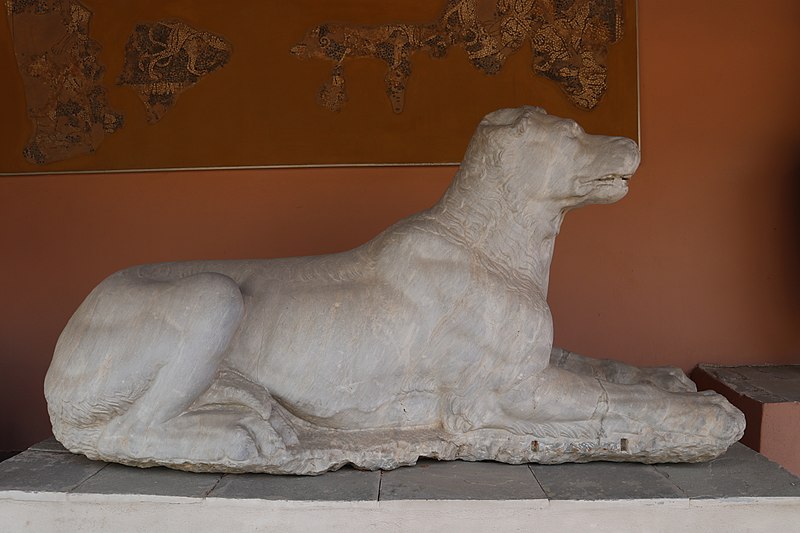
It’s believed that the Mastiff has been living amongst humans as far back as 3000 BC. Though the Mastiff looks different from its original ancestors, you can still find Mastiffs being depicted in ancient European and Asian art.
Ancient Romans took a particular liking to the Mastiff and trained them to become guard dogs and war dogs. They were also often favored contenders in ancient Roman arenas and fought against larger animals, including bears, lions, and tigers.
Caesar himself made note of the impressive Mastiffs when he encountered them during his invasion of Britain in 55 BC.
Late-Middle Ages
By the 1400s, the Mastiff became an established dog in English society, and the modern Mastiff’s roots can be traced to its English ancestors. This dog breed continued to be used as a war dog and breeding practices continued to be perfected to continue a lineage of healthy, noble dogs.
One particular story of a female Mastiff belonging to an English knight, Sir Piers Legh, outlived her owner in battle and made her way back to his home, Lyme Hall. She eventually birthed a litter of pups, which carried the lineage of the Lyme Hall strain. This strain is the oldest kennel of Mastiffs in the world.
World War II Era
The population of Mastiffs suffered during the World War I and II periods. Food was scarce, and many owners and breeders couldn’t provide enough food for their dogs, let alone themselves. To keep the lineage of Mastiffs from facing extinction, the Mastiffs were bred with other dog breeds, including the Great Dane, Saint Bernard, and Tibetan Mastiff.
The outlook for Mastiffs became brighter when North American breeders grew an interest in this dog breed and imported them to the Americas from England. As the population of Mastiffs grew in North America, these breeders sent some dogs back to England to help rebuild the population in their homeland.

The Mastiff Today
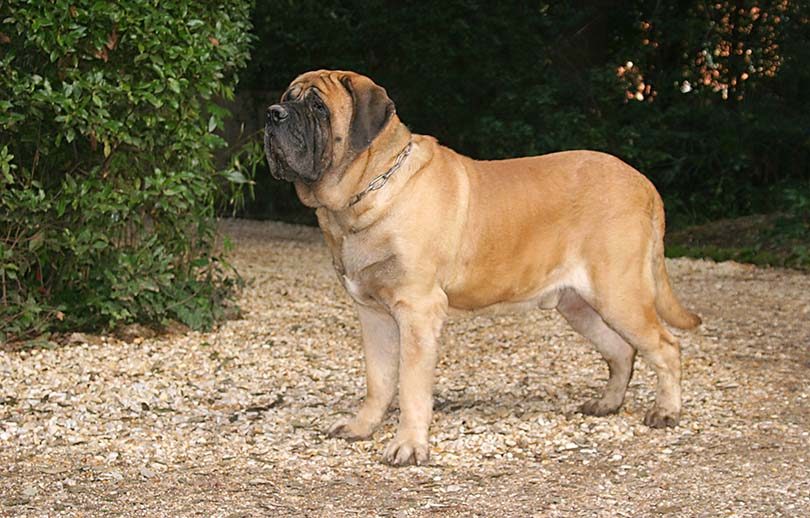
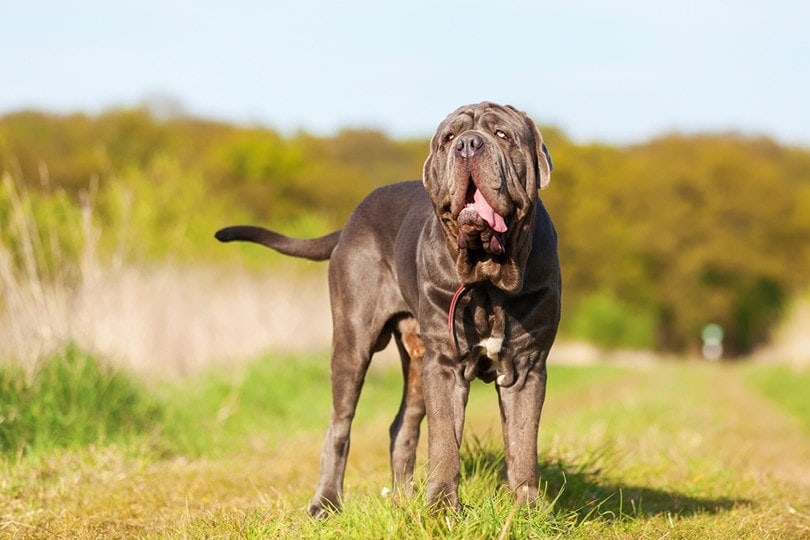
The American Kennel Club (AKC) first recognized the Mastiff in 1885 and has kept a record of the standard appearance for this dog breed. Mastiffs aren’t as ferocious as their ancient Roman and British ancestors. However, they’re still a large and formidable breed. Male mastiffs can weigh anywhere between 160 to 230 pounds, and female Mastiffs can weigh between 120 to 170 pounds. They can grow up to a shoulder height that surpasses 30 inches.
Mastiffs belong to the AKC’s working group and the United Kennel Club’s (UKC) guardian group. They continue to assist humans with work that requires drive, strength, and tenacity. You can often find Mastiffs working as police dogs, military dogs, and guard dogs. They can also learn to become reliable search and rescue dogs.
Living With a Mastiff
While Mastiffs are noble and loyal, it takes an experienced dog owner to raise up a healthy and well-behaved Mastiff. Mastiffs tend to be extremely loyal to their family but very wary of strangers and other animals. Therefore, early socialization is key to the success of raising a Mastiff that won’t act aggressively towards strangers.

Training
This dog breed also requires firm, fair, and consistent training. Once a Mastiff owner earns the respect of their dog, these dogs become rather easy to train because they’re quite intelligent and have developed an eagerness to please.
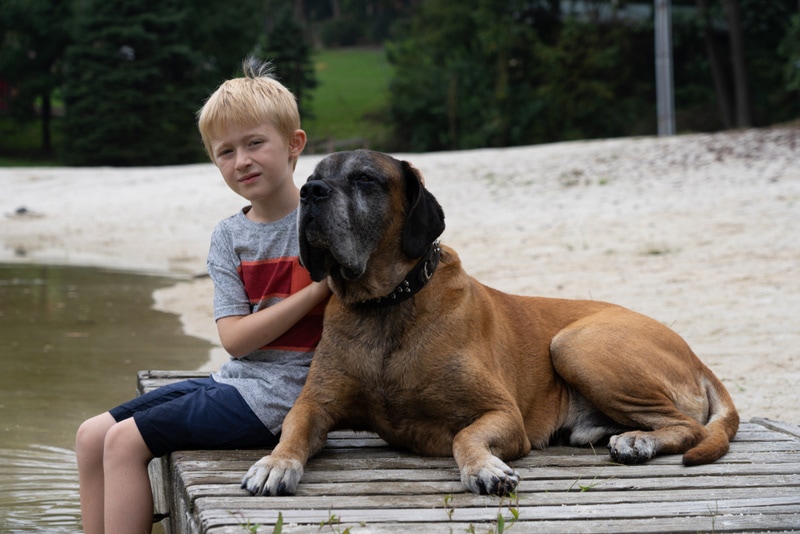
Mastiffs can also be good family dogs because they’re relatively calm. However, they do best with older children simply because they may not know their own size and could accidentally knock over toddlers and young children.
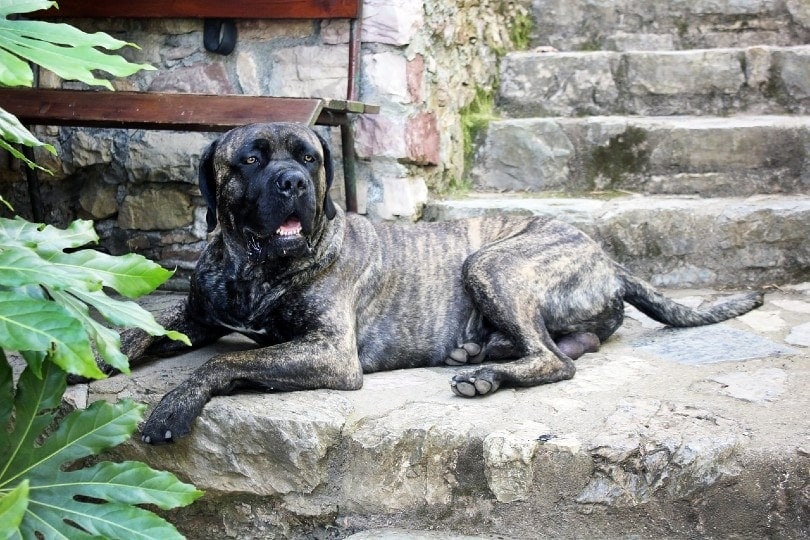
See Also: Brindle Mastiff
Health Concerns
Unfortunately, like most giant breeds, Mastiffs have a shorter lifespan compared to smaller dog breeds. They live to be about 8 to 10 years old. Common health concerns that Mastiffs can develop include osteosarcoma, elbow and hip dysplasia, cardiomyopathy, and gastric torsion.

Expenses
Since Mastiffs are giant dogs, they can eat a lot of food and require a well-balanced diet that can end up costing a lot of money. So, it’s important to consider the costs and care needs for this dog breed before deciding to raise one.
Conclusion
Mastiffs were originally bred and kept as war dogs and guard dogs. Today, they still work alongside people as police dogs, military dogs, and guard dogs. However, they’re also popular companion dogs that can be very loyal and loving towards their family.
Mastiffs have been around humans for thousands of years and have an established reputation amongst people that’s well-earned and well-deserved. They’ve captured the hearts of people all throughout history, and we’re confident that they’ll continue to be a favored dog breed for many more years to come.
Also see:
Featured Image Credit: Inna Astakhova, Shutterstock
Get Hepper In Your Inbox


Pet care tips from our vets and experts, straight to your inbox.
You may opt-out at any time. View our Privacy Policy for more information.
Jessica is a freelance writer who spends most of her day reading and writing while her fluffy Cavapoo, Nora, naps beside her. She loves and appreciates pets and animals because there’s so much to learn from them, and they do so much for people. As a dog mom, she understands the special relationship that pet parents have with their pets. So, she loves sharing helpful information that people can use to better understand their pets. When she’s not writing, you can find her walking dogs, tending to her plant babies, or drinking her nth cup of coffee.
Join the conversation
Ask a question, share your story, or send private feedback.