Hepper is reader-supported. When you buy via links on our site, we may earn an affiliate commission at no cost to you. Learn more.
Why Are St. Bernards Shown With Barrel Collars? Breed Interesting Facts
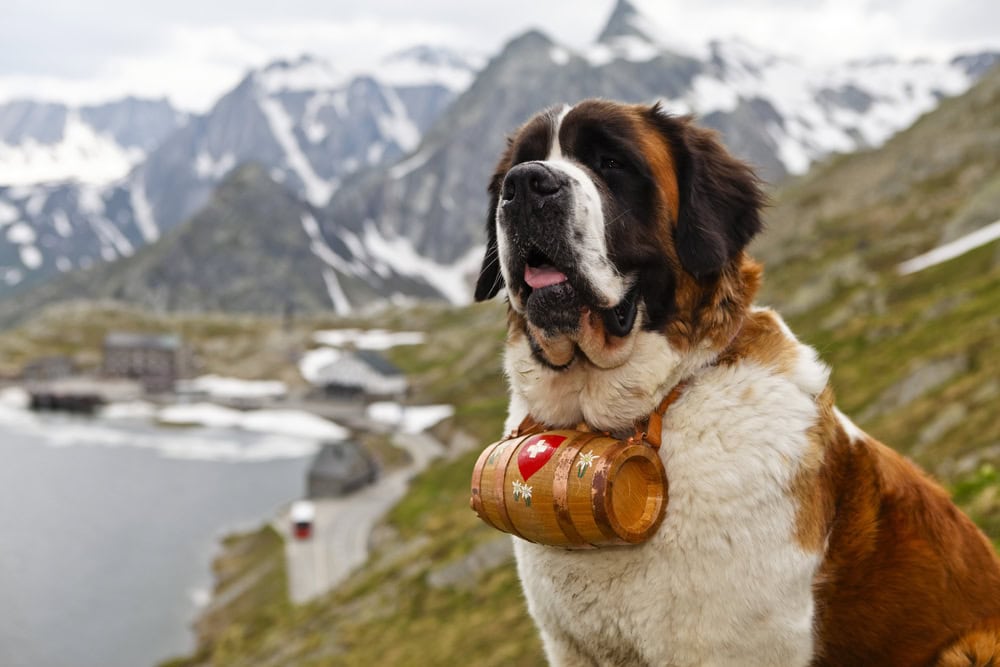
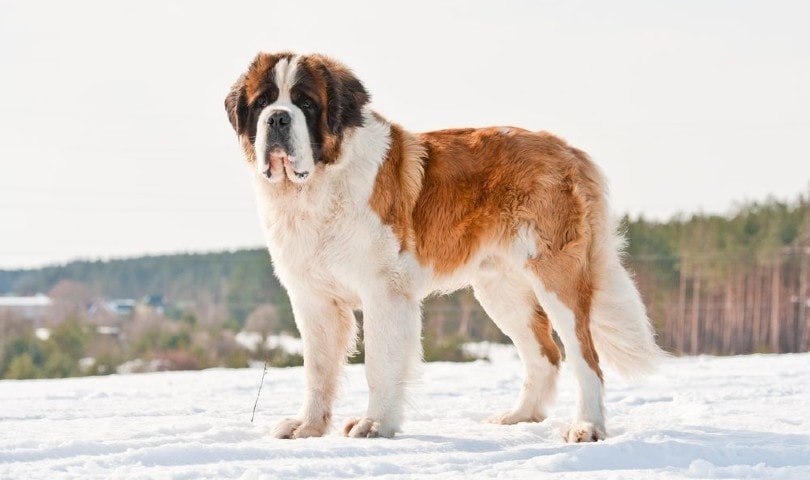
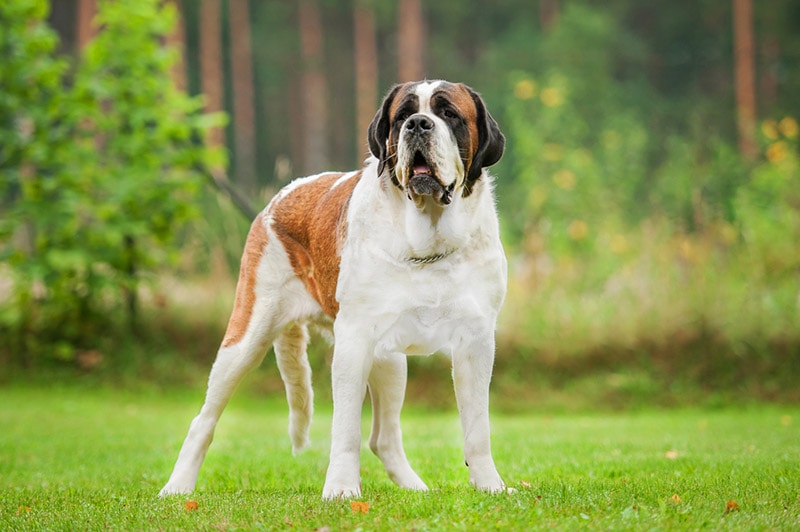
Although there are many myths surrounding the life of this noble and loyal breed, one of St. Bernard’s most enduring legends is that they walked around with small barrels of brandy around their necks to resuscitate avalanche victims. But did these dogs wear barrels around their necks during rescue operations in the Swiss Alps? As romantic as this idea is, it comes from the imagination of a young painter. In 1820, a 17-year-old child prodigy named Edwin Landseer created a painting called, "Alpine Mastiffs Reanimating a Distressed Traveler." It depicted an unconscious avalanche victim being resuscitated by two large St. Bernards, one with a barrel of brandy around his neck. Landseer's stroke of inspiration made the brandy barrel the enduring symbol of the St. Bernard. Read on to discover all the details of this fascinating anecdote and the origins of the big friendly beast that is the St. Bernard.

A Brief Look at the Origins of the St. Bernard Dog
The St. Bernard is one of the most iconic dog breeds in the world, but their true origins are a little hazy. Most historians believe that St. Bernards were first bred in the Great St. Bernard Pass in the Swiss Alps. This was a strategic trading route that linked what is now Italy with the rest of Europe. The pass was also used by pilgrims making their way to Rome. The St. Bernards living in this area were likely bred from herding dogs that accompanied groups traveling along this route. The most likely candidates for these herding dogs are Tibetan Mastiff and Molosser breeds. Both are believed to have been used to produce the St. Bernard.
St. Bernards were commonly used in the areas where they could assist the monks of the Great St. Bernard Hospice in the Alps, rescuing those who got lost or injured while traveling through the treacherous terrain. They were known to save many people from avalanches, freezing streams, and snowfalls.
However, according to various sources, St. Bernards were present in the Swiss region long before antiquity. Indeed, the Germanic tribes that lived there apparently used these canine giants as war dogs when they invaded the Roman Empire. Legend has it that even the most battle-hardened Roman legions trembled in fear at the sight of these massive four-legged beasts.
Thus, the breeding of St. Bernards likely started somewhere in the first two centuries of the modern era. They were finally recognized as a breed by the American Kennel Club in 1885, and classified in the working group. St. Bernards are still used today for search-and-rescue operations because of their size, strength, and intelligence.

Where Does the Brandy Barrel Myth Come From?
St. Bernards are often associated with carrying a barrel of cognac around their neck and rescuing victims from avalanches; the eau-de-vie would be used to "warm up" the poor travelers buried under the snow. This is a myth that's been circulating for over 200 years, but how did it even get started?
It is true that St. Bernards were used in rescue operations in the steep and snowy terrain of the Swiss Alps. However, the monks of the St. Bernard Hospice claimed that these dogs never carried a small wooden barrel full of alcohol around their necks. This lingering image in pop culture is instead attributed to the 1820 painting by young Sir Edwin Landseer.
Landseer’s “Alpine Mastiffs Reanimating a Distressed Traveler,” was a renowned success in 1820. The huge canvas shows an unconscious avalanche victim surrounded by two St. Bernards, one of whom is barking for help and the other is licking the victim’s hand. From one of the dog’s collars hangs a cask, a whimsical detail that Landseer created just to add something to his picture. From this trivial detail was born the myth of St. Bernards carrying barrels of brandy around their necks. The real St. Bernards that saved hundreds of lives in the snow-capped mountains of the Alps did not wear eau-de-vie in cask necklaces, as charming as this idea is.
What to Know Before Adopting a St. Bernard Puppy
The St. Bernard is an imposing breed that requires a substantial investment of time, money, and energy. It’s a long-term commitment, caring for a St. Bernard puppy. You will need to provide exercise, training, proper nutrition, and plenty of attention.
This breed is not a dog for everyone. They are highly energetic and can be destructive if left alone for long periods of time. They also require constant supervision when outside and are prone to escaping their yards.
You should also be prepared for intense grooming needs. The St. Bernard has a thick double coat that needs regular combing and brushing to prevent matting. You will also need to cut their nails regularly to prevent them from splitting or cracking.
So, if you are interested in adopting a St. Bernard puppy, be sure to research all aspects of their care before bringing one home. If you can indeed commit the time and resources to care for one of these pups, they will provide you with many years of loyal companionship and love.
Final Thoughts
St. Bernard rescue dogs are frequently portrayed as having small kegs tied around their necks, full of hot brandy for freezing mountaineers.
This legend is more fiction than fact, with that wooden barrel contributed to Sir Edwin Landseer's iconic painting that highlighted the heroic deeds of these brave, caring, and loving dogs.
See Also:
Featured Image Credit: fred12, Shutterstock
Get Hepper In Your Inbox


Pet care tips from our vets and experts, straight to your inbox.
You may opt-out at any time. View our Privacy Policy for more information.

Genevieve, a biologist and science writer, who harbors a profound affection for capuchin monkeys, pumas, and kangaroos. This passion has led her to travel extensively, volunteering and working at wildlife rehabilitation centers in Bolivia, Guatemala, Canada, and Australia. Now residing in Argentina as a Canadian expat, Genevieve enjoys the view of horses and cows greeting her from the vast plains outside her home office window. She proudly cares for three rescued dogs—Lemmy, Nala, and Pochi—and a playful kitten named Furiosa. Sharing her extensive knowledge and love for animals brings her immense joy and fulfillment.
Join the conversation
Ask a question, share your story, or send private feedback.