Hepper is reader-supported. When you buy via links on our site, we may earn an affiliate commission at no cost to you. Learn more.
Saint Bernard vs Great Dane: The Key Differences (With Pictures)

In this article
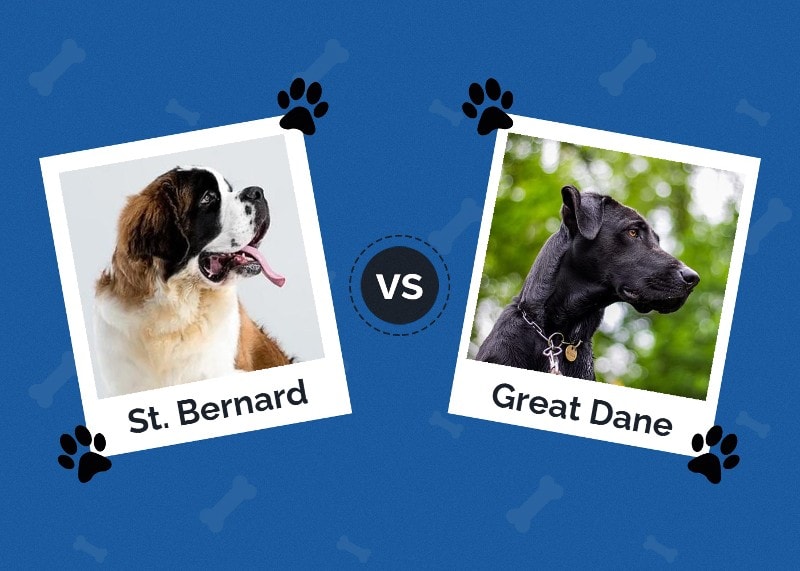
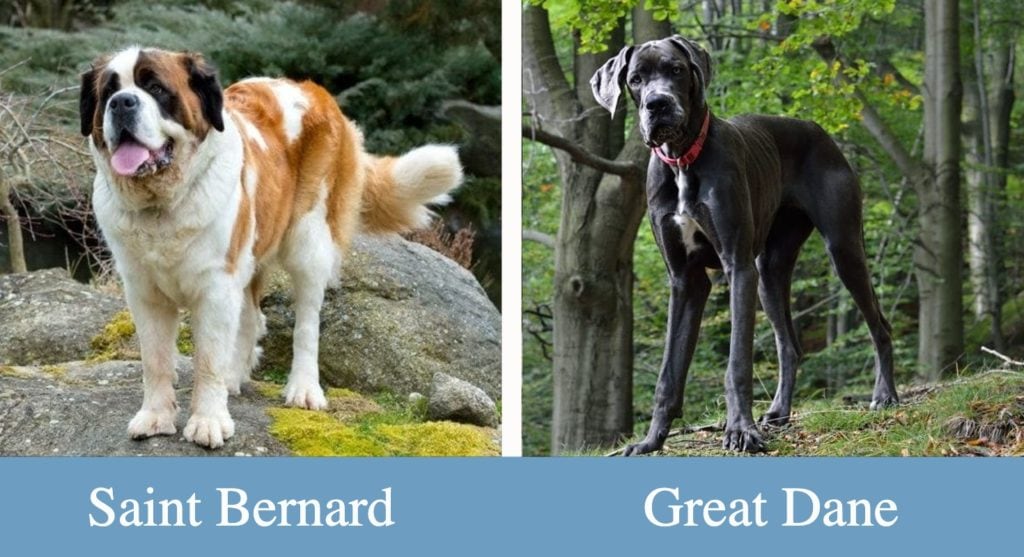
The Saint Bernard and the Great Dane are two very distinctive giant dog breeds. They’re both members of the working group and are both known for their gentle and patient temperaments and strong work ethic, but there are quite a few differences between the two. They originate from different countries, have different working histories, and are physically very distinct from one another.
In this post, we’ll explore how the Great Dane and Saint Bernard are alike and different to help you decide which breed would be a better fit for you and your family.

Visual Differences
At a Glance

Saint Bernard Overview
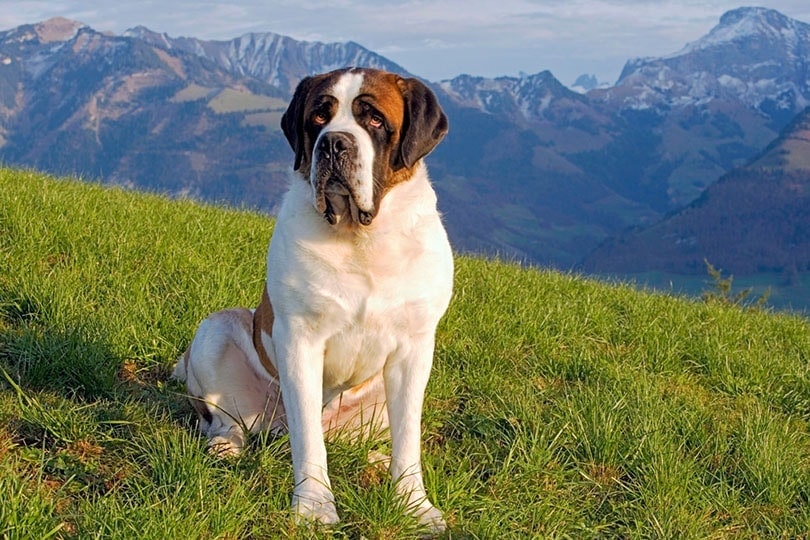
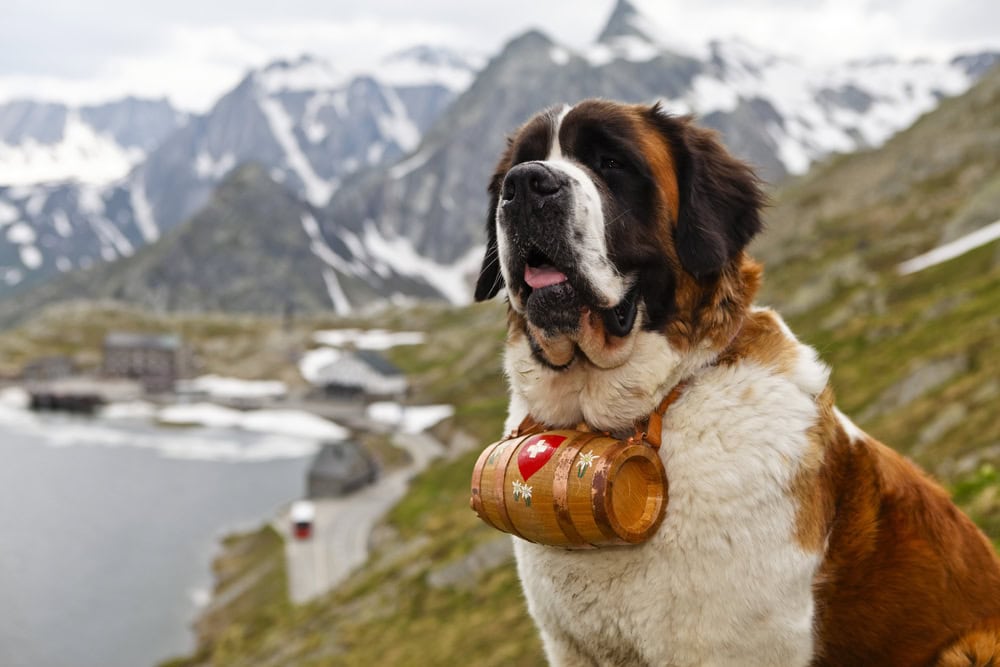
Saint Bernards hail from the Swiss Alps where they were bred and developed by hospice monks to rescue those that had wandered astray in rough weather conditions. This gentle giant still holds a special place in the hearts of dog lovers today not only for their countless acts of heroism but also for their hearts of gold. Let’s find out more about the Saint Bernard.
Personality
Saint Bernards are truly lovely dogs that are affectionate and friendly family members as long as they’ve been properly socialized, including in families with children and other pets. They’re also known for being playful, protective, and sociable with moderate energy levels.
They’re great at both snuggling up on the couch or enjoying a stroll in the park, but they’re not the most demanding in terms of exercise needs. Around one hour per day should be just fine for most Saint Bernards.
Appearance
The Saint Bernard is a huge, powerfully built dog with a muscular physique, broad back and shoulders, arched chest, and a thick, strong neck. They have a friendly expression, though Saint Bernards with dark masks have a more serious expression.
Their coats can be either short or long and come in a wide variety of color combinations, including brindle and white, brown and white, red and white, and mahogany and white. The only AKC-standard marking is their black face mask.
Health & Care
In terms of grooming, Saint Bernards need brushing at least once per week throughout the year to help keep their coats in tip-top condition. You can gently detangle your Saint Bernard with a metal comb or slicker brush. During shedding seasons, you’ll need to brush your Saint Bernard daily as they’ll be losing a lot more hair than usual. They also need regular nail trims to prevent painful overgrowth.
The Kennel Club in the UK classifies Saint Bernards as “category three.” Dogs in this category are prone to health issues due to their appearance, including dental and jaw issues and issues with the skin folds, eyes, and back legs.
Here is a list of conditions to watch out for in Saint Bernards:
Training
Saint Bernards are very eager to please. It’s recommended that you take your Saint Bernard to obedience classes because it’s especially important for dogs of their size.
Even though Saint Bernards are not typically aggressive dogs, if they’re not taught manners from a young age, they may become unruly by, for example, stealing food, being bossy, ignoring your commands, and jumping up to greet people. When a dog is as huge as a Saint Bernard, these things can become a real problem.
Suitable for:
Saint Bernards would fit nicely into any loving family that’s willing to put the time and effort required into raising them to be model citizens. If there are children in the home, it’s important that they know how to treat the Saint Bernard sensibly and with respect.
It’s also a good idea to supervise your Saint Bernard around small children because they’re so huge that a small child may easily get knocked down by accident. Otherwise, Saint Bernards are typically great family dogs with an abundance of love to share.
Great Dane Overview
Another breed known for being a gentle giant, the Great Dane originated in Germany—in spite of what the breed name suggests—where these ginormous dogs were bred to hunt wild boar and protect property. Today, Great Danes are loving family dogs in many homes around the world. Let’s take a closer look at this magnificent dog breed.
Personality
In terms of personality, the Great Dane is quite similar to the Saint Bernard. Well-socialized Great Danes are known for their friendliness, their family-orientedness, dependability, and their patience with younger family members.
They aren’t the most rambunctious dogs, but adult Great Danes still need around 2 hours of exercise per day, making them perfect for active families. If you have a Great Dane puppy, they should be exercised in shorter bursts daily because their fast-growing bones and joints can be damaged by too much exercise too soon.
Appearance
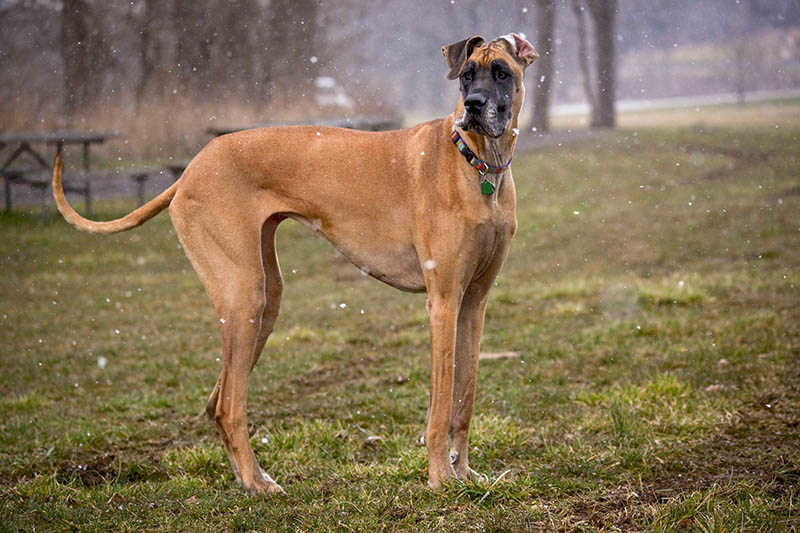
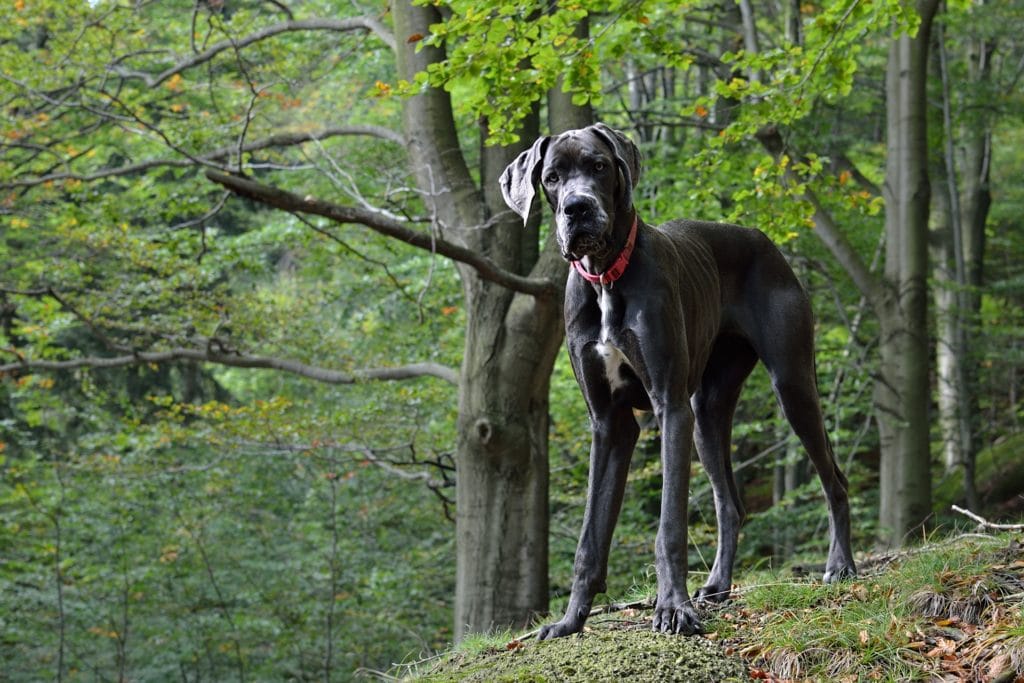
As the world’s tallest dogs, Great Danes never fail to turn heads wherever they go. These majestic canines can grow up to 32 inches tall and they have a huge frame and powerful, confident stance. The head is long and rectangular, particularly in American Great Danes.
European Great Danes have heads that appear more square-shaped than rectangular and droopier lips. Both the American and European Great Danes are slender and muscular, though American Great Danes are somewhat sleeker-looking than Europeans. European Great Danes are a little stockier.
There is a wide variety of coat colors and color combinations, including black, black and white, blue, brindle, fawn, and merle. AKC-standard markings are white, black, and black masks, though alternative markings are possible.
Health & Care
As short-coated dogs, Great Danes are not really heavy shedders. That being said, because they’re so huge, the hair they do shed may seem to be rather a lot. You can keep this under control by brushing your Great Dane weekly. Like the Saint Bernard, you’ll need to brush them daily during shedding seasons. Great Danes, like all dogs, need to have their nails trimmed regularly.
In terms of health conditions that Great Danes are prone to, bloat is one of the most common and dangerous.
In addition to bloat, other potential conditions include:
Training
Like Saint Bernards, Great Danes are smart and eager to please, but it’s still a good idea to enroll them in obedience classes to supplement the training and socialization you will do with them.
Though Great Danes are known for being gentle, they’re also huge and so can become quite a handful if not trained and socialized properly. They need consistent and firm but kind leadership to thrive in the training department.
Suitable for:
A Great Dane would be the perfect fit for any family that wants a dog with a gigantic heart, is willing to work on socializing them from as early as possible to prevent their size from becoming an issue, and is committed to making sure they get enough exercise every day.
As with any dog breed, it’s best to supervise Great Danes around little children. Even though Great Danes are not ill-tempered or aggressive as a rule, like the Saint Bernard, they may accidentally knock a small child over when playing or even just passing by simply because they’re so big! Likewise, children need to be taught how to interact sensibly with the Great Dane.
Which Breed Is Right for You?
If you’re trying to decide between a Saint Bernard and a Great Dane, we know how tough the decision must be as they’re both wonderful breeds, similar in personality, and with plenty of love to give to the right family. Just as much, both are a huge (quite literally) commitment, particularly in terms of socialization, training, and general care.
If you’re an active person who is happy to commit to exercising a dog for around 2 hours per day, the Great Dane might be for you. If you prefer a dog that needs only around an hour of exercise per day, you might consider the Saint Bernard.
Also, Great Danes might be slightly better guard dogs as they were developed, in part, to guard property. That being said, Saint Bernards are also protective of their humans, so there’s no reason they wouldn’t also make a great guard dog.
We hope our comparison has helped you make a decision as to which breed would be a better fit for you. Good luck!
Related Read:
Featured Image Credit: Left: sean1006, Pixabay, Right: monnieblazkova, Pixabay
Get Hepper In Your Inbox


Pet care tips from our vets and experts, straight to your inbox.
You may opt-out at any time. View our Privacy Policy for more information.
Kit Copson is a freelance writer and lifelong animal lover with a strong interest in animal care. She has parented various furry beings over the years and is currently a proud cat mom of two—one skittish but adorable Domestic Shorthair and very chilled (unless hungry) Siamese and a —and dog mom of one—an adopted Bichon Poodle cross. When not writing about or spending time with pets, Kit can be found doodling in her sketchpad, reading, or more often than not, drinking tea.
Join the conversation
Ask a question, share your story, or send private feedback.