Hepper is reader-supported. When you buy via links on our site, we may earn an affiliate commission at no cost to you. Learn more.
Why Is My Cat’s Tail So Long? Vet-Reviewed Science & Information


In this article
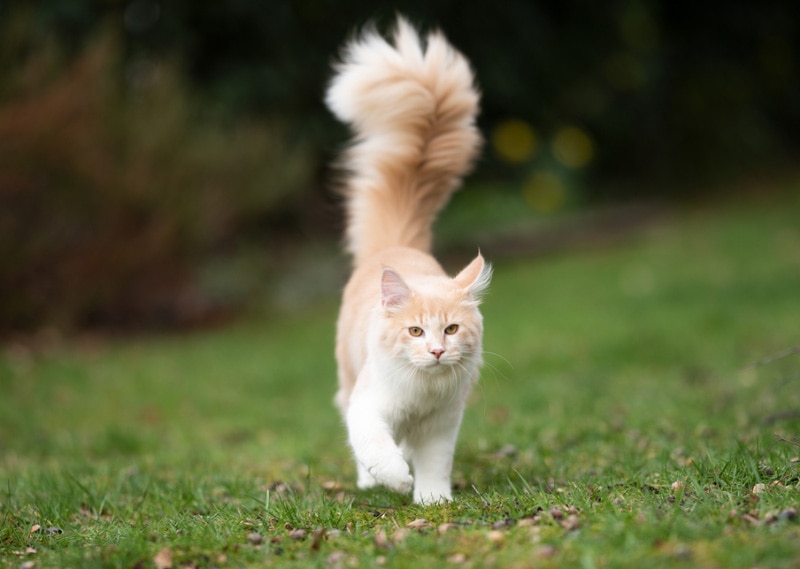
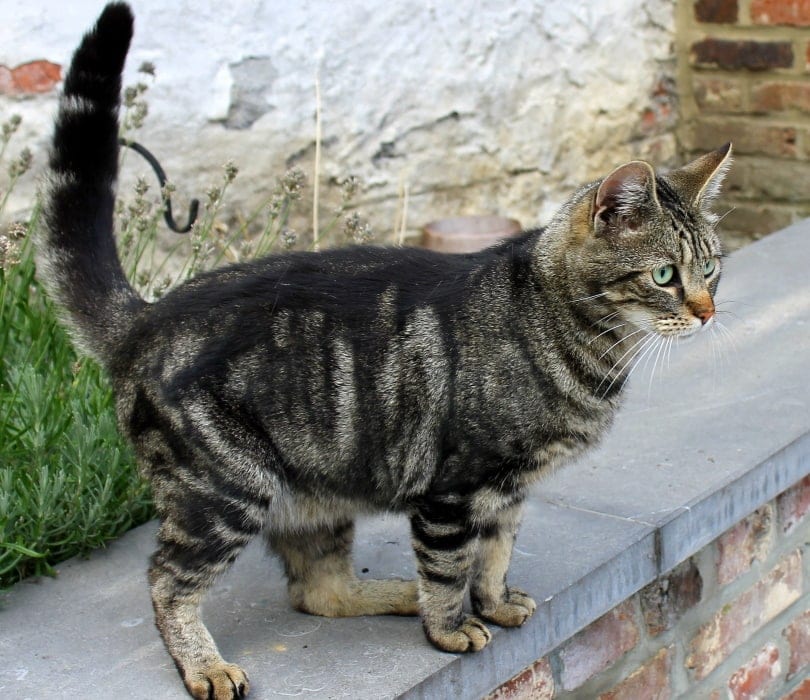
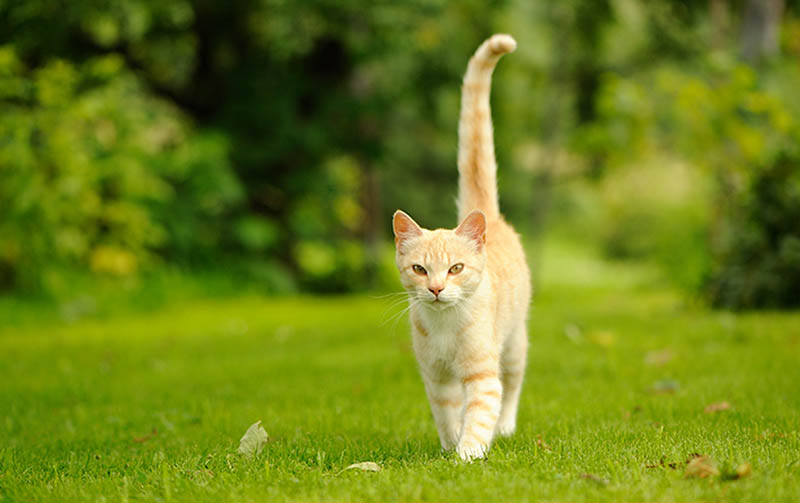
Most cats’ tails tend to be pretty long. If you’ve ever taken the time to study a cat’s tail, you may have even noticed that some cats can have tails as long as half of their bodies! But why do cats have long tails? What is the function of a long tail, and how do cats develop them?
In this article, we will go over the evolutionary benefits of a long tail as well as what can determine the length of an individual cat’s tail. If you want to know why your feline friend has such a long (or short) tail, keep reading below.
Your feline friend could have a long tail for several reasons, but we have classified them into two different categories.

The Benefits of a Tail
Tails provide several benefits for cats.
1. Balance
You have likely heard about this benefit before, but tails can help your cat to keep their balance. Cats are known to be graceful, agile creatures that almost always land on their feet. This poised reputation is due in some part to your cat’s tail, which almost behaves as a fifth limb, as it helps cats maintain good coordination when they’re falling from a height.
During the righting reflex in a fall, a cat’s tail works by rotating in the same direction as their body spins, helping them stabilize themselves before they land.
Does this mean that cats with shorter tails are clumsy? Not necessarily. A cat’s tail is not the only feature that helps them balance. Furthermore, it’s the stump of the tail that does the primary rotation during this reflexive action.
A cat’s tail also offers them balance while they sprint or chase an object or prey. The tail’s role in such a situation is to act as a counterbalance and help them quickly turn as they pursue their target.

2. Communication
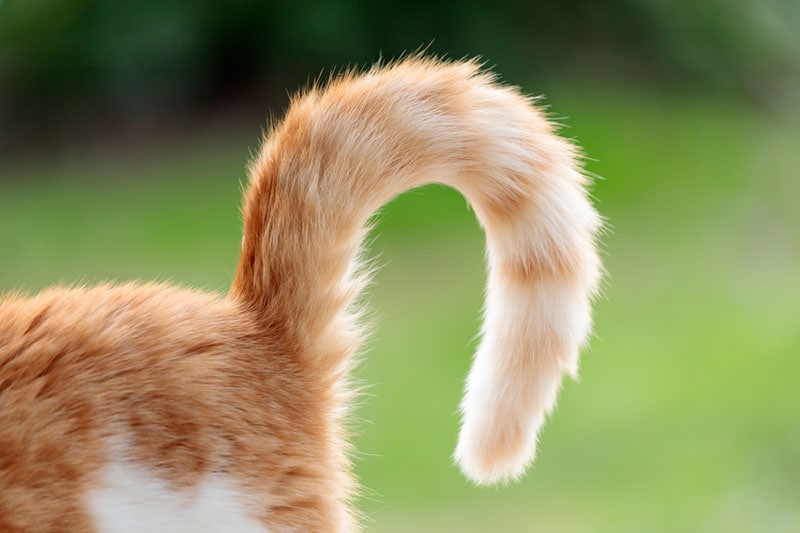
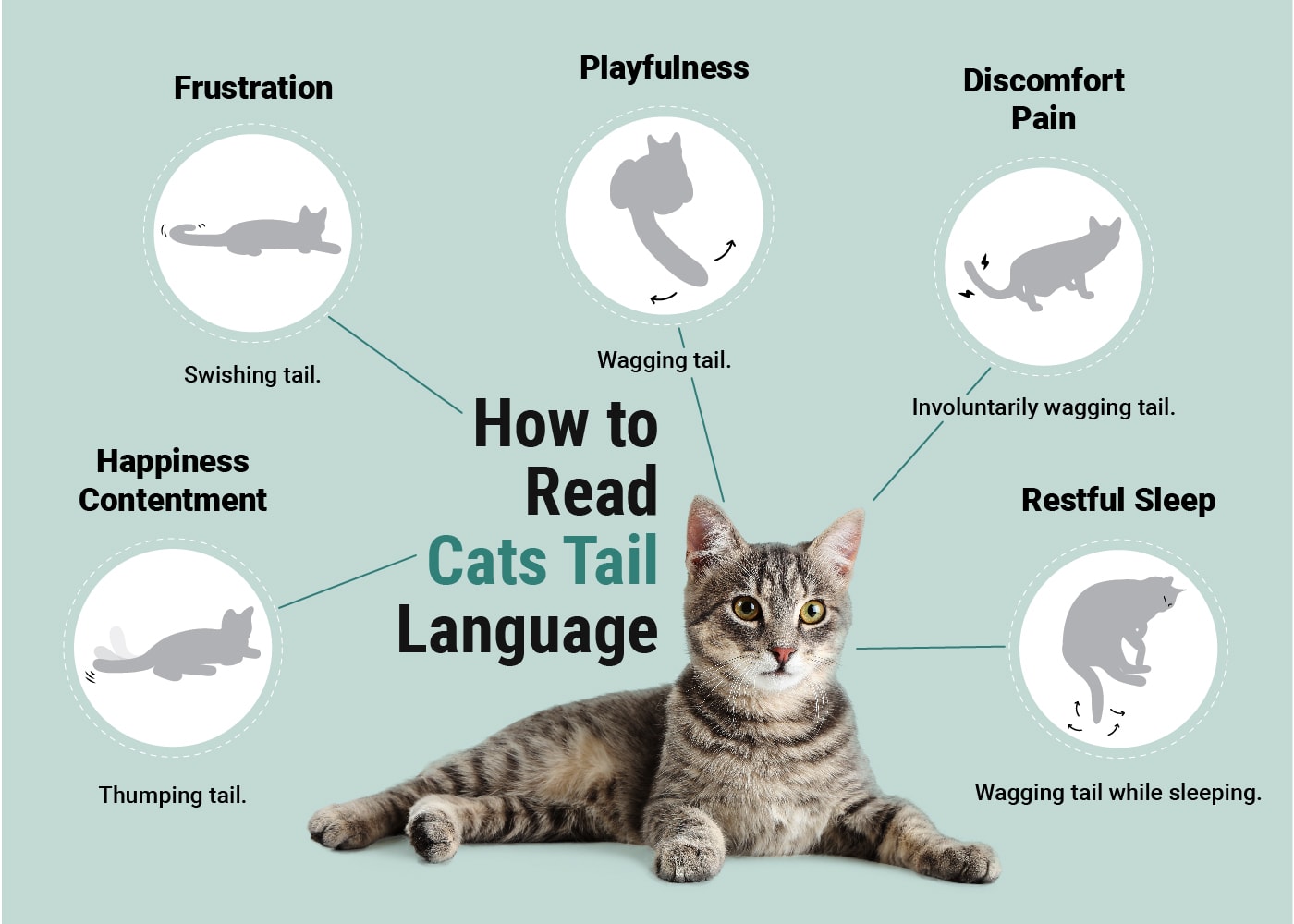
The tail is a communication tool for your cat. For instance, an upright tail with a slight bend at the tip typically indicates your cat is in a friendly mood, while a stiff or tucked tail may suggest uncertainty or fear.
There are several ways cats communicate. Vocalizing is a common method of communication. This includes meowing, yowling, hissing, growling, and other such sounds. Chirping, chattering, and purring are other ways your cat may communicate. But beyond their tail and their voice, your cat may use their eyes and ears to communicate as well.
This means that a cat without a tail can still communicate, as the tail is just one part of the puzzle, and cats have several different communication techniques in their repertoire. In addition, many forms of communication are used simultaneously.
How Tails Are Developed in Cats
Now that you know why cats have developed tails, you may be wondering which factors allow them to develop tails in the first place.
Your cat’s breed can determine a lot of their appearance, and their tail is no exception. Some cat breeds tend to have average-sized tails, while others are known for much longer or shorter tails.
The single largest determining factor in tail length is the expression of the T gene in cats during embryonic development; mutations along this gene can result in a short or absent tail 1. Several cat breeds have such mutations: the American Bobtail, Manx, Pixie-Bob, Kurilian Bobtail, and the Japanese Bobtail.
Partial mutations or abnormalities along this gene result in a minimal tail, a raised rump (but no visible long tail), a short tail, or a stump. Conversely, if your cat has no mutations along this gene, they’re likely to develop a tail, which is usually around 9 to 11 inches in length, on average.
It is important to note that, though some cats are known for their lack of a tail, breeding such cats remains controversial, as though they can function as relatively normal individuals, the absence of a tail doesn’t offer these cats any benefits over their long-tailed counterparts. Hypothetically, such cats would have a harder time hunting prey in the wild.
Which Cat Breeds Have Long Tails?
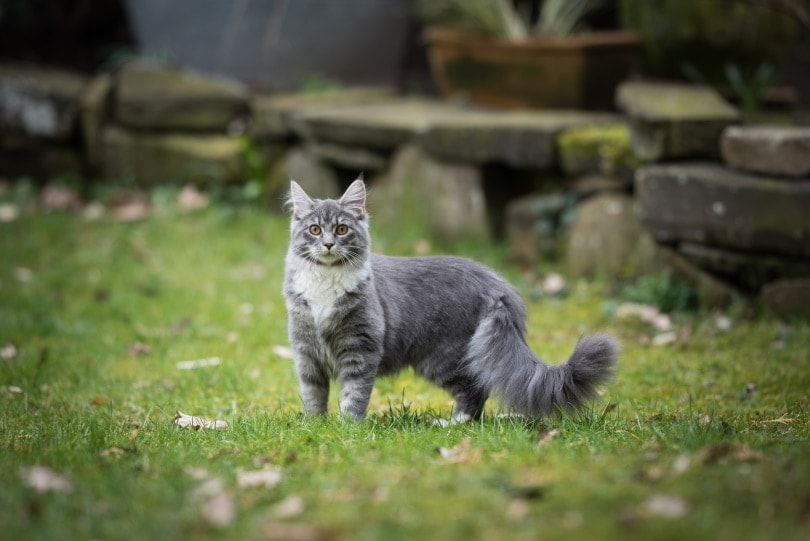
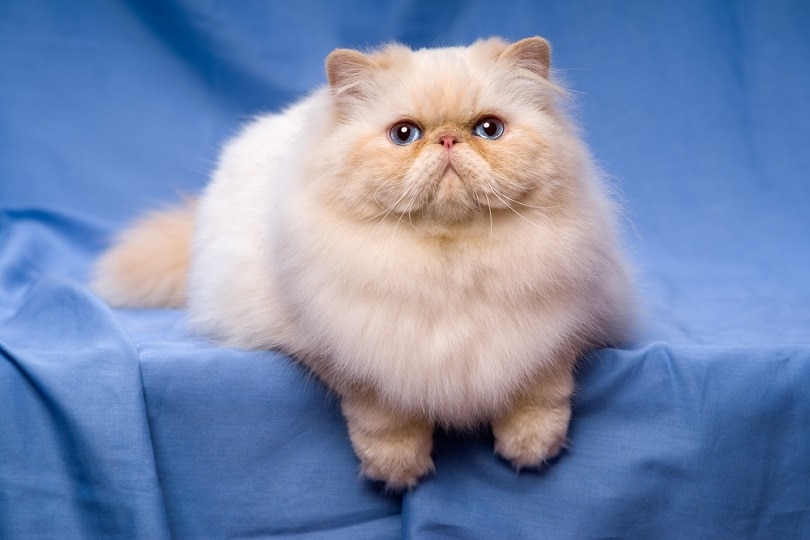
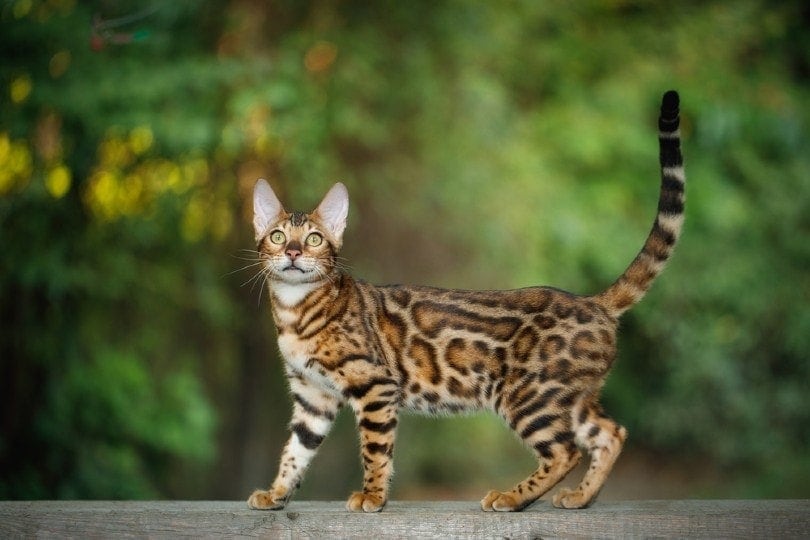
As we’ve already established, your cat’s genetics is the single largest factor in determining the length of their tail. There are some breeds where long tails are more prevalent. If your cat has a surprisingly long tail, check and see if their breed is on this list.
Conclusion
A cat’s long tail is not just for show and offers them several benefits. A cat’s genetics are the main determinant of their tail length. Though some cats have been selectively bred for having short or no tails, it is important to note that the lack of a tail doesn’t offer them any benefits.
See Also:
Sources
Featured Image Credit: Imageman, Shutterstock
Get Hepper In Your Inbox


Pet care tips from our vets and experts, straight to your inbox.
You may opt-out at any time. View our Privacy Policy for more information.
Pets are Jordyn’s passion, cats especially. Whenever she has the opportunity, she loves to learn about them and share her knowledge with everyone. She is devoted to her tabby cat named Jack and works hard to buy him his favorite treats and toys. Discovering new ways to better care for her pet is always on her to-do list, and she is eager to help pet parents everywhere who have similar pursuits. In her spare time, she loves to read, write, and take long walks. She has a creative spirit, which often helps her to come up with funny cat names.
Join the conversation
Ask a question, share your story, or send private feedback.