Hepper blog

Search our database of over 9,984 posts with up-to-date information from our experts and veterinarians.

Hepper is reader-supported. When you buy via links on our site, we may earn an affiliate commission at no cost to you. Learn more.

Why Do Cats Wag Their Tails? 5 Vet-Reviewed Reasons

By Oliver Jones · Reviewed & fact-checked by Dr. Paola CuevasVet Approved
Dr. Paola Cuevas
Reviewed & Fact-Checked byDr. Paola CuevasMVZ (Veterinarian)
Paola Cuevas is a veterinarian and animal behaviorist, with over 18 years of experience working with a variety of species. Her passion is animal welfare and focuses on the importance of preventive medicine. Paola has skills in the fields of nutrition, microscopy, clinical pathology, diagnostic imaging, and endoscopy as well as extensive experience in animal training through positive reinforcement. As our in-house veterinarian, Paola is very happy to share her knowledge and experience with our readers and hopes to be helpful with any issue presented by your non-human family members.View authorThe information is current and up-to-date in accordance with the latest veterinarian research. Read about our vets
Share
Ask us a question in the comments
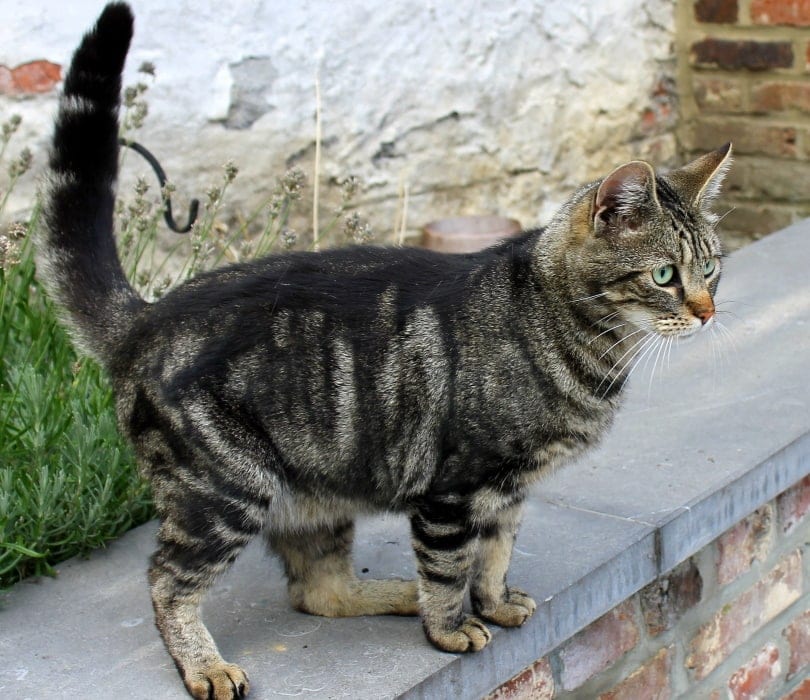
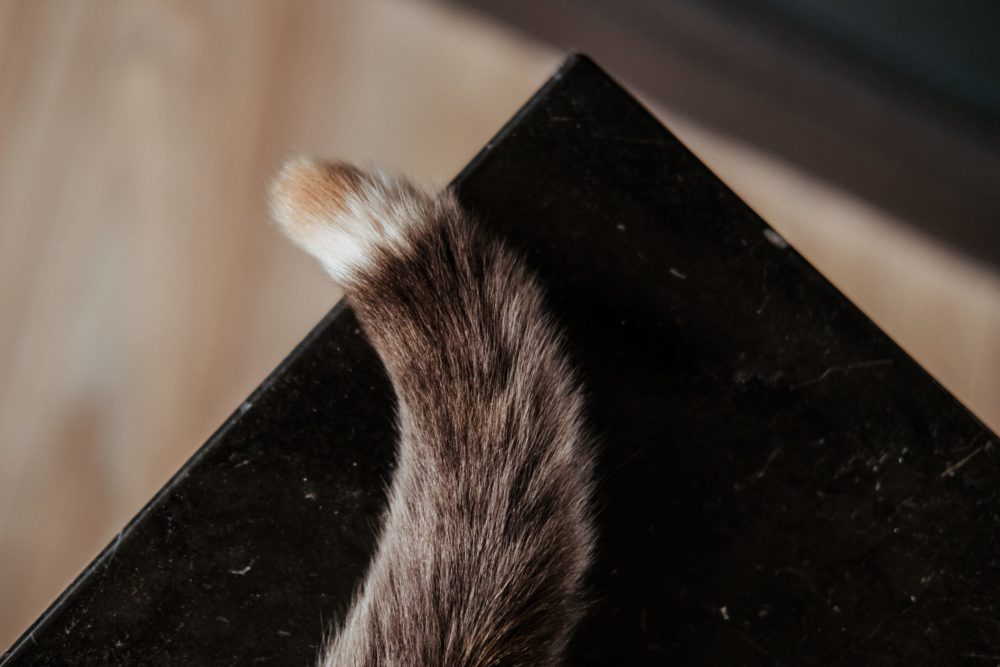
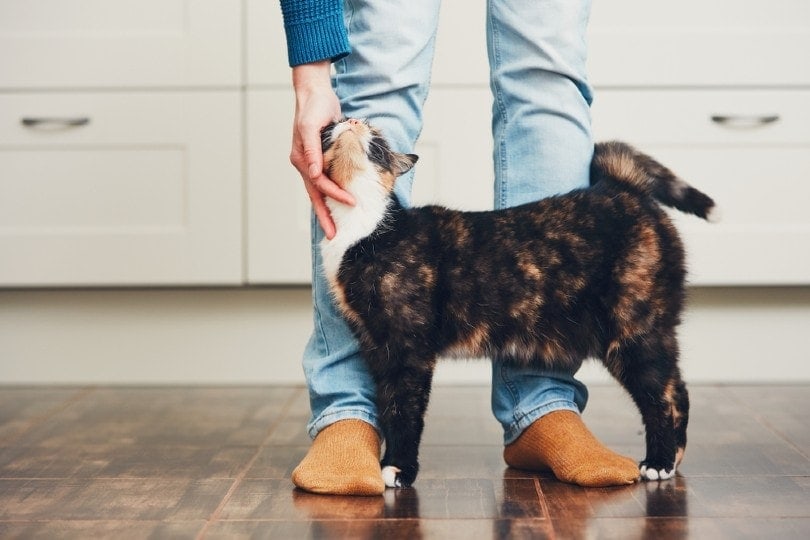
tabby cat wagging its tail

Most everyone knows that dogs enthusiastically wag their tails to show that they are happy. But what’s the deal with cats? If you’re wondering why cats partake in tail wagging, you’re not alone, and we’re here to help you get it straight!

Cats wag their tails for many reasons, and almost all cats engage in the behavior. Tail wagging for cats is a form of body language to express their mental and emotional state. Here are some of the main reasons cats wag those gorgeous tails of theirs!

The 5 Possible Reasons Why Cats Wag Their Tails

1. The Cat Feels Confident

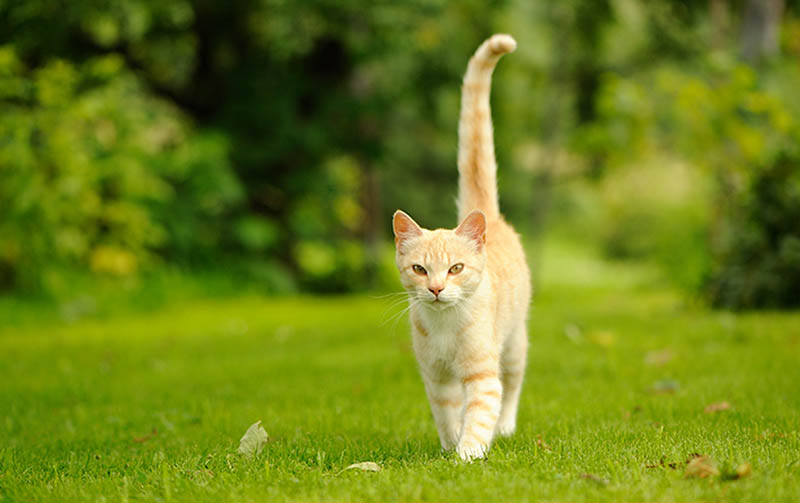
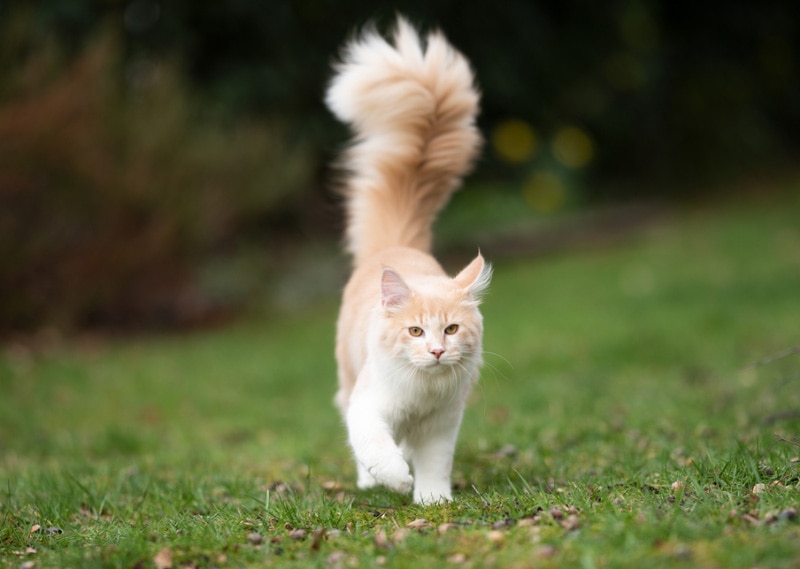
Surely, you’ve seen your cat or someone else’s cat proudly walking down the street with their tail standing straight up with the tip wagging. This is a sign of confidence and that the cat is ready to meet and interact with you or other cats or family pets.
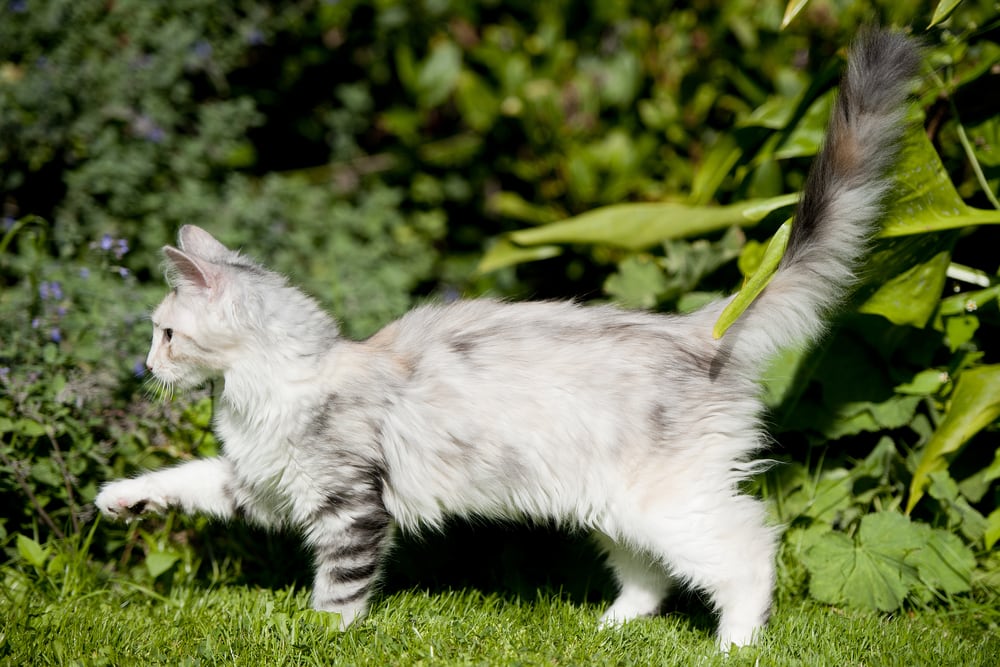
White and gray striped cat in the garden with tail up
Photo Credit: 11A Fotografie, Shutterstock

2. The Cat is Afraid

Some cats wag their tails back and forth when they’re afraid of something. A cat that’s feeling afraid may wag their tail close to the ground, or they might even hide the tail under their body. This is a clear sign that the cat doesn’t want to interact with anyone or anything nor engage in any type of fight.

On the other end of the spectrum, a cat that is afraid but willing to fight may hold their tail up straight while arching their back. The tail may fluff up to appear bigger and wag back and forth to warn an approaching threat to stand back.
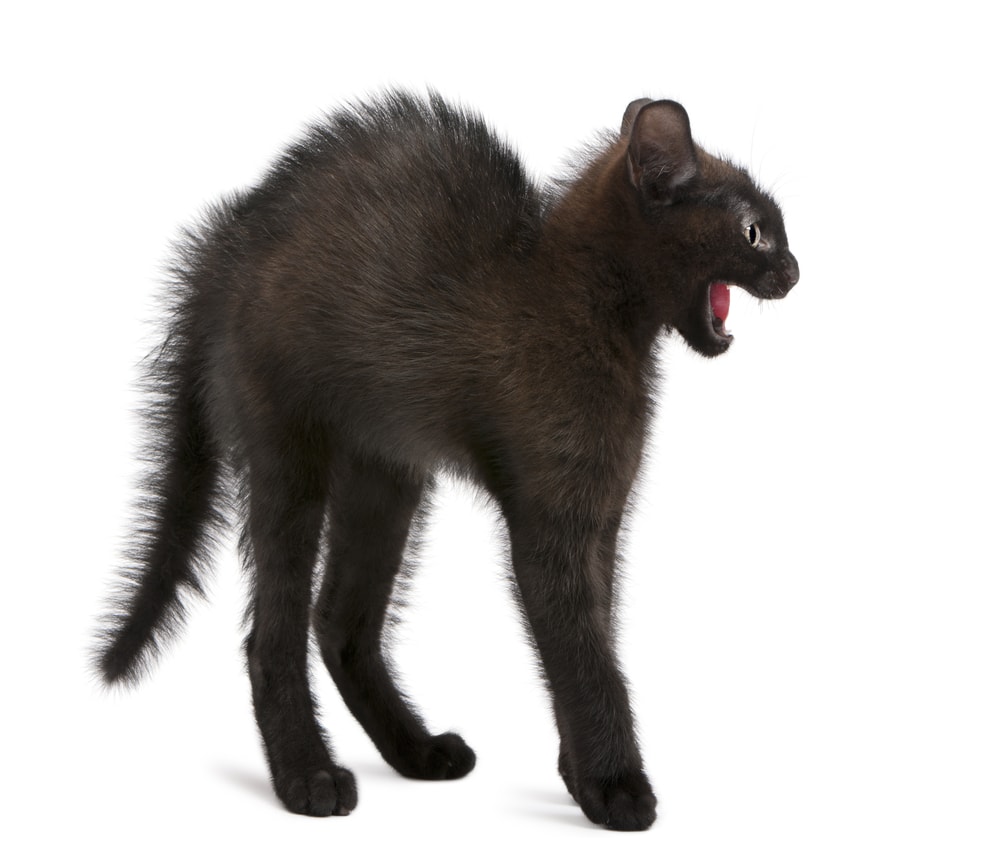
Freightened black kitten on white background
Photo Credit: Eric Isselee, Shutterstock

3. The Cat is Excited

The next time you see your cat’s tail standing straight up and quivering a bit, it’s a sign your cat is excited. Maybe you just opened a yummy can of cat food or returned home after being away all day. This type of tail wagging may also be seen when a cat is peeing or when marking their territory. In this case, the cat will back up to an object, shake their erect tail, and relieve themselves.

feeding cat
Image Credit: Dora Zett, Shutterstock

4. The Cat Might Be Annoyed

When a cat is feeling annoyed, they will often wag their tail back and forth to let you or another pet know

Annoyed cats can also flick their tail when they are feeling agitated. For example, if you’re petting your cat or brushing their fur, they may get fed up with it all and flick their tail to send you the message to back off.

Cat not happy with his food
photo Credit: Nils Jacobi, Shutterstock

5. The Cat Might be Attentive, In Hunter Mode

When going after prey, cats swish their tails back and forth in an attempt to mesmerize the prey. If you’ve ever watched a cat go after a mouse in the grass, you’ve probably seen the cat’s tail be held straight parallel to the ground and begin swishing back and forth right before they pounce into action to capture the prey.
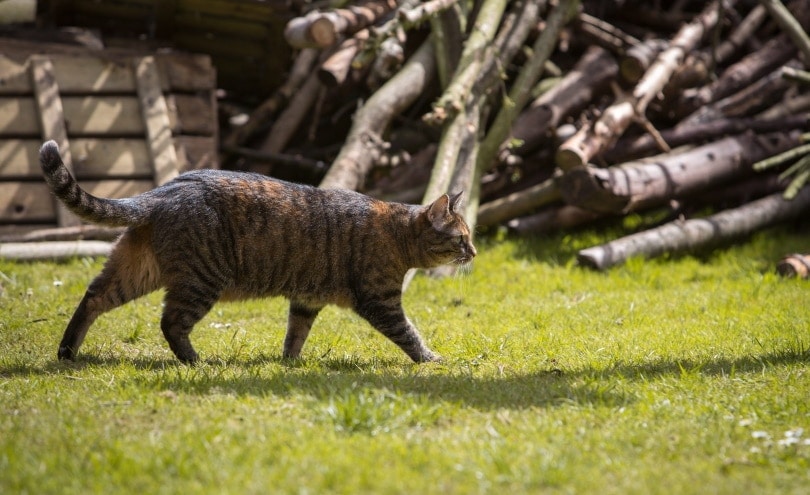
domestic cat hunting prey
Image Credit: Piqsels

Keeping Your Cat’s Tail Healthy

Considering that cats use their tails to communicate, it’s only natural that you want to help your feline keep their tail healthy and in good shape! When you’re brushing your cat, don’t neglect that long tail. Just remember that most cats don’t like having their tails handled, so proceed with caution.

Carefully and gently brush your cat’s tail to remove any loose hairs. Use a slicker brush for cats that feels gentle on your cat’s fur. If you use a good-quality brush and positive reinforcement methods, your cat may learn to enjoy having their tail brushed so much that they’ll come running whenever you pull out the comb!

If you have an outdoor cat, it’s a good idea to check their tail now and then to ensure it’s free from injuries, inflammation, ticks, or any infection. It’s common for outdoor cats to get into scuffles with other cats and get bitten on the tail. A bite wound can easily become infected, so make the habit of regularly inspecting your cat’s tail carefully. Keep an eye out for burrs and other items that may be entangled in the fur.

Conclusion

Even though they’re somewhat mysterious and aloof, cats have many ways of communicating. They vocalize by meowing and hissing and they show how they feel by positioning their eyes and ears in different ways. Cats also use their tails to communicate how they feel by wagging, vibrating, or swishing their tails back and forth.  Keeping an eye on your cat’s tail is a great way to decipher how your cat is feeling!

Looking for more tall tails? Try:


Featured Image Credit: Piqsels

Get Hepper In Your Inbox

Pet care tips from our vets and experts, straight to your inbox.

List

Select all that apply.

You may opt-out at any time. View our Privacy Policy for more information.

Oliver Jones
Authored by

Oliver Jones

Join the conversation

Ask a question, share your story, or send private feedback.
Rate this post
Required to post. Only our editors see your rating.
Who should see this?

A human reviews every comment before it appears. Your email is never published.

Picked to go with this article

Cat Tail Language: Vet-Approved Guide to What Your Cat Is Telling You

Cat Tail Language: Vet-Approved Guide to What Your Cat Is Telling You

Cats may be unable to talk to us with words, but they have their special way of communicating with humans. Your pet’s tail and movements can tell you a lot abo…

Chantelle Fowler
By Chantelle Fowler ·
Why Do Cats Wag Their Tails While Lying Down? 5 Reasons Explained

Why Do Cats Wag Their Tails While Lying Down? 5 Reasons Explained

For some people, cats can be difficult to understand. Cats aren’t always as obvious about their moods and feelings as dogs, but they have many ways of communic…

Oliver Jones
By Oliver Jones ·
Why Does My Cat's Tail Vibrate? 4 Vet-Verified Reasons

Why Does My Cat's Tail Vibrate? 4 Vet-Verified Reasons

Cats, consistent with their nature, communicate in mysterious ways, and using their tails is one of them. It might seem an odd part of their body to use as a c…

Annaliese Morgan
By Annaliese Morgan ·
Do Cats Have Control Over Their Tails? Understanding Tail Movements & Body Language

Do Cats Have Control Over Their Tails? Understanding Tail Movements & Body Language

Have you ever wondered how much control your cat has over their tail? Do they even realize it's there, and if so, can they control each movement? While it migh…

Nicole Cosgrove
By Nicole Cosgrove ·

Keep reading

More stories you might like

Why Do Cats Have Tails? Vet-Reviewed Feline Anatomy

It might seem like your cat’s tail is constantly in their way if it’s getting caught in doors, windows, and other spaces. If it’s in their way all the time, wh…

Oliver Jones
By Oliver Jones ·
Why Do Cats Have Tails? Vet-Reviewed Feline Anatomy

Why Your Cat Thumps Their Tail? 7 Interesting Reasons

Sometimes you might find yourself wishing your cat came with a handy booklet that lets you in on why they do the things they do. Cats are much less obvious abo…

Kerry-Ann Kerr
By Kerry-Ann Kerr ·
Why Your Cat Thumps Their Tail? 7 Interesting Reasons

Why Do Cats Wag Their Tails While Sleeping? 4 Possible Reasons

Cats are difficult to understand since they do many things that people find out of the ordinary. For example, cats love wagging their tails even when asleep. T…

Nicole Cosgrove
By Nicole Cosgrove ·
Why Do Cats Wag Their Tails While Sleeping? 4 Possible Reasons

Why Is My Cat Puffing Their Tail? 4 Vet-Reviewed Reasons

We might not speak “cat,” and we don't have to because there are various ways our cats can successfully communicate with us. Body language is one of them, and…

Kerry-Ann Kerr
By Kerry-Ann Kerr ·
Why Is My Cat Puffing Their Tail? 4 Vet-Reviewed Reasons

8 Different Types of Cat Tails (With Pictures)

Anyone who has ever owned a cat knows that felines make wonderful pets. From the tips of their cute little noses down to the ends of their tails, cats are beau…

Nicole Cosgrove
By Nicole Cosgrove ·
8 Different Types of Cat Tails (With Pictures)

Cat Communication 101: Cat Body Language & Meowing

Have you ever wished your cat could talk? While cats can be mysterious creatures, they have some very effective ways of communicating with humans. From those p…

Nicole Cosgrove
By Nicole Cosgrove ·
Cat Communication 101: Cat Body Language & Meowing

Why Is My Cat’s Tail So Long? Vet-Reviewed Science & Information

Most cats’ tails tend to be pretty long. If you’ve ever taken the time to study a cat’s tail, you may have even noticed that some cats can have tails as long a…

Jordyn Alger
By Jordyn Alger ·
Why Is My Cat’s Tail So Long? Vet-Reviewed Science & Information

What Is My Cat Trying to Tell Me? 6 Common Things They Communicate

While cats have a reputation for being elusive and independent, they’re actually excellent communicators. As the bond between you and your cat strengthens, you…

Jessica Kim
By Jessica Kim ·
What Is My Cat Trying to Tell Me? 6 Common Things They Communicate