Hepper is reader-supported. When you buy via links on our site, we may earn an affiliate commission at no cost to you. Learn more.
Why Do Cats Lick Dogs? 4 Vet-Reviewed Reasons


In this article
Cats and dogs don’t always make best friends. If you introduce a new cat or dog to a multi-pet household, make sure they are not left together unsupervised at any time, until they are entirely comfortable around each other. Not all dogs and cats will get along, and dogs that have not been socialized with cats may seriously harm them.
But when you walk in on your cat licking your dog, you might be wondering if it’s a sign of affection or something else entirely.
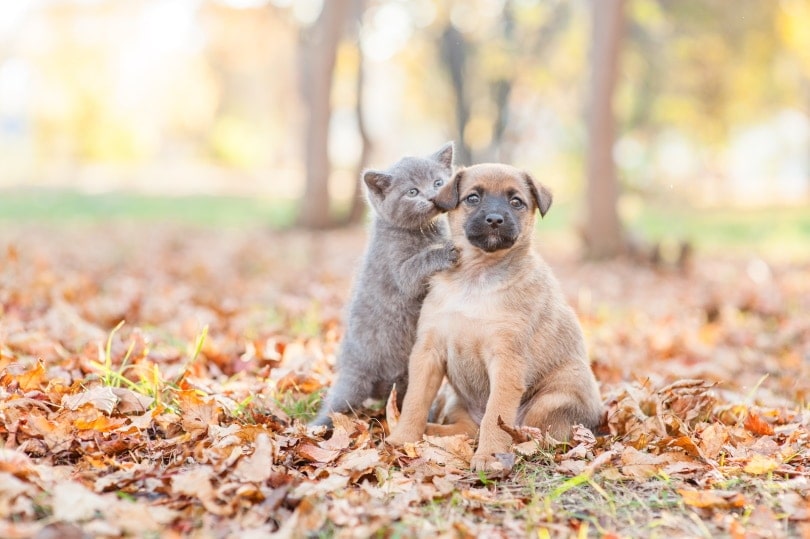
Good news! There are a few reasons cats might lick dogs, but they’re generally positive. Cats lick and groom other cats frequently, and sometimes they extend this behavior to humans or other pets in the household. Here are four reasons why your cat might be licking your dog.

The 4 Possible Reasons Cats May Lick Dogs
1. Grooming
Cats use their tongues to groom, and they’re pretty good at it. Cats’ tongues have small hooks or papillae that act like teeth on a comb. This feature helps cats remove dirt, loose hair, skin cells, and debris from their fur when grooming, while also distributing natural skin oil. But it also has the function of removing as much meat as possible off the bones when eating prey.1
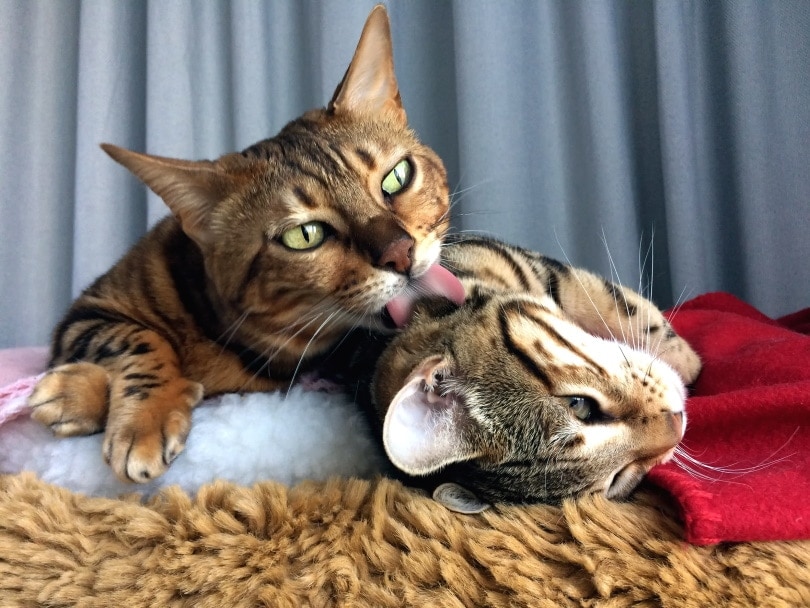
Grooming is also a social activity for cats. Cats who live together often groom each other. This is called allogrooming. That way, they can help each other stay clean, share affection, and improve their social bond. Grooming between cats may also sometimes be performed as a means to establish hierarchy and avoid or redirect aggression, particularly when the dominant cat is grooming the other one’s head or neck.2 That is not to say that some cats won’t groom dogs they live with, particularly if they have a very close relationship, usually in cases where the cat has joined the household as a kitten and become attached to the dog.
2. Affection
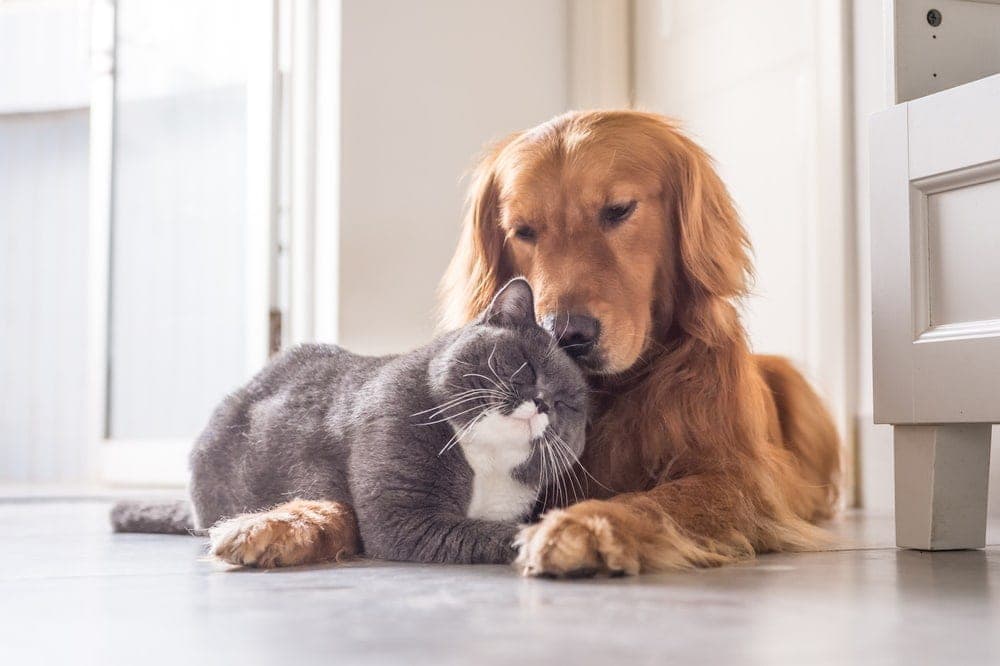
Cats can also lick dogs as a sign of pure affection. Grooming isn’t purely practical for cats—it’s also a way to show love. Cats often lick each other or their humans to build stronger social connections. Licking can also be a sign of trust, as the grooming helps your cat relax. If your cat is grooming your dog, they probably trust the dog enough to get close and let down their guard around them.
3. Attractive Scents
This reason isn’t quite as lovey-dovey as the others, but it isn’t a bad sign either. Sometimes, cats lick dogs because they are curious about the smell and taste. Your cat might smell whatever your dog may have stepped in or come in contact with and want to taste it, giving them information about the dog’s recent whereabouts, particularly for indoor cats, or your dog might have traces of food in their fur that your cat wants to get at.
If your cat is just curious about the taste, it might not be a sign of affection—but it does mean that your cat feels pretty safe and secure!
4. Scent Marking
Licking is also a way to transfer scent onto a new animal. Cats have a much stronger sense of smell than humans, and they love things that smell familiar. That’s one reason why cats rub up against things, and it’s also a reason some cats may lick dogs. They’re putting their saliva on the dog so that they can smell it later and recognize the dog as familiar.
If your dog has been out and has brought in a lot of new and unfamiliar scents, this may be the reason your cat is licking them or rubbing against them, possibly trying to incorporate the scents, leaving their familiar scent on the dog.

Why Do Cats Lick Dog’s Ears?
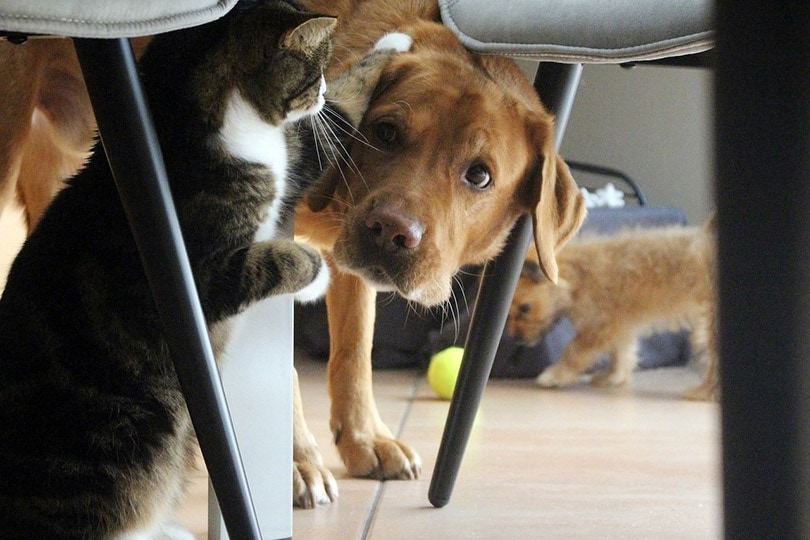
If your cat licks your dog often, you might notice a few favorite spots. Lots of cats love to lick their dogs’ ears! The reason why cats focus on the ears is probably because of the earwax and the smell of this skin area. Earwax is composed of dead skin cells and oils or fatty acids from the skin, and many cats are curious about the scent.
If your cat is suddenly or frequently licking your dog’s ears, it’s important to check that they don’t have excess wax or an ear infection, which may cause a more intense smell and attract cats and other dogs in the household to lick them. Licking them can cause the infection to worsen, as cats’ and dogs’ mouths are far from clean. Also some dogs will not tolerate their ears being touched, and they may growl at the cat if they attempt to do so. Please supervise your pets if you feel the dog may attempt to harm the cat.
The Lick-Then-Bite Game
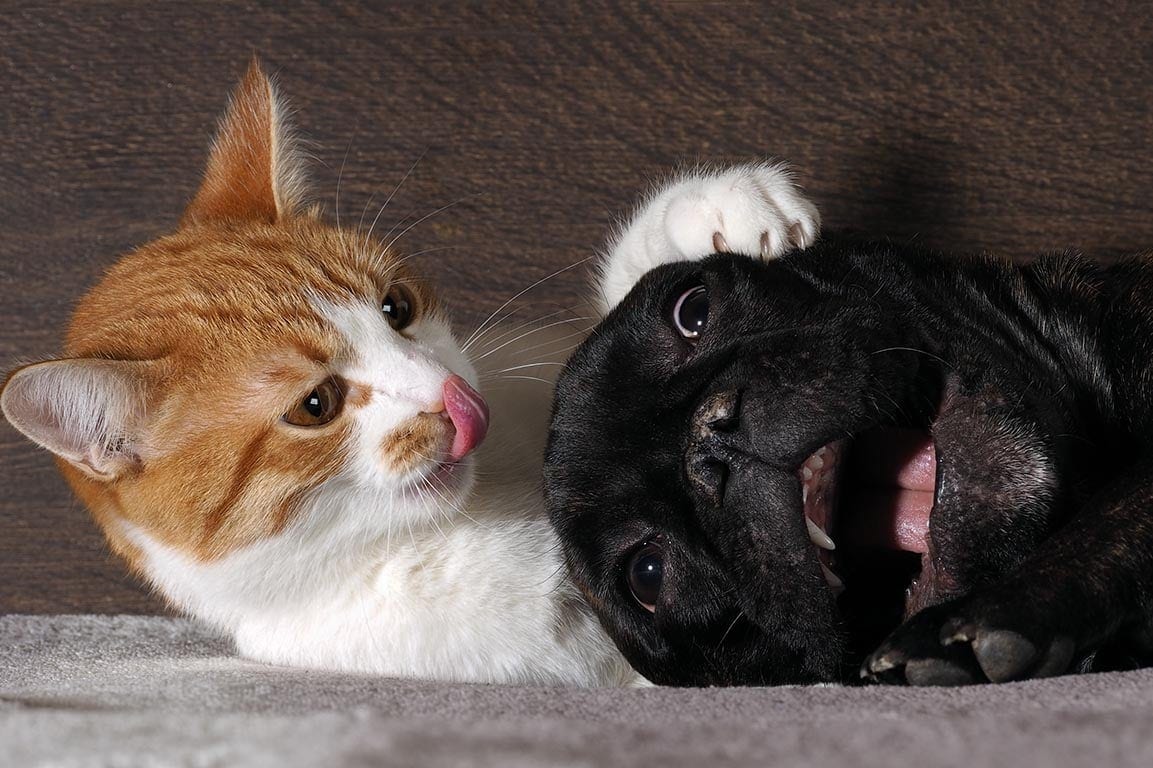
Another strange thing that cats do is pause licking to bite something and then go back to licking. This can happen for a few reasons. Sometimes, cats get a tough spot—like a clump of dirt or a burr—by biting it. You usually see a kind of burrowing movement as your cat works out whatever is stuck. But other times, it seems like your cat has gone from friendly to fierce and back again in a blink.
We don’t know all the reasons, but it’s clear that cats are trying to communicate different things at different times when they bite. Bites may be a sign that your cat has had enough of interaction and would like the dog to leave them alone, or they got over-stimulated, too excited, or very playful. Some cats will gently bite their owners as well, particularly teenage and young cats, sometimes as a sign of affection, but often again as a sign they had enough cuddles and attention. You can gently discourage your cat from biting by not giving them attention or stopping the interaction, but most of the time, these bites will be fairly gentle and harmless.
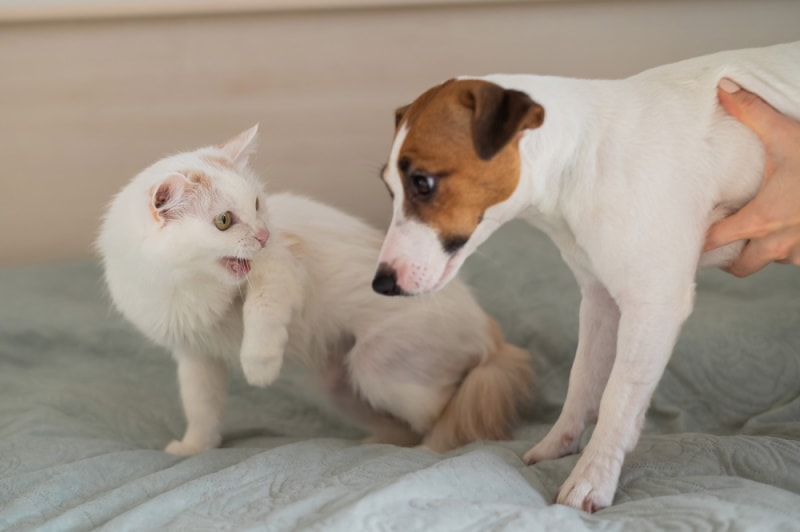
However, cats may also bite if they are feeling scared or stressed, if the dog is being too playful or rough with them, at which point they may swipe, hiss, ruffle their fur, or hide, they can bite as a sign of pain. If you think your cat is scared of the dog, stop the interaction and ensure the cat has their private space where the dog cannot get to. If they are painful, limping, have a wound, or show any other signs of illness, get them checked by a vet.
Fostering Friendship Between Cats and Dogs
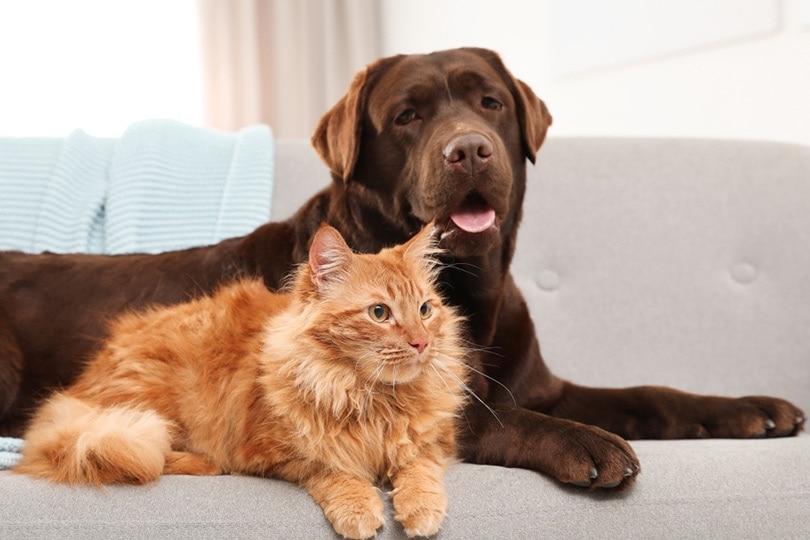
It can be challenging to ensure all cats and dogs in the home will get along. Often, cats will arouse prey instincts in some dogs—this means that dogs can see cats as something to chase. Some cats may be scared or even become aggressive to dogs, making it hard to get a friendly relationship off the ground.
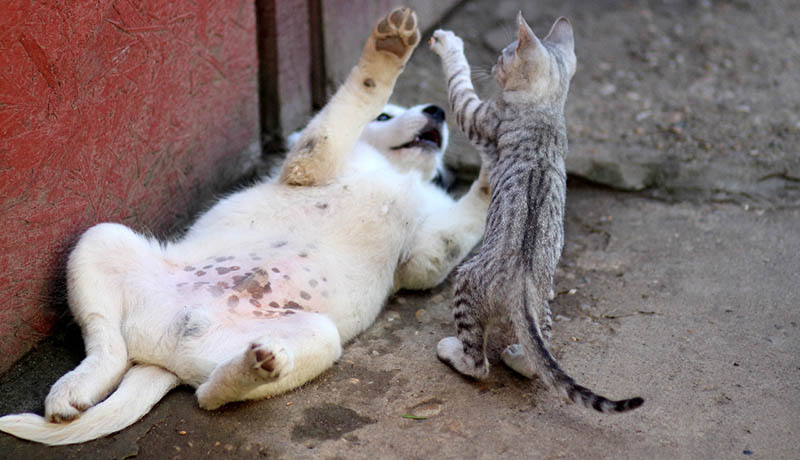
Cats and dogs are best socialized together from a very early age, as kittens and puppies. At this stage they can accept each other more quickly and are unlikely to hurt each other. When you get a new pet, make sure to conduct all introductions gradually. For the first few days or even weeks, it’s best that the two animals do not come into contact, particularly unsupervised. You may place the new pet in a room where they won't be disturbed for the first few days so that they can adjust to being in a new place and so that other animals can become familiar with their scent.
Exchange their scents by leaving some of the dog’s possessions in the cat room or near their crate, and the other way around. You can also exchange bedding to help the scents become even more familiar. Afterward, do controlled introductions with the dog on a lead, and the cat loose, with plenty of room the cat can withdraw to if they feel threatened. Slowly allow them to spend more supervised time together and reward calm behavior.
Cats do best when they have a safe space out of reach of your dog, since they often need more privacy. Now, not all dogs are suitable to live with cats. If your dog has not been socialized with cats from a young age, they are showing the urge to chase cats, or they have shown aggression towards other pets, it’s crucial to reconsider if getting another pet is actually a good idea. This may primarily put the cat’s health and life at risk, but cats may also injure dogs, as animals cannot be supervised 24/7. If you already have a multi-pet household, and your dog is showing signs of aggression towards one or more cats, it’s important to separate the animals immediately and seek veterinary and professional behavioral help. Some dogs may suddenly become aggressive towards other animals due to pain or illness, so ruling this out by your vet is the first step.
Final Thoughts
Navigating multi-pet life can be challenging. Cats and dogs have some similarities, but they also have different needs, wants, body language, and lifestyles, and it can be hard to get them to see each other as friends. If your cat starts licking your dog, you might be a little confused or worried. If any of the animals appear uncomfortable, gently separate them, but if they are interacting positively and playfully with each other, reward this behavior and remain calm. Always supervise them while interacting.
Grooming behaviors are generally a good sign on the cat’s end. Hopefully, before long, you’ll have a happy, well-integrated pet family, but always put their safety first.
Related Reads:
Featured Image Credit: Ermolaev Alexander, Shutterstock
Get Hepper In Your Inbox


Pet care tips from our vets and experts, straight to your inbox.
You may opt-out at any time. View our Privacy Policy for more information.
Chelsie is a freelance writer who is passionate about helping pet owners and beloved animals live their best lives. She lives in rural Alberta, Canada with her husband and two sons. She is also currently a pet parent to four horses, four cats, and a border collie.
Join the conversation
Ask a question, share your story, or send private feedback.