Hepper is reader-supported. When you buy via links on our site, we may earn an affiliate commission at no cost to you. Learn more.
Why Do Dogs Roll Around on Their Backs? 8 Possible Reasons
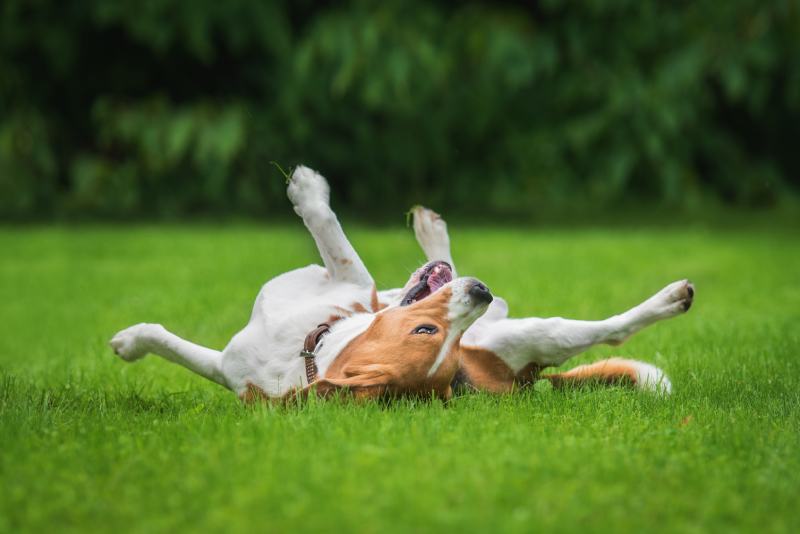
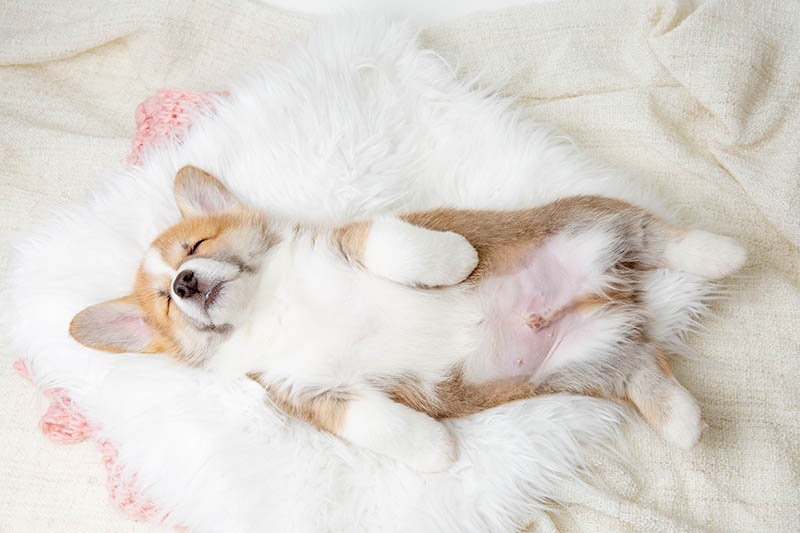
As a dog owner, you may have probably noticed that your canine friend tends to roll on its back, especially when you come back home. While this may be typical behavior in all dogs, there may be various reasons, ranging from inviting play time to relieving an itch.
However, if your dog keeps compulsively rolling on its back, there could be an underlying health issue, such as skin infections or even allergies. The exact situation in which a dog rolls around on its back can tell you more about what they want and feel at that specific moment.
In this article, we will highlight some of the reasons why dogs adopt this peculiar behavior and what it means for your canine companion.

The Science Behind It
According to studies done on dog behavior, rolling on their backs is one of the easiest ways that canines can release endorphins. Endorphins are essentially natural painkillers in animal bodies and can create a feeling of euphoria.
So, when your dog is rolling around on its back, it is simply trying to stimulate the release of these chemicals, thus resulting in a feeling of relaxation and pleasure.
Not only that but rolling on their backs helps dogs to stretch their muscles, especially the neck and spine muscles. This also helps improve flexibility and relieve tension.

The 8 Reasons Why Dogs Roll Around on Their Backs
1. Your Dog Might Be Itchy
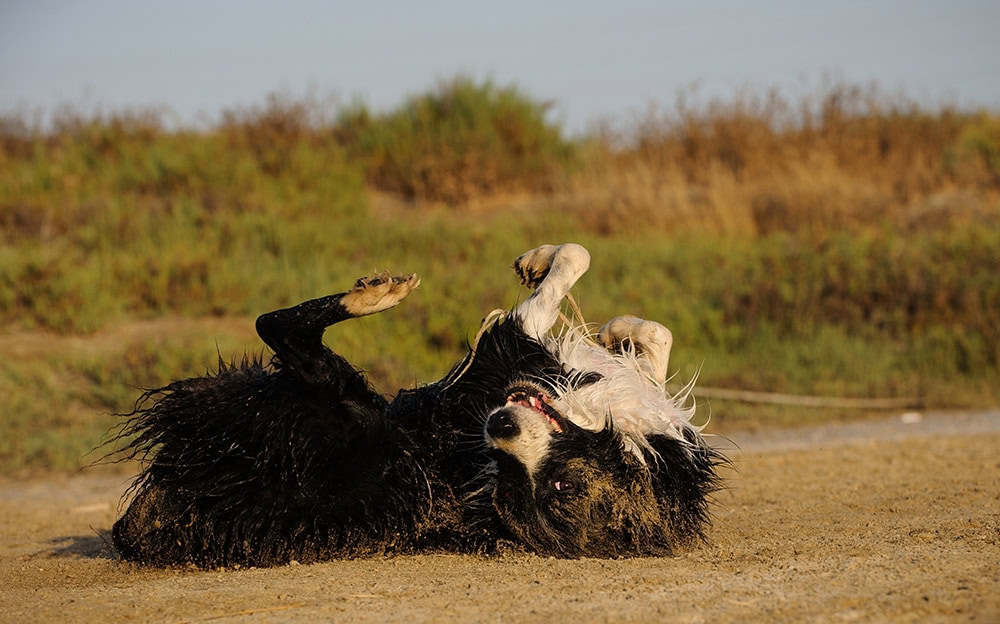
Just like humans, dogs also experience itchiness, especially in those hard-to-reach areas like their backs. So, rolling on the ground is simply your dog's way of alleviating the itch by scratching the perfect spot.
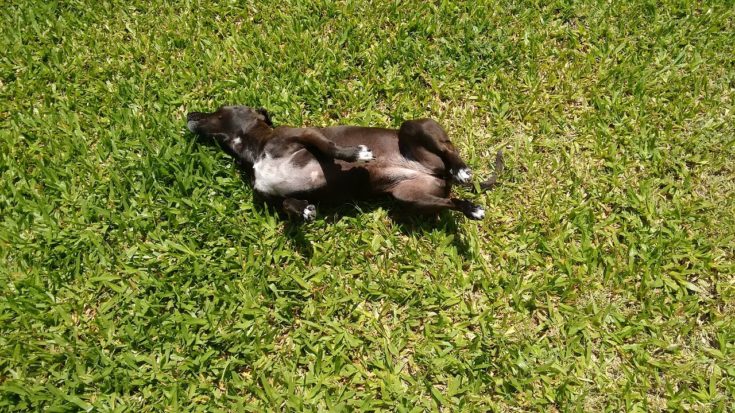
Depending on the severity of the itch, different surfaces can be soothing for your dog. You are likely to find your furry companion rolling around on the grass, bushes, dirt, and even carpets for that unique sensation.
Nevertheless, you should be very wary about scratching behavior that doesn’t seem to stop. If the behavior produces open wounds, you should take your dog to the vet. It could be a sign that your dog needs to be dewormed or something else.
Usually, seasonal allergies are the major cause of itching in dogs. Fortunately, you can handle the itching by utilizing dog allergy shampoo. You can also opt to use home-based remedies to minimize the itching. If the itching is more serious, your vet will recommend medication to reduce the compulsive itching.
2. Your Dog Is Masking or Leaving Its Scent
If your dog is introduced to a new environment, it is likely to roll around on its back to either spread its scent or transfer the scent of things it likes onto its body to disguise its smell. If you don't know which of the two your dog is displaying, take some time to observe the behavior for more information.
Usually, the back roll can be accompanied by urinating or marking. The back roll might also occur because the dog loves the scent of something else in the immediate environment.1
3. Your Dog Might Be Playing a Trick
Due to evolution, dogs have learned to use manipulation to get their way. They have learned that by lying on their back, they can lure innocent prey to a predetermined kill box more effectively. This behavior is not desired and is often displayed by overly anxious dogs.
The idea behind this behavior is that dogs will typically lie on their backs and wait for an unsuspecting victim to approach. Yet, they do this while not being relaxed or in a happy disposition. So, you should be very cautious when approaching such a dog because they are likely to growl or even snap at you.
Other tell-tale signs that you should avoid such a dog, even if it’s lying on its back, include hard eye contact when in the vicinity of the owner or other dogs and jaws stiffening or closing to indicate tension.

4. Your Dog Doesn't Want to Be Perceived as a Threat
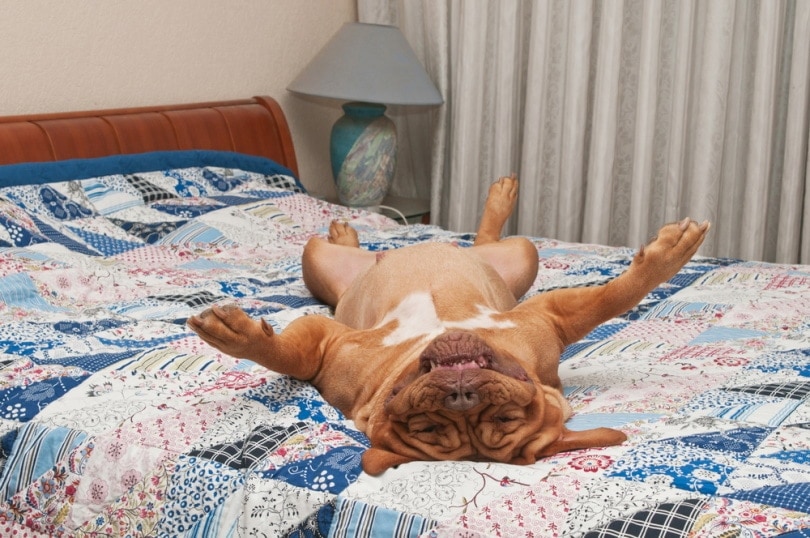
Another common scenario where your dog might be rolling on its back is when it's introduced to another new dog. This submissive behavior is simply a way for your furry companion to show people and other dogs that they are not a threat and that they do not intend to pounce on them and attack.
And, since they are rolling on their backs, they get to expose one of the most vulnerable parts of their body. This is a way for your dog to show trust and respect. But since back rolling makes your dog vulnerable, never force them to assume the position or even pin them there.
Also, be on the lookout for urinating while back rolling for submissiveness. This could be a sign that your dog is experiencing anxiety or fear when meeting a new dog. Commonly referred to as the “Alpha Roll” this submission technique can easily create negative associations with lying on their back, consequently increasing your dog’s fear and anxiety to roll over.
5. Your Dog Might Be Suffering From Obsessive Compulsive Behavior
Even though less frequent, your dog might be rolling around on his back because of OCD.
While many people might not know about OCD in dogs, it is not a rare condition and can include a range of activities besides rolling on the ground. They include biting walls chasing their tails, or even excessively yelping or barking. More serious OCD occurrences in dogs may lead to injuries, especially self-harm as the dogs scratch or chew excessively.
Unfortunately, this behavior doesn't seem to have a purpose or an apparent reason and can even happen without a trigger. However, some studies seem to suggest that this peculiar behavior stems from hereditary factors as well as triggering traumatic events.
Fortunately, since the behavior is closely associated with dog anxiety, your local vet can recommend medication-based treatment. If the behavior is undiagnosed or untreated, it can worsen as the dog ages.
6. Your Dog Is Greeting You
Some dog breeds love their owners so much that they are inclined to show them that their presence is welcome by greeting them. So, they are likely to roll around on their backs to say “Hi”.
If this behavior stems from excitement, it is often accompanied by wagging their tails, light yelping, enthusiastic licking, wiggling, or even squirming. This act of submission simply shows that your dog is comfortable with you.

7. Your Dog Is Trying to Temperature Regulate
Dogs tend to expose their tongues or pant in a bid to cool off when they are feeling hot. They may also expose their underbelly to heat dispersion because their bellies tend to have lighter fur, which can be exposed to outside elements to keep the dog cool. Some dogs will also expose their paws to cool off.
8. Your Dog Might Simply Want Attention
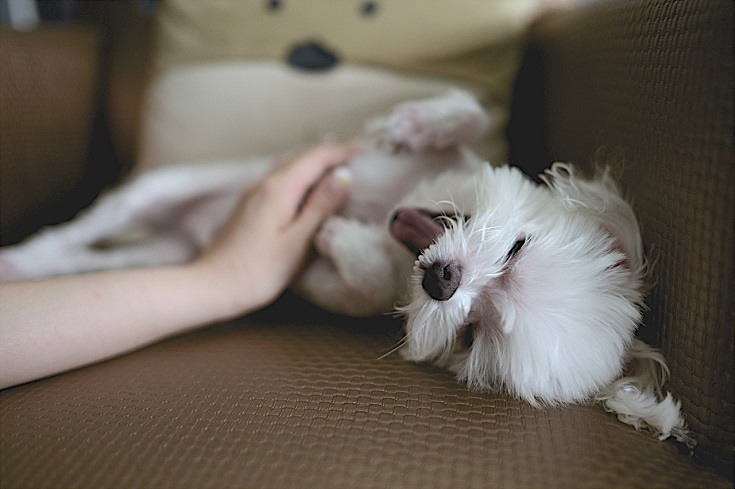
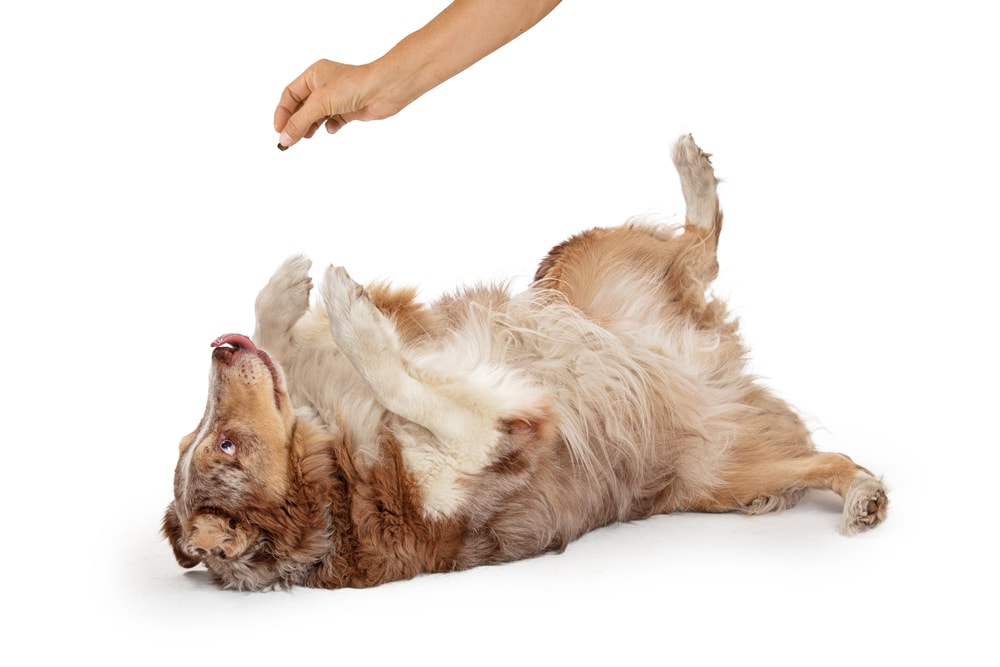
Just like rolling on their back to greet you, they also do so to seek attention. Generally, rolling around on their backs usually invites playtime from the owners who feel compelled to give them a belly rub.
Usually, dogs learn this behavior while at the puppy stage since almost everyone wants to give puppies a belly rub. So, as much as the dog might be a mature adult, it still knows how to ask for the one thing that its owners can’t resist.
However, you should keep in mind that even though dogs might like belly rubs more than other pets, they might suddenly decide that they do not want to be rubbed anymore. So, the best way to ensure that everyone is comfortable and happy is by petting your dog in short bursts, preferably two to three short rubs, and then stopping to check whether your dog still wants further rubbing.


Conclusion
Even though dog rolling behavior is common in most dog breeds, there may be several reasons why they choose to do so. It could be something as simple as relieving an itch or even a way of showing submission to the owners. Whatever the reason, you should learn to recognize any other accompanying signs.
If your dog compulsively keeps rolling on its back, consult your local veterinarian about likely causes and treatments. Moreover, it's best to exercise caution when petting a dog lying in this vulnerable position because they might snap at you due to fear or anxiety.
Nevertheless, this is common behavior, and you should only be concerned if it occurs more frequently and leaves open wounds on your dog’s back.
Featured Image Credit: Rita_Kochmarjova, Shutterstock
Get Hepper In Your Inbox


Pet care tips from our vets and experts, straight to your inbox.
You may opt-out at any time. View our Privacy Policy for more information.

Nicole is a lover of animals of all sizes but is especially fascinated with the feline variety. She’s the proud mom of Baby, a Burmese, and works every day so he can relax in the sunshine or by the fire. She’s always had a cat in her home and has spent countless days with others, observing behaviors and softening up even the grouchiest of the lot. Nicole wants to share her kitty expertise with you so you and your cat can live happy, healthy, and care-free.
Join the conversation
Ask a question, share your story, or send private feedback.