Hepper is reader-supported. When you buy via links on our site, we may earn an affiliate commission at no cost to you. Learn more.
Do Cats Enjoy the Smell of Bleach? Safety & Toxicity Info

In this article
After cleaning the bathroom or kitchen with bleach, you may have noticed that your cat is fascinated with the leftover aroma. Some cats have a strange attraction to bleach, but others dislike the odor and avoid it.
To cats, bleach may smell similar to pheromones or other odors that appeal to them. In this article, we will discuss the theories behind the behavior and how you can prevent your cat from consuming it.

Why Cats Are Drawn to Bleach
Unfortunately, the reasons cats are drawn to bleach haven’t been scientifically proven. However, there are a few theories, and some are more plausible than others.
The Appeal of Strong Odors
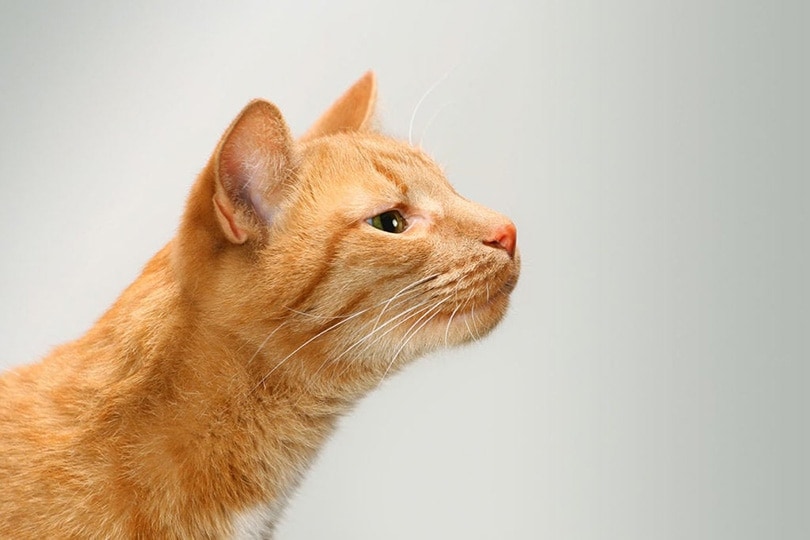
Cats are curious about their environment, and with their enhanced sense of smell, a strong odor like bleach may attract them, especially when they encounter it for the first time. Although they don’t lick a freshly cleaned floor or table, some cats rub against it to add their scent.
They may be trying to reduce the intensity of the odor by adding their pheromones, but it’s not entirely clear why some cats roll around on floors treated with bleach.
The Similarity to Catnip and Pheromones
Some have suggested that cats react similarly to bleach as catnip. Catnip contains volatile oil, nepetalactone, that makes some cats roll around, meow loudly, and salivate. It’s similar to how a female cat behaves when in heat, but unlike the sex-driven chemicals, the cat reacts to an artificial pheromone.
It can energize them when they sniff it but can have a sedative effect if consumed. Although bleach does not contain nepetalactone like catnip, it causes a similar effect in some cats when they encounter a freshly bleached surface.
This theory is based on anecdotal evidence, and the correlation between bleach and a cat’s sexual response, like that experienced with catnip, has never been proven.
The Similarity to Cat Urine
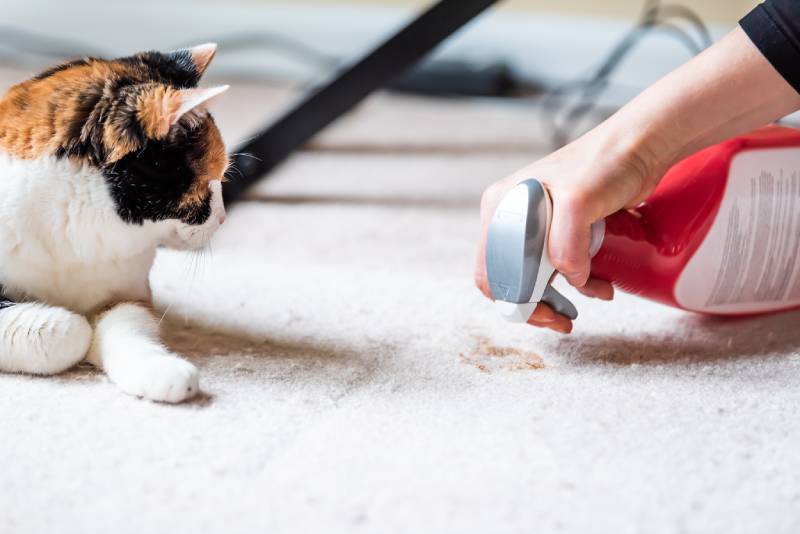
Bleach doesn’t contain ammonia, but both chemicals produce strong odors. You may have read articles that suggest avoiding ammonia-based cleaners to treat urine stains since they can encourage cats to return to the same spot. However, the same advice doesn’t apply to products with bleach.
Bleach cleaners can damage fabrics and can’t be used on every material, but they’re not known to attract cats like ammonia. Some cats may be attracted to any strong aroma, whether bleach or ammonia, but they may be appealing for different reasons.
Is It Safe for Cats to Inhale Bleach?
Household bleach, including the color-safe variety with hydrogen peroxide, is an irritant rather than a corrosive agent. It’s unsafe for cats to inhale or consume, but if your cat rolls on the floor after it's cleaned with bleach or inhales it briefly, it’s unlikely to harm them.
You should still store bleach products in a secure area your cat cannot access and keep them away from recently cleaned kitchens or bathrooms until the surfaces are dry.
On the other hand, ultra-concentrated bleach is a corrosive chemical that can burn your feline if they touch it. It’s used in chlorine pools and industrial and agricultural applications. If your cat touches or ingests industrial bleach, take them to the emergency clinic immediately.
The 5 Ways to Keep Your Cat Safe from Bleach
Unfortunately, bleach and similar compounds are necessary for cleaning up tough messes like those in our bathrooms. Luckily, there are some small things that you can do to keep your cat safe while they roam their territory looking for intruders.
1. Keep the Toilet Lid Closed
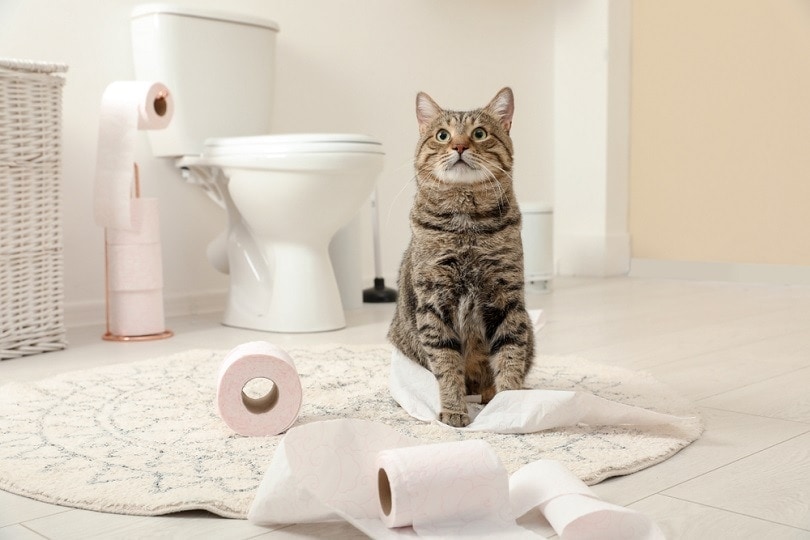
Keeping the lid closed is one of the easiest ways to protect your cat from bleach after cleaning your toilet. Your cat will still be able to smell the bleach and likely still be curious about it, but with the lid closed, they won't be able to get to the source of their curiosity and lick it.
2. Never Leave Bleach Solutions Lying Around
It's not uncommon for people to leave their cleaning supplies out while working. Never leave a bleach solution unattended when you have cats. If you have to leave the room, bring the solution with you or dump it out and make a new one when you return.
3. Always Dilute Your Bleach
You should always dilute your bleach, but you should be especially vigilant about your dilution if you have cats. Household bleaches generally have a 5%–6% hypochlorite content, which is a dangerously high amount of hypochlorite if undiluted.
An excellent middle ground of being tough on pathogens but safest for your family members is a 1:32 ratio of bleach to solvent. If you're in a situation where you need a more powerful bleach solution, such as during a pathogen outbreak, you can use a 1:10 dilution system. However, you must rinse the surface and allow it to dry for 30 minutes before your cat touches it again.
4. Rinse Bleach Crystals Away Properly
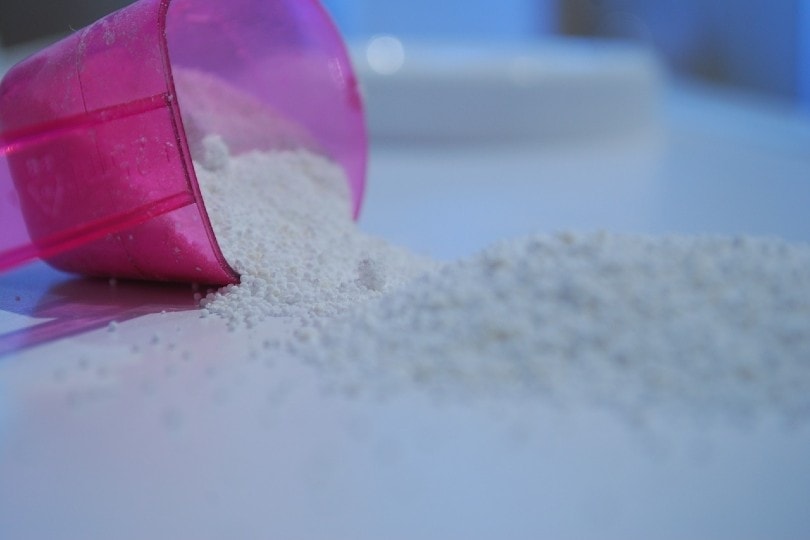
The bleach cleaning agent, sodium hypochlorite, is a solid that is dissolved in water to create a cleaning solution. However, when the water evaporates, it leaves the sodium hypochlorite crystals behind and looks like dust.
No dust must be left behind when your cat comes back in contact with the bleached surface. This dust is highly toxic and can be dangerous for cats.
5. Keep Your Cats Out of the Room
It's best to keep your cats out of the room when you're treating anything with bleach. The compound can be dangerous for them if they inhale or ingest it. So, it's best to minimize the risk by not allowing them near the solution.
You'll even want to limit their contact with the solution after rinsing and drying the surface, as the solution can remain crystallized on surfaces even after the water dissolved in it evaporates.

Signs of Bleach Toxicity In Cats
If you think your cat has ingested bleach, immediately take them to an emergency veterinarian. Bleach toxicity is hazardous for any creature, and a trained veterinarian should oversee them while they recover for the best outcome. Here are some common sings of bleach toxicity in cats.
Ingestion of Diluted Bleach
Ingestion of Concentrated Bleach
Final Thoughts
The idea of our cats getting poisoned by a toxic chemical is frightening, but they're curious creatures that need our help to stay safe. It's vital to keep cleaning products in a secure location and prevent cats from touching bleached surfaces before they're safe. Bleach poisoning can be very dangerous for cats, so cat owners need to do what they can to keep their cats safe from the compound.
Related Reads:
Featured Image Credit: kropekk_pl, Pixabay
Get Hepper In Your Inbox


Pet care tips from our vets and experts, straight to your inbox.
You may opt-out at any time. View our Privacy Policy for more information.
Luxifa is a freelance writer with a passion for animal science and technology. She loves to share the world of animal science with people to help them make informed decisions for themselves and their pets. Luxifa has worked in professional pet care for over six years and realised she could help change the world of pet care by bringing the information people needed to them in terms they could understand. Knowledge is power and she loves to help everyone become the most informed they can be.
Join the conversation
Ask a question, share your story, or send private feedback.