Hepper is reader-supported. When you buy via links on our site, we may earn an affiliate commission at no cost to you. Learn more.
Can Cats Smell Human Hormones? Vet-Verified Facts


While cats are much smaller than many predators, they compensate for that with agility, flexibility, and wits. Heightened senses are another powerful tool in a feline’s arsenal. They can see in the dark, hear noises from afar, and identify the slightest odors. Which leaves us with a question: Can our four-legged buds smell human hormones, such as estrogen, HCG, and more? Well, the answer remains unclear at the moment.
It’s possible that cats may be able to detect certain human hormones and scents we emit in particular situations, but this is currently only anecdotal information without any scientific backing. Let’s get into more details.

What Is a Hormone? Breaking It Down
A hormone is a chemical substance, a compound secreted by glands, organs, and tissues.1 Once the hormones are released into the bloodstream, they circulate to deliver very specific “commands” to different parts of the body. The effects may not kick in immediately, though. Hormones work slowly yet have a huge impact on various processes.
Mainly, we’re talking about growth, metabolism, blood pressure, and the sleep-wake cycle, along with overall development and functions. More importantly, hormonal fluctuations alter the natural odors of the body. It’s possible that cats may be able to smell this, but we don’t know for sure.
Odors & Hormone Levels: How Are Cats Able to Potentially Detect Them?
Did you know that kitties have 45–200 million scent sensors?2 To put things into perspective, we only have 5 million of those. More than that, the sense of smell of the average cat is approximately 14 times better than what a human male or female is born with. That’s quite a difference! In contrast, cats have a low number of taste buds: up to 500 versus 2–4,000 in an adult human.
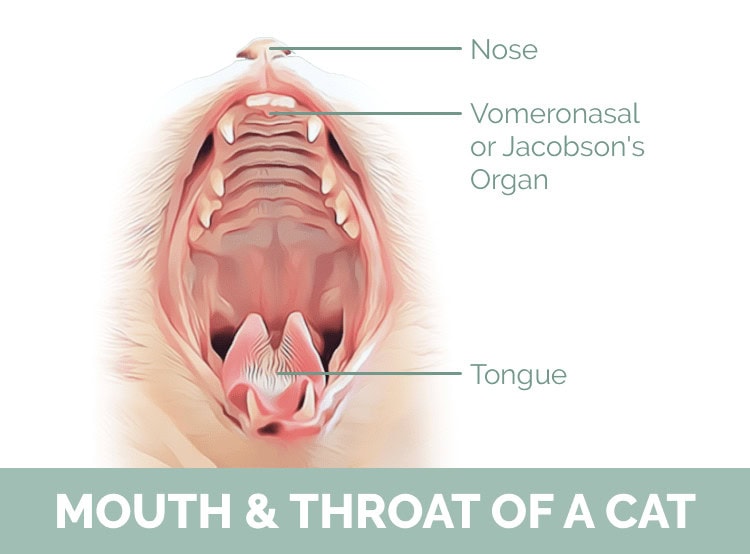
Cats also have a specialized vomeronasal organ, which is located on the roof of their mouth, behind the incisor teeth and connected with the nasal cavity. It helps them detect very subtle scents, such as pheromones.
So, it shouldn’t come as a surprise why felines mostly rely on their olfaction, followed by hearing and sight, to experience the world. And since our hormones impact the body’s scent, it probably doesn’t take too much effort to detect them. The same goes for the pheromones.
Which Human Hormones Can Felines Potentially Detect?
Although we now know for sure that cats do, indeed, have an amazing sense of smell, we still can’t be sure if they can pick up on human hormones or not, and if they do, which ones they may be able to detect best. This requires further scientific research.
However, here’s a quick look at common human hormones that have an impact on the body’s scent, making them potentially detectable by cats:
- Menstrual Cycle Hormones. When a woman’s body goes through a menstrual cycle, it produces a series of hormones like LH and FSH that slightly alter that woman’s scent. And felines may be able to detect those small changes. Thus, if your cat is sniffing you more than usual, chances are they know that you’re on your period.
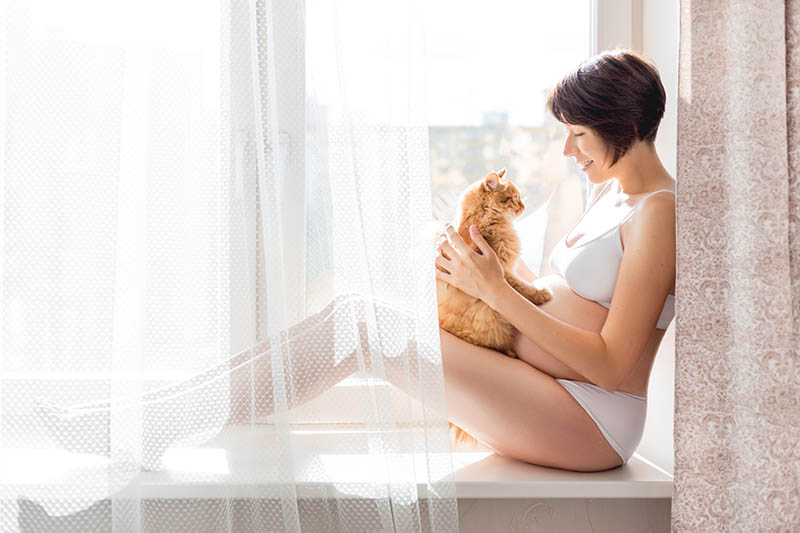
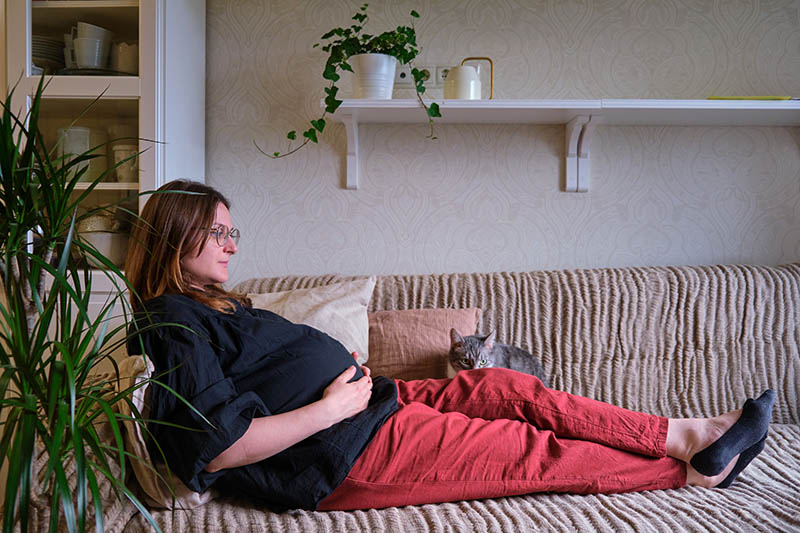
- Pregnancy Hormones. Much like the menstrual cycle, pregnancy leads to the secretion of several hormones in the female body, mainly estrogen, progesterone, and human chorionic gonadotropin hormone or HCG. Your furry companion may be able to notice that. Some experts even go as far as to claim that cats can tell a woman’s pregnant before she does!
- Pheromones. The main job of pheromones is communication. While they have been widely studied in other species, there is a lack of general consensus on the definition, importance, and potential role of pheromones in people. Although it is believed that there are certain compounds in the human sweat, amongst others, that may impact the mood and behavior in people of the opposite sex, this area requires more research. However, cats can probably easily detect various scents released by their pet parents, be those pheromones or not.
- Testosterone Levels. Although cats are able to tell if their fellow male feline is sexually active or not by the pheromones and scents the males emit through their urine, and although they don’t understand the concept of neutering, there’s no scientific proof that cats can smell testosterone in human males. Also, it’s believed that our pets can’t differentiate between human males and females.
How Do Cats Handle This Information?
Have you ever felt like your furry bud somehow knows that you’re upset? Well, that’s because they probably do! When we’re having a hard time dealing with life stuff or experiencing pain, cats may be able to detect that through fluctuations in hormone levels that cause changes in the body odor, as well as picking up on our body language, other non-verbal means of communication such as gazing, and our voice cues.
Here’s how cats may react to various human emotions and behaviors:
- Being Scared. Similarly to dogs, felines may be able to “smell” fear by picking up on the changes in your body’s scent based on the hormonal changes and a spike in adrenaline and cortisol. And by “felines”, we also mean tigers, panthers, and lions! When you’re afraid of something, your furry friend may either get anxious or run away and hide.
- Being Sad. Cat owners who suffer from depression may feel better by interacting with their cat, and according to research, their depression may reduce if their cat was more likely to comply with their intent to interact. Cats generally seemed unaffected by the owner’s mood unless they were in close contact with their owner.
- Being Happy. When we’re feeling relaxed and happy, our bodies release the “good” hormones that felines probably like to be around. Studies have shown that cats react positively to their owners interacting and talking to them in a specific, pet-directed way, and both parties may have an increased oxytocin level, thus improving their bond.
Do Cats Understand What’s Going On?
If we’re talking about complex matters like the menstrual cycle or pregnancy, then the answer is no. Cats have no way of knowing exactly what’s causing the fluctuations in hormone levels. Think of it this way: it’s a foreign concept to felines, yet they do have the ability to recognize the changes. So, the increased attention to your body will be caused by the cat’s desire to figure out what’s going on.
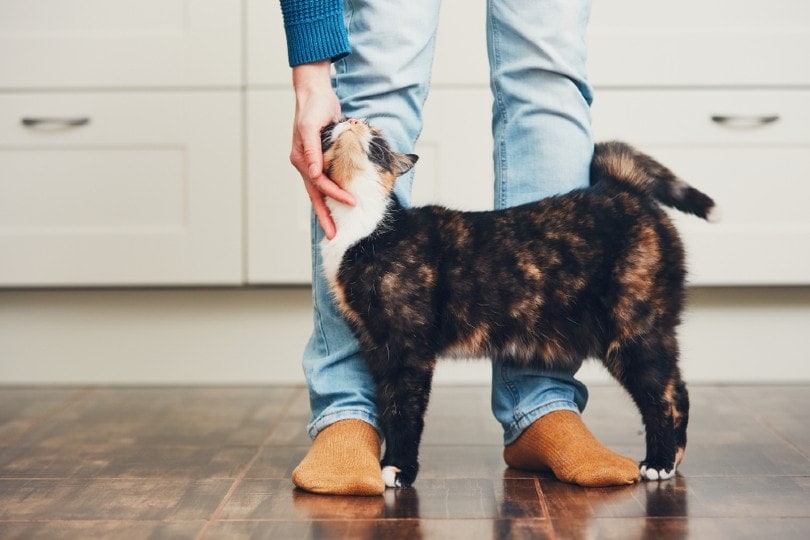
Now, cats aren’t as upfront with how they show affection compared to dogs and some other pets. At the same time, if a feline is purring, licking you, coming in for head butts, or following you around the house, those could very well be signs of affection. But they won’t necessarily be triggered by hormones.
Final Thoughts
Cats are truly fascinating creatures. They are not only capable of making us smile, laugh, and appreciate life more, but they may also be able to detect changes in our hormone levels by picking up on our body’s scent, alongside many other cues. Cats have a sense of smell that’s vastly superior to what we, humans, are equipped with.
Therefore, don’t be surprised if the furry member of your family has been treating you a bit differently lately. Chances are, they know that you’re dealing with a disease or just going through a rough patch that’s affecting your mood. So, do your best to return the favor by taking care of your cat, keeping them safe, and staying in sync!
You Might Also Be Interested In: How Cats Endocrine Systems Work: Vet-Reviewed Facts
Sources
Featured Image Credit: everyman, Shutterstock
Get Hepper In Your Inbox


Pet care tips from our vets and experts, straight to your inbox.
You may opt-out at any time. View our Privacy Policy for more information.
Nicole is a lover of animals of all sizes but is especially fascinated with the feline variety. She’s the proud mom of Baby, a Burmese, and works every day so he can relax in the sunshine or by the fire. She’s always had a cat in her home and has spent countless days with others, observing behaviors and softening up even the grouchiest of the lot. Nicole wants to share her kitty expertise with you so you and your cat can live happy, healthy, and care-free.
Join the conversation
Ask a question, share your story, or send private feedback.