




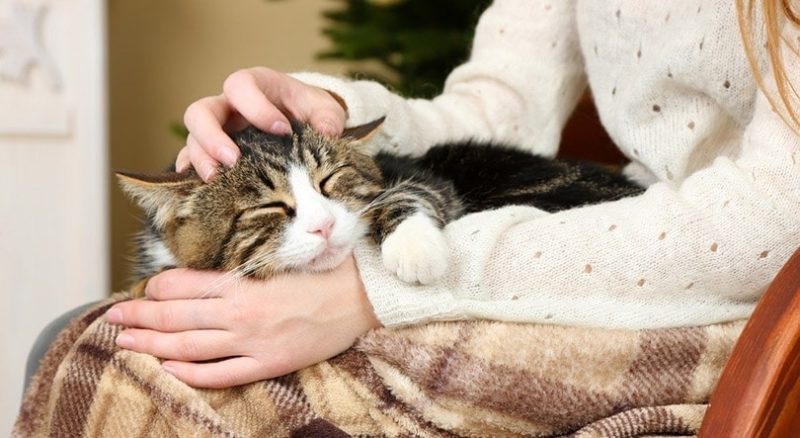

Cats, like most domestic animals, have evolved tremendously over the centuries. While some instincts remain highly intact, your cat feels safer at home and in your presence.
So, why does your cat like sleeping between your legs? Are they scared? Are they just enjoying the warmth you’re providing, and should you appreciate the charming sign of affection?
Here are eight possible reasons why your feline enjoys turning your thighs into a warm, cozy hammock.

The 8 Possible Reasons Why Your Cat Sleeps Between Your Legs
1. Safety & Protection
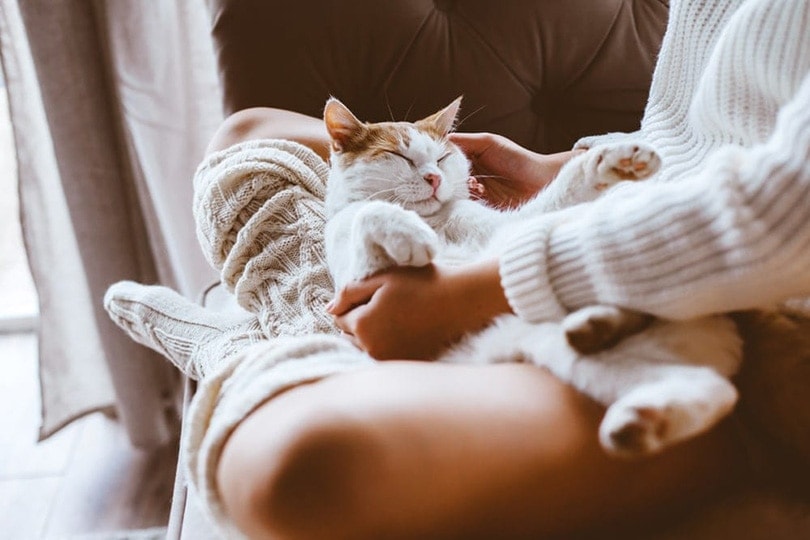
Domesticated felines enjoy a safe living environment. However, they still have the instinct to protect themselves, especially when they want to sleep deeply. Your legs on either side of the cat create a fortress and give your feline friend a sense of security. The legs also partially conceal your cat to make it feel like they’re hiding and provide a cozy, natural hammock.
If your cat sleeps between your legs, they’re also communicating that they trust you. The kitty cuddle can certainly reassure you of your bond.
2. Warmth
Apart from wanting to feel protected as they sleep, felines love warm and cozy spots. While your kitty may not mind their bed during the day, they may prefer sleeping between your legs if you are the warmest thing they can find at night.
As one of your feline’s primary missions is to feel warm and cozy, they may also sleep on your chest or beside you, where their body touches your hips. They may not mind any position as long as they feel safe beside you and enjoy the warmth radiating from your body.
3. Comfort
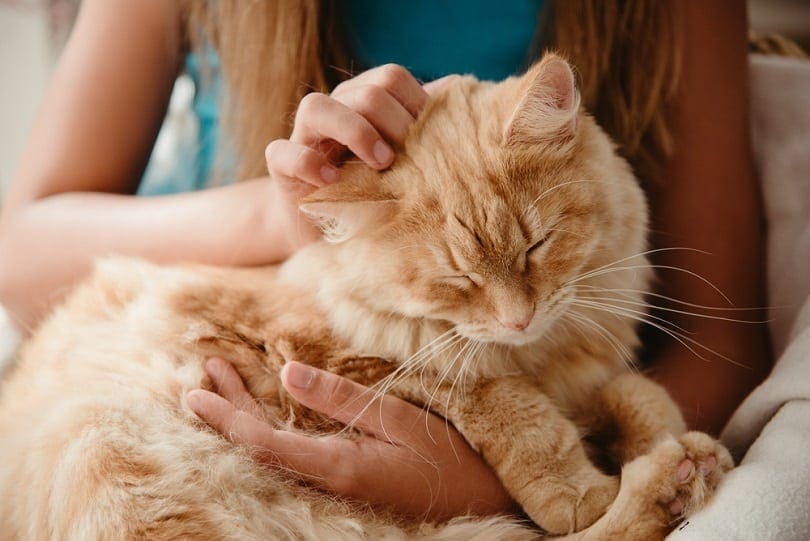
Whether your cat wants to feel safe or warm, they’ll also want to be comfortable enough to take a nap. Sleeping on your chest can also be an option, but you may move too much during sleep, causing your cat to find a more suitable location.
For many cats, sleeping between your legs may provide just the perfect position to relax without a worry in the world. Your movements will not pose any risks of falling, and your cat can quickly go back to sleep after minor interruptions.
4. Excellent Vantage Point
One of the instinctive behaviors portrayed by some cats is the preference for sleeping on elevated surfaces. Perching on the highest shelf, on the top cushion of your sofa, or even on your refrigerator can seem more ideal than the expensive kitty bed on the floor because it offers a better vantage point.
Felines in search of a warm, safe, and cozy yet higher-up place to sleep may nap on top of your legs. The somewhat elevated position provides a slightly better visual overview of their environment in case of any potential threats, although it won’t be as good as a high perch, and many cats choose the owner’s bed so they can be close to their human.
Your home may be safe, but your cat instinctively wants to protect themselves if things go south. The area between your legs can provide them with safety, warmth, and coziness, while serving as a good enough lookout spot.
5. For Deep Sleep
Safety, warmth, comfort, and a reasonably good vantage point in case of danger make an excellent recipe for deep, uninterrupted sleep. Your lap provides all this, meaning your feline friend can get into a comfortable position, forget all the potential nuisances of the surrounding environment, and sleep. If your kitty frequently sleeps between your legs, leaving their scent around will reassure them and make the area feel even safer and more familiar.
You can tell whether your cat is napping or in a deep sleep based on how they act. Cats can sleep as much as 18 hours daily, depending on their age, health, and level of activity, although they only go into the REM stage for a few minutes at a time. When your furry buddy is dead asleep, they may wiggle or twitch a little, indicating that they’re dreaming.
6. Territory Marking
Cats are territorial animals, although males tend to overdo territory marking compared to females. Irrespective of your feline’s gender, they will likely want to mark specific spots to keep other cats or pets off. Cats can also mark territories with their scent besides leaving visual marks like urine spraying and scratches.
Sleeping between your legs will leave their scent behind and make it smell familiar and friendly, knowing that you belong to them.
As your cat rubs against your thighs, clothes, or bedding, they’ll leave the scent of their pheromones. Although you cannot detect the smell of pheromones, other cats will get the message.
7. Cat-Owner Bonding Time
Your feline buddy may seem aloof at times, although this does not negate that they’re still a social creature. They enjoy gestures of love and can show affection towards you by wanting to get cozy around you. There’s no better place to pass this message than lying on your chest or between your legs, where it’s warm, comfortable, and safe!
Wanting to sleep between your legs may sound creepy, but not in the cat-family world. Felines love to curl up together and sleep; you may have noticed this if you have multiple cats. If your cat finds you worthy of a kitty cuddle, you are “family.”
8. Stress or Anxiety

Cats love maintaining routine behaviors without too many sudden changes. For some cats, the slightest differences in their environment, food, or litter box can cause uncertainty and stress. This makes it safer to always introduce changes in bits. Often, a stressed or anxious feline may adopt clingy behaviors, which may involve wanting to sleep between your legs.
Before you assume your feline wants to stay warm, get cozy, or bond, ensure they are not exhibiting other behavioral changes. You can tell something is amiss if you also notice excessive vocalization, such as increased meowing, bathroom accidents, hissing, scratching, or reduced appetite.
One way to make your cat feel at ease again is by spending time with them. Consider buying exciting toys and engaging in playtime to help kill boredom. Another excellent step is to create multiple hiding spots around your home to make it feel safer.
Pet parents with anxious kitties know the pain of watching their companions be uncomfortable—that’s where the Hepper Nest Bed comes in. Our product is designed with nervous pets in mind. The bowl shape with high rounded sides comforts your cat to make them feel safe and secure, while the self-warming, sherpa fleece insert and flexible molded foam ensure that they stay as cozy as possible. Learn more about how the Next can calm your anxious pet here.


Other Questions About Cats Sleeping on Legs
Cats have quirky behaviors, and there is a good chance you will never fully understand your pet. If you are still curious why your feline friend loves to snuggle up for naps between your legs, here are some frequently asked questions that may provide more insights.
How Do I Make My Cat Sleep Beside Me and Not Between My Legs?
It’s easy to feel trapped or uncomfortable if your cat wants to sleep between your legs all night. In this case, you can only sleep on your back or tummy and move gently to avoid dropping your feline buddy. If you don’t mind sharing a bed with your cat but want them to sleep beside you, consider using positive reinforcement or clicker training. Reward your cat each time they sleep where you prefer.
How Do I Stop My Cat from Sleeping Between My Legs?
If you don’t like your cat sleeping between your legs, perhaps because it disrupts you from having a good sleep, there are clever ways to encourage them to nap elsewhere. You could consider making their bed warmer using a microwavable heat pad, but make sure it’s meant for pets, not too hot, and place it under a blanket for safety. Do not use electric ones due t risk of causing burns or accidental fires due to malfunction. Also, ensure the feline’s bed has high sides that can fully or partially hide your cat as they sleep, and place it close to your bed, or even on it to begin with. You can make the bed more enticing by placing it in an elevated area, sprinkling catnip or treats on it, and enticing your cat to use it by offering treats and praise.
Should I Encourage My Kitten to Nap on My Bed at Night?
That depends entirely on your preferences. If you won’t mind your cat sleeping on your bed or with you, then it’s fine to let them explore and choose their favorite sleeping spot. If you’d prefer them not to and you want to keep your bedroom to yourself, then it’s best not to teach them any behaviors or establish routines you may later find undesirable. If you really want your kitten sleeping on your bed, provide them with a warm and cozy spot, and make sure to prepare for nighttime zoomies and play sessions, which may involve your toes.
Final Thoughts
The most logical reason your cat wants to sleep between your legs is that they find the area safe, warm, and comfortable. This is also a charming way of your feline saying that they trust you and want to pin you down for a while and claim ownership over you. The warm kitty cuddles also provide an easy way for you to bond.
Occasionally, cats may exhibit clingy mannerisms because of anxiety, stress, or health concerns. Always check in with your vet if kitty cuddles are accompanied by excessive vocalization, loss of appetite, or any other sign that sets off alarm bells.
Featured Image Credit: Africa Studio, Shutterstock
 The 8 Possible Reasons Why Your Cat Sleeps Between Your Legs