Hepper is reader-supported. When you buy via links on our site, we may earn an affiliate commission at no cost to you. Learn more.
Alopecia X in Dogs: Causes, Signs, Treatments & FAQ (Vet Answer)
In this article
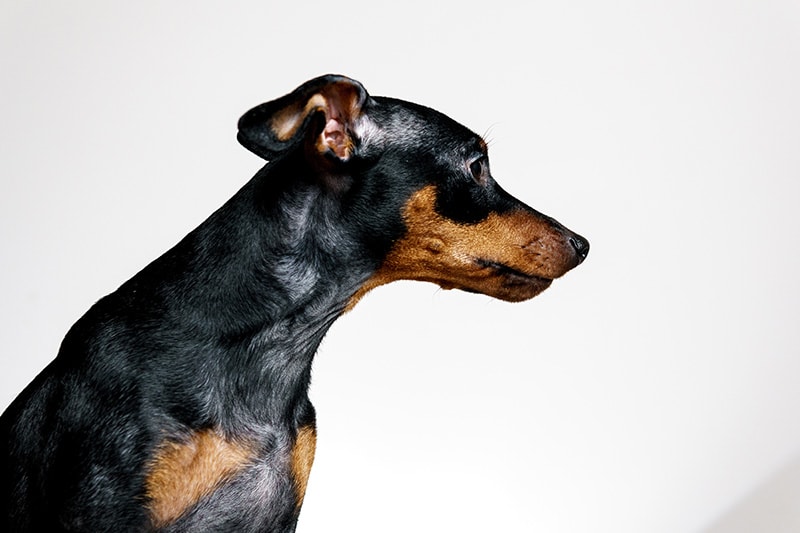
While a disease with the name “Alopecia X” may sound very trendy (quite like the name of a cutting-edge band), in reality, the “X” is telling in that there are currently many aspects of this disease that are not yet fully understood. While much is a mystery, we do know that it is a disease of the hair arrest cycle that affects specific anatomical areas of certain breeds.
In this article, we’ll discuss the signs, causes, and treatments that are known about this condition. Let’s read on to find out more!

What Is Alopecia X?
The term alopecia means hair loss where it would normally not be present. While Alopecia is a broad and complex topic that can be related to many different diseases, Alopecia X is specifically a disease of the hair arrest cycle.
A normal hair cycle consists of three main phases: anagen (growth), catagen (regression), and telogen (quiescence or inactivity). In addition, there can be exogen (hair shedding) and kenogen (empty hair follicles between telogen and anagen). In dogs with Alopecia X, their hair cycle is stuck in the telogen phase and causes a discontinuation of new hair growth. While this can be areas of partial or full hair loss, for dogs with this disease, the hair loss is not a symptom of another health issue. The Alopecia itself is not due to inflammation, and the skin is not itchy.
Dogs that are typically affected by this disease are plush-coated and/or arctic breeds with a thick undercoat. The Pomeranian breed is often most closely associated with Alopecia X, but others can include toy or miniature Poodles, Chows, and Keeshonds. It may occur in a dog from 1–10 years of age but often starts before the dog turns 3 years old.
Other names that have been given or used to reference this disease include growth hormone-responsive alopecia, castration-responsive alopecia, wooly syndrome, coat funk, or pseudo-cushings, among others. The good news is that this disease, while potentially a little funny-looking or unsightly, is purely a cosmetic condition!
What Are the Signs of Alopecia X?
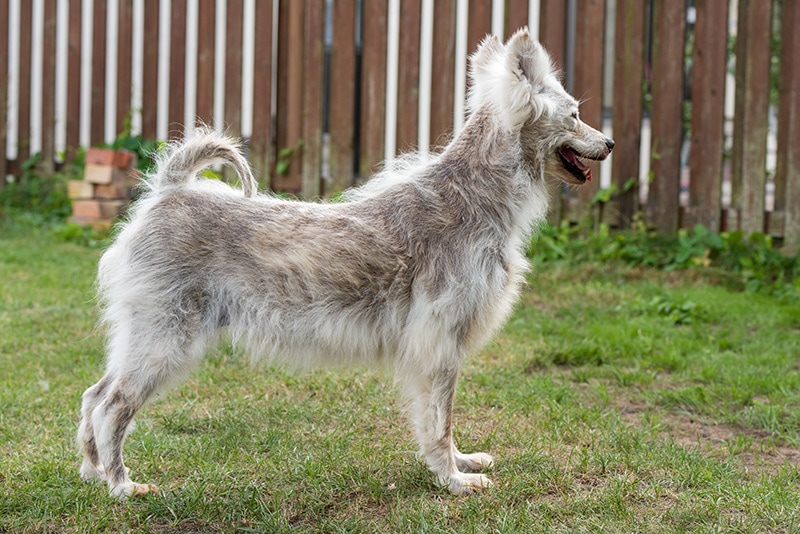
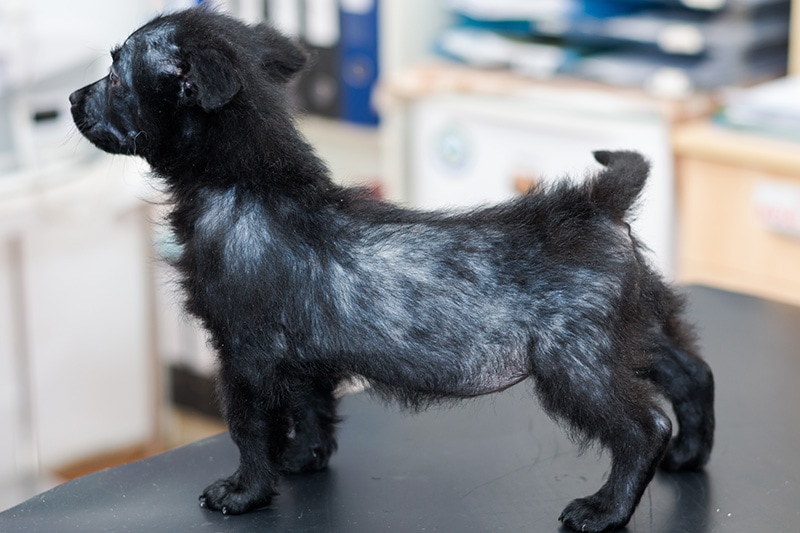
Alopecia X consists of symmetric hair loss on both sides of the trunk (the main central part of the body) that can also include the neck, thighs, and tail. The hair on the head and towards the ends of the extremities remains normal and is not affected. Alopecia X dogs typically lose their long primary hairs first, which then leaves behind the fuzzy part of their coat. Many times, this fuzzy undercoat is lost as well, leaving the skin of the affected dog completely bare. In addition to the hair loss, the skin in these areas can become hyperpigmented over time, eventually changing to a blackish-gray color.
If Alopecia X is the only disease present, these dogs tend to be happy and healthy aside from the hair loss. They should not display other signs of illness or signs associated with other types of diseases that also can cause hair loss (such as hypothyroidism or Cushing’s disease). With Alopecia X, there are not typically signs of itching, redness, or crusting of the skin unless a secondary infection or another condition is also present.
What Are the Causes of Alopecia X?
As mentioned, much is still not known about Alopecia X, and this includes the specific causes of the disease. It has been hypothesized to be a hereditary condition. Many theories have been proposed, some of which have been disproven over time. Common theories include altered or changed sex hormones, genetic causes, and changes in the hormone receptors on the hair follicles. More research is needed to help us continue to learn about this disease.
How Do I Care for a Dog with Alopecia X?
If you have a dog with the signs of Alopecia X, your veterinarian will start with a thorough history coupled with a complete physical exam. Based on these components, further testing may include some (or all) of the following: skin scraping and skin cytology, baseline blood and urine lab work, sex hormone levels, biopsy of the affected area, and testing to rule out other common causes of hair loss such as hypothyroidism and Cushing’s disease (also known as hyperadrenocorticism).
As this disease is a diagnosis of exclusion (in this case, diagnosed by ruling out other causes of hair loss), if the diagnosis is made, it should be known that treatment can be frustrating! Sometimes there may be no or only a partial response to treatment, and some things that work well for one dog may not work for another. If a dog is intact sexually, spaying or neutering a dog can be the first step that may help hair growth after the surgery. Another option to try could be the supplement melatonin.
About half of dogs given melatonin will show some hair growth response after several weeks to months. Other treatment options that could be considered but may have a larger risk of side effects or be somewhat controversial include microneedling, injections of medroxyprogesterone acetate, or trilostane. Some veterinarians may even recommend benign neglect (not attempting to treat) as this disease does not affect a dog's health, but just their looks!

Frequently Asked Questions (FAQ)
Is this condition contagious?
Thankfully, no, this is not a contagious condition to other dogs or people! With that being said, it is suspected to be a hereditary disorder, so related dogs or dogs from a shared genetic line may have this in common.
What’s the overall prognosis if my dog is affected?
Unfortunately, no treatment has a guaranteed track record for full hair regrowth. Some treatments may work partially in some dogs, but there is a likelihood that this hair may also fall out again at some future point in time, whether months to years down the road. Thankfully, this disease is purely cosmetic, and there is some comfort in knowing that an affected pet is not suffering or experiencing a poor quality of life.
Conclusion
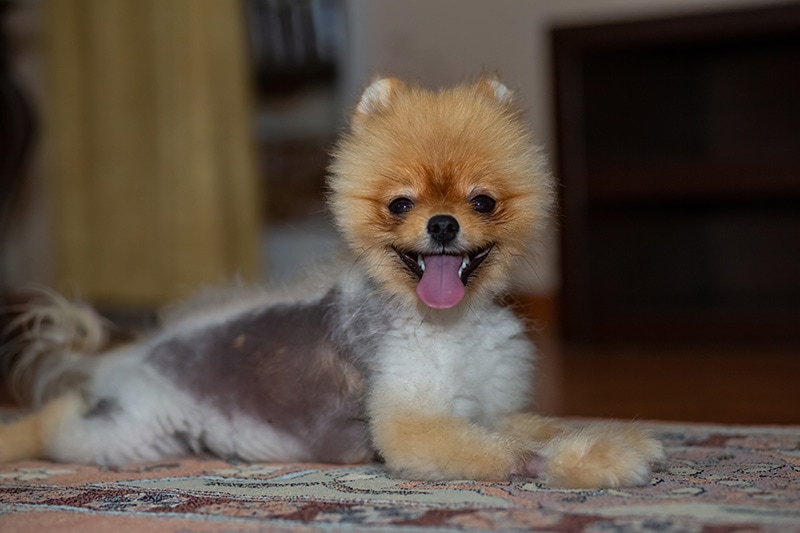
Alopecia X in dogs is a cosmetic condition where commonly affected, specific breeds have symmetric hair loss on the trunks of their bodies. Because it is a diagnosis of exclusion, ruling out other causes for the hair loss helps confirm the diagnosis. As there is limited information on the causes of the disease and its relational success in treatments, much more research and information is still needed in order to fully understand this condition.
See also:
Sources
https://veterinarypartner.vin.com/default.aspx?pid=19239&id=4951938
https://www.medvet.com/alopecia-x-in-dogs-hair-cycle-arrest/
https://www.cliniciansbrief.com/article/alopecia-x-pomeranian
https://www.dvm360.com/view/whats-causing-alopecia-in-pomeranians
https://www.researchgate.net/publication/362320486_Alopecia_X_in_dogs_report_of_seven_cases
Featured Image Credit: real_content, Shutterstock
Get Hepper In Your Inbox


Pet care tips from our vets and experts, straight to your inbox.
You may opt-out at any time. View our Privacy Policy for more information.

Dr. Rachel Ellison has worked in veterinary medicine for over a decade and loves teaching and helping others (animal and human), preventative medicine, and preserving the animal-human bond. She received her bachelor's degree in Zoology at Miami University (Oxford, Ohio) and then her Doctor of Veterinary Medicine at The Ohio State University in 2013. Dr. Ellison lives on a mountain in Utah with her husband, daughter and son, as well as their animal menagerie— a Bernese Mountain Dog, an orange tabby cat, and a Bengal/Siamese mix, as well as numerous chickens. During her free time you will find her with those she loves, cooking and baking, reading, hiking, and exploring nature and the world around her.
Dr. Rachel Ellison has worked in veterinary medicine for over a decade. She lives on a mountain in Utah with her husband, daughter, and son, as well as their animal menagerie— a Bernese Mountain Dog, an orange tabby cat, and a Bengal/Siamese mix, as well as numerous chickens. During her free time, you will find her with those she loves, cooking and baking, reading, hiking, and exploring nature and the world around her.
Education
Dr. Ellison graduated from Miami University (Oxford, Ohio) with her bachelor's degree in Zoology, and then her Doctor of Veterinary Medicine at The Ohio State University in 2013.
Experience
Over the past decade, Dr. Ellison has learned that she loves teaching and helping others (animal or human), preventive medicine, and preserving the animal-human bond. She has had experience writing both veterinary-related and non-veterinary-related articles for various companies and websites- including Hepper!
Join the conversation
Ask a question, share your story, or send private feedback.