Hepper is reader-supported. When you buy via links on our site, we may earn an affiliate commission at no cost to you. Learn more.
6 Aquatic Pet Turtle Diseases to Watch Out For (Vet Answer)

In this article
Many people think that owning a turtle will be easy. Certainly, easier than walking a dog every day, right? Nope!
Owning a turtle is a lot of work. It is expensive and requires exceptional attention to detail—particularly when it comes to their health. This article goes over six aquatic pet turtle diseases to watch out for.

First, an Essential Turtle Vocabulary Lesson
Husbandry is the environment and food that an animal lives in. Getting the environment and food just right is essential when taking care of aquatic/semi-aquatic turtles.
This is the most important part of owning a turtle. Making sure the husbandry is correct for your species of turtle is the number one thing that will keep your turtle healthy. Not getting the husbandry right means your turtle will get sick. Every disease on this list can be caused by inappropriate husbandry.
The 4 Most Important Husbandry Components
Here are the major husbandry components you want to pay attention to for a healthy environment.
1. Temperature
Turtles are reptiles, so they are completely reliant on their environment to stay warm, cool off, digest their food, and fight off infection. If the temperature in their enclosure is not appropriate, they can get sick with many problems, including infections of their eyes, ears, and shell.
2. Sunlight
Aquatic turtles need sunlight to absorb certain vitamins and minerals. Indoor ultraviolet lights are mandatory to prevent disease. Without appropriate ultraviolet light, aquatic turtles cannot maintain healthy bones or shells and are predisposed to metabolic bone disease.
3. Diet
Without a balanced diet, turtles can develop several diseases that can be debilitating. Making sure they eat their vegetables (if they should eat them) and making sure their diet is supplemented with the appropriate minerals—it's a science.
Without a healthy diet, aquatic turtles can be deficient in vitamins that protect them from eye, ear, and nose infections. The most common vitamin deficiency is hypovitaminosis A.
4. Water
Keeping a tank clean can be challenging. Especially since aquatic turtles eat and poop in the same spot. Making sure the water is changed frequently enough and that the filtration system is adequate is a lot of work. In a dirty tank, turtles can develop infections in their ears, eyes, skin, and their shell.

The 6 Aquatic Pet Turtle Diseases Caused by Inappropriate Husbandry
1. Hypovitaminosis A (Vitamin A Deficiency)
If the diet is not well balanced (i.e., they only eat one type of fish for years), then turtles can develop a deficiency in vitamin A. As a result, their immune system does not work as well. And the mucous membranes around their eyes, nose, and throat do not exfoliate normally and as a result, build up residue. These two things predispose them to infections of the eyes, ears, and nose.
Knowing exactly what your turtle needs to eat is the first step to preventing this very common condition. Then convincing your turtle to eat a well-balanced diet is the next step. Insisting they eat their veggies and other food that are not their favorites is an art.
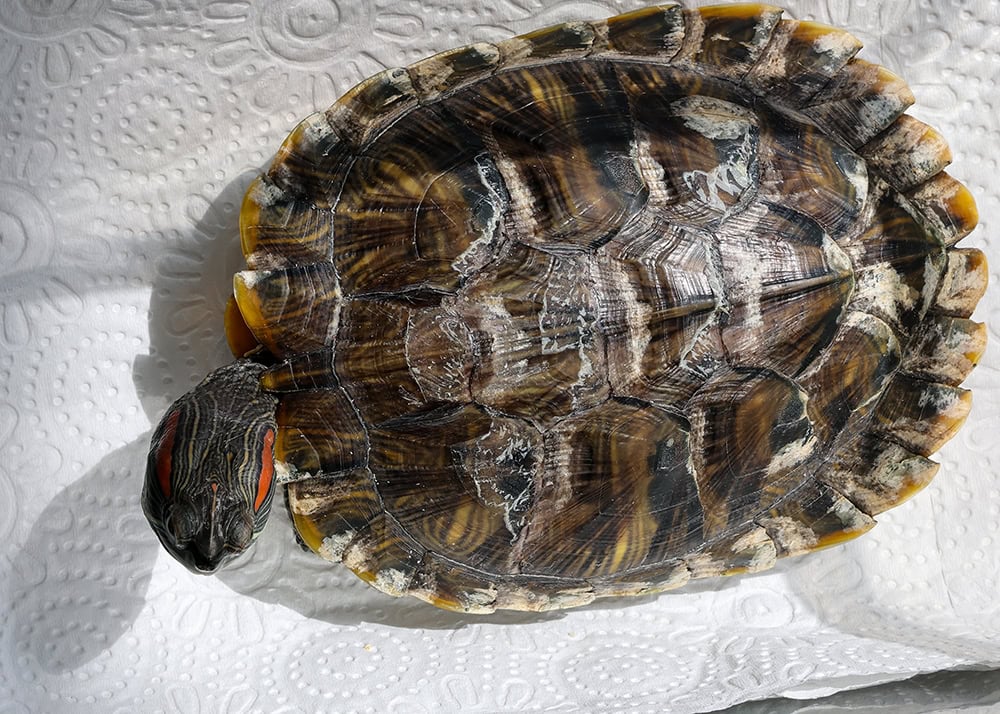
2. Shell Rot (Ulcerative Shell Disease)
The common term for this disease is shell rot but some veterinarians may refer to it as ulcerative shell disease.
It occurs because of a combination of poor husbandry factors, including diet, water quality and temperature, and other factors like ultraviolet light. When these factors are not just right, the shell quality starts to
Disintegrate, which leaves it open for bacteria and infection. As the infection sets in, it spreads further into the weakened and disintegrating shell.
If you notice your turtle's shell sloughing off or pits forming, bring it to a veterinarian before the vicious cycle gets out of control.
3. Ear Infections
Aquatic turtles can easily get ear infections if their water is dirty and if they do not get the right vitamins and minerals in their diet. Often an ear infection is not noticed until the ear becomes a full-blown abscess. It then needs to be fixed with surgery and antibiotics. And a better diet.
4. Metabolic Bone Disease
While an inappropriate, unbalanced diet can weaken a turtle's skeleton, an often overlooked and mismanaged husbandry factor is ultraviolet light, which also weakens bones and shells.
Just like human turtles absorb nutrients from sunlight, and if they do not get to do this, their body uses the minerals in their skeleton to compensate. After years of using their skeleton to compensate, it begins to fall apart.
The shell is considered part of their skeleton, and it is the most obvious sign of this disease. If your turtle's shell grows abnormally, be suspicious of this disease. They will need a veterinary visit and a thorough assessment of their husbandry.
5. Eye Infections
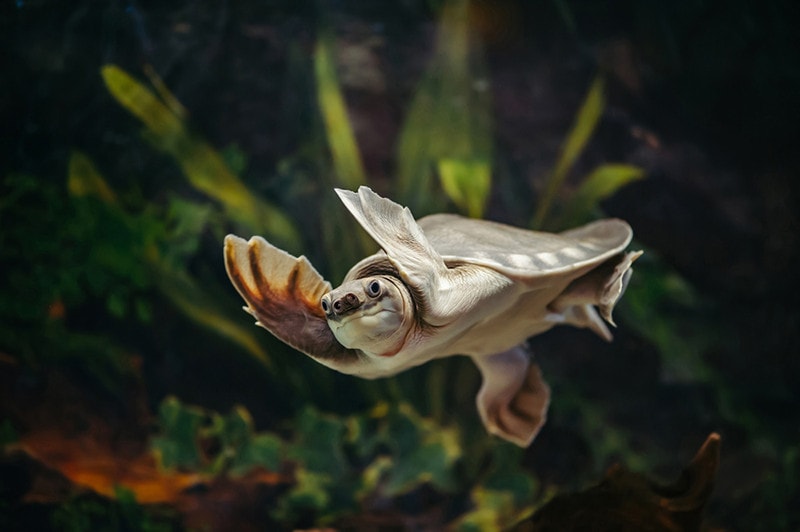
Eye infections are common in aquatic turtles. Often because their tank water is not clean enough or their diet is sub-par. The immune system cannot keep up, and their eyes cannot clean themselves properly because of a buildup of mucous membranes (see hypovitaminosis A).
Swollen eyes, closing their eyes (or not being able to open them), a hazy fog developing over their eye, and/or discharge are all signs of an eye infection. To treat it, they will need veterinary-prescribed eye drops. And an assessment of their water quality and diet.
6. Intestinal Parasites
Intestinal parasites are common in aquatic turtles. Especially turtles that eat live prey—fish, worms, and/or invertebrates. Intestinal parasites are often not as big of a problem in turtles as they are in other species. However, if they get too prolific, they can certainly be a problem, especially if a turtle's diet is not giving them enough nutrition to begin with. And if their immune system is depleted from inadequate husbandry.
Making sure your turtle's baseline of health is strong enough to protect them from gentle parasitic burdens is essential. And getting regular fecal (once or twice a year) is also helpful for keeping on top of it.

Frequently Asked Questions (FAQ)
How do you know if your turtle is sick?
Get to know your turtle's personality and habits. While it is easy to dismiss them, turtles have distinct personalities, preferences, and habits.
When they do not feel well, their patterns change, even slightly. A person who is paying careful attention to every detail of their life will notice it immediately.
Signs to look for:
How to prepare for a vet visit?
Yes, turtles need doctor's visits too. Many do well with yearly check-ups.
Finding the right vet who is willing to work with turtles might be hard but worth the effort. When you go to the vet, expect to discuss husbandry. Think of it as a husbandry consultation, a way to get a second option on the crucial elements of your turtle's diet and environment. Husbandry assessments can be the key to a successful turtle check-up.
Things to prepare for their check-up
Summary
Owning a turtle is closer to a science project than most people think. You must do research, trial and error experimentation with your husbandry setup, continuously monitoring and checking the tank system, and regularly reviewing your progress.
Often if there is one problem with the husbandry, other problems are also hiding, and as a result, problems often overlap. And one problem leads to others.
The best thing you can do for your turtle is to know their exact husbandry requirements. Get yearly checks and husbandry consultations with a reptile veterinarian. And get to know your individual turtle's personality and habits so that when something changes, you notice it right away.
See also:
How Long Can Turtles Go Without Water? Vet Reviewed Facts & FAQ
Are Turtles Reptiles or Amphibians? Scientific Classification
Sources
Featured Image Credit: jwiens, Pixabay
Get Hepper In Your Inbox


Pet care tips from our vets and experts, straight to your inbox.
You may opt-out at any time. View our Privacy Policy for more information.
Dr. Chantal is passionate about the human-animal bond and improving animals' lives through their connections with their human companions. She has worked with many different species, big and small, including dogs, cats, birds, rabbits, guinea pigs, reptiles, amphibians, and even horses and mice. Chantal is excited to share her knowledge using her writing to help people connect with their animal friends.
Dr. Chantal believes that the best way for animals to be healthy is for their humans to understand their needs and well-being. She loves spreading her knowledge to as many people as she can through her writing.
Education
Dr. Chantal graduated from the Royal Veterinary College in London, England, where she received her vet degree. She then received her Masters in Conservation Medicine from Tufts University.
Experience
Dr. Chantal has worked with animals her entire life in many fields, even outside of veterinary medicine. She managed horse barns, worked as a dog trainer, and as a wildlife biologist before attending vet school. Chantal has been a veterinarian for over three years and continues to work with dogs, cats, and exotic animals. And, she still knows a thing or two about horses.
Join the conversation
Ask a question, share your story, or send private feedback.