Hepper is reader-supported. When you buy via links on our site, we may earn an affiliate commission at no cost to you. Learn more.
Can Turtles Get COVID? Vet-Reviewed Facts & FAQ


In this article
The COVID-19 pandemic has had an enormous impact on our world and our lives. Beyond worrying about ourselves and close friends and family, many of us also worry about our pets. After all, there have been cases of cats and dogs becoming sick after exposure to someone with COVID-19.
But what about our pet turtles? Is there a risk of reptiles catching COVID? There hasn’t been a case yet of any turtle or reptile catching COVID-19.
Let’s take a closer look at what diseases you can catch from your turtle and other illnesses that your turtle might come down with that you should be on the lookout for.

Animals and COVID-19
According to the Centers for Disease Control and Prevention, coronaviruses are a large group of viruses. Some infect only people, while others infect certain kinds of animals, such as cattle and bats.
There are also rare coronaviruses that infect animals and then spread to people. It’s believed that this is exactly what happened with the coronavirus that led to SARS-CoV-2 (thought to have been transmitted by bats).
While animals can catch COVID from us, it is extremely rare for us to catch it from an animal. The SARS-CoV-2 coronavirus has infected many animals worldwide after they came into contact with people with COVID-19.
- Pets: Dogs, cats, hamsters, and ferrets
- Zoos and sanctuaries:Bigs cats (lions, snow leopards, tigers), primates, otters, hyenas, fishing cats, coatimundi, binturong, manatees, and hippopotamuses
- Mink farms: Mink
- Wildlife: Wild mink, giant anteaters, white-tailed deer, mule deer, and black-tailed marmosets
That all these species have contracted SARS-CoV-2 from us humans may come as a surprise. But you might have noticed that birds and reptiles are missing from the list, which is why as far as we know at present, you don’t have to worry about your turtle catching COVID.
What Diseases Can Humans Catch From Turtles?
Salmonella
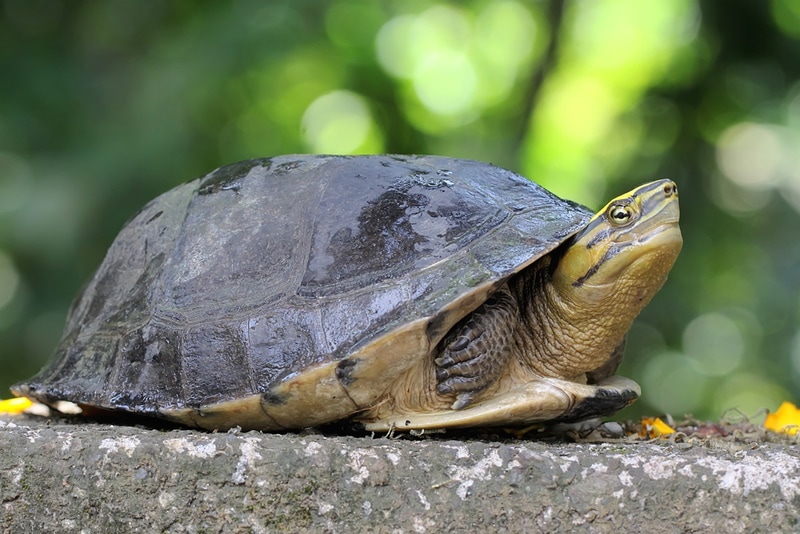
The most common bacteria discussed in relation to turtles are Salmonella bacteria. They are zoonotic, which means they can be transmitted from animals (or reptiles, in this case) to humans and cause illness.
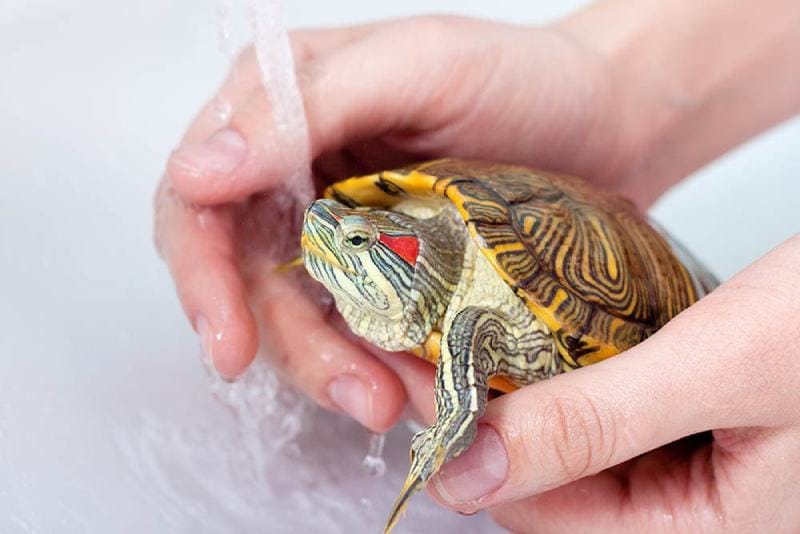
A wild or pet turtle can have Salmonella yet appear completely healthy. The bacteria are passed on to anyone who handles the turtle and doesn’t wash their hands immediately after.
Symptoms of Salmonella infection in people are:
Anyone with a compromised immune system, young children, and seniors might need to be hospitalized. This is why cleaning your turtle’s habitat frequently and thoroughly washing your hands after handling them is critical!
Botulism
Botulism is caused by a toxin from the Clostridium bacteria and can be fatal in some cases. Turtles eat the spores of Clostridium while feeding, which is eventually excreted with their feces.
This is particularly dangerous for children under the age of 1 and has been known to cause paralysis and death. Older children and adults typically have mature defense systems that help protect against the spores.
Common Health Problems in Aquatic Turtles
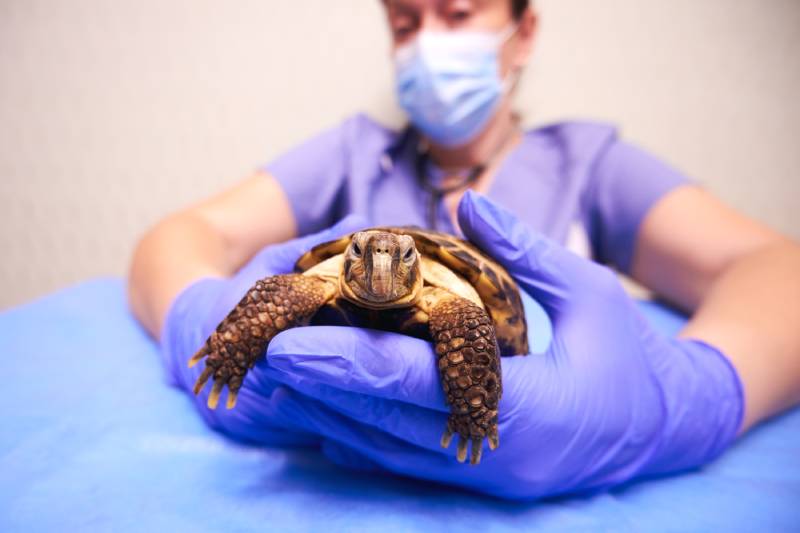
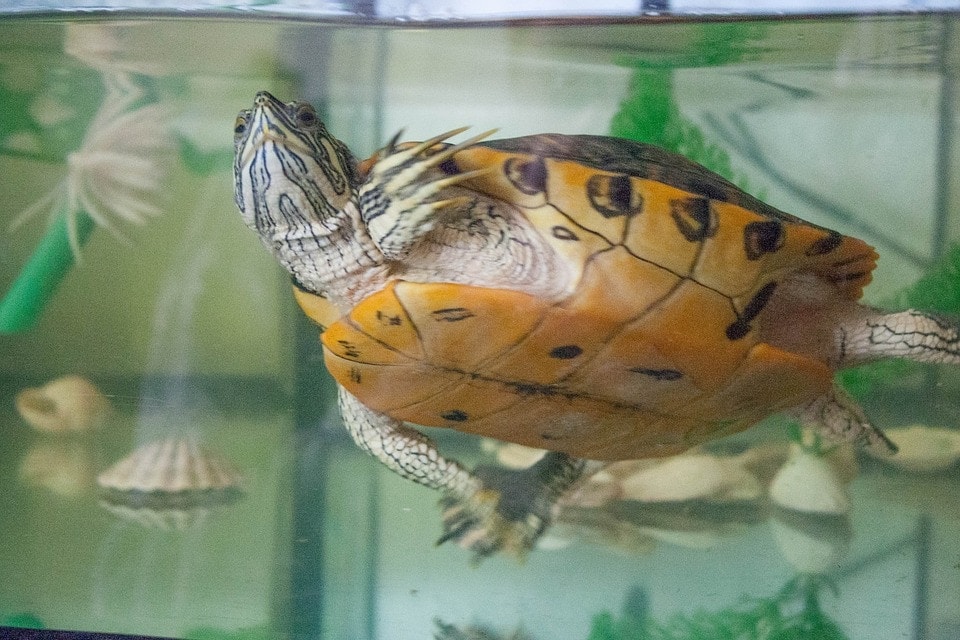
Common health conditions in aquatic turtles include:
- Bladder stones: Bladder stones occur in turtles primarily from not receiving the appropriate nutrition in their diet and from dehydration. A sign of bladder stones is blood in their feces.
- Irregular shell growth:This is caused by malnutrition or possible metabolic bone disease. The shell might be shaped asymmetrically or soft and bumpy.
- Shell fractures:These might occur if the turtle falls from a height or if a family pet chews on them, which can lead to trauma or fractures to the shell. A turtle’s shell is essentially bone, though, so it can be repaired.
- Prolapse:This occurs when any part of the turtle, such as an organ (bladder, intestine, uterus, penis, or cloaca) or tissue, protrudes from the vent.
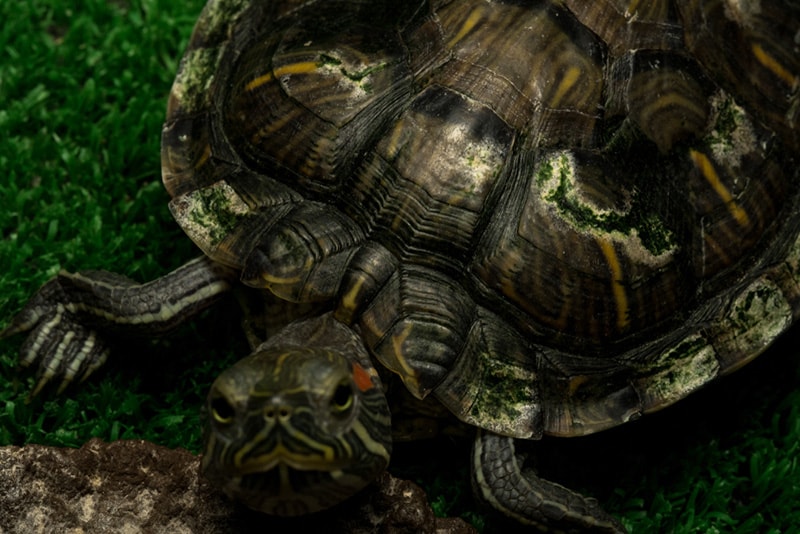
- Algae on the shell:This isn’t too serious unless it isn’t cleaned off, but it can be a sign of infrequent water changes and an unclean tank.
- Skin and shell shedding:Both the skin and shell will shed from time to time. If the shedding skin is thick and leaves behind bleeding and raw areas on the turtle’s body, it might be a fungal or bacterial infection or vitamin A deficiency.
Take your turtle to your veterinarian if you notice anything wrong with them. Each of these conditions requires medical intervention.
Taking Care of Your Turtle
To ensure that your turtle stays healthy, follow these tips.
Maintaining the Water
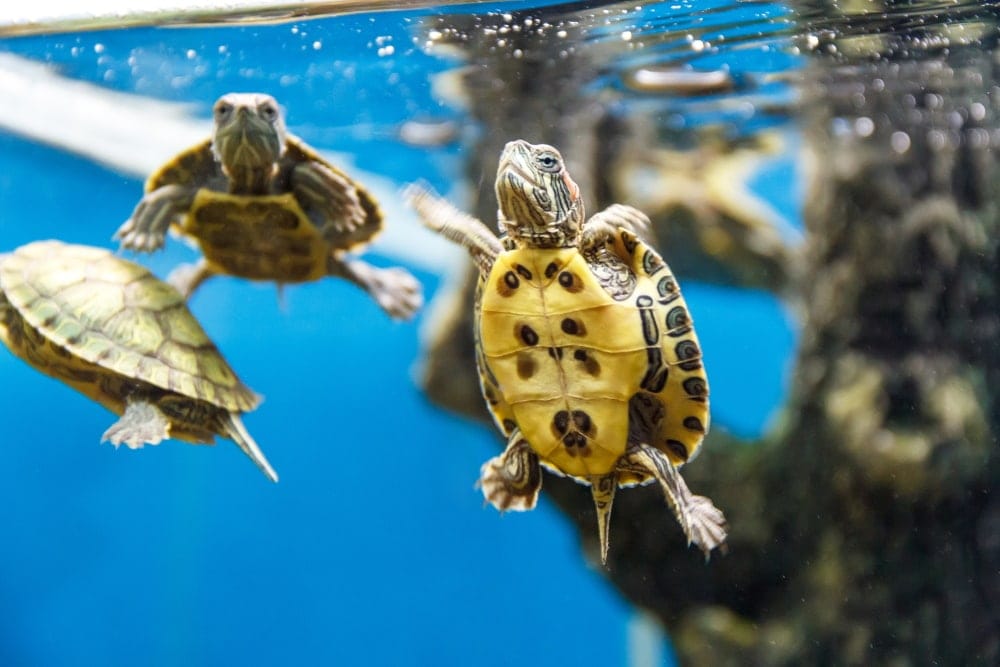
Maintaining the water in your turtle’s habitat is essential to keeping them healthy. You’ll need to consistently change the water and install a water filtration system. You should change a third of the standing water at least once a week.
But the good news is that you don’t have to completely empty the tank and scrub it down that often. Keeping water in the tank during water changes can help maintain normal bacteria levels.
Heating
You need to maintain the proper heat in the habitat. Otherwise, your turtle might go into hibernation, which can lead to serious health issues.
The temperature should be consistent without dramatic changes, and you’ll want to get a heating element that can keep the temperature between 70°F and 90°F. You can speak to your vet about the best ways to do this.
Lighting
Turtles need both UVA and UVB lighting to remain healthy. The UVB light provides them with vitamin D, which helps with calcium absorption, and calcium is vital for shell health.
The bulbs must also shine directly into your turtle’s habitat, not through glass, plastic, or plexiglass, which will filter the light. The light bulbs should typically be changed every 6 to 9 months.
Basking
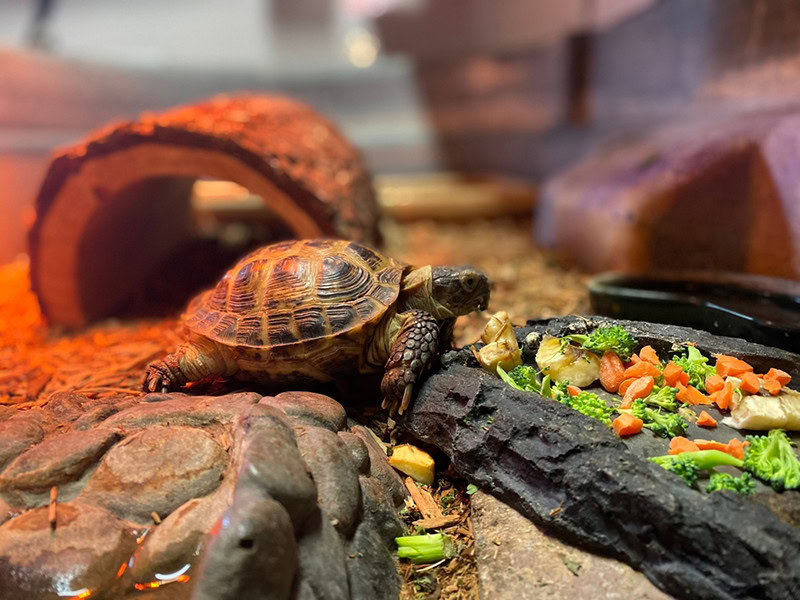
Your turtle must have a basking area that enables them to get out of the water to dry out and warm up. You can purchase basking platforms through pet stores or simply use a flat rock or piece of driftwood large enough for your turtle.
Diet
Giving your turtle a proper diet is essential to keep them in good health. They need a mix of vegetables, with an emphasis on leafy green veggies. Most turtles are omnivores, so they also need animal protein. Many turtle owners rely on turtle pellets for this, but you can also find insects meant for turtles in pet stores. What your turtle eats depends on their age and species, so you’ll want to research and speak to your vet.
Try not to overfeed your pet. In most cases, you can put out food for your turtle, let them eat for about 2 minutes, and then remove whatever is left over.
Illness
Always keep a close eye on your turtle. The more familiar you are with them and how they behave, the more likely you can pick up when something is wrong. If they stop eating, are breathing out of their mouth, or have weepy, swollen eyes, take them to your veterinarian.
Just like with any pet, you should bring them in once a year for an annual check, even when they are in good health. Turtles tend to hide signs of illness, which makes these annual visits crucial.
Conclusion
No, it is not likely that a turtle can get COVID-19. There has never been a record of any reptile contracting this coronavirus, so you don't need to worry about your turtle.
While humans can catch a few serious diseases from them, there isn’t any infection that we get that can be passed to pet turtles.
As long as you take excellent care of your turtle by regularly maintaining their habitat, keeping up with wellness checks with the vet, and feeding them a proper diet, you’ll have your pet for many years to come.
See Also:
Featured Image Credit: Studio Empreinte, Shutterstock
Get Hepper In Your Inbox


Pet care tips from our vets and experts, straight to your inbox.
You may opt-out at any time. View our Privacy Policy for more information.
Kathryn was a librarian in a previous lifetime and is currently a writer about all things animals. When she was a child, she hoped to work in zoos or with wildlife in some way, thanks to her strong love for animals. Unfortunately, she's not strong in the sciences, so she fills her days with researching and writing about all kinds of animals and spends time playing with her adorable but terribly mischievous tabby cat, Bella. Kathryn is hoping to add to her family in the near future – maybe another cat and a dog.
Join the conversation
Ask a question, share your story, or send private feedback.