Hepper is reader-supported. When you buy via links on our site, we may earn an affiliate commission at no cost to you. Learn more.
Do Turtles Have Ears? Vet Reviewed Issues & Care Guide



In this article
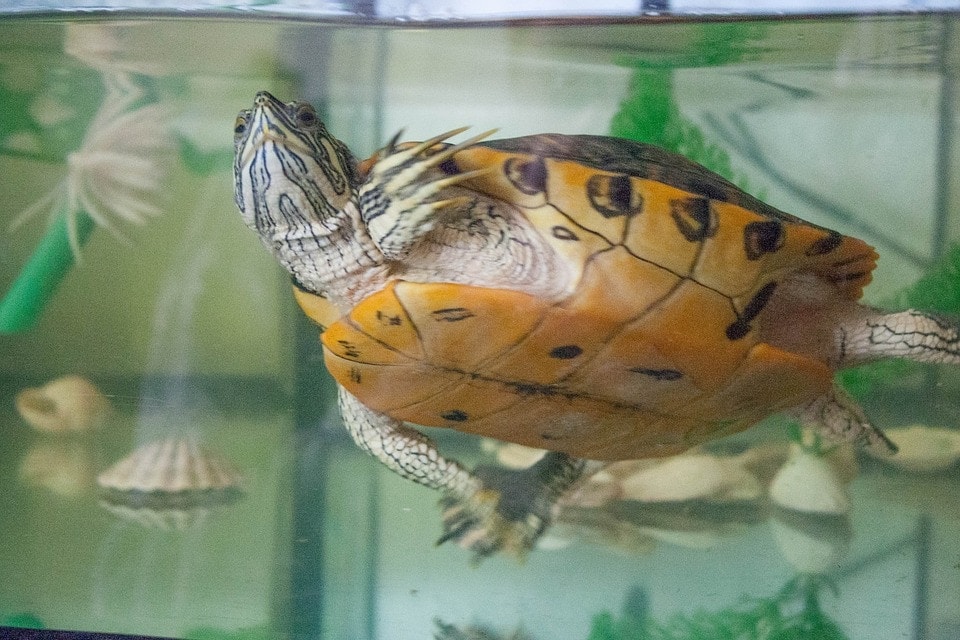
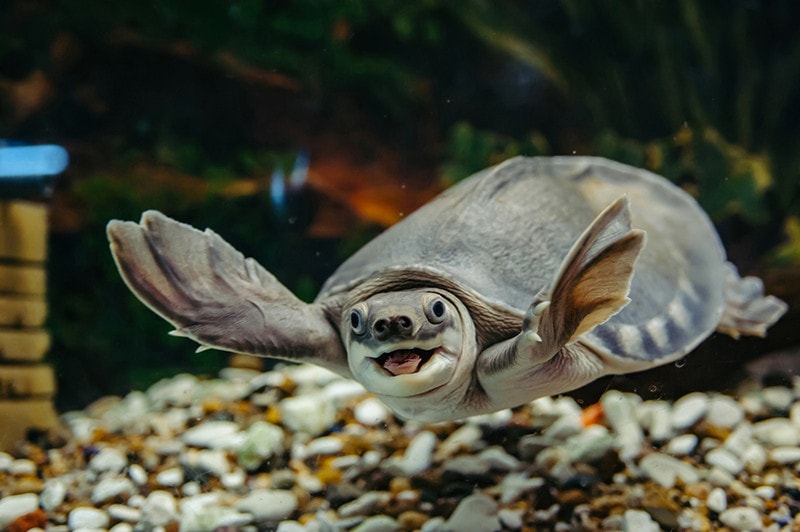
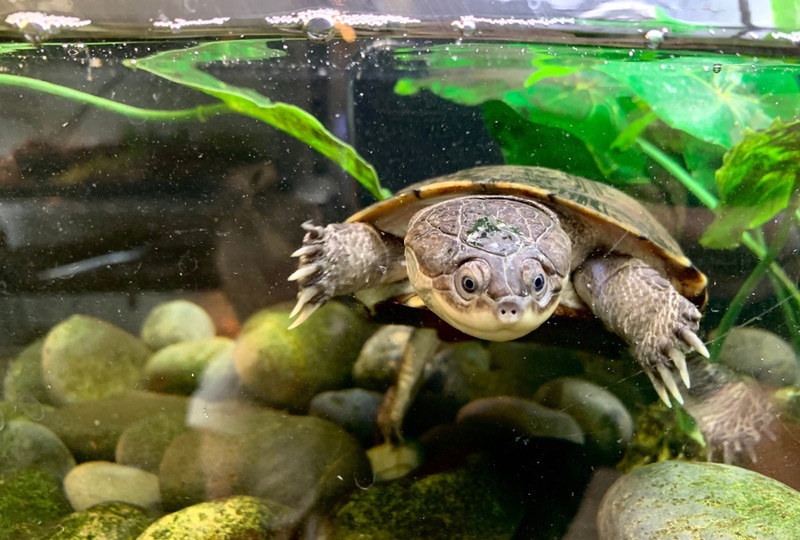
When looking at a turtle’s adorable little head, you might find yourself wondering, do turtles have ears? The answer is yes, but also no. Turtles do not have the external structures that we commonly associate with ears, but they do have internal structures that allow them to pick up vibrations and low-frequency sounds. You cannot see these internal structures because they are covered beneath a thin layer of skin for protection. To learn more about the capabilities of a turtle’s hearing and the common issues their ears face, keep reading below.

How Well Can Turtles Hear?
Although we know that they can hear, the range and frequencies detected by our terrapin friends are less understood compared with other reptiles. However, it's known that turtles have greater auditory thresholds than most other reptiles, allowing them to hear frequencies around 500 Hz. It has been determined that they can hear even better underwater. So, can your turtle hear you when you talk to them? Absolutely!
Can Turtles Get Ear Infections?
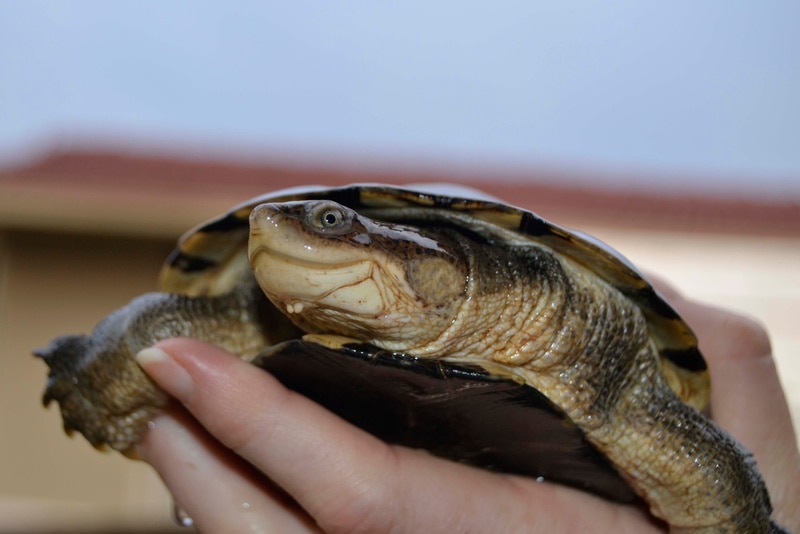
Since a turtle’s ears are completely covered up, it would make sense that they would be protected from infections, right? Unfortunately, that's not the case. Turtles can develop ear infections, and some species are at a particularly high risk (such as the Box turtle).
Ear infections in turtles typically occur in the middle ear or the tympanic cavity. The middle ear is located close to the corner of the mouth and is protected by a thin membrane, but it can still become infected. When infected, pus may develop, which can form a plug in the ear cavity and cause the membrane to bulge out or even rupture. Additionally, the infection may spread to the jaw and other parts of the skull.
Common Signs of Ear Infections in Turtles
If you are concerned that your turtle may have developed an ear infection, there are a few signs that you can watch out for. These signs include:
- Swelling of the ear membrane
- Pus leaking from the ear membrane
- Dragging head against objects
- Clawing at ear
- Struggling to swallow
- Unwilling to eat
- Inflammation of the eyes or nose
Common Causes of Ear Infection in Turtles
Typically, the most common causes of ear infections in turtles are related to a vitamin A deficiency or poor sanitary conditions. Both are factors you, as the pet owner, can have a considerable influence over. With attentiveness and care, you can work to prevent ear infections in your turtle.
Vitamin A Deficiency
A deficiency in Vitamin A primarily occurs when a turtle is fed an improper diet. Turtles eating iceberg lettuce, poor-quality pellets, or all-meat diets often experience a vitamin A deficiency.
Without adequate vitamin A, your turtle may experience worrying changes to their skin and mucus-producing glands. They may also suffer changes to the membranes of the mouth, eyes, upper respiratory tract, and kidneys. Signs of a vitamin A deficiency in turtles include a poor appetite, weakness, and swollen eyelids. Your turtle may suffer from respiratory infections and even kidney failure in more severe cases.
Poor Hygiene and Sanitary Conditions
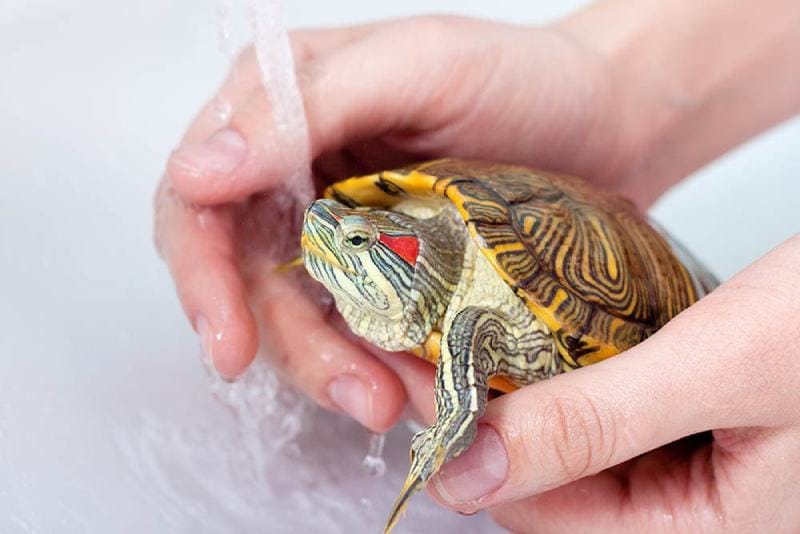
To keep your turtle hygienic and happy, you must keep their body and home clean. Bathing your turtle is simple, and you can gently brush off any grime with a soft-bristled toothbrush and dechlorinated water. If discoloration on your turtle does not wash off after this gentle bath, reach out to your vet.
As for maintaining the enclosure, you will first need to remove all the objects (including your turtle) from the tank. Then, you can use a diluted mixture of bleach and warm water to eradicate bacteria in the tank. Let the tank sit for at least 10 minutes, then use plain water to rinse out your turtle’s enclosure.
Do not use soap or detergent to clean the tank, turtle, or contents. Thoroughly rinse or replace substrate and scrub any other objects from the tank.
Always wear gloves when handling your turtle or washing their tank, as turtles can carry Salmonella and other bacteria.
The frequency with which you clean your turtle’s tank will depend on the type of turtle you own as well as how tidy they tend to be. It is recommended that you clean aquatic tanks twice per month and dry tanks once every few months. Even deeper cleanings should be done a few times per year. Partial water changes each week will also help to keep the habitat fresh.
Conclusion
Turtles have ears but do not have the external structures or visible holes that most people would expect to see. While the hearing capabilities of turtles have yet to be thoroughly understood, it is believed that turtles have a more impressive hearing threshold than most reptiles. Their hearing only becomes more precise when they are underwater. Since turtles have ears, it is vital to remain vigilant against ear infections. If you ever suspect your turtle is suffering from an ear infection, make an appointment with your vet immediately.
Sources
https://www.petmd.com/reptile/pet_lover/5-things-you-didnt-know-about-turtles
https://www.petmd.com/reptile/conditions/ears/c_rp_ear_infections
https://www.petmd.com/reptile/care/evr_rp_turtles-101-how-to-clean-and-care-for-your-turtles-tank
https://vcahospitals.com/know-your-pet/turtles-aquatic-diseases
Featured Image Credit: Belikart, Shutterstock
Get Hepper In Your Inbox


Pet care tips from our vets and experts, straight to your inbox.
You may opt-out at any time. View our Privacy Policy for more information.
Pets are Jordyn’s passion, cats especially. Whenever she has the opportunity, she loves to learn about them and share her knowledge with everyone. She is devoted to her tabby cat named Jack and works hard to buy him his favorite treats and toys. Discovering new ways to better care for her pet is always on her to-do list, and she is eager to help pet parents everywhere who have similar pursuits. In her spare time, she loves to read, write, and take long walks. She has a creative spirit, which often helps her to come up with funny cat names.
Join the conversation
Ask a question, share your story, or send private feedback.