Hepper is reader-supported. When you buy via links on our site, we may earn an affiliate commission at no cost to you. Learn more.
Are Maltese Smarter Than Most Dogs? Different Types of Dog Intelligence

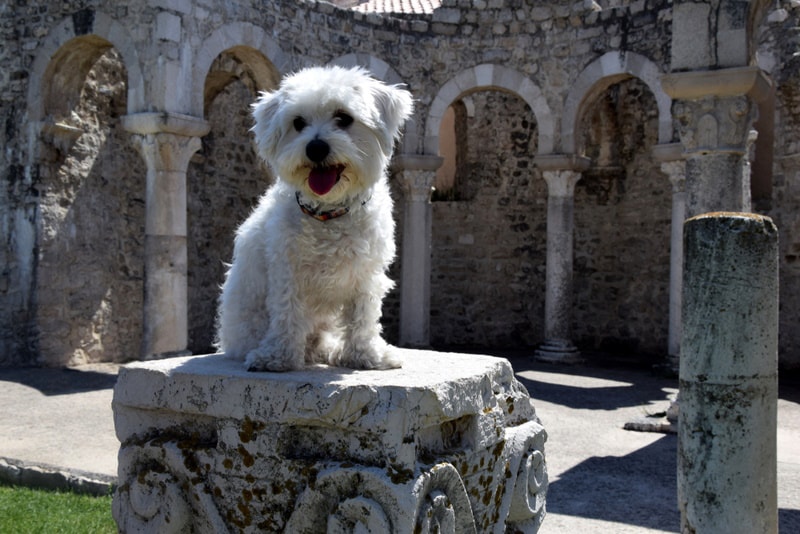
Say you want a beautiful, loving, and not-too-big dog. A Maltese might be for you! With silky white coats and friendly personalities, they are an extremely popular breed for a reason. But let’s say you also care about having an intelligent dog. Is a Maltese out of the running? Well, maybe. The most famous dog intelligence test ranked them at 111 out of 138. But that test only measured one kind of intelligence.
Let’s take a look at what it means to be smart and how the Maltese measure up.

Maltese Are Slow & Stubborn Learners
The most famous trial of intelligence was all about “working IQ”, a combination of learning speed or obedience. The researcher, Stanley Coren, worked with thousands of dogs of different breeds to compare their intelligence. There were two skills he looked for—first, how many repetitions it took to teach a dog a new command, and second, how reliable a dog was at following commands it already knew.
Maltese weren’t the worst, but they didn’t do great either—it took an average of 40 to 80 repetitions to teach one a command, and even then, they only obeyed about a third of the time. Compare that to a Border Collie that can learn a command in only five repetitions and obey more than 95% of the time!
Now, if you have a Maltese, you might begin to see the problem already. Maltese are stubborn dogs. Even if they know a command, they might not reliably follow through the first time you ask. It takes a lot of work to build a trusting relationship with a Maltese, and you might find that it only obeys when it feels like it. Working IQ is easy to measure, but it only captures one type of intelligence.

Many Maltese Are Great Problem Solvers
Another type of intelligence many animal behavior experts look at is “adaptive intelligence,” or problem-solving skills. If your dog can get to the treat jar no matter how you try to lock it away, it must have a high level of adaptive intelligence.
However, it’s a little trickier to measure adaptive intelligence than working intelligence. You can measure how long it takes dogs to solve a problem, but different dogs will do better on different problems. Problem-solving skills often vary a lot within a breed, though—so some Maltese will blow away the competition, but others will lag behind.
Maltese Instinctive Intelligence
You can also look at “instinctive intelligence”—that’s the smarts that are inborn into any dog. Dogs have done all sorts of different tasks over the years, and instincts help your dog naturally gain certain skills. A shepherd breed of dog will pick up herding right away, but they might have a hard time learning to be a good hunting dog.
Maltese have an instinctive skill set of their own—and it may surprise you. Despite their cute, fluffy appearance, these dogs are actually killers! Specifically, Maltese were bred to kill rats and other vermin. If a mouse moves into your home, you might be surprised to see your sweet, loving lap dog kill it on sight, even if it has never tried before. That’s instinctive intelligence at work.

Maltese Have a Reputation for a High “EQ”
Those types of intelligence are all good, but there’s one in particular where Maltese shine. That’s emotional intelligence, sometimes called EQ. Although there aren’t any studies showing how breeds stack up against each other, Maltese are known for being “in tune” with their owners’ emotions. This helps them seem loving, caring, and empathetic—perfect traits for a canine companion. This high EQ is one of the main reasons the Maltese are so beloved today.

Conclusion
We hope that this whirlwind tour through all the different types of intelligence helps you get a better understanding of Maltese. Like all dog breeds, this one has its strengths and weaknesses. It’s not the most obedient or fastest learner, but that doesn’t make it a dumb breed. Instead, we can appreciate all the other ways Maltese are intelligent—from their inborn hunting skills to their loving, emotionally intelligent personalities.
Sources
Featured Image Credit: Sadovnikovrn, Shutterstock
Get Hepper In Your Inbox


Pet care tips from our vets and experts, straight to your inbox.
You may opt-out at any time. View our Privacy Policy for more information.

Chelsea Flake Mortensen is a writer with a passion for pets. She grew up around everything from cats to chameleons and loves working with all kinds of animals. Chelsea has a BA in English and Creative Writing from Brigham Young University.
Chelsea loves reading, writing, sewing, and board games. She's lived in half a dozen US states and two countries. She is currently living in New England with her husband. Her articles have been featured in various magazines and literary journals for children and adults. Her writing has been translated into over 40 languages.
Join the conversation
Ask a question, share your story, or send private feedback.