Hepper is reader-supported. When you buy via links on our site, we may earn an affiliate commission at no cost to you. Learn more.
Australian Shepherd vs Labrador: The Differences (With Pictures)
In this article
Australian Shepherds and Labrador Retrievers are similar in many ways. Both are similarly sized and can make fantastic family companions. They’re both high energy and do best in active families.
That said, there are vast differences that set them apart from one another. Aussies do best in households with older kids and teenagers, while Labs are terrific with children of all ages. Both are friendly, though Aussies are more cautious around new people.
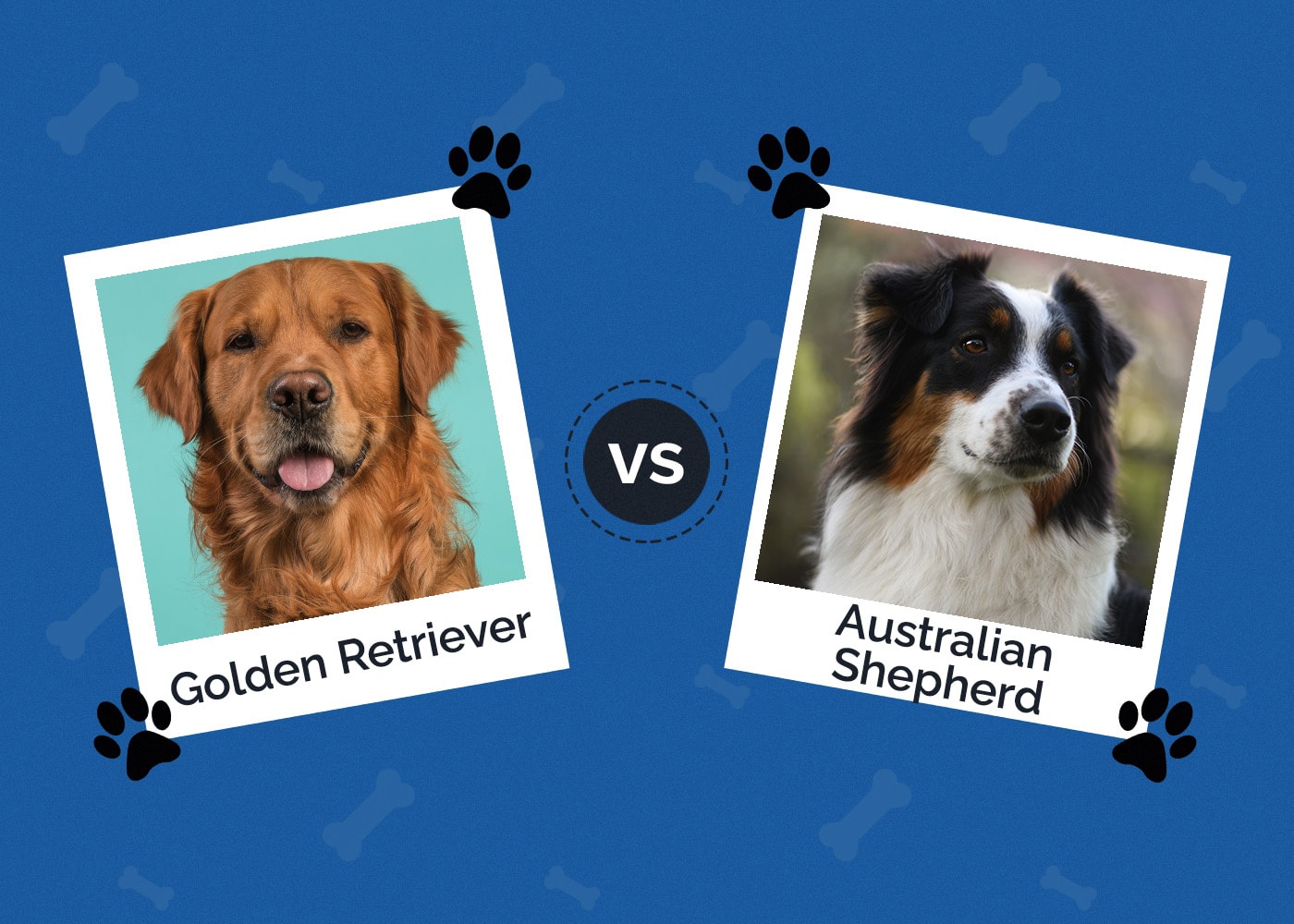
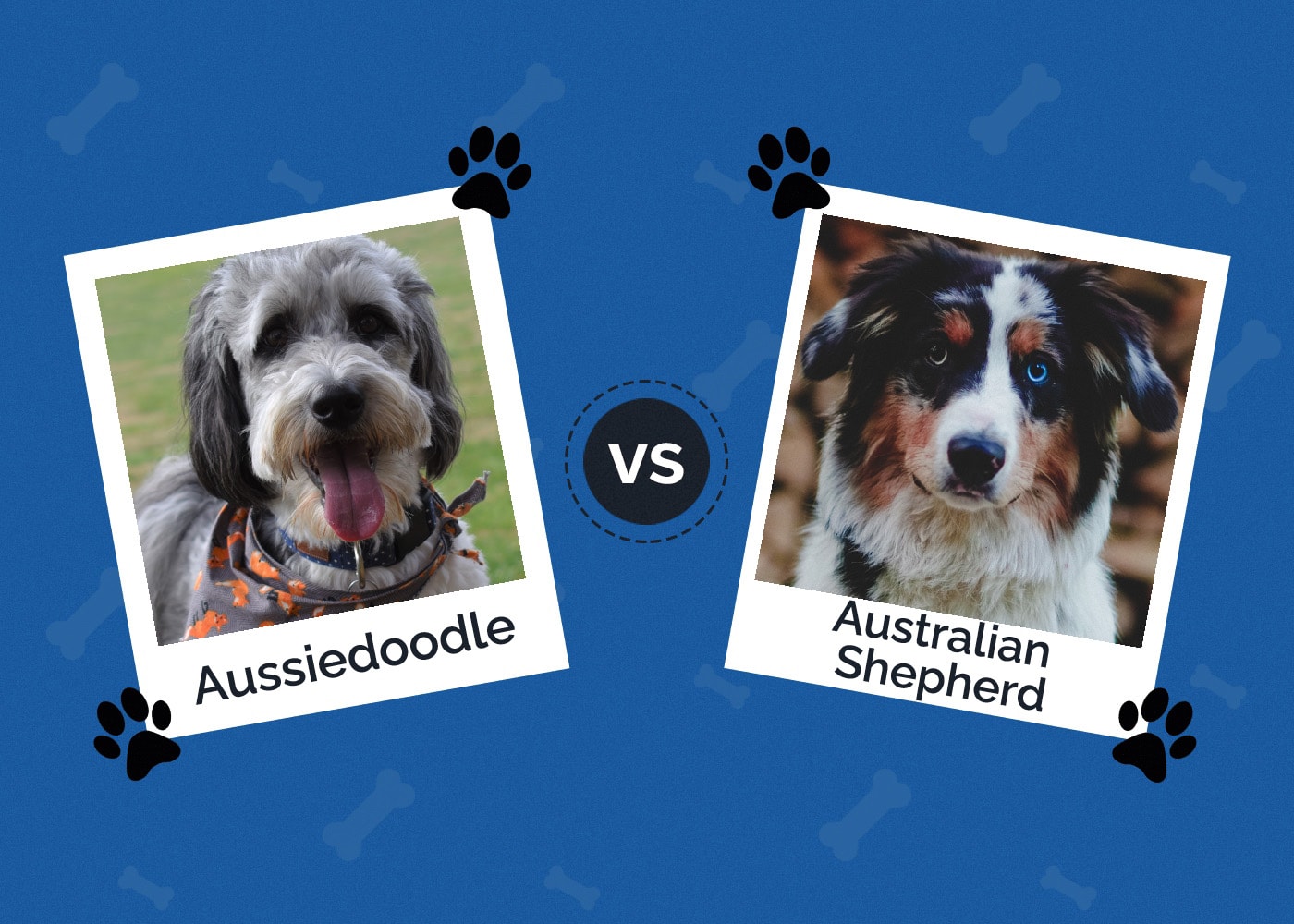
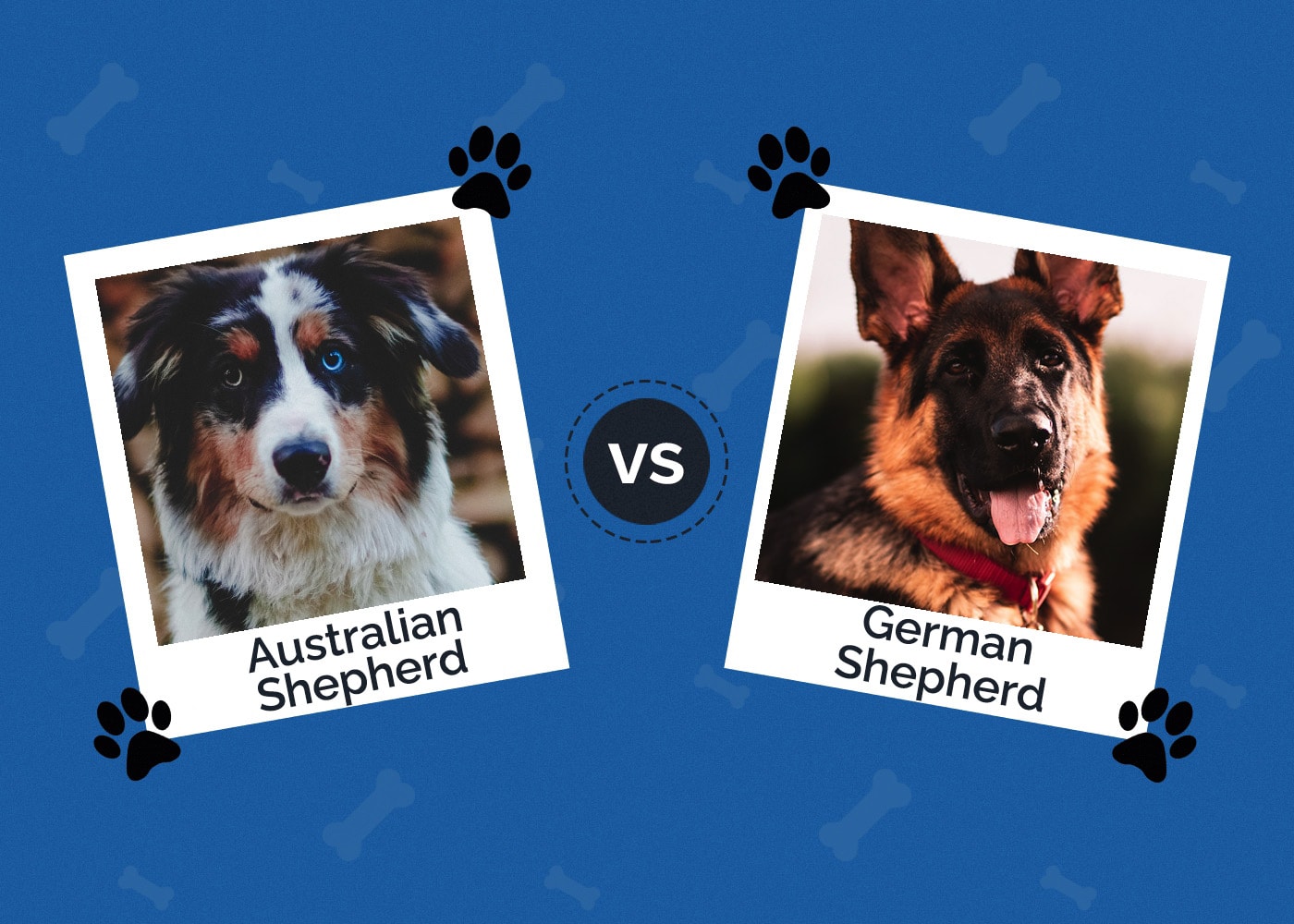
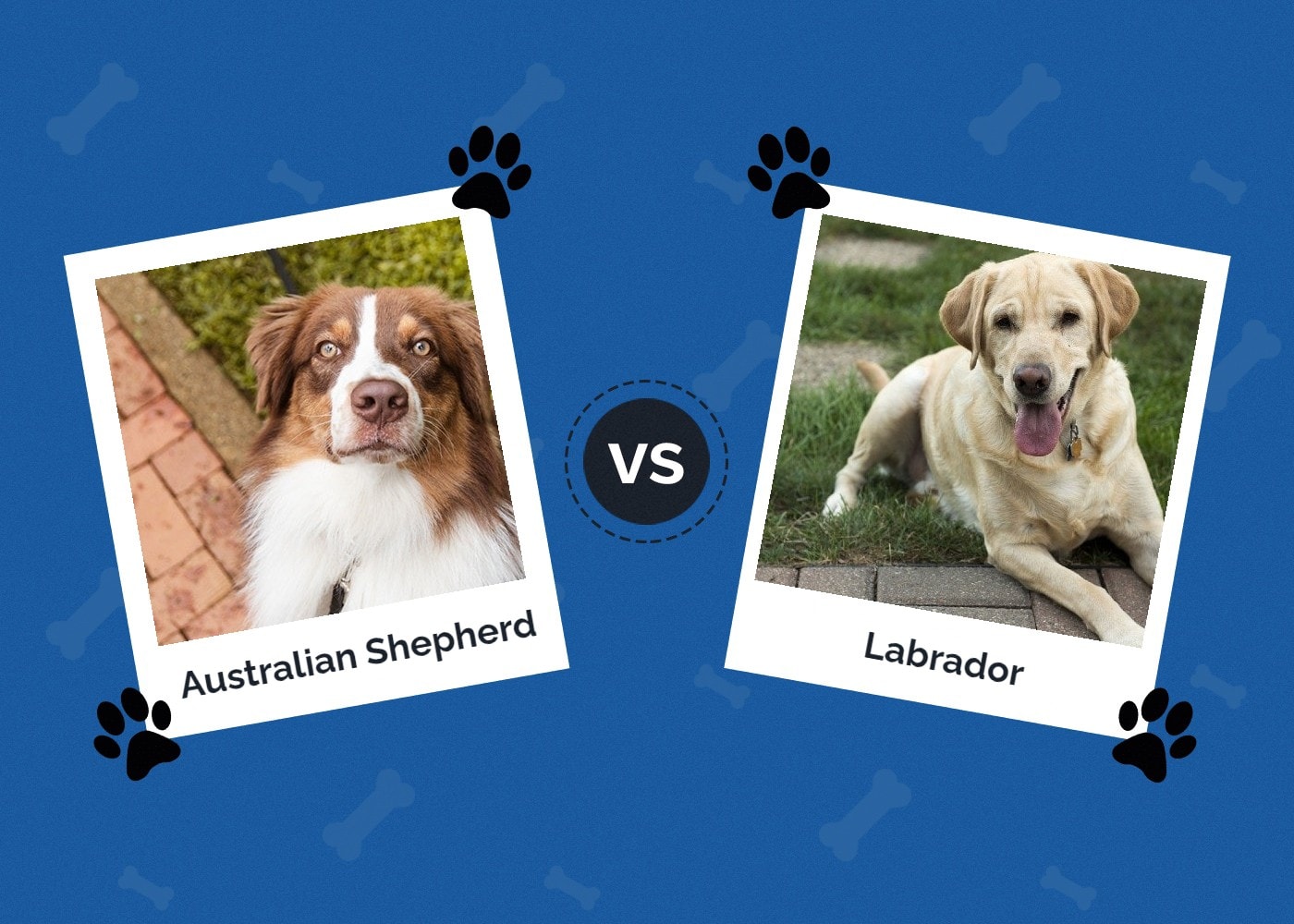
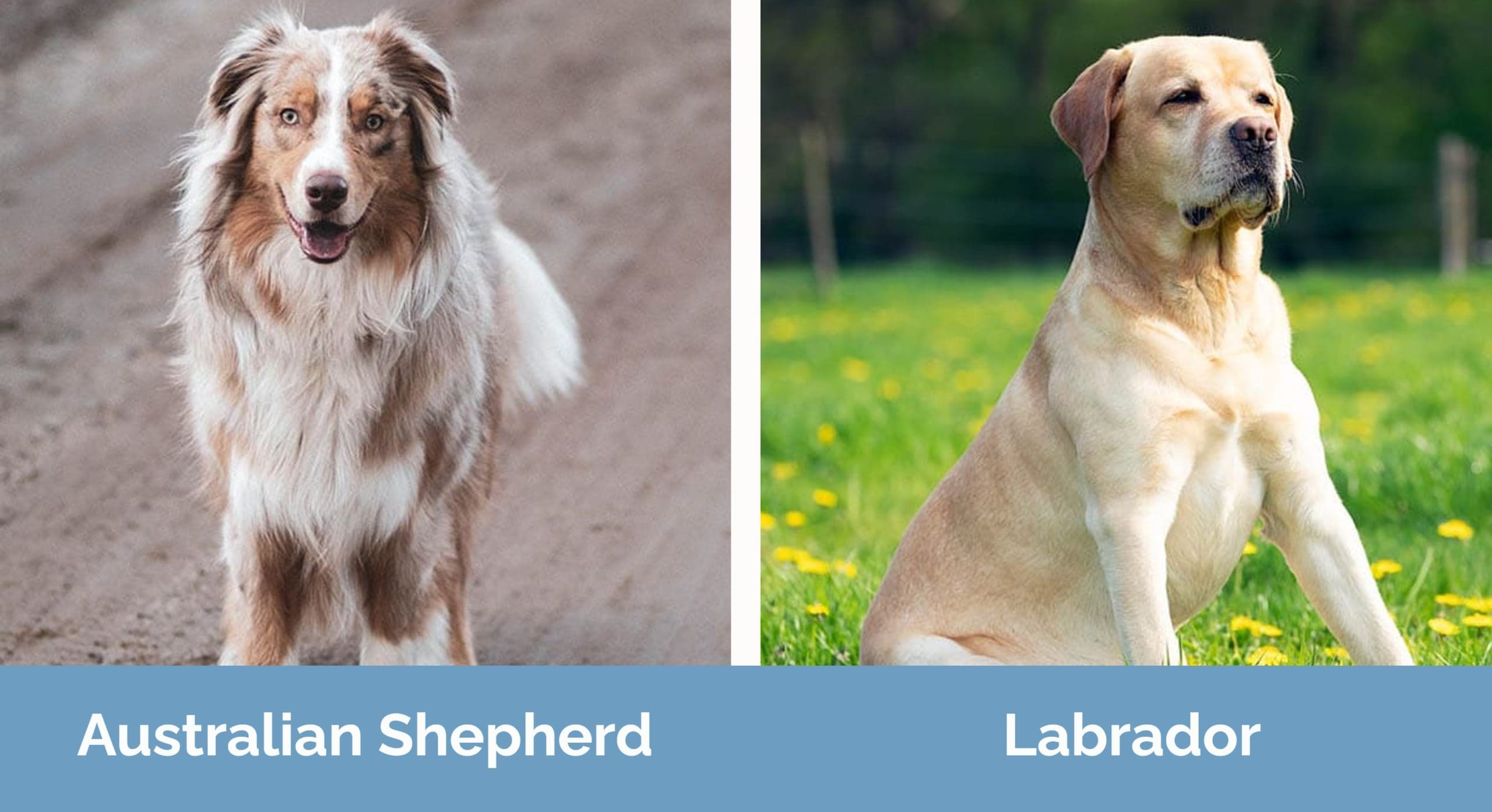
Aussies are strikingly dogs that come in several colors and patterns, but their eyes set them apart from other breeds. They can be green, amber, blue, hazel, or brown. Many even have heterochromia, a combination of more than one color in the same eye.
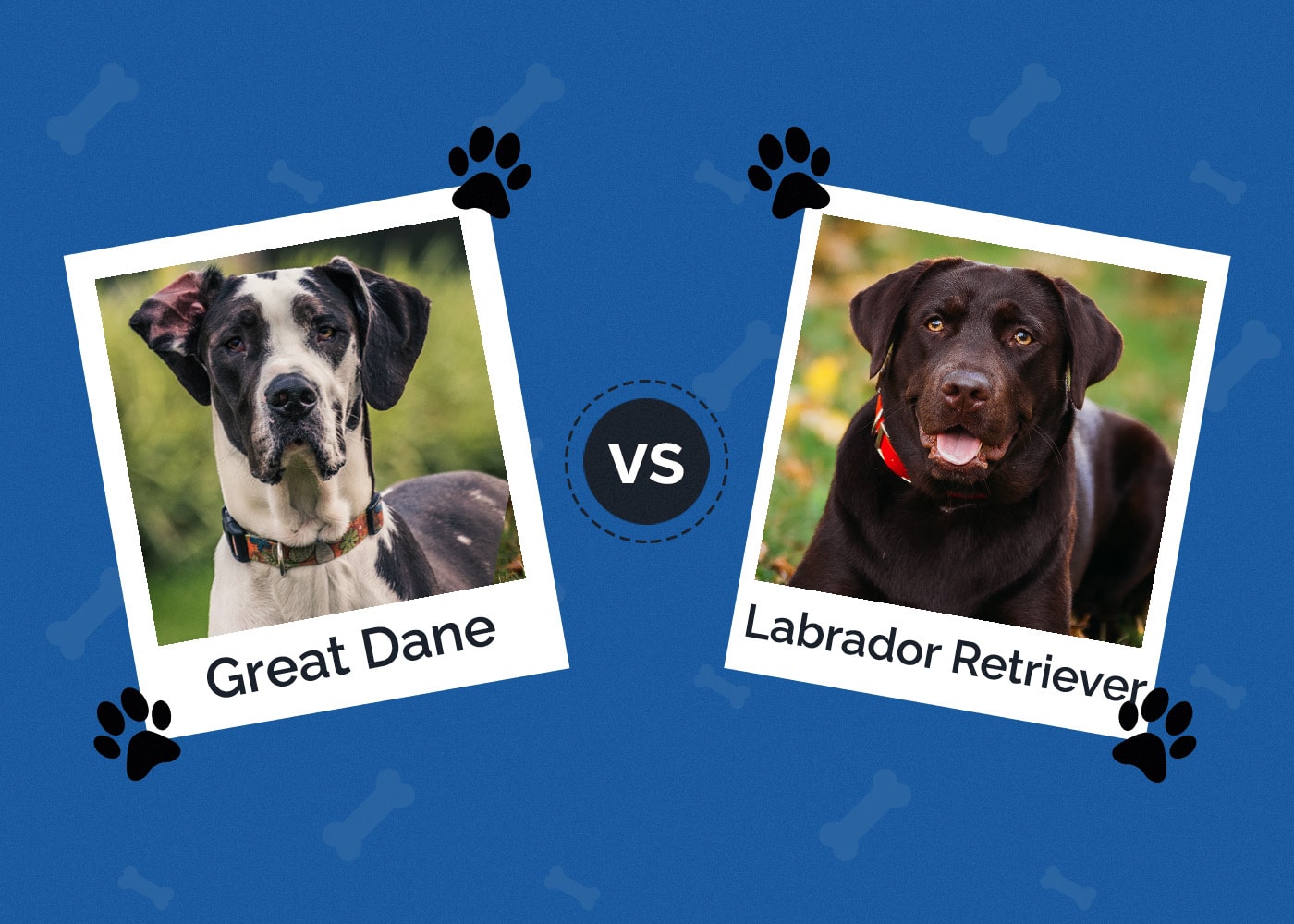
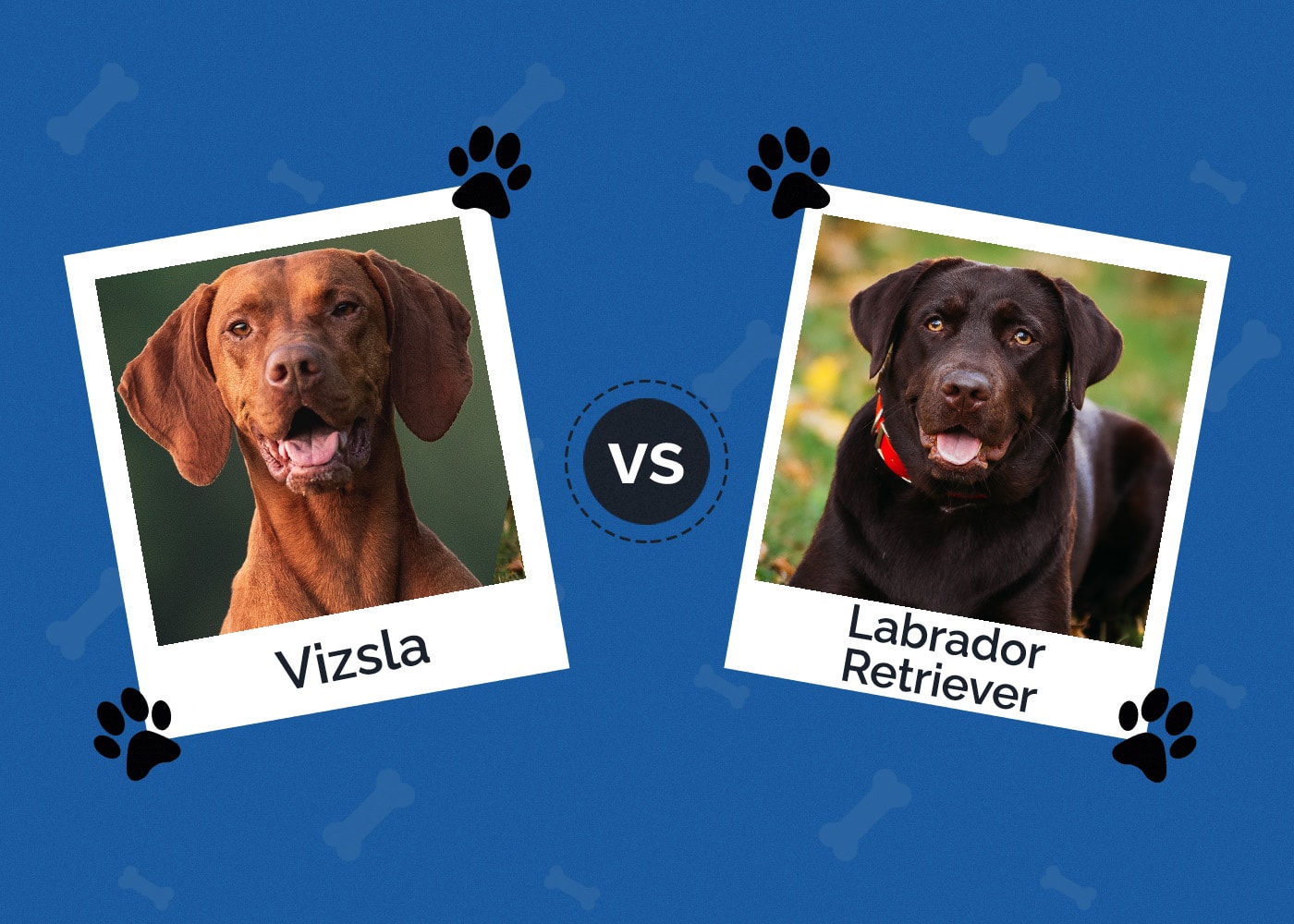
Labs are a beautiful breed, too, but they’re much more uniform in appearance. They come in three colors: chocolate, black, and yellow. Their eyes are either brown or hazel.
If you are on the fence about which breed is right for you, we can help. Keep reading to find our comparison of the two breeds. You might be surprised to learn which will fit in best with your family.

Visual Differences
At a Glance

Australian Shepherd Overview

Australian Shepherds are a herding breed developed in the United States during the 19th century. They're descendants of herding breeds such as Collies, Carea Leones, and Basque Shepherd Dogs. The breed spread into the Western U.S., where ranchers valued the breed’s hard-working qualities and knack for handling livestock.
Aussies were kept purely as a working breed for over 100 years. Then, in the mid-20th century, Aussies began performing at rodeos across the country and skyrocketed into the public eye. They were recognized by the American Kennel Club (AKC) as a breed in 1991.
Personality / Character
Australian Shepherds are an intelligent, loyal, and easy-going breed. Aussies are protective of their family and territory, so they’re not afraid to let you know if someone encroaches on their space. Their loyalty extends to their family members so they can be standoffish with strangers. They are not considered an aggressive breed, however.
Despite modern Aussie being explicitly bred to be kept as pets, they still have a high prey drive and herding instinct that can cause them to try to herd their humans or other family pets.
Exercise
Australian Shepherds need at least one hour of exercise daily, but the more you give them, the better. Their exercise time is best spent doing high-energy activities such as Frisbee or letting them go off-lead in a secure spot. But it would be best if you took them for a walk every day, too. Aussies have high energy levels and need time daily to burn off steam otherwise, they can become restless and agitated, which can lead to destruction in your home.
It is best to have a yard for your Aussie to play in. You’ll need a secure fence to keep an Aussie contained, though. Their strong herding instinct will encourage them to dig under or even jump over fences to satisfy that need.

Suitable For:
Aussies can make fantastic family pets, but you should consider the size and age of your family members before adopting. This breed has a very strong herding instinct, so it’s not unusual to find them trying to herd young children in your home. Because of this instinct, Aussies may try to assume the dominant role in the family, so this breed is best for firm and confident owners who can assert their dominance. This is not a breed you should consider if you’re a first-time dog owner.
Pros
- Beautiful coat in striking colors
- Highly intelligent
- Easy to train
- Loyal
- Mid-sized
Cons
- Need a great deal of physical exercise
- Can be destructive and very vocal
- May show dominance toward some individuals

Labrador Overview

Labrador Retrievers are a British breed of retriever gun dogs. They originated in the Canadian province of Newfoundland and were introduced to England in the 19th century by fishermen. These working dogs were bred to help the fishermen by fetching ropes and retrieving escaped fish. Surprisingly, Labs were almost extinct in Canada by the 1880s due to government restrictions and tax laws.
These rules were put into place as a way of encouraging families to raise sheep. Families were not allowed to keep more than one dog, and female Labs were highly taxed, so girl puppies were often culled from litters. Thankfully, Labs persisted throughout England and skyrocketed in popularity worldwide after WWII. Today, Labradors consistently top the most popular dog breed list and have been in the number one spot in America since 1991.
Personality / Character
Labs have been the most popular dog breed for decades for a good reason. Their sweet-natured and outgoing personality makes for a winning personality. Labs are brilliant and eager to please their owners. This makes them highly trainable, which is a good thing because Labs absolutely need training as they have a lot of excess energy that requires a healthy outlet.
Labs are very affectionate towards children, other animals, and strangers. Thanks to their seemingly infinite patience, they are fantastic family dogs suitable for children of all ages.
Thanks to their intelligence and initiative, Labs have a high success rate for becoming guide dogs. They are also often used in water rescues as they are tireless swimmers.
Exercise
Labs love to play and have a lot of energy. They need a fair bit of exercise and one-on-one attention to stay happy. Owners should aim for at least an hour of exercise daily, though some Labs are a bit more relaxed and will be pleased with 45 minutes. You can’t leave a Lab alone in your backyard and think that it’ll get the exercise it needs on its own.
Like many breeds, if Labs feel too confined and don’t get the physical activity they need, they can become unruly and destructive.
Young adult Labs may be prone to Exercise-Induced Collapse (EIC). This nervous system disorder typically shows itself before the age of two. Symptoms appear after low to moderately strenuous activities and cause affected dogs to have an uncoordinated gait. They may sometimes exhibit more severe side effects, such as confusion, seizures, and loss of consciousness. This condition can cause life-threatening collapse after strenuous exercise. The severity of EIC will vary from dog to dog. A DNA test can determine if your dog has EIC.

Suitable For:
Labrador Retrievers make great family pets and are a great pick if you have children or other pets in the home. This breed does best with active families and in households with plenty of space to roam. Remember, Labs have high exercise demands that cannot be met in your backyard alone. You must make time every day to go for walks and play with them; otherwise, they could become bored and destructive.
Pros
- Friendly and peaceful
- Easy to train
- Great with kids
- Great with other pets
Cons
- Sheds a lot
- Needs a lot of exercise
- Prone to EIC

Which Breed Is Right for You?
If you are trying to decide between an Australian Shepherd and a Labrador Retriever, you have your work cut out for you. Both are beautiful, intelligent, and great companions. But which breed will fit in best with your family? Let’s make a final comparison to see if we can help you decide.
Both breeds were bred to be work-oriented, but Aussies seem to have maintained this work ethic so much that some try to herd their family members. Labs are also hard workers, with many acting as guide dogs.
Aussies are arguably more striking in appearance than Labs. They have many coat color options, and their beautiful eyes set them apart from virtually every other breed. Labs are also beautiful dogs, but their features are not as distinctive.
Labs are outgoing and high-spirited. Aussies are also a friendly breed but are more hesitant around strangers. While both can make fantastic family dogs, remember that the Aussies’ strong herding instinct may be problematic if you have young children at home. An Aussie can still be a great pet for your kids with proper training and socialization.
Both breeds have a lot to offer prospective families. But, hopefully, you have a better idea about which will fit in better in your household after reading our comparison.
See also:
Sources
Featured Image Credit By: (L) Cespedes G, Shutterstock | (R) Rebecca Humann, Pixabay
Get Hepper In Your Inbox


Pet care tips from our vets and experts, straight to your inbox.
You may opt-out at any time. View our Privacy Policy for more information.

Chantelle's life revolves around two passions: writing and animals. Raised on the prairies of Canada amidst a menagerie of pets, she now lives with five cats, two guinea pigs, and a bearded dragon. Together with her husband and child, Chantelle delights in being an exemplary animal parent, going as far as installing wall-mounted cat shelves to give their cats an indoor playground. When she's not cozying up with her cats or snapping their amusing antics, she enjoys venturing into the Rocky Mountains, binge-watching her favorite Netflix shows, and indulging in spontaneous reading adventures.
Join the conversation
Ask a question, share your story, or send private feedback.