Hepper is reader-supported. When you buy via links on our site, we may earn an affiliate commission at no cost to you. Learn more.
Great Dane vs Labrador: How Do They Compare? (With Pictures)
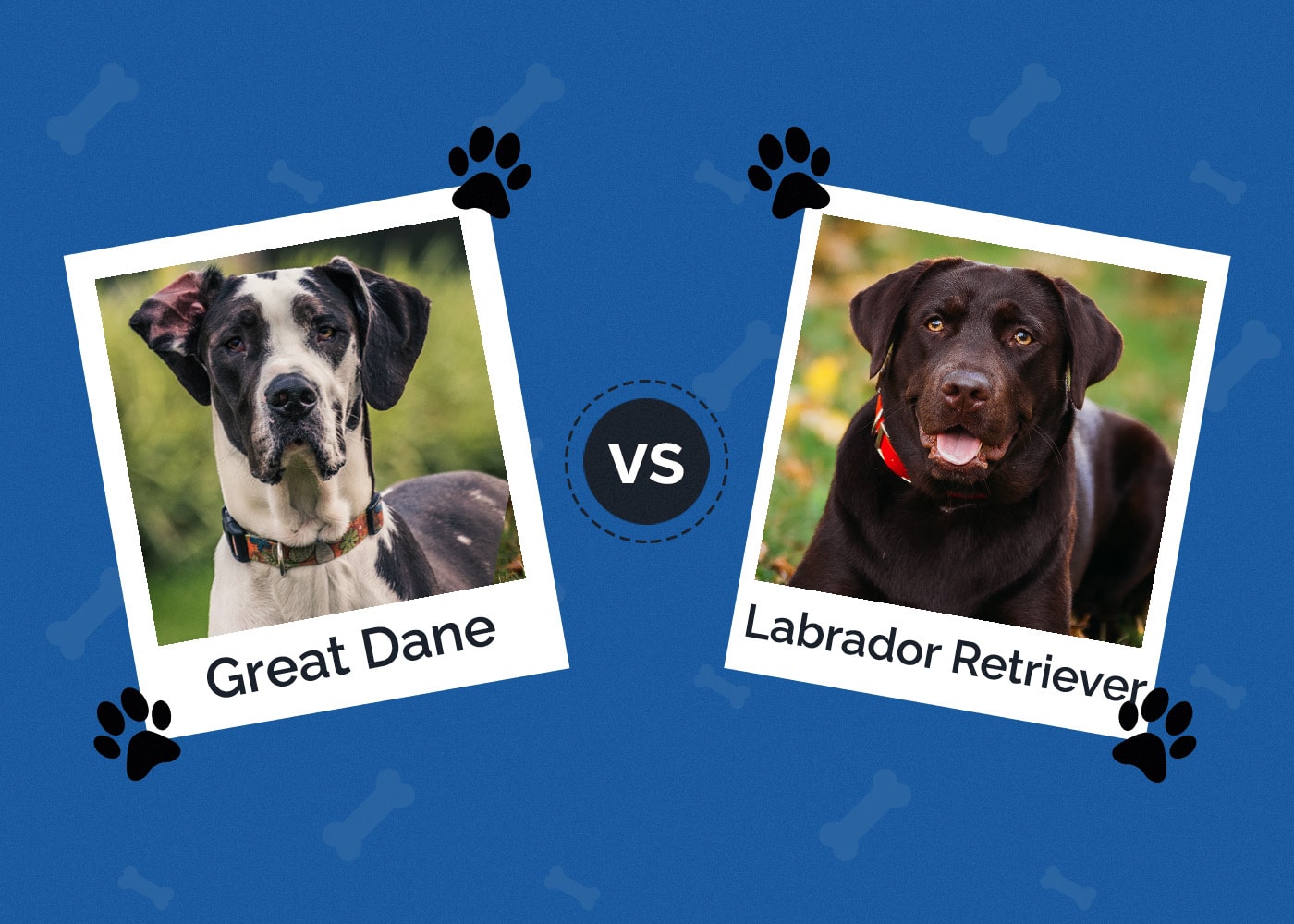
Great Danes and Labradors are big, beautiful dogs with fantastic temperaments. They are both friendly, easygoing, and affectionate. If you're considering adopting a large breed dog, you've probably seen both breeds in your research.
Labs have been at the top of the American Kennel Club's list of the most popular dog breeds for 31 years. But don't be so quick to discount the Great Dane because they haven't cracked the top ten. Both breeds have a lot to offer their family members, but it might come down to your family situation and lifestyle if you're trying to decide between the two.
Keep browsing our blog to learn more about the similarities and differences between Great Danes and Labradors so you can decide which will be best for your home.

Visual Differences
At a Glance
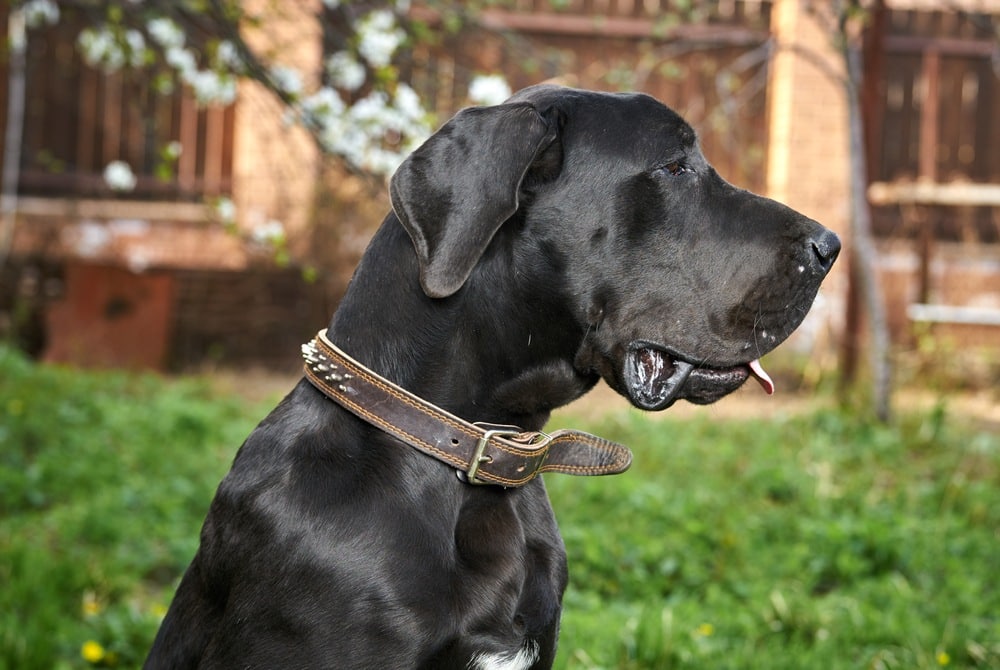
Great Dane Overview
Great Danes are a working dog breed that originated in Germany over 400 years ago. The breed descended from mastiff-like hunting dogs in the Middle Ages and was originally bred for wild boar hunting. German noblemen also used Great Danes as guardians, keeping them at their side in their bed chambers.
Great Danes needed to be powerful to stand up against the dangerous and aggressive boars. Over time, the breed developed to the standards it is recognized by today.
Personality
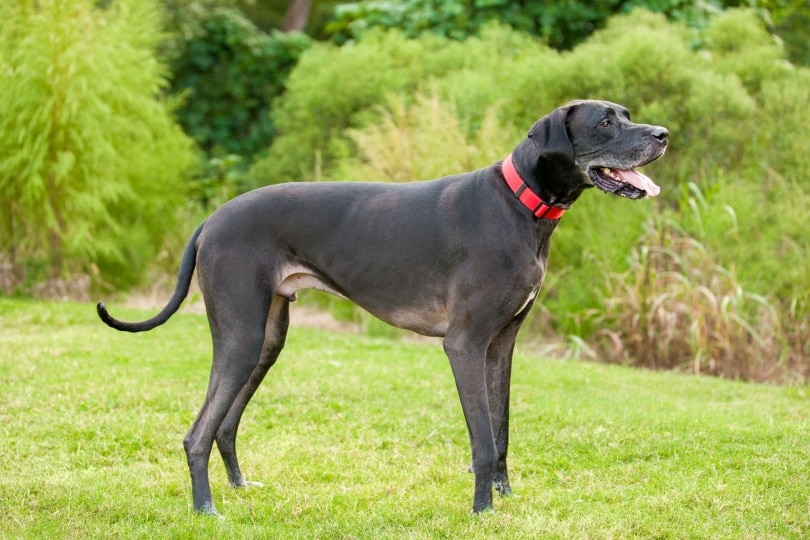
Don't let the Great Dane's large size intimidate you. This breed is known for its "gentle giant" temperament and its proclivity for its owners. It is generally amicable and affectionate to its family members and strangers. They are very laid back and calm when trained well, which makes them an excellent pick for families with small children.
Of course, you should consider the size and strength of this dog before adopting one, as they can easily knock over small children. Also, young kids shouldn't be allowed to leash-walk a Great Dane as they are powerful and challenging to manage.
Great Danes are great for multi-pet households, especially when the pets can be raised together.
Health & Care
The Great Dane's size is one of the things that make this breed so great, but it also makes them a challenge to upkeep. This breed needs a lot of space to stretch out, sleep, and play. Your backyard should have a fence at least six feet high to prevent escapes. In addition, you'll need a big vehicle for transporting it places and may need to call for backup if your dog ever becomes incapacitated, and you need to take it to the vet as it may be too big or heavy for you to move on your own.
As with any large dog breed, you should be prepared to spend more on its care. Thanks to their fast metabolism, Great Danes will eat a considerable amount more than small and medium breeds.
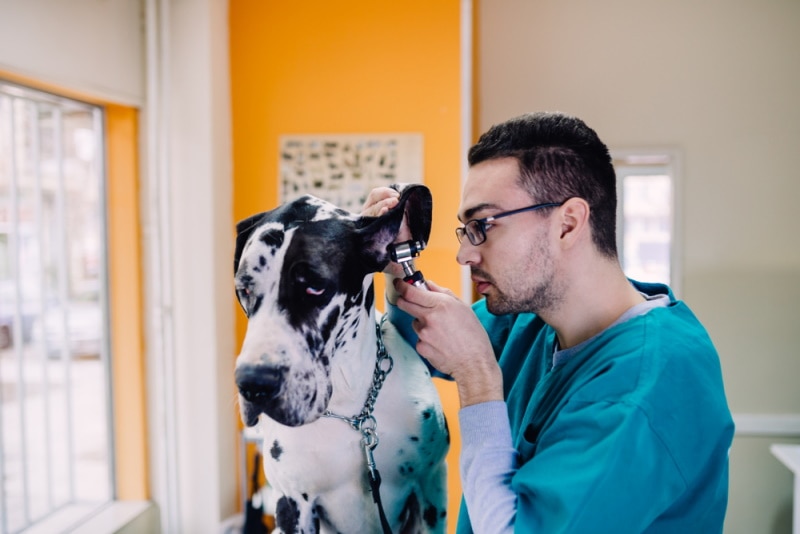
This breed may be prone to bloat or gastric dilatation-volvulus (GDV). In fact, the American Kennel Club reports that GDV is the number-one killer of Great Danes. GDV is an emergency that can be life-threatening, so it is essential to familiarize yourself with the symptoms. You can minimize your dog's risk of developing this condition by serving smaller meals throughout the day or even opting for a surgery called prophylactic gastropexy, whereby your dog's stomach will get tacked to its body wall.
Great Danes may be at risk of developing wobbler syndrome due to their large head and long necks. A survey of the Veterinary Medical Database shows that just over 4% of Great Danes are affected by this condition. This disease originates in the cervical spinal cord and, as the name suggests, may cause your dog to be wobbly when it walks. In the advanced stages of the disease, affected dogs may buckle when walking. Around 5% of dogs with this condition will become acutely paralyzed in all four limbs.
Other health conditions affecting Great Danes include cardiac diseases, autoimmune thyroiditis, hip dysplasia, and elbow hygroma.
Exercise
Great Danes have low to average activity requirements. They're not a lazy breed, but they won't say no to a day on the sofa binge-watching your newest Netflix obsession. Over-exercising is not recommended, especially when your Great Dane is a puppy. Many owners actually try to restrict the amount of exercise their Great Dane pup gets for the first year of its life. Overworking a young dog when it's in its crucial rapid growth period can have adverse effects on its hip and joint development. Puppies under 18 months old should only have 15 to 30 minutes of exercise daily.
Most Great Dane owners find that a 30-to-60-minute walk provides enough mental stimulation and exercise for their full-grown dogs.
Suitable For
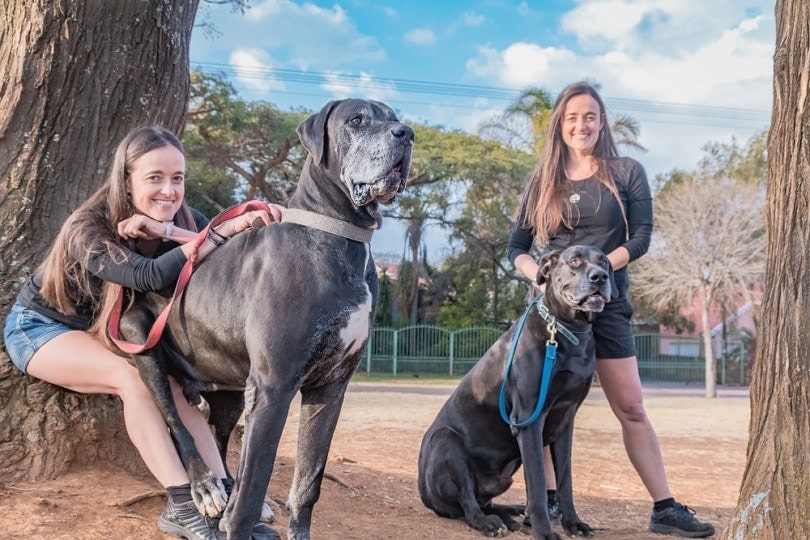
Great Danes make fantastic companions for couples or families with a lot of space to spare in their homes and yard. Their ideal family may already have a young pet or two that they can get socialized with from an early age. Great Danes are best for families with older children and teens or younger kids who understand their limitations.
Great Danes may not be the best breed for first-time dog owners. Their large sizes mean they can become quite a handful to the inexperienced.
Labrador Overview
The Labrador breed dates back to the 1800s. They are a breed of sporting dog that originated when European settlers on the East coast of Canada bred St. John's Water Dogs with British hunting dogs. Working in Newfoundland's fisheries, the early Labs were busy hauling nets, diving for cod, and retrieving whatever their fishermen owners needed.
By the early 1900s, American hunters and farmers had heard of the Lab's work ethic, and by 1917, the American Kennel Club officially recognized them as a breed.
Personality
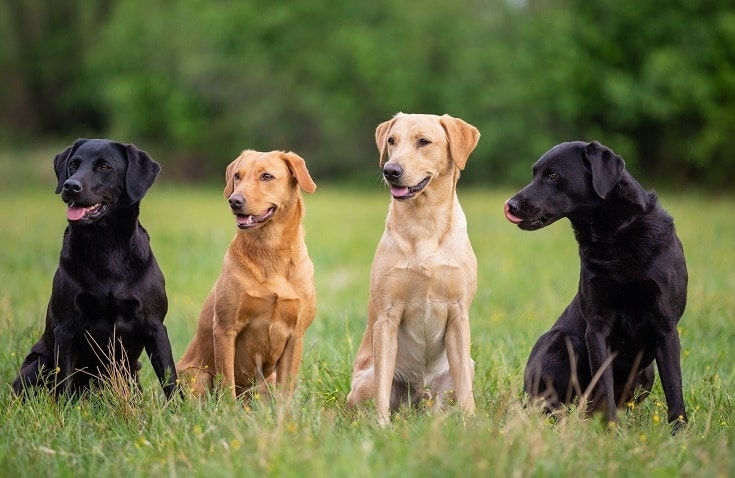
Labrador dogs are a very energetic and family-friendly breed. They thrive in environments with children, feeding off the often social environment. They are affectionate towards their family members, children, and even strangers. They also tend to get along well with other pets in the house, especially if they grow up together.
Labs are brilliant and eager to please. This makes them relatively easy to train. However, training is a must with this breed as their naturally high energy levels need to be harnessed and have an outlet of some kind.
Labs have a proven track record of being excellent guide dogs. Many find work in search and rescue roles and drug and bomb detection.
Health & Care
Labradors are a generally healthy dog breed, but they may be at risk of developing certain conditions.
The breed's ear anatomy and its proclivity for water may make it prone to developing ear infections. PetMD suggests cleaning your Labrador's ears with a cleaner that contains a drying agent to minimize its risk of infections.
A condition known as exercise-induced collapse (EIC) can occur in young Labs. This is a common nervous system disorder that can be inherited. EIC the real your dog may collapse when overexcited or overexercised. It is not painful and should resolve after 25 minutes of rest, but severe episodes can be fatal.
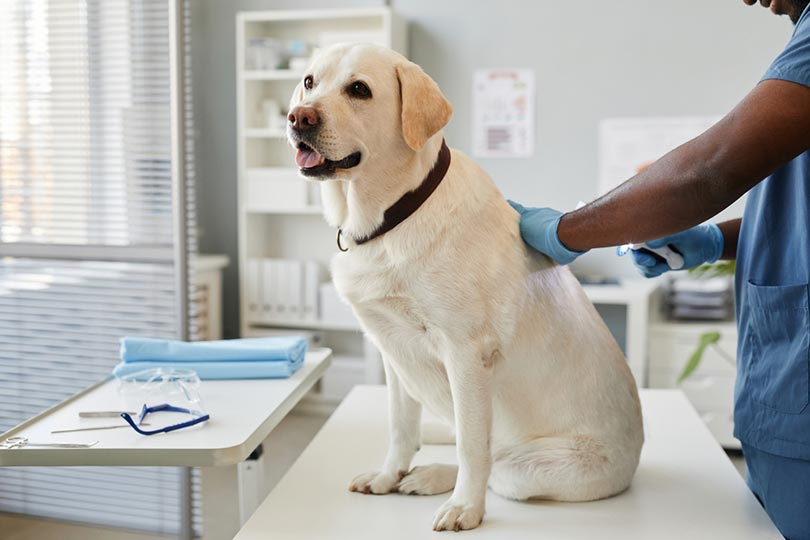
Labs may be prone to elbow or hip dysplasia, inheritable orthopedic conditions that affect the joints.
One study suggests that Chocolate Labs may have a shorter lifespan than their black or yellow counterparts.
Labs may be predisposed to hemangiosarcoma, an aggressive form of cancer that develops from blood vessels. This disease affects middle-aged to senior dogs most of the time, though it has been reported in puppies.
Labs may be prone to other health conditions, including centronuclear myopathy, nutritional dilated cardiomyopathy, and progressive renal atrophy.
Exercise
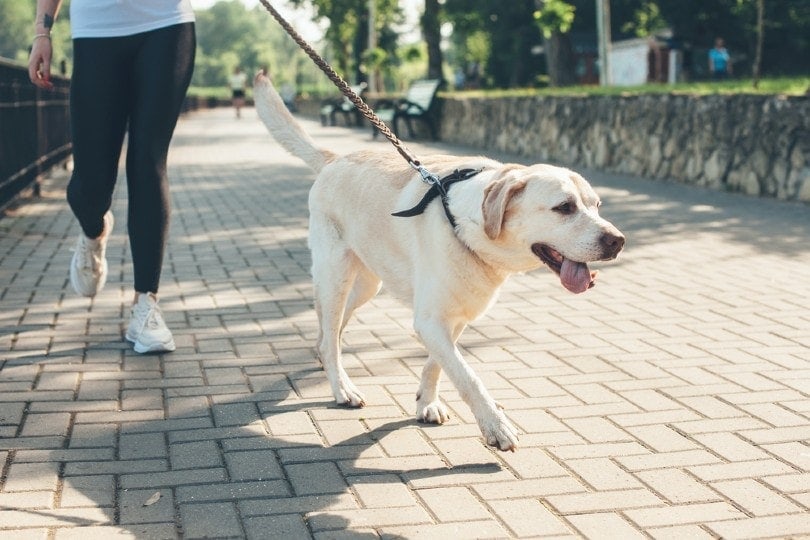
Labradors are happiest in homes with plenty of exercise and training opportunities. They are high-energy and need a lot of attention and exercise to keep destructive behaviors at bay. You should be willing to provide two hours of exercise a day, whether through active playtime, hiking, or spread across several walks. They are a very people-oriented breed, so their exercise time is best done in your company rather than alone in your yard.
Labs love to swim whenever and wherever. No body of water is off-limits.
Suitable For
Labrador dogs are great companions for both couples and families alike. They are happiest with a family that will give them the large amount of exercise they need. A Lab will love tagging along with you during your walks, hikes, runs, and will especially love swimming next to you. Though they are an active breed, they are also relaxed, making them tolerant in households with young children.
Which Breed Is Right for You?
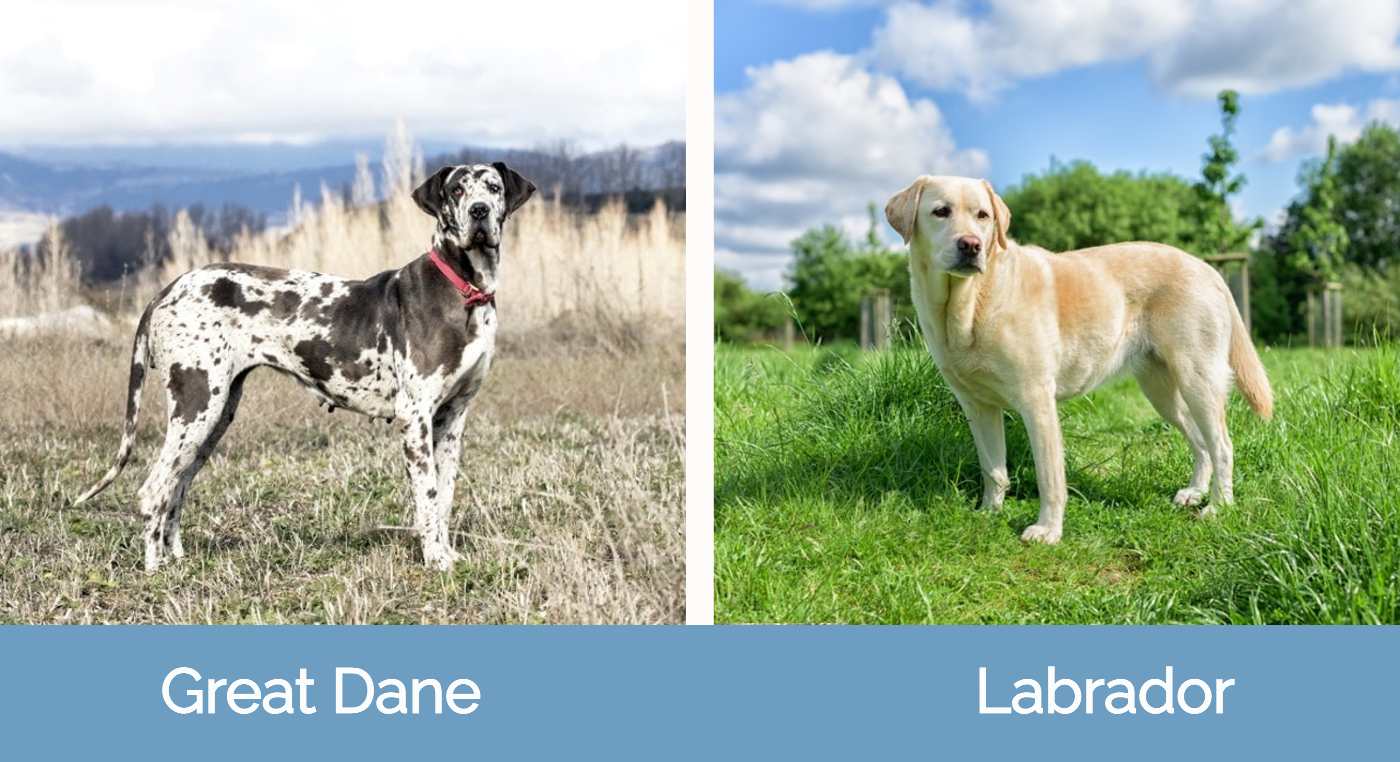
Great Danes and Labradors are both big dogs, but the Great Dane is considered an Extra-Large breed. It is this large size, unfortunately, that makes their life expectancy quite a bit shorter than the Labs.
Labs are best suited for large homes with a lot of space inside and outside to run and explore. Their ideal pet parent is adventure-minded and active. Great Danes also need a lot of room inside, but they don't need as much exercise or space outside to be happy.
Both breeds are loyal, kind, affectionate, and happy. However, if you have children in your home, a Lab might be a better choice as they're more easygoing, and their smaller size makes them gentler than the extra-large Great Dane. You will have a fantastic life companion with a Great Dane or a Lab.
See Also:
“Sources”
Featured Image Credit: (L) Earl Wilkerson, Shutterstock | (R) Ajtai Krisztina, Shutterstock
Get Hepper In Your Inbox


Pet care tips from our vets and experts, straight to your inbox.
You may opt-out at any time. View our Privacy Policy for more information.

Chantelle's life revolves around two passions: writing and animals. Raised on the prairies of Canada amidst a menagerie of pets, she now lives with five cats, two guinea pigs, and a bearded dragon. Together with her husband and child, Chantelle delights in being an exemplary animal parent, going as far as installing wall-mounted cat shelves to give their cats an indoor playground. When she's not cozying up with her cats or snapping their amusing antics, she enjoys venturing into the Rocky Mountains, binge-watching her favorite Netflix shows, and indulging in spontaneous reading adventures.
Join the conversation
Ask a question, share your story, or send private feedback.