Hepper is reader-supported. When you buy via links on our site, we may earn an affiliate commission at no cost to you. Learn more.
Australian Shepherd Growth & Weight Chart (Puppy to Adult)


In this article
Despite the name, Australian Shepherds are popular dogs that originated in America and are favored for their friendly temperament and gorgeous looks. They particularly suit people who need a high-energy dog to keep up with an active lifestyle. They are hard workers and are often used as assistance dogs in a variety of capacities.
Adopting an Australian Shepherd is akin to bringing a fluffy bundle of joy and energy to your home. They are commonly called an Aussie, and the shorter name better suits this calico-colored puppy. They often have blue eyes that might change as they grow older. The colors on their coat can also vary and shift as they age.
What kind of things should you expect from them as they grow? If you want to keep track of your puppy’s growth and understand the typical rates to keep up with their health, then check our Australian Shepherd growth charts to learn what to expect each month toward adulthood.

Australian Shepherd Puppy Growth and Weight Chart
The charts below demonstrate how your pup will grow each passing week and month. They will give you an idea of what to expect your puppy to weigh as they grow, but it’s important to remember that not every dog is the same. If you have been following up with the appropriate veterinarian visits, they can tell you if your pup is still in a healthy range.
Australian Shepherd Puppy Growth Chart (Male)
| Weight Range | |
| 8 weeks | 5-7 lbs. |
| 9 weeks | 7-12 lbs. |
| 10 weeks | 15-19 lbs. |
| 11 weeks | 18-23 lbs. |
| 3 months | 21-27 lbs. |
| 4 months | 28-35 lbs. |
| 5 months | 34-43 lbs. |
| 6 months | 38-49 lbs. |
| 7 months | 44-55 lbs. |
| 8 months | 47-58 lbs. |
| 9 months | 49-63 lbs. |
| 10 months | 51-65 lbs. |
| 11 months | 53-67 lbs. |
| 1 year | 54-68 lbs. |
| 2 years | 56-69 lbs. |

Australian Shepherd Puppy Growth Chart (Female)
| Weight Range | |
| 8 weeks | 4-8 lbs. |
| 9 weeks | 6-11 lbs. |
| 10 weeks | 10-15 lbs. |
| 11 weeks | 12-19 lbs. |
| 3 months | 14-21 lbs. |
| 4 months | 19-28 lbs. |
| 5 months | 23-35 lbs. |
| 6 months | 26-39 lbs. |
| 7 months | 29-44 lbs. |
| 8 months | 31-47 lbs. |
| 9 months | 33-49 lbs. |
| 10 months | 34-51 lbs. |
| 11 months | 35-52 lbs. |
| 1 year | 36-54 lbs. |
| 2 years | 37-55 lbs. |
You need to take good care of your pet while they are growing, so you can use our calculator tool to help you know how much to feed your pup and keep their well-being:
Dog Calorie Calculator
Recommended Daily Calories

The exact amount of calories an individual animal needs to maintain a healthy weight is variable and influenced by many factors including genetics, age, breed, and activity level. This tool is meant to be used only as a guideline for healthy individuals and does not substitute veterinary advice

Australian Shepherd Growth Stages (With Pictures)
It is good to know what to expect each step of the way to monitor your pup’s growth and development successfully. From the time they are born to when they hit adulthood, there are many changes for your little puppy. It happens much faster than in humans and should be monitored carefully.
8-Week-Old (2 Months) Australian Shepherd
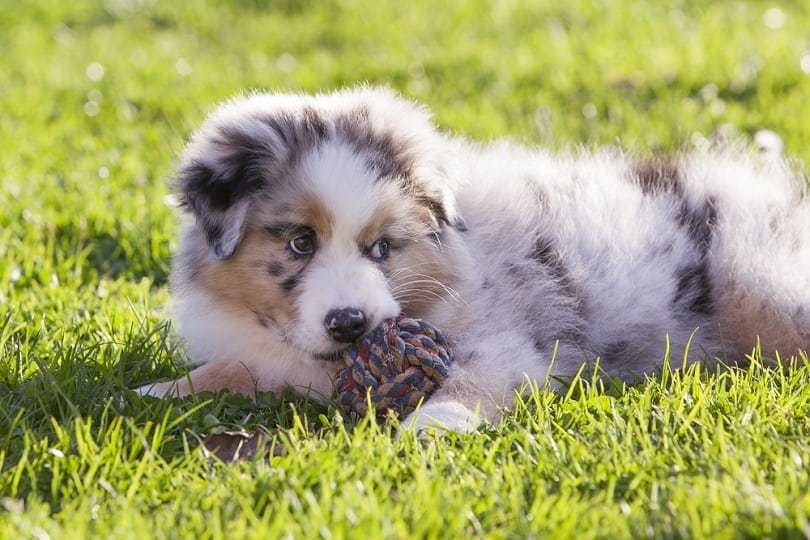
From birth to the time that they develop into an 8-week-old Australian Shepherd, they will probably be with their breeder. As you can see from the charts above, they grow quite quickly. When they come to you at this age, depending on whether they are male or female, an 8-week-old Australian Shepherd is usually between 4 and 8 pounds.
At this point, they are typically deemed old enough to leave their mother. It is also the time that they are mentally developed enough to begin housetraining. They should be introduced to solid food, and the rest of this adjustment will fall into your hands.
At about 2 months of age, it is essential to start socializing your puppy. Everything is going to be new to them, and the world is a large place for such a small dog. Get them accustomed to different people and other animals, especially if you intend for them to live in a house with more dogs, cats, or other pets. Make sure they have had a health check and have started their vaccinations so you can keep them safe during this period.
12-Week-Old (3 Months) Australian Shepherd
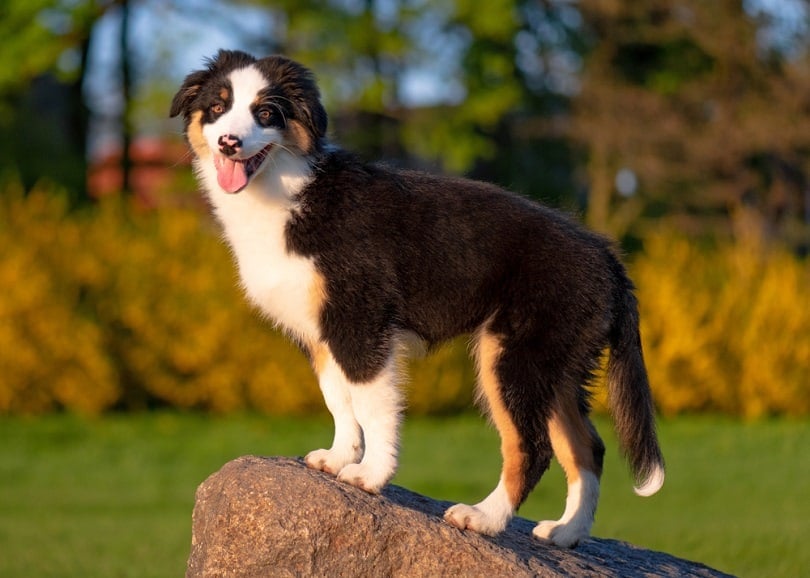
When your puppy is 7 to 9 weeks old, their senses are fully developed, and they have grown accustomed to their sense of smell, sight, and sound. This is typically when a puppy also begins to react with fear to everyday household objects. They need this adjustment period and should be guided through it.
It is at this point that a puppy will be going through an intense chewing phase. Although it might be extremely irritating, it is normal behavior. They need affirmative training to teach them when it is and isn’t appropriate to act like this.
From 3 months forward, they begin teething, which is part of the motivation to chew on things. It often brings them relief, so give them toys that they can chew on responsibly.
6-Month-Old Australian Shepherd
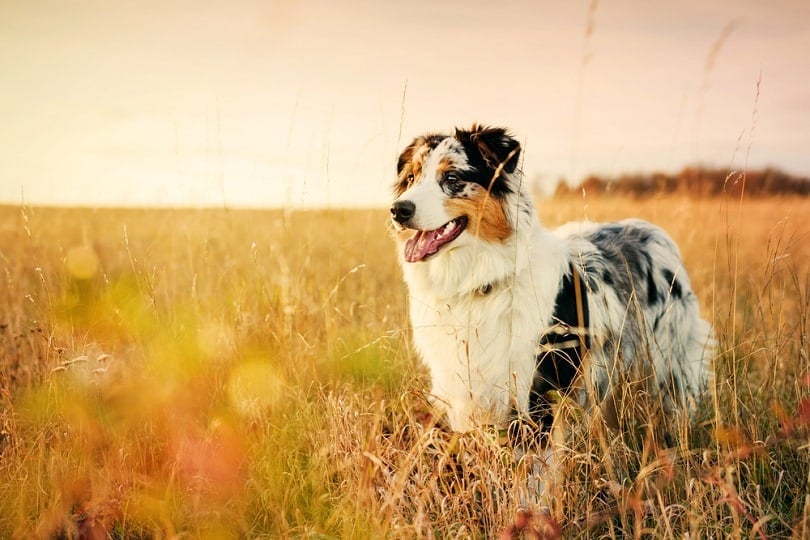
A 6-month-old Australian Shepherd puppy is normally done teething and can move forward in the chewing stage. They are also trying to figure out their standing within their family “pack.” That not only means comparing themselves to other animals in the house but also their human counterparts.
It is typical for a pup to enter into another chewing phase at about 7 months of age. It can be a reaction to physical and hormonal changes in their body. If they are excited, they tend to react physically.
At 6 months, males are usually around 15 to 17 inches tall, with females often a little smaller at 13 to 15 inches.
12-Month-Old (1 year) Australian Shepherd
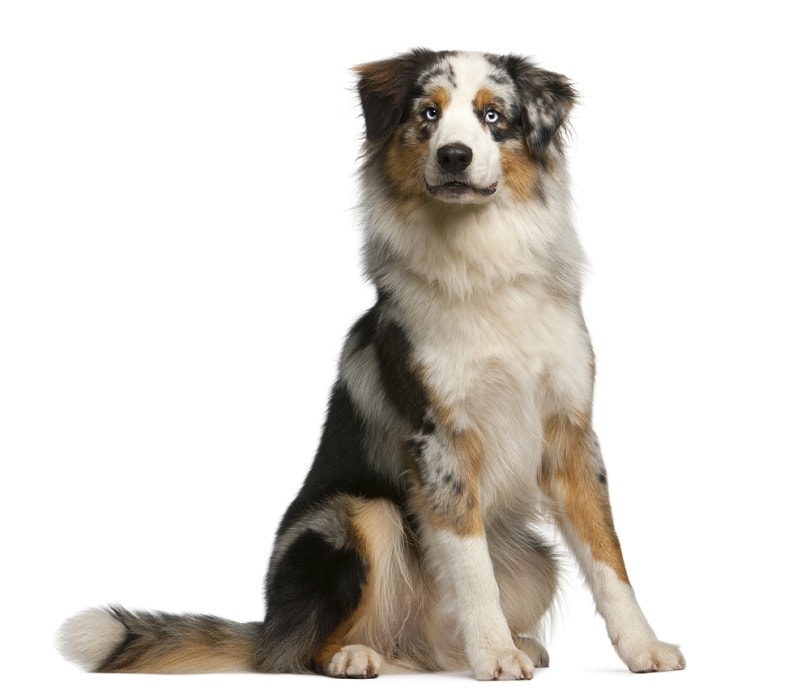
Between the 9th and 12th month, a puppy can be transitioned to adult food without it impacting their health negatively. Their adult coat should have grown in completely, and their eye color will have balanced out.
A pup that has hit 1 year can be completely transitioned to a typical exercise regimen for an adult of their breed. For an Australian Shepherd, that normally means they need at least an hour of activity each day, with at least 20 minutes of that being more intense activity.
If your puppy hasn’t been spayed or neutered at this point, then it is after 6 months that they begin to experience their first sexual behaviors.
When Do Australian Shepherds Stop Growing?
Normally, Australian Shepherds stop growing at about 16 months old. They often reach their full height of around 20 to 23 inches for males and 18 to 21 inches for females by the time they are 12 months old, but they will continue to fill out until that 16-month mark. They do slow down about 8 months old in terms of growth, so if you have a pup that has been rocketing up in size and is about 6 months old, don’t worry too much.
Male dogs do tend to outweigh their female counterparts in this breed, but it depends on their parent’s genetics. Males can be anywhere from 10+ pounds more and typically stand about an inch taller than females.
Their brains mature while they grow as well, but they will continue to behave like a puppy until they are at least a year old. This age is when you may begin to notice them mellowing out, and by the time that they are 2 years old, they will behave as an adult. Females tend to mature earlier than males, as the boys often experience a marked period of adolescence as their hormones start to really kick in.
How Does Neutering/Spaying Affect My Dog’s Growth?
Scientists have gone back and forth on whether spaying or neutering your dog will affect their growth. Current research suggests that how and by how much it is affected depends on the timing of surgery. Dogs spayed/neutered before they have reached sexual maturity may not reach their full expected size, while males that are neutered before the age of 12 to 18 months will often be more slight, with less bulk to their body.
There is some variation depending on breed and size, but in general, it is recommended that females be spayed between their first and second seasons, with males best neutered around 18 to 24 months. There are a number of factors that will influence this decision, including the health and temperament of the individual dog, as well as their lifestyle and home environment, so it is best to talk to your vet about what’s best for your dog.
Dangers of Growing Too Quickly or Stunted Growth
Growing too quickly presents a danger to your dog. It doesn’t occur frequently, but growth that is too rapid can create significant health issues later on down the line. These include problems with the development of bones, joints growing out of line, weakness in their tendons and muscles, and sensitive spots focused on their nerves.
Growing too fast might result from feeding them the wrong diet, such as feeding a giant breed formula for this medium-sized breed, or a formulation that is too high in fat or contains the wrong balance of nutrients.
Too much exercise that is inappropriate for their age is another way that this could occur. Their body will try to compensate for the additional stresses on the system by growing faster.

The 5 Facts About the Australian Shepherd
1. The Australian Shepherd is not Australian.
The name of the Australian Shepherd is quite misleading because they are not from Australia. They were initially from the Basque region of Spain and were developed as cowboy dogs in America early in the country’s history.
2. Native Americans treated Australian Shepherds as sacred animals.
Native Americans regarded the Australian Shepherds as sacred because of their bright blue eyes. They called them “ghost eyes.”
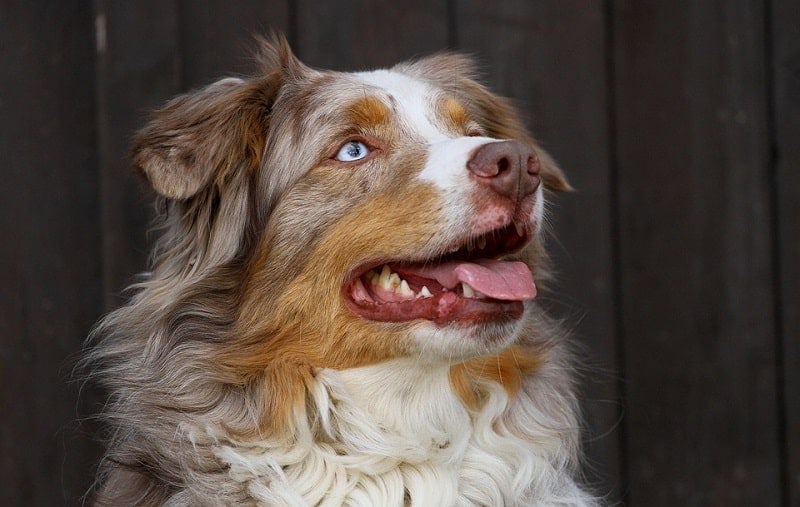
3. Heterochromia is typical for this breed.
Heterochromia is what it is called when animals or humans have two different colored eyes. In the case of an Australian Shepherd, one is often blue and the other is brown.
4. They naturally have bobbed tails most of the time.
Although it might look like they have cropped tails, they can actually be born stubby and short.
5. Australian Shepherds have always been hard-working dogs.
Throughout their history, Australian Shepherds have been used as working dogs and have fulfilled various jobs. These include being herding dogs, hearing dogs, drug dogs, seeing-eye dogs, and even rescue dogs.

Conclusion
As you keep an eye on your adorable puppy, look for these indicators of healthy growth. Although weight is an easily measurable metric, it isn’t always the best indicator of the health of your pup. Maintain recommended visits to your veterinarian to assure yourself of your dog’s continued health.
Related Read: Are Australian Shepherds Hypoallergenic?
Sources
Featured Image Credit: PhoTonie, Shutterstock
Get Hepper In Your Inbox


Pet care tips from our vets and experts, straight to your inbox.
You may opt-out at any time. View our Privacy Policy for more information.
Nicole is a lover of animals of all sizes but is especially fascinated with the feline variety. She’s the proud mom of Baby, a Burmese, and works every day so he can relax in the sunshine or by the fire. She’s always had a cat in her home and has spent countless days with others, observing behaviors and softening up even the grouchiest of the lot. Nicole wants to share her kitty expertise with you so you and your cat can live happy, healthy, and care-free.
Join the conversation
Ask a question, share your story, or send private feedback.