Hepper is reader-supported. When you buy via links on our site, we may earn an affiliate commission at no cost to you. Learn more.
Basenji Dog Breed: Info, Pictures, Characteristics & Facts
In this article
Breed Overview
Height:
Weight:
Lifespan:
Colors:
Suitable for:
Temperament:
Here’s a quick question: What’s a noble and regal dog that hails from Ancient Africa and doesn’t bark?
Did you guess correctly? It is a Basenji! This age-old breed has been around for thousands of years. Strong-willed, smart, and independent, the Basenji is a livewire dog that will thrive with an active family.
If you’re looking for a proud and poised pooch, this bark-less dog may be the perfect fit for you. Let’s take a look at every aspect of this exceptional breed, from her temperament and trainability to her grooming, feeding, and exercise requirements.

Basenji Puppies
Basenji Characteristics
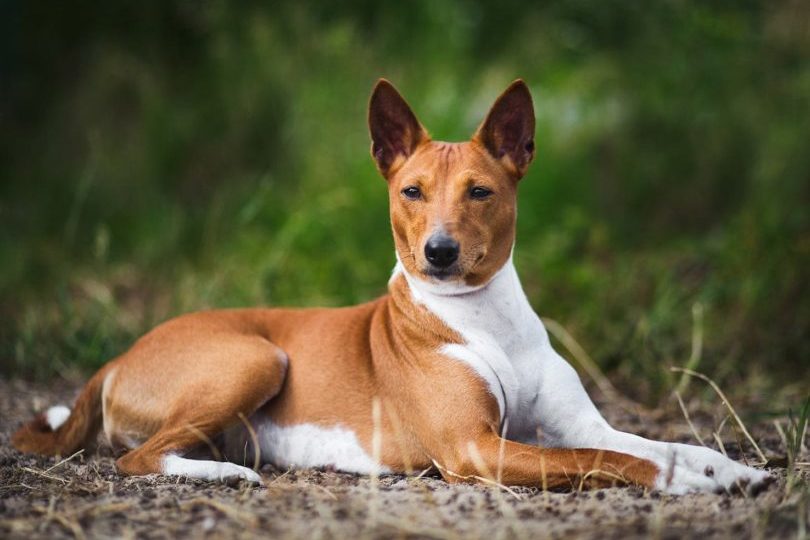
One of the smallest hounds on the market, the Basenji was originally bred in the Congo and used to herd small game into hunter’s nets and keep the village’s rodent population under control. These days, Basenjis make great pets for experienced, active families with older children.
Before you go out and scoop up an adorable, fox-like Basenji pup from the first internet ad you see, it’s important to know that you should get your new puppy from a high-quality, trustworthy, and reputable breeder.
The best way to find a reputable breeder isn’t by the best deal offered. It’s by the health and happiness of their dogs.
Some ways you can find a great Basenji breeder include:

Temperament & Intelligence of the Basenji 🧠
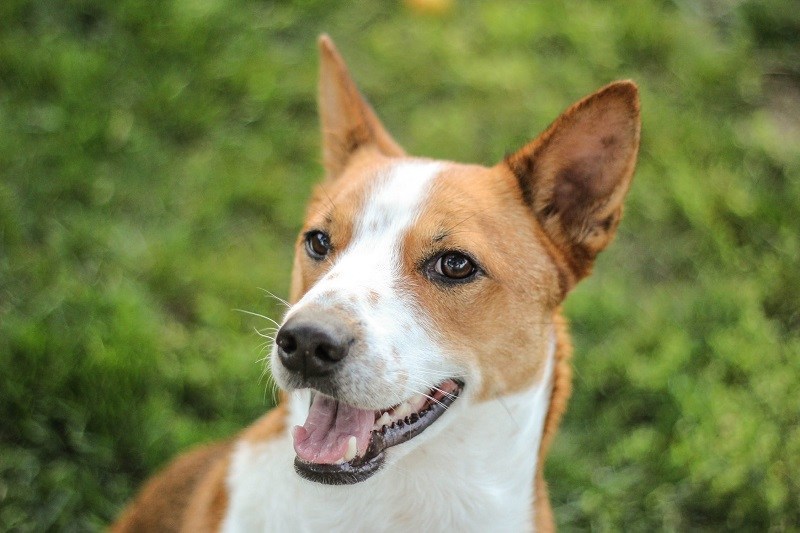
The Basenji is a curious, smart, independent, and energetic breed of dog that can be reserved with strangers. The breed is extremely cat-like and can be aloof with people that don’t know. They even have been known to climb up fences and trees, much like felines!
Due to their independent nature, Basenjis may not seem like the most loving and devoted dogs. However, they can become very attached to their human companions and sometimes overprotective of those they love.
Basenjis are super smart dogs and are expert escape artists. If they have the chance to get out and run, they’ll surely take it. This is why it’s important to have a high, fenced-in yard that is escape-proof. Also, you should always be on the lookout when entering or exiting your home because Basenjis will make an escape for it!
Are These Dogs Good for Families? 🏡
Basenjis, while feline-esque, are lovable and affectionate dogs who adore their families. While sometimes bull-headed, they can be great with older children and love to run and play with active members of the family.
The Basenji can be in a household with young children. However, it is important to socialize them starting from a young age. Additionally, teaching your kids how to behave around their new furry friend is equally as important. Teach them to never take the dog’s food or toys away while he is eating or chewing. And always keep a vigilant eye on your children while they play with the dog.
Does This Breed Get Along with Other Pets? 🐶 😽
Basenjis originally hunted as a pack and can be great with other pets, especially dogs, if socialized from a young age. However, they can sometimes be argumentative with other Basenjis.

Things to Know When Owning a Basenji
Now that we’ve got your Basenji’s personality down pat, let’s explore how to take care of him.
Food & Diet Requirements
As a smaller dog, your Basenji has an extremely fast metabolism and burns energy at a high rate. Their small stomachs require small, routine meals. A high-quality, high-protein, grain-free kibble that is specifically designed for small breeds should do the trick. Not only does it have the proper nutrition, the smaller size means that your Basenji can easily eat it.
Keep in mind that your Basenji’s diet and nutritional requirements will evolve as he grows. A puppy will have an entirely different diet than an adult or senior dog.
Exercise 🐕
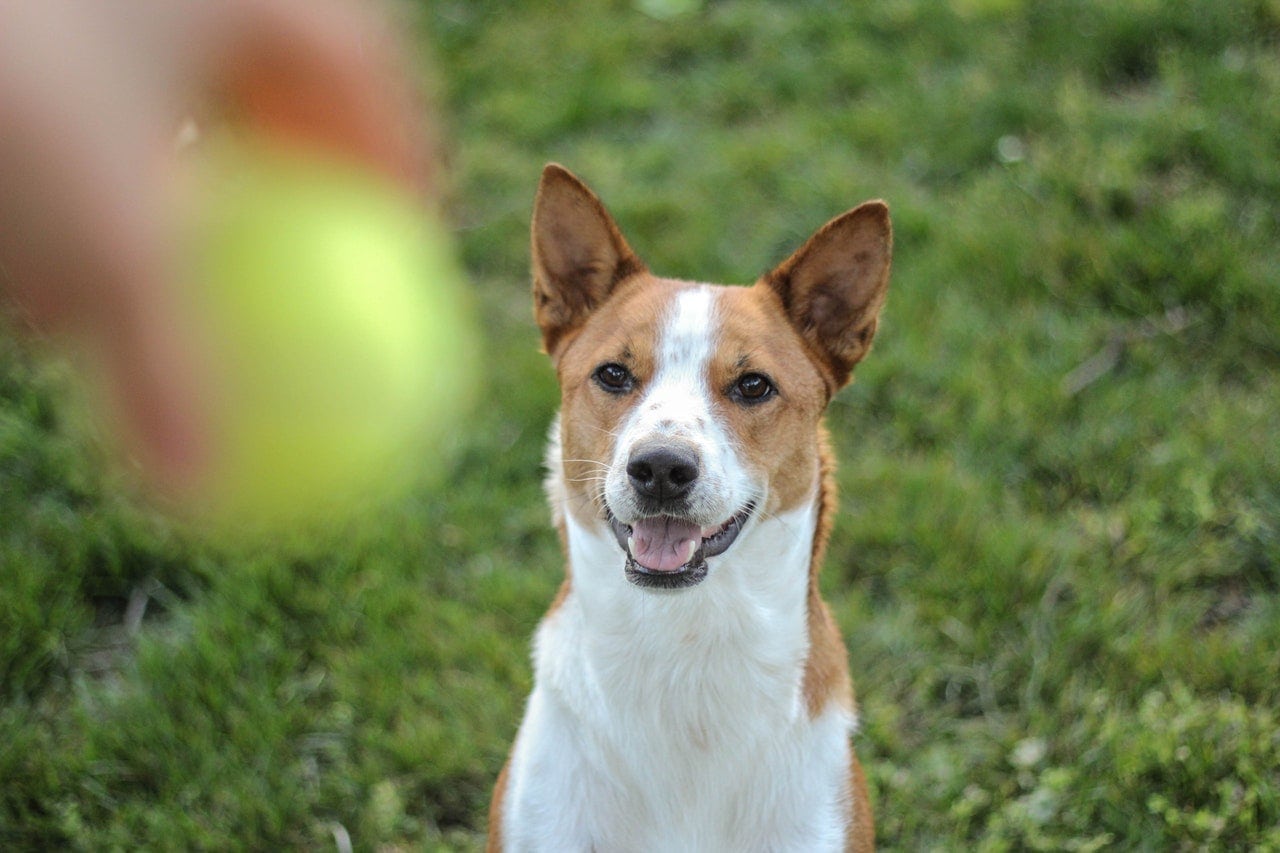
Your Basenji loves to play! However, he definitely has a mind of his own and will not typically fetch a ball. Keep him mentally and physically stimulated by tuning into his innate want to hunt and chase. Find games that make your Basenji work to always keep him on his toes.
A Basenji is an incredibly agile dog. Enrolling him in a weekly agility course class will keep him in peak condition while keeping boredom at bay.
Take your Basenji for an hour walk or two half-hour walks per day. If you have a large fenced-in yard, allow him to romp and explore outside. He will also gladly accompany you on a run or hike. Keep in mind, though, that you should never take his leash off. As an avid hunter, your Basenji will follow his nose and run off in chase of a rabbit, squirrel, or some other small prey animal.
Training 🦮
While highly intelligent, Basenjis are not the easiest dogs to train. They are strong-willed and stubborn, and love being the boss. A firm, consistent training routine is optimal when training your Basenji. You should opt to start teaching him the basics, including sit, stay, heel, and come, from a very young age. Once you have a good starting foundation, showing him more complex tricks should be easier as he grows up.
Grooming ✂️
As they are self-groomers, grooming your Basenji is a breeze! Brush his coat weekly to get rid of dead hair and dandruff. Be sure to gently clean his ears and clip his nails routinely.
Health and Conditions ❤️
As they age, all dog breeds will be afflicted with genetic health conditions, just like their human counterparts. Run, don’t walk, away from breeders that don’t offer a health guarantee on your new Basenji puppy.
While overall healthy, Basenjis can suffer from an inflammatory bowel disease common to the breed known as Immunoproliferative Small Intestine Disease. Other issues include certain types of eye conditions, and hip and elbow dysplasia.
It is important to schedule routine health visits with your vet to stay on top of health issues before they become real life-threatening problems.

Male vs. Female
Both boy and girl Basenjis make awesome companions. There are very few differences in temperament or activity level between the two genders, however, male Basenjis will be a tad larger than female ones.

3 Little-Known Facts About the Basenji
1. They are the World’s Oldest Breed of Dog
The Basenji originated in central Africa and is a basal breed that predates the 19th century modern breeds that many people know and love.
2. They Don’t Bark
Due to the unique shape of their larynx, the Basenji breed does not mark. Instead, they make a yodel-like noise that is commonly called a “baroo.” They also growl.
3. They Self Groom
Just like your cat, Basenji dogs clean themselves, making the dirty work of grooming easier for you!
Final Thoughts
If you’re in the market for a unique type of dog, a Basenji could be the perfect one for you. While independent and wary of new folks, Basenjis are loyal and loving dogs that love to run, hike, and play chase.
They can often be stubborn and tough to train. But with patience and time, you will be able to teach your Basenji a plethora of agility tricks.
Overall, the Basenji makes a great family pet. Just don’t count on it barking anytime soon!
See also:
Featured Image Credit: Christina, Pexels
Get Hepper In Your Inbox


Pet care tips from our vets and experts, straight to your inbox.
You may opt-out at any time. View our Privacy Policy for more information.

Nicole is a lover of animals of all sizes but is especially fascinated with the feline variety. She’s the proud mom of Baby, a Burmese, and works every day so he can relax in the sunshine or by the fire. She’s always had a cat in her home and has spent countless days with others, observing behaviors and softening up even the grouchiest of the lot. Nicole wants to share her kitty expertise with you so you and your cat can live happy, healthy, and care-free.
Join the conversation
Ask a question, share your story, or send private feedback.