Hepper is reader-supported. When you buy via links on our site, we may earn an affiliate commission at no cost to you. Learn more.
Betta Fish Temperature Shock: Causes, Signs & Treatment (Vet Answer)

In this article
Like most fish, bettas are sensitive to rapid changes in temperature. This is typically not something that’s a problem in a well-maintained home aquarium, but temperature shock is a big risk when performing water changes or when you bring your betta home for the first time. Temperature shock can be deadly for betta fish, especially if they rapidly enter water that is much cooler than what is safe or comfortable for them.
When it comes to temperature shock in betta fish, here are the things you need to know.

What Is Temperature Shock?
Temperature shock is a physiological reaction in the body that occurs when temperatures rapidly change. Imagine the feeling you get when you step from an air-conditioned house into a humid summer day. You’re immediately uncomfortable and you may even feel like the air you’re breathing quickly becomes more difficult to breathe in. This is a similar physiological reaction to temperature shock in betta fish. However, stepping from a cool to a hot place is uncomfortable for us, while temperature shock can be deadly for bettas.
Different fish have different levels of tolerance for such changes. Bettas have not been extensively studied for the changes they experience in lower temperatures, as they tend to deteriorate very quickly when this happens. This indicates that their tolerance for a cold shock is very low.
Causes of Temperature Shock
Temperature shock can be caused by natural or artificial ways. For pet bettas, natural factors (such as rainfall) are a non-factor, as they’re housed indoors. Therefore, examples of scenarios that can cause temperature shock include the following:
Temperature Shock Causes
Signs of Temperature Shock
Fish respond to changes in temperature differently, and depending on the rate at which the temperature changes, the reactions may be minor or very prominent. Of major concern for bettas is a cold shock, as they don’t tolerate cooler temperatures well.
Generally speaking, a fish has three primary mechanisms that kick in whenever they begin to experience temperature changes.
- Primary response: The most rapid response in fish involves their central nervous system and the release of specific stress hormones that are involved in a crisis. The main purpose of such a response is to preserve their vital organs (particularly the brain)
- Secondary response: In this phase, the metabolic response of a fish changes, and they experience ion imbalances, immune-programmed responses, and changes in blood profiles.
- Tertiary response: Prolonged exposure to less-than-ideal conditions leads to either permanent alterations, the onset of disease, or death.
The rate at which these responses appear depends on the rate at which the temperature changes. A sudden change in temperature will produce more dramatic effects; however, changes as subtle as 1°C can produce unnoticed changes in a fish’s body as well.
In the most extreme cases, during the primary phase, a fish may dart uncontrollably, lose swimming coordination, and bump into objects within their aquarium. In addition, they will constrict their gills to minimize blood flow to the brain and other vital organs in an effort to preserve them. In a worst-case scenario, the lack of blood flow to the vital organs may cause permanent damage to a fish’s body.
In the second phase, stress hormones (such as cortisol) dominate the metabolic processes within the fish’s body, and their presence triggers a cascade of responses that involves just about every organ system in the body. The immune system increases the number of white blood cells in circulation, and the fish’s primary objective is to survive. During this phase, owners may observe their bettas losing color, appetite, being lethargic, and because they are in a continuous state of stress, they may come down with another ailment or disease very easily.
The third phase only triggers if the fish has been slowly shocked into a temperature they eventually adjust to. Fish in these scenarios are usually in poor health, lack vigor, and don’t thrive unless major changes are introduced to their husbandry and care.
Temperature Shock Treatment Options
In a strict sense, a sudden temperature shock is often fatal for bettas, and if their temperature fluctuates too rapidly, they can sometimes perish within a matter of a few hours. Sometimes, fish that recover from such episodes have permanent damage to their nervous system and never regain the ability to swim or eat properly. In such cases, veterinarians often assess the chances of recovery before giving owners an appropriate suggestion.
In incidences where the temperature shock is very slow and gradual, the fix is a restoration to normal temperature, done slowly as well.
The ideal temperature for a betta is between 80°F - 83°F (approximately 26.7 - 28 °C). If you enjoy watching bettas constructing nests, you should set the heater at 82.4°F (28°C), as this is the ideal temperature for maintaining bubble nest integrity. Interestingly, this temperature also protects bettas against many pathogens that thrive in lower temperatures, such as gill flukes and Ich. It also dissuades the growth of certain bacteria.
If your betta’s temperature is low, you should gradually increase the temperature by no more than 1.8 - 3.6 °F (1 - 2 °C) per day. A sudden change may inadvertently shock and stress your fish. It is best to adjust the temperature by 1.8 °F (1 °C) every 12 hours until you reach the desired temperature.
If the temperature is too high, you need to move your betta’s aquarium to a cooler room. Please note that an aquarium heater only heats up water; if the ambient temperature in a room exceeds the setting on a water heater, it will simply switch off and not decrease the temperature. However, bettas usually handle warmer temperatures better than cooler temperatures.
You should not drop ice or cold water into your bettas tank if you think it is too warm, as this will shock your fish.
How to Prevent Temperature Shock
When introducing a betta fish to a new environment, the easiest way to prevent temperature shock is to float them in a bag in the tank they will be going into. This will allow the temperature in the bag to slowly match the temperature of the tank. This takes around 20 - 30 minutes on average. After the temperature has adjusted, you can begin slowly adding tank water into the bag to allow your betta to adjust fully to the temperature and the parameters of the water.
Take Precautions Ahead of Time
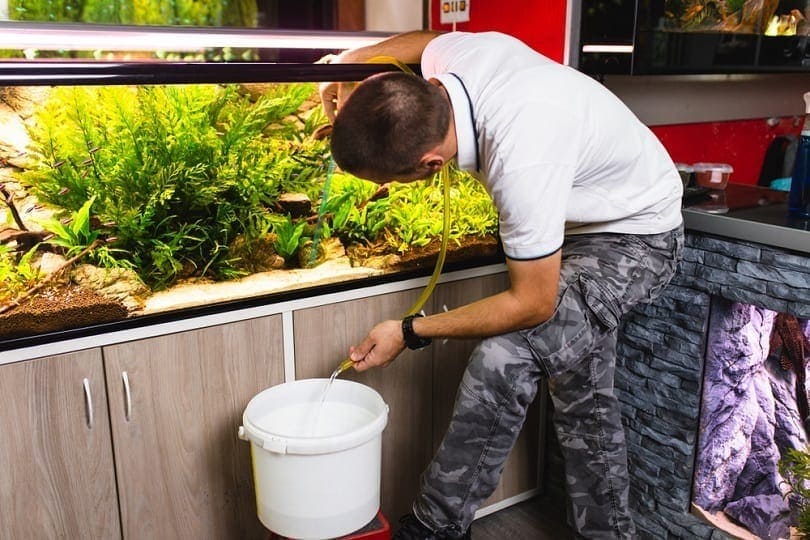
If you are performing water changes, then you should take precautions to prevent temperature shock. If your betta fish’s tank stays at 80°F - 83°F (26.7 - 28 °C), but you replace the tank water with cold water from the tap, then you may change the overall tank temperature too rapidly for your betta fish, causing them to go into shock. This can be avoided by preparing water ahead of time and allowing it to reach an appropriate temperature and then adding it to the tank very slowly over at least a few minutes to allow for safe acclimation.
Invest in a Reliable Tank Heater
The easiest way to prevent temperature shock for your betta fish is to invest in a reliable tank heater. Maintaining the temperature in a range of 80°F to 83°F (26.7 - 28 °C) is ideal.
Even at the lowest part of this temperature range, room temperature water will almost certainly be too cold for your betta fish. Avoid keeping your betta’s tank in a location where it will have air from your air conditioner or heater blowing directly on it.
Final Thoughts
Unfortunately, there aren’t really ways to treat temperature shock in Betta fish except to correct the temperature. It’s important to take precautions to prevent temperature shock in the first place. Otherwise, you’re risking your betta’s life, even if you immediately begin working toward fixing the water temperature. A reliable tank thermometer and heater are your best tools to prevent temperature shock from occurring.
Featured Image Credit: at.rma, Shutterstock
Get Hepper In Your Inbox


Pet care tips from our vets and experts, straight to your inbox.
You may opt-out at any time. View our Privacy Policy for more information.
Dr. Luqman grew up with an extreme fondness for animals and turned a childhood dream into reality by becoming a veterinarian. His goals are now focused on helping pet owners understand their pets better in order to ensure the best quality of life for all pets globally. He is passionate about wildlife, exotic pets, pet owner education, and animal welfare. Luqman has 3 years of professional experience working with a variety of animal species. He has skills in demonstrating proper animal husbandry and training some exotic species, such as parrots. Additionally, he has decades of personal experience with keeping many exotic pets: freshwater fish, parrots, songbirds, chickens, ducks, turtles, and hamsters.
Dr. Luqman grew up with an extreme fondness for animals and turned a childhood dream into reality by becoming a veterinarian. His goals are now focused on helping pet owners understand their pets better in order to ensure the best quality of life for pets all around the world. His passions are wildlife, exotic pets, pet owner education, and animal welfare.
Education
Luqman received his degree from Universiti Putra Malaysia.
Experience
Luqman has 3 years of professional experience working with a variety of animal species. He has skills in demonstrating proper animal husbandry and training some exotic species, such as parrots. Additionally, he has decades of personal experience with keeping many exotic pets: freshwater fish, parrots, songbirds, chickens, ducks, turtles, and hamsters.
Join the conversation
Ask a question, share your story, or send private feedback.