Hepper is reader-supported. When you buy via links on our site, we may earn an affiliate commission at no cost to you. Learn more.
Betta Fish Ich: Causes, Signs, Treatment & Prevention (Vet Answer)

In this article
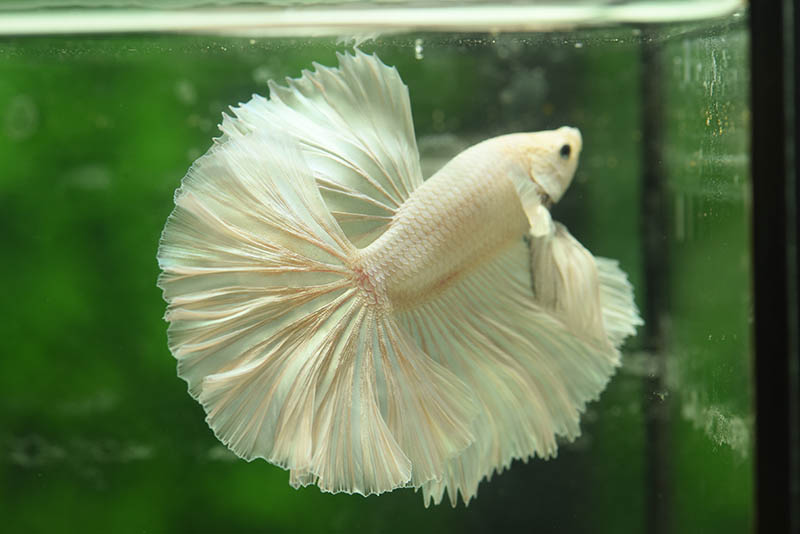
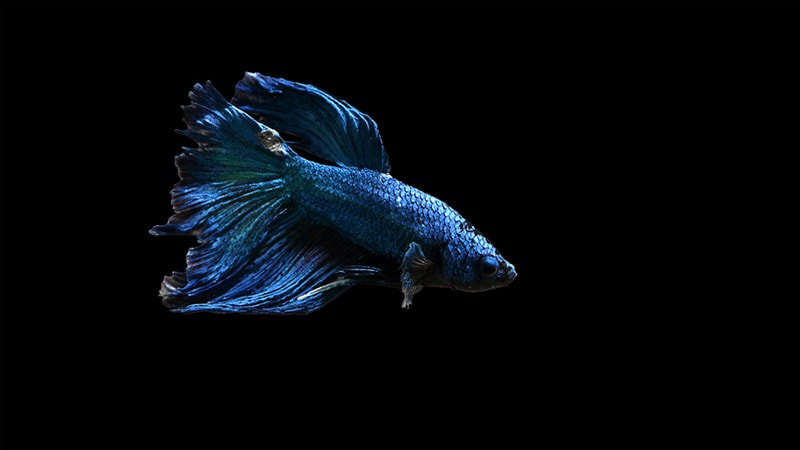
Known for their beautiful fins and colors, Bettas are among the most popular fish in the aquatic trade today. Their appeal is only furthered by the relative ease of care and minimal requirements when compared to other fish.
Despite their hardy nature, Betta fish are not entirely immune to some diseases. Ich is a freshwater fish parasite that can sometimes be seen in Bettas. Read on as we explore this parasite in greater detail.

What Is Ich?
Ich (pronounced “ick”) is a shorthand for Ichthyophthirius multifiliis, a parasite that can infect almost all freshwater fish. In practice, though, this parasite is mostly found in cold water temperatures. Properly maintained tropical fish tanks rarely have issues with this parasite, which makes it quite a rare find in Bettas. When found in Bettas, it also indicates that the water parameters are less than ideal for the Betta.
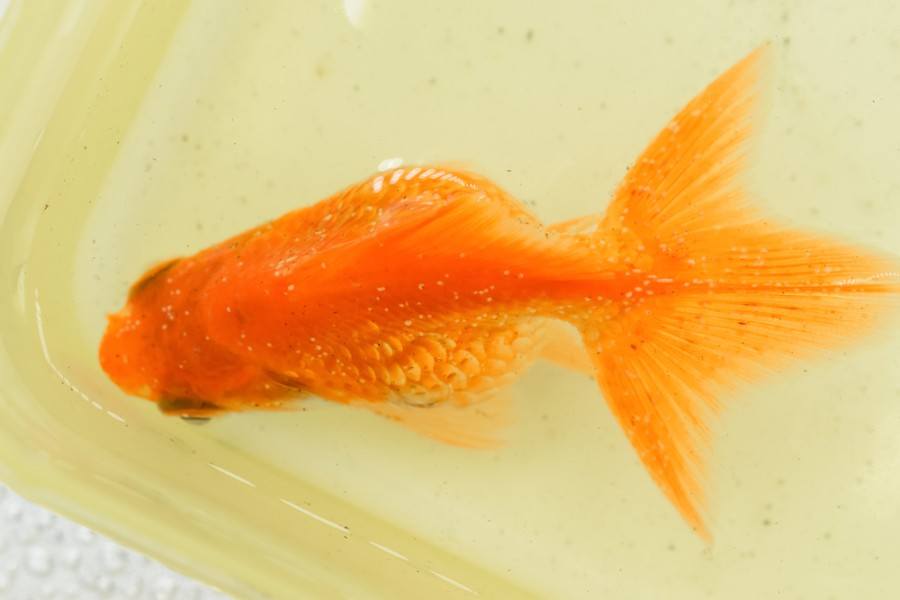
A fully grown parasite within a fish’s skin is a 1-millimeter continuously rotating entity surrounded by the fish’s immune system cells and appears as a white dot or spot on the fish, its trademark sign.
The parasite stage found on the fish is known as a trophont. The life cycle of this parasite is relatively simple:
- Trophonts feed on a fish’s skin for nutrition.
- They eventually leave the fish and develop into a tomont.
- Each tomont then produces several thousand theronts.
- The tomont eventually bursts, releasing these theronts. Now infectious, they are termed as tomites.
- The tomites infect a fish and burrow into its skin, fins, or gills, and the cycle begins anew.
Main Causes of Ich
Ich is a parasite that cannot survive without a host, and therefore, its presence in your aquarium means one of the following:
- Your Betta was infected with the parasite before you purchased it.
- A new fish or invertebrate you added into your aquarium was infected with the parasite.
- You added contaminated water (from another aquarium) into your Betta’s aquarium.
Unlike most other diseases, Ich does not seem to be affected too much by water quality; breaching quarantine protocol in the most pristine waters can still easily introduce it into your aquarium. That being said, it will likely cause much greater mortality and it thrives better in less-than ideal conditions and overstocked tanks.
With that said, having good quality water shouldn’t be mistaken for permission to delay treatment as this parasite can cause up to 100% mortality if left untreated.
Signs of Ich
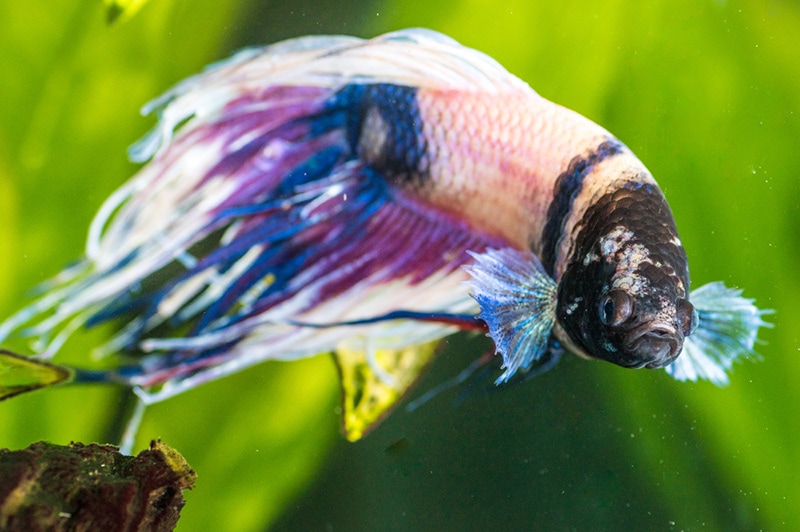
As mentioned before, the trademark sign of this disease is the presence of small white salt-like spots on your fish. This may be accompanied by other signs shown by your fish:
- Randomly darts around the tank and rubs on objects in the tank (known as flashing)
- Refuses to eat
- Seems to breathe heavily
- The color changes
- Fish displays abnormal behavior (such as hiding, or inactivity)
- Rest on the bottom
- Fish can't balance properly and may be swimming upside-down or sideways.
Ich & Bettas: The Importance of Environment
It is relatively rare to encounter Ich in Bettas for one fundamental reason: Bettas thrive in tropical waters. Noticing Ich on your Betta is a sign that their water temperature is probably less than ideal. The parasite’s life cycle is accelerated in warmer waters. In temperatures of around 25°C (77°F), the parasite completes its life cycle in about seven days. In warmer temperatures, the parasite dies off much faster. Many treatment protocols involve raising the water temperature to around 26.7°C (80°F).
The ideal temperature for Bettas is 28°C (82.4°F). At this temperature, the parasite shouldn’t last long in the water at all. Therefore, noticing this parasite on your Betta is an indication that you should look at the temperature in which your Betta is housed because it might be wrong.
Though you should obviously treat Ich in your Betta if you do notice it, you should keep in mind that its presence indicates that the water temperature you’re housing your Betta in is likely incorrect.
Treating Ich
There are several treatment options for Ich. These options can be combined or can be used individually, depending on the circumstances and the safety of the chemicals for your other fish.
Treatment options include the following:
Potential future treatment options include:
Treatments that have fallen out of favor with fish enthusiasts are:
Preventing Ich
There are steps that you can take to decrease the likelihood of an infestation. When you bring a new fish home, quarantine it for 6–8 weeks or longer in a separate tank from the main tank. This step is vital, as Ich is a parasite that needs a host to survive; it cannot enter your tank unless it takes a ride on a new fish. This quarantine will give you plenty of time to monitor for the onset of signs of many diseases and infestations, including Ich. If your new fish is sick, you’ll only have to treat the quarantine tank and not your entire main tank.
If you decide to forgo quarantine (a decision that is not recommended), make sure you do not combine the water that your fish came in into the tank. Pouring water from the pet or aquarium store directly into the tank can introduce parasites that haven’t found a host yet. The same goes for any water that comes with plants and décor for your tank. It’s good practice to quarantine or bleach dip plants (with a safe dilution) before adding them to your tank.
Ich thrives better in poor water conditions, so maintaining water quality is key to preventing Ich. This is especially true if your water is cloudy or you don’t perform water changes on a regular basis because it’s more difficult to spot the presence of Ich on your fish.
Routinely check water parameters and make any adjustments needed to maintain the water quality. Lastly, you should perform water changes and carefully inspect your fish on a regular basis for any signs of illness.
Conclusion
Ich should be a rare occurrence in a Betta’s tank, and if it does present itself on your Betta, it’s a sign that there’s something wrong with the environment in which your fish is kept. Quickly diagnosing and treating this parasite is key, as it can cause mortality in your fish.
We hope the content provided in this article has helped you better understand this parasite and the importance of a good quarantine protocol for your fish.
See Also: 10 Best Betta Water Conditioners
Sources
Featured Image Credit: Patcharanat Sriboonruang, Shutterstock
Get Hepper In Your Inbox


Pet care tips from our vets and experts, straight to your inbox.
You may opt-out at any time. View our Privacy Policy for more information.
Dr. Luqman grew up with an extreme fondness for animals and turned a childhood dream into reality by becoming a veterinarian. His goals are now focused on helping pet owners understand their pets better in order to ensure the best quality of life for all pets globally. He is passionate about wildlife, exotic pets, pet owner education, and animal welfare. Luqman has 3 years of professional experience working with a variety of animal species. He has skills in demonstrating proper animal husbandry and training some exotic species, such as parrots. Additionally, he has decades of personal experience with keeping many exotic pets: freshwater fish, parrots, songbirds, chickens, ducks, turtles, and hamsters.
Dr. Luqman grew up with an extreme fondness for animals and turned a childhood dream into reality by becoming a veterinarian. His goals are now focused on helping pet owners understand their pets better in order to ensure the best quality of life for pets all around the world. His passions are wildlife, exotic pets, pet owner education, and animal welfare.
Education
Luqman received his degree from Universiti Putra Malaysia.
Experience
Luqman has 3 years of professional experience working with a variety of animal species. He has skills in demonstrating proper animal husbandry and training some exotic species, such as parrots. Additionally, he has decades of personal experience with keeping many exotic pets: freshwater fish, parrots, songbirds, chickens, ducks, turtles, and hamsters.
Join the conversation
Ask a question, share your story, or send private feedback.