Hepper is reader-supported. When you buy via links on our site, we may earn an affiliate commission at no cost to you. Learn more.
Black Fly Bites on Dogs: Our Vet Explains Signs, Treatment & Prevention

In this article
Black flies are annoying insects that can cause several health problems for dogs. Although most of the time their bites are harmless, there are cases where they can cause redness, itching, and pain at the bite site and even allergic reactions in sensitive dogs. Fortunately these bites are usually not as bad as they look.
In this article, find out what black fly bites look like, signs your dog might show if they’ve been bitten, what you can do to help your dog, and how you can prevent bites from these insects.

What Are Black Flies?
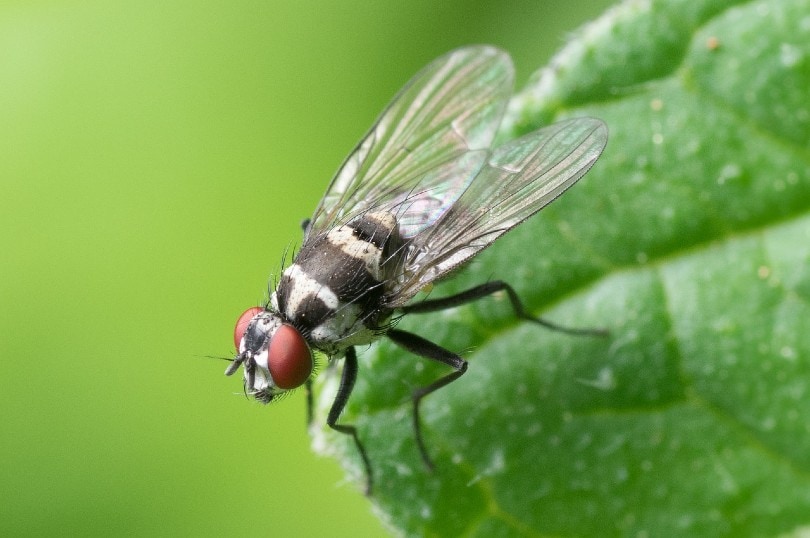
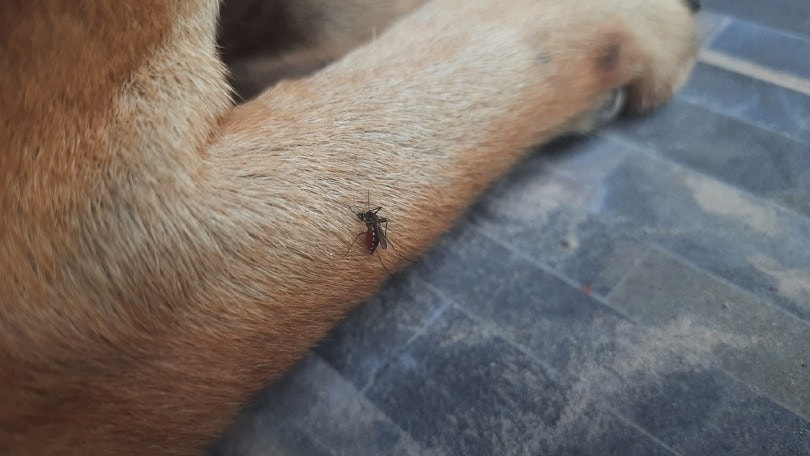
Black flies or buffalo gnats are not just one thing. Rather it is the common name for many types of flies that are part of the family Simuliidae, which includes over 2,400 species, 255 species of which are found in North America 1. They are found all over the world but almost always near running water. This preference is explained by the fact that the adults live on the plants around the water, and the larvae develop in flowing water, attached to rocks or other submerged objects. They can also be found around farms, in wooded or plain areas. So, if you live in these environments, your dog's bug bites may well come from black flies.
The females are hematophagous, meaning they feed on blood (of humans and other animals, including dogs) as well as nectar, and the males feed mainly on nectar. Most black flies are 1–6 mm long and can attack in swarms; sometimes they have been known to kill livestock 2.
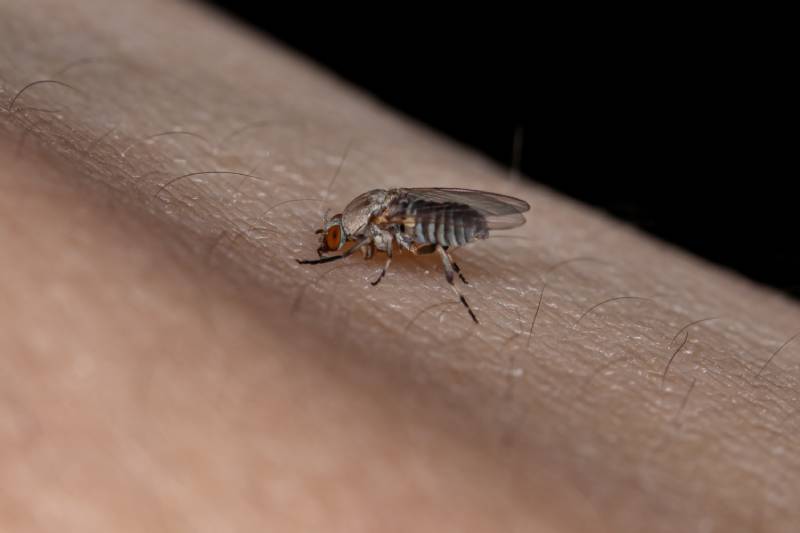
What Do Black Fly Bites Look Like?
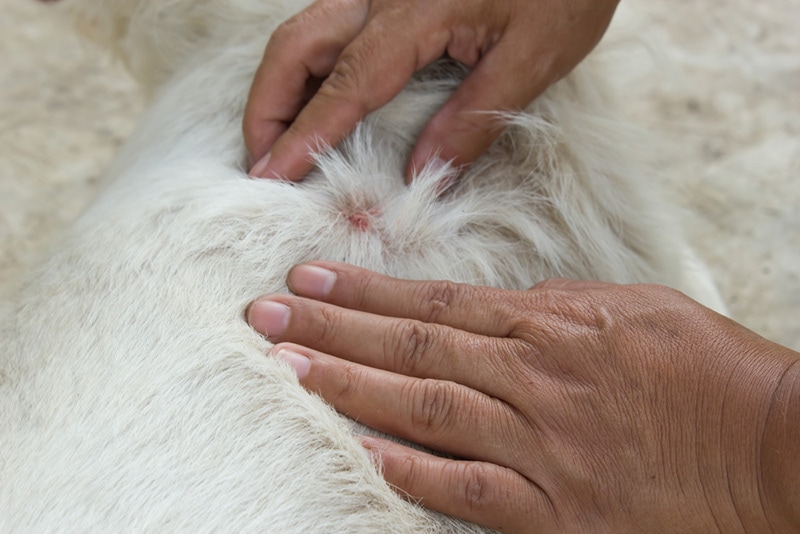
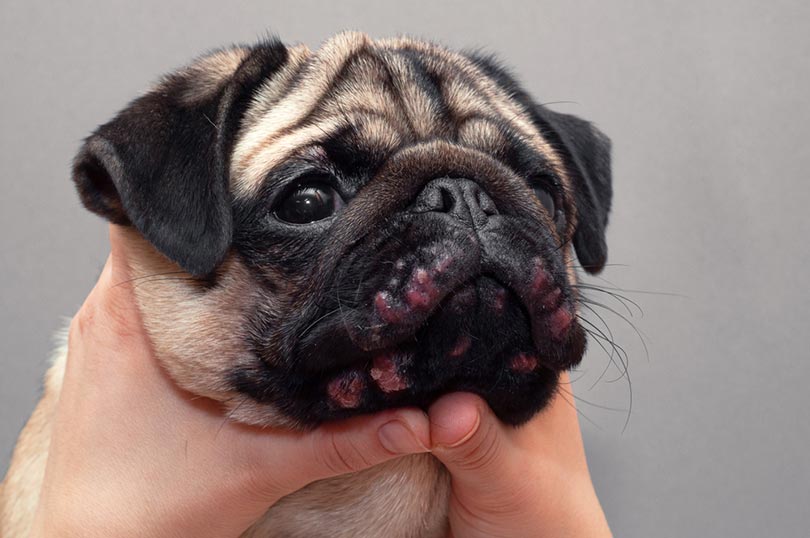
Black fly females need to feed on blood to produce eggs, so they have to bite a mammalian or avian species to feed. Although they can be found all year round, their bites are more usual in the warm seasons. Their bites are most easily seen on areas with no or little hair, such as the abdomen, inner thighs, or ears, and appear as bullseye-like spots (nickel-sized flat, red spots that may or may not be outlined). Black fly bites can be flat or raised in the center. Itching may also occur, especially when there are several bites. These bites are generally harmless and will disappear by themselves, so there is no need to panic. They usually look worse than your dog feels! If your pet has multiple bites on their body, it is recommended to watch them closely and make sure they do not become infected or have an allergic reaction.
It is important to keep in mind that Lyme disease transmitted by ticks can also produce a bullseye or target shaped lesion. If your dog is showing signs of illness such as limping, swollen joints, loss of appetite and lethargy, make sure to get them checked out by the vet urgently.
What Are the Signs of Black Fly Bites on Dogs?
Black fly bites look like red dots that may or may not have red circular rings. Itching is not a common clinical sign, but it can occur, especially if there are multiple bites. The redness and itching occur because of the fly's saliva, which is irritating. The black fly inoculates saliva into the tissues when it bites, and this acts as an anticoagulant. The signs associated with black fly bites on dogs may include:
- Red spots
- Presence of black flies
- Itching
- Crusts (if the affected dog scratches a lot)
- Mild pain
Sensitive dogs can develop allergic reactions to black fly bites. Allergic reactions can show in different way such as:
- Urticaria: raised lumps in the skin (also known as hives)
- Allergic dermatitis
- Edema: accumulation of fluid within the tissues under the skin. This can put your dog's life in danger if their face and neck swell, because it affects their ability to breathe.
- Anaphylactic shock: This is the most severe type of allergic reaction and can put your dog's life in danger. This is a true emergency situation.
If your dog shows any of the following clinical signs (signs of an allergic reaction), contact the veterinarian immediately:
- Swelling of the face and neck
- Hives
- Diarrhea
- Vomiting
- Disorientation
- Seizures
- Lethargy
- Drooling
- Breathing difficulties
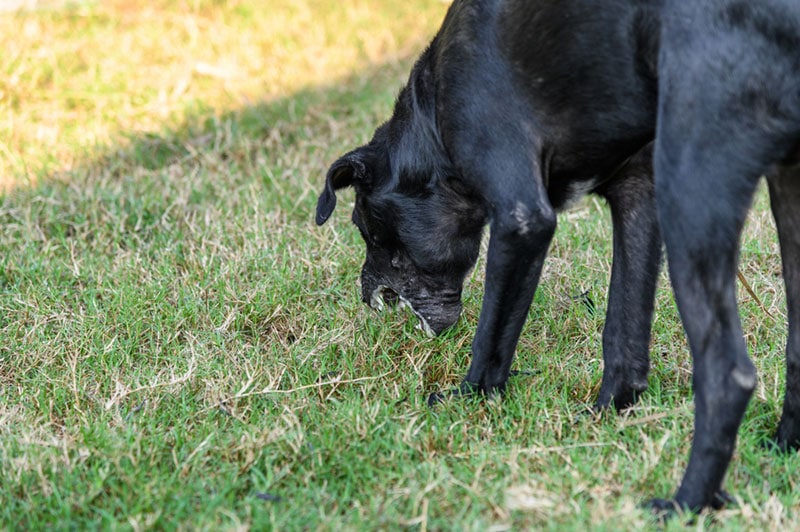
How Do I Care for a Dog With Black Fly Bites?
The good news is that this type of insect bite does not usually require intensive treatment. Here's what you can do at home to help your pet and promote healing:
- Gently clean the affected areas with boiled cooled salt water and pat dry with a paper kitchen towel.
- If crusts have occurred, apply a warm compress to soften them before cleaning as above.
- Prevent your dog from licking or scratching the bites either by covering it with a loose-fitting t-shirt or by using a buster collar.
- Apply a soothing cream or anti-itch lotion if you have one on hand.
If the skin is irritated and/or itchy, you can try:
- Oatmeal baths
- Allergy relief shampoo
- Cool packs over the bites (don’t put the ice packs directly on the skin; wrap them in a cloth or paper towels, or you risk causing your dog ice burns)
If the itching does not improve, the bites become infected, or complications occur (e.g. an allergic reaction), contact your veterinarian.
How to Prevent Black Fly Bites
To keep the number of black fly bites to a minimum, you can try these tricks to help your dog:
- Keep your dog's fur and skin clean.
- Clean up the waste in your yard.
- On hot days, avoid taking your dog for a walk in the first few hours after sunrise and the last few hours before sunset. Early and late daylight hours are when black flies are most active.
- Avoid areas with dense vegetation and waterways.
- Cover your dog's ears with a bandana.
- Consider lightweight clothing that covers your dog’s belly and inner thighs.
- Use only products intended for use on dogs, ask your veterinarian for a recommendation. Do not use human insecticides or essential oils because these can be toxic to dogs.

Frequently Asked Questions
Are Black Flies the Same as Horseflies?
No, black flies and horseflies are two separate types of fly families. Black flies belong to the family Simuliidae, while horseflies belong to Tabanidae. Horseflies are more aggressive and their bites are more painful. Horsefly bites are not dangerous for dogs, but they can become infected or cause allergic reactions in sensitive dogs.
Can Black Fly Bites Get Infected?
Yes, black fly bites can become infected if your dog scratches or chews the affected areas and damages the skin. The damaged skin is then more susceptible to infection. If your dog's black fly bites become infected or they take too long to heal (more than a week), contact your vet clinic for advice.

Conclusion
Black fly bites are usually not itchy or painful. In most cases, they look worse than they really are! These bites appear as red dots that may or may not have red rings around them. In case of itching, your dog may scratch until crusts and/or secondary infections occur. If your dog is more sensitive, allergic reactions are possible and should be treated by a veterinarian. In case the bites do not heal or have become infected or your dog shows signs of an allergic reaction, contact the vet ASAP.
See also:
Sources
Featured Image Credit By: Amelia Martin, Shutterstock
Get Hepper In Your Inbox


Pet care tips from our vets and experts, straight to your inbox.
You may opt-out at any time. View our Privacy Policy for more information.
Iulia Mihai is a veterinarian with more than 13 years of experience in pet pathology, laboratory, and cancer. She studied at the University of Agronomical Sciences and Veterinary Medicine of Bucharest, Romania Iulia earned a master’s degree in equine and pet pathology and studied epithelial cancer for her Ph.D. Dr. Mihai's passions for internal medicine and parasitology inspired her to volunteer at the faculty’s clinic in her third year of college. She has worked in a couple of veterinary clinics over the years as an internal medicine specialist, and loves to write and educate pet parents about pet nutrition, behavior, and diseases.
Iulia is a passionate veterinarian with a strong affinity for veterinary parasitology, internal medicine, and laboratory. She is excited to share her experience and knowledge with pet owners around the world through her writing and hopes to educate people on pet nutrition, diseases, and behavior.
Education
Iulia graduated from the University of Agronomical Sciences and Veterinary Medicine, Bucharest, Romania, in 2012 and has a Master’s degree in Small Animals and Equines Pathology and is certified in HAACP food safety system implementation. Iulia started her Ph.D. in epithelial cancer in dogs and cats in 2013. Her research is published in national and international veterinary journals.
Experience
Dr. Iulia has been a veterinarian for more than 14 years. She is experienced in animal pathology and laboratory and has experience with exotic animals, such as pet rats and ferrets. She also has skills in the field of clinical pathology, laboratory, microscopy, cancer, and imaging.
Join the conversation
Ask a question, share your story, or send private feedback.