Hepper is reader-supported. When you buy via links on our site, we may earn an affiliate commission at no cost to you. Learn more.
Bourke Parakeet: Pictures, Personality, Food & Care Guide

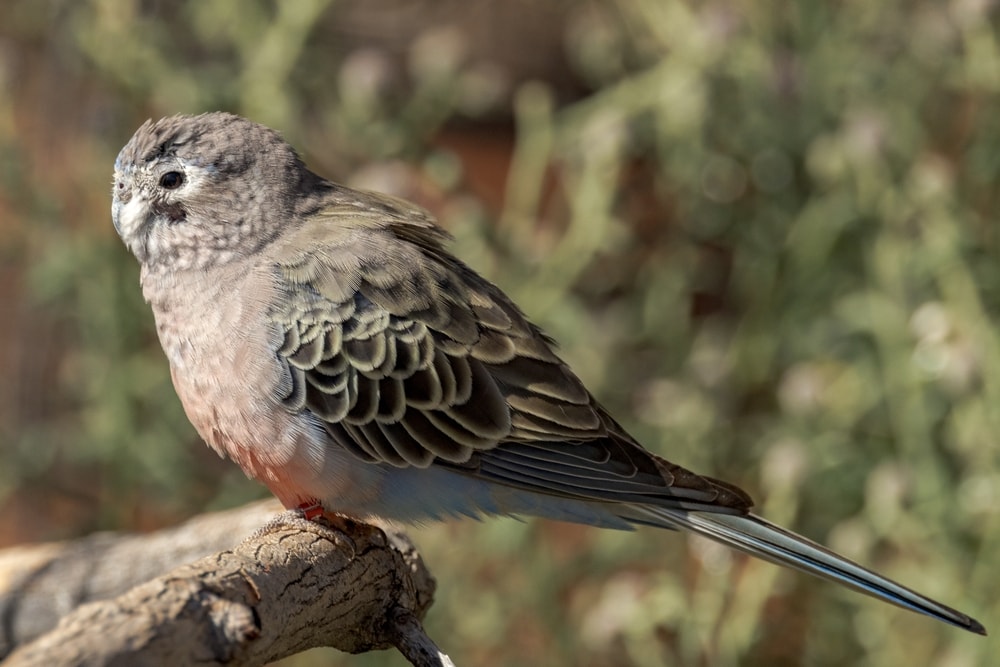
In this article
Getting a new pet is always a big deal, especially when deciding what sort of pet you desire. If you’re looking at getting a bird, we recommend checking out the Bourke’s parakeet (especially if you’ve never owned a bird before!). These mellow, friendly birds love companionship, making them optimal pets.
However, you should know a few things about the Bourke’s parakeet before adopting one. Below, you’ll find everything you need to know about them, such as how to care for them properly and more!

Species Overview
| Color: | Gray, pink, blue, brown |
| Size: | 7–8 in |
| Weight: | 1.6 oz |
| Wingspan: | 5–12 in |
The Bourke’s parakeet is unusual in that it is much quieter than similar species (which is why these birds are so popular). These birds are also incredibly social, so you’ll have a new best friend with one in your home. You’ll also find some stunning color mutations among this bird species!
Bourke’s Parakeet Characteristics
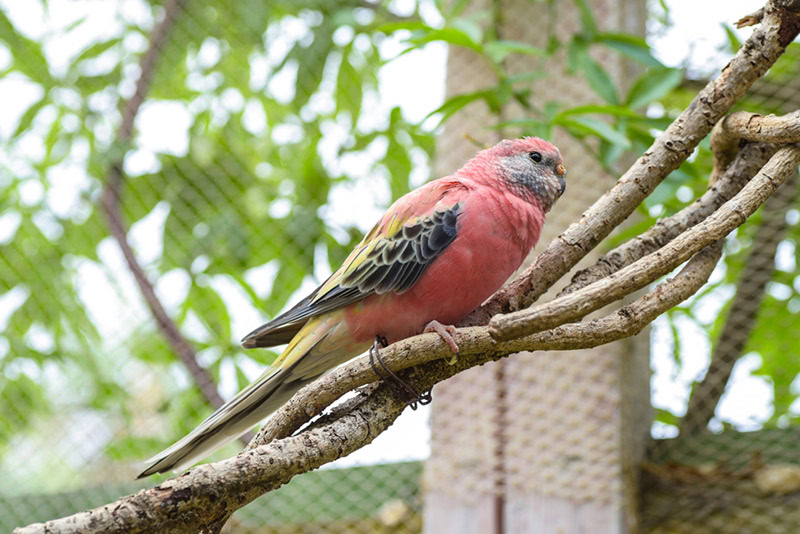
Bourke’s Parakeet Characteristics
History & Natural Habitat
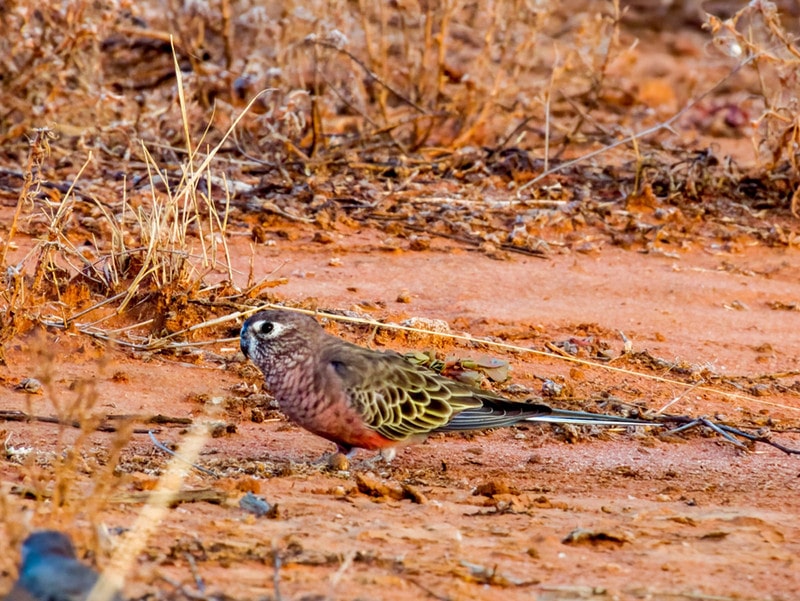
The Bourke’s parakeet is a native species of Australia that lives mainly in the dry plains but also in native eucalyptus and cypress woodlands. They can be found in most of the continent, and you might even occasionally find a few of these birds in urban areas.
John Gould, an English ornithologist, first described these birds in 1841, and their name comes from the former New South Wales Governor, Sir Richard Bourke. Though the species was originally classified as a part of the Neophema genus, in the 1990s, it was assigned to the Neopsephotus genus.
There are plenty of Bourke’s parakeets today; the International Union for Conservation of Nature and Natural Resources (IUCN) has this species marked as one of least concern as the number of wild Bourke’s parakeets increases by year.
Things to Know When Owning a Bourke Parakeet
If you’re considering adding a Bourke’s parakeet to your home, you should know plenty about these birds before doing so. Here’s what to know about the Bourke’s parakeet’s vocalizations, temperament, and how to care for them.
Temperament
The Bourke’s parakeet is known for being friendly, good-natured, and mellow, making them excellent pets, particularly for first-time bird parents. They tend to be much quieter than other parrot species, which is one reason they’re so popular as a pet. Due to their social natures, these birds love companionship and can be cuddly; don’t be surprised to find yourself walking around the house with a guest on your shoulder! You also shouldn’t be surprised to see them getting bursts of energy at dawn and dusk; these are the times they’re most active, so they’ll want to fly around then.
If you have other birds, the Bourke’s parakeet should get along fine with them (provided the other birds are as peaceful as they are). They will get territorial during mating season, though this isn’t unusual for birds. And because the Bourke’s parakeet is intelligent, you can have fun teaching them tricks!
Another positive for the Bourke’s parakeet is that these birds rarely bite, another reason they make good pets for first-time owners.
Sounds, Speech & Vocalizations
As we said, the Bourke’s parakeet is much quieter than other parrot species, so if you’re looking for a bird big on talking, this isn’t the bird for you. Rather than speaking, these birds will whistle, warble, and make a chirpy sort of noise. They’ll be noisiest at dawn and dusk (when they tend to get those bursts of energy).
Bourke’s Parakeet Appearance
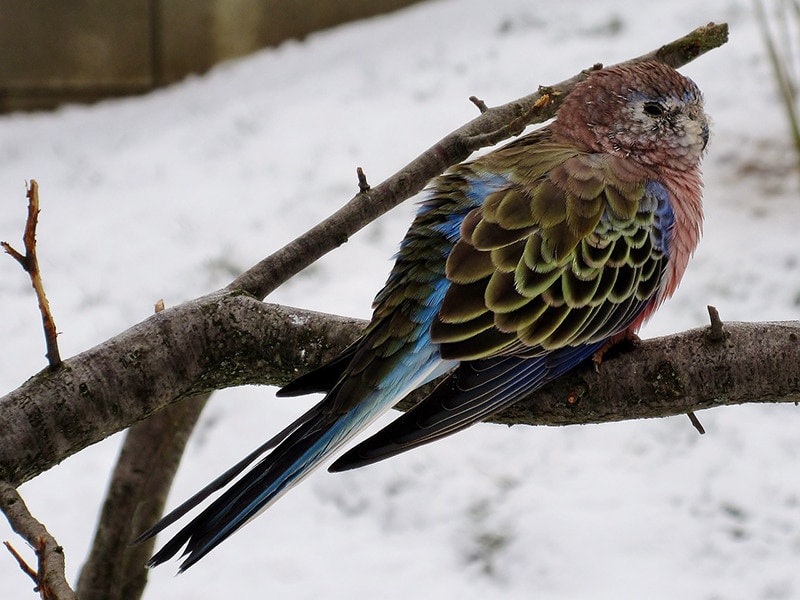
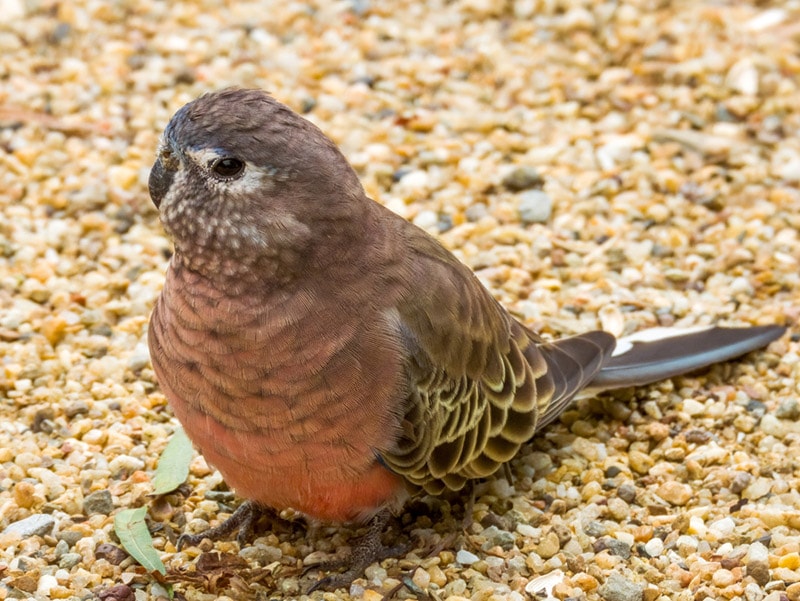
The Bourke’s parakeet may not be as vividly colored as other species, but that doesn’t make these birds any less colorful and eye-catching. These birds have pink feathers adorning the breast, dark blue wings, a blue tail, and a dusty to dark brown-grey hue on the back of the wings. And, of course, the males are a bit showier than the females. Adult male Bourke’s parakeets have a blue forehead, while the females of the species have no blue or very little color on the forehead.
However, you can also get many color mutations through selective breeding with these birds, including:
Caring for the Bourke’s Parakeet
The Bourke’s parakeet can do fine on its own (provided you give them plenty of attention each day), but they will also do well cohabitating with other birds. A few species this bird will get along with are other Bourke’s parakeets, the cockatiel, the Budgie, and finches. Having the Bourke’s parakeet living with other birds will also help keep your feathered friend mentally stimulated and help prevent boredom. Because this species is so social, they need to have plenty of interaction, whether it’s with you or other birds. If you’re the one your Bourke’s parakeet depends on for social encounters, expect to interact with them for at least a couple of hours a day.
You’ll also want to ensure you have plenty of toys for your Bourke’s parakeet to keep them occupied. These birds are particularly fond of preening toys and bells! Because the Bourke’s parakeet is intelligent, be sure to get yours some toys that will challenge that intelligence.
These birds do best in temperatures between 60°F and 85°F, but as long as they are kept from excessive cold or heat, they should be fine.
And when it comes to keeping your bird clean, you’ll be glad to know the Bourke’s parakeet is an enthusiastic bather. You can keep a small bathing pool in their cage or aviary with clean, lukewarm water, and they’ll be thrilled! You can also spritz them with water; they’ll find this equally enjoyable.
Diet & Nutrition
The Bourke’s parakeet is a grass parakeet, so they forage plains and fields for food in the wild. This amounts to them eating a diet of plant matter, grass, seeds, insects, berries, and fruit when available. Your Bourke’s parakeet will need a balanced diet that includes seeds, pellets formulated for them, veggies, and the occasional fruit. Fresh water should also always be available to your bird!
Cage/Housing Requirements
Because of their love of flying around the hours of dawn and dusk, an aviary of at least 6 feet in length is the ideal housing for a Bourke’s parakeet. However, an aviary isn’t doable for many bird owners. If an aviary isn’t an option, you’ll need a large flight cage for your bird. Choose the largest option available, with dimensions at least 1.5 feet tall, 1.5 feet wide, and 3 feet long. The Bourke’s parakeet is a bird that doesn’t do well in small quarters.
Of course, you'll need a larger cage if you have birds other than your Bourke’s parakeet living in the same cage. Be aware, though, that your Bourke’s parakeet might disrupt other birds with their dusk and dawn flying habits; they might even end up knocking their feathered friends off their perches!
Exercise
Though Bourke’s parakeets are less active than many other similar birds, they do have their active moments (like dusk and dawn). Letting them outside their cage for 2 or 3 hours each day so they can fly around or play in a supervised area will be ideal. Having a long flight cage where they can safely fly about is also optimal. And don’t forget to include many toys for your Bourke’s parakeet in their cage! Toys will keep them plenty active when they aren’t able to be outside their cage.
Health & Conditions
The Bourke’s parakeet is a fairly hardy bird that isn’t prone to many illnesses. They tend to live for a long time (provided they have proper care) and rarely get sick. There are a few issues that might occur with these birds, though.

3 Little-Known Facts About the Bourke’s Parakeet
Here are three more facts you might not have known about the Bourke’s parakeet!
1. These birds are also known as “sundown parrots”.
You can probably guess why they’re called the sundown parrot, too! It’s because of the way they tend to get active at dusk.
2. Bourke’s parakeets have zygodactyl toes.
These birds have zygodactyl toes, which means they have two toes that face forward and two that face backward.
3. This parakeet can live up to 25 years.
However, they tend to live 10–15 years in captivity (which is still a long time!). With proper care, though, your bird could live up to 25 years.
Final Thoughts
The Bourke’s parakeet is an excellent bird for a first-time bird parent, as they are mellow and quieter than many other similar species. You will need to prepare yourself for their crepuscular flying activities, though! These birds are reasonably easy to care for (though you need a rather large cage or an aviary for them to live in) and make wonderful companions. They’ll love riding around on your shoulder while you go about your day, as well as playing with toys in their cage.
If you’re considering getting a bird for the first time, the Bourke’s parakeet is an excellent choice!
Featured Image Credit: Imogen Warren, Shutterstock
Get Hepper In Your Inbox


Pet care tips from our vets and experts, straight to your inbox.
You may opt-out at any time. View our Privacy Policy for more information.
Misty Layne lives out in the woods in small-town Alabama with her two Siamese—Serafina and Jasper. She also has an array of stray cats, raccoons, and possums who like to call her front porch home. When she’s not writing about animals, you’ll find her writing poetry, stories, and film reviews (the animals are, by far, her favorite writing topic, though!). In her free time, Misty enjoys chilling with her cats, playing piano, watching indie and foreign films, photographing abandoned places, and catching up on her never-ending TBR list.
Join the conversation
Ask a question, share your story, or send private feedback.