Hepper is reader-supported. When you buy via links on our site, we may earn an affiliate commission at no cost to you. Learn more.
Can Bearded Dragons Eat Chives? Our Vet Answers

In this article
Feeding a cat or dog is a pretty straightforward enterprise; there's no shortage of dry food, wet food, semi-moist food, freeze-dried food, treats, snacks, and supplement options for canine and feline pets. Feeding your bearded dragon the right diet is not always so easy.
Bearded dragons need to eat a mixture of animal protein and plant matter, with the animal portion preferably in the form of live insects and other invertebrates, which can be readily sourced from pet stores or online exotic pet food suppliers. You can even breed your own live food, provided you don’t mind the noisy chirrup of crickets!
When it comes to the plant portion of the diet, there are so many things to choose from, and it’s not always easy to know what is, and what isn’t, a safe option for your beardie. For example, Can bearded dragons eat chives? The answer isn’t as simple as you might think.
Our final verdict: It is best to leave chives out of your bearded dragon’s diet, but read on to understand how we came to that conclusion, and learn more about how vegetables and herbs fit into their diet.

Can Bearded Dragons Eat Chives?
With the lack of strong supporting evidence either way, we recommend not adding chives to your bearded dragon’s menu. Apart from the possible risk of toxicity, this herb is also 90% water, so there is little to be gained from offering it to your pet.
If you would like to spice up your beardie’s life, which is certainly a great idea, we’ve created a list of safe herbs you can include when preparing your bearded dragon’s menu for the week. Remember that an adult should be consuming 50-70% animal protein, 30-45% plant matter, with 5% allocated for treats like fruit or cooked meats.
Tried and Tested Tasty Herbs for Bearded Dragons
These all provide a mixture of beneficial vitamins and minerals, with the right proportion of calcium and phosphorus, a vital consideration of reptile diets. Foods that contain higher levels of phosphorus than calcium can put your pet at risk of Metabolic Bone Disease, so the ratio of these two minerals is a key determinant of ideal reptile foods. Always use fresh herbs, not dried, as the dehydrated forms are likely to cause gastrointestinal upset.
Whenever you offer a new food to your Bearded Dragon, always start with a small amount, in case they don’t react well to it, and if in doubt, speak to your veterinarian or reptile specialist about the best dietary options.
The Bearded Dragon Diet
Unlike cats and dogs, bearded dragons are not domesticated, and it is important that we provide them with a diet that mimics what they would eat in the wild—as closely as possible.
There are commercial pellet foods available for bearded dragons, but these should only really be used as a failsafe; one that has the right balance of nutrients, but bears little resemblance to the type of food a wild beardie would eat.
When formulating the ideal bearded dragon diet, there are multiple factors to consider, including the life stage of your pet, the amount and type of animal protein they need to be consuming, and what sort of plant matter is best.
Getting the right balance of vitamins and minerals is particularly important for reptile species, and it is not as simple as just feeding them a garden salad. The wrong levels of calcium, phosphorus, or vitamin A , for example, can lead to major health problems, even death.
Another important consideration is variety. Bearded dragons originate from Australia, where they live in a wide range of habitats, from dry deserts to lush rainforests. This means that their diets are equally varied. They are opportunistic omnivores, and their wild menu can consist of insects, arachnids, small mammals, small reptiles, and the flowers, leaves, roots and shoots of plants. There are rarely any carrots, or steaks, or strawberries lying around the Australian outback, so the fresh food section of the supermarket is not necessarily the bearded dragon buffet you might imagine it to be.
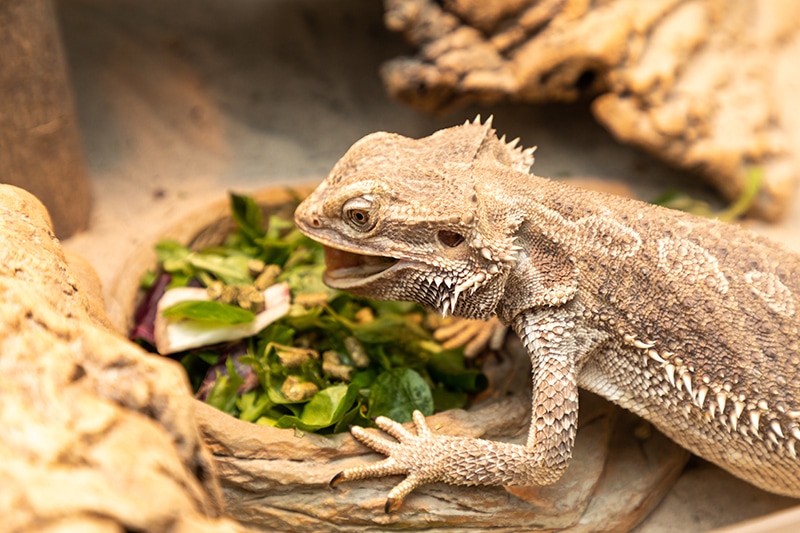
Variety And Right Balance Of Nutrients For Bearded Dragons
Pet food stores, particularly those that specialize in exotic pets, can be a wealth of information and a source of live food for your bearded dragon. You should never feed them insects you have found in the garden because you don’t know what sort of chemicals or parasites they may have been exposed to.
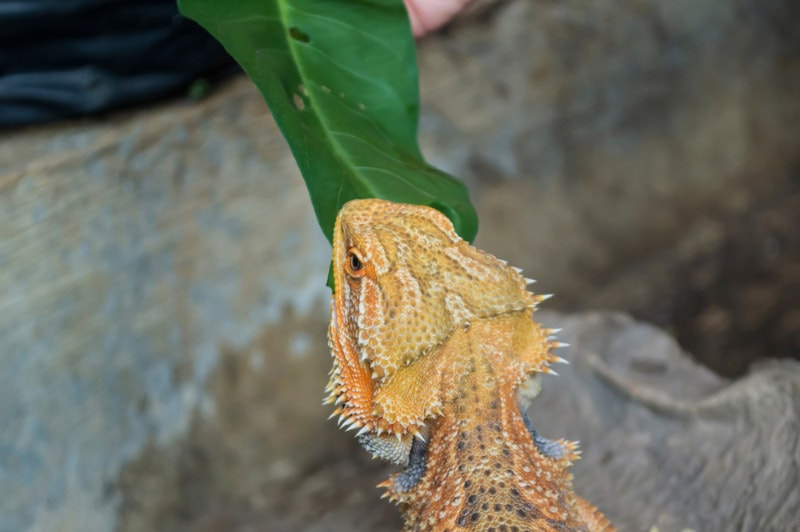
Leafy greens are the ideal type of plant to offer your bearded dragon, with ingredients such as kale, chinese cabbage, dandelion greens, collard greens, spinach and parsley all great options. Each has a few limitations, which is why feeding a variety is much safer than just feeding one type. For example, kale contains goitrogens, which are substances that can affect the thyroid gland, but have low levels of oxalates. Parsley, on the other hand, is low in goitrogens, but higher in oxalates, which can cause kidney stones.
If Parsley Is On The List, Why Not Chives?
Allium schoenoprasum—aka chives—belong to a group of plants called Alliums, which includes leeks, onion, shallots, and garlic. You may be aware that these vegetables are toxic to dogs and cats, as well as several other species. Most toxicities are seen when animals ingest concentrated or dehydrated forms of these vegetables. The sulfur-containing oxidants in these Alliums damage red blood cells, causing a condition known as Heinz Body Anemia.
While the toxic effects of these plants is well documented in domestic mammals, there is conflicting information about their effects on reptiles.
- One study of reptiles as pollinators, observed lizards enjoying the flowers of Allium subvillosum, a rare Mediterranean species.
- There was a case of several tortoises of two different species suffering from apparent Allium toxicity after eating ramson (wild garlic), with one, a giant Aldabra tortoise, dying. The clinical findings were consistent with Allium toxicity, with the exception of Heinz bodies.
- Allium sativum (garlic) is actually a key ingredient in Verm-X, a commonly used supplement to support gut function in reptiles.
Conclusion
Navigating the intricacies of exotic pet diets can be tricky, which is why we always try to provide you with plenty of information to help. Some foods are a definite ‘yes’ for Bearded Dragons, others a firm ‘no’. There are a lot of gray areas, like chives, and in these cases, we always recommend erring on the side of caution.
If there is no clear benefit to be gained from feeding a particular item, but there's a chance of causing harm, it simply isn’t worth the risk.
Featured Image Credit: RHJPhtotos, Shutterstock
Get Hepper In Your Inbox


Pet care tips from our vets and experts, straight to your inbox.
You may opt-out at any time. View our Privacy Policy for more information.
Karyn has lived in the UK for the past 10 years after moving from Queensland, Australia. In 2010, she graduated from The University of Queensland School of Veterinary Science, and also holds a Bachelor’s degree in Zoology. Karyn is passionate about using evidence, experience, and owner collaboration to provide the best solutions for pets, and believes in making reliable information about animal health accessible to all. She shares her home with 5 cats, 4 dogs, and 1 husband, and when she is not practising as a veterinary surgeon, she spends her time writing, gardening, and cleaning up pet hair!
Karyn comes from Queensland, Australia, but has lived in the UK for the past 10 years. She is passionate about using evidence, experience, and owner collaboration to provide the best solutions for pets, and believes in making reliable information about animal health accessible to all.
She shares her home with 5 cats, 4 dogs and 1 husband, and when she is not practising as a veterinary surgeon, she spends her time writing, gardening, and cleaning up pet hair!
Education
In 2010, Karyn graduated from The University of Queensland School of Veterinary Science and also holds a Bachelor’s degree in Zoology.
Experience
Dr. Kanowski has worked in small animal practice, both in Australia and the UK, and she will be very happy if she never has to see another post-Brexit Animal Export Certificate again! Karyn has special interests in acupuncture and canine behavior and loves challenging surgical cases.
Join the conversation
Ask a question, share your story, or send private feedback.