Hepper blog

Search our database of over 9,984 posts with up-to-date information from our experts and veterinarians.

Hepper is reader-supported. When you buy via links on our site, we may earn an affiliate commission at no cost to you. Learn more.

Can Bearded Dragons Eat Mint Leaves? Vet-Reviewed Nutrition Facts & FAQ

By Codee Chessher · Reviewed & fact-checked by Dr. Karyn KanowskiVet Approved
Dr. Karyn Kanowski
Reviewed & Fact-Checked byDr. Karyn KanowskiVeterinarian
Karyn has lived in the UK for the past 10 years after moving from Queensland, Australia. In 2010, she graduated from The University of Queensland School of Veterinary Science, and also holds a Bachelor’s degree in Zoology. Karyn is passionate about using evidence, experience, and owner collaboration to provide the best solutions for pets, and believes in making reliable information about animal health accessible to all. She shares her home with 5 cats, 4 dogs, and 1 husband, and when she is not practising as a veterinary surgeon, she spends her time writing, gardening, and cleaning up pet hair!View authorThe information is current and up-to-date in accordance with the latest veterinarian research. Read about our vets
Share
Ask us a question in the comments
Hepper_Can Bearded Dragons Eat_Mint Leaves

Bearded dragons are great pets for first-time reptile owners because of their low maintenance needs and social personalities. They’re non-picky omnivores that eat a lot of bugs as juveniles, growing to prefer plants as they age. If you’re an herb enthusiast, you may wonder if mint and other herbs are suitable to feed your beardie. Thankfully, mint is safe, if fed in moderation.

Mint isn’t that great for bearded dragons and shouldn’t be fed as a staple, but it can be a nice treat on occasion or sprinkled on food your beardie won’t eat. Read on as we break down the nutritional content of mint leaves, how it affects beardies, and other herbs that you may consider feeding instead.

Are Mint Leaves Healthy for Bearded Dragons?

Not really. Mint isn't especially high in nutrients, containing about 80% water and some other trace nutrients like calcium, vitamin C, and iron. These are useful and even healthy, but combined with mint’s water content, it’s not worth offering the herb regularly. Too much water can upset their digestive systems, causing stomach upset and watery diarrhea.
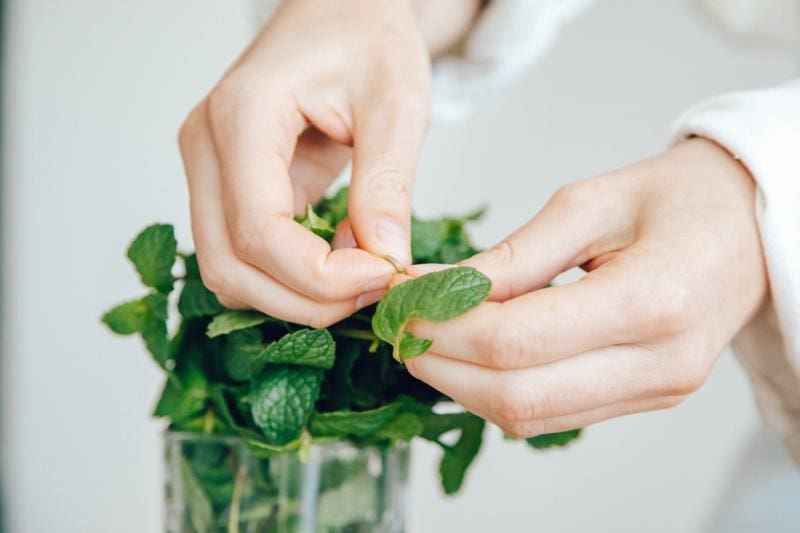
Person Holding Green Mint Leaves
Image Credit: ROMAN ODINTSOV, Pexels

What Other Herbs Can Bearded Dragons Eat?

While mint may not be the best herb for your bearded dragon, there are lots of other options you can choose from. The two main ingredients you need to watch out for are calcium and phosphorus. A 2-to-1 ratio is ideal, which you can achieve by mixing herbs into your beardie’s diet. Whether you’re growing them in your home already or need some decoration ideas for your beardie’s tank, the herbs below are prime candidates.

Safe & Tasty Herbs for Bearded Dragons:

  • Rosemary: A classic herb with a powerful flavor, your bearded dragon will love this calcium-rich herb.
  • Cilantro: This popular taco topping is also valuable in a beardie’s diet, containing various trace vitamins and excellent calcium content.
  • Basil: Basil has high calcium but not as much phosphorus as your beardie needs, making it best as an occasional treat.
  • Thyme: Yet another herb with plenty of calcium and other trace nutrients, including antibacterial properties.

Herbs to Avoid Feeding Your Bearded Dragon

Not all herbs are created equally when it comes to nutritional content for bearded dragons. Some may be lacking in nutrients or even actively toxic to your beardie.

Herbs to Avoid Feeding Your Bearded Dragon:
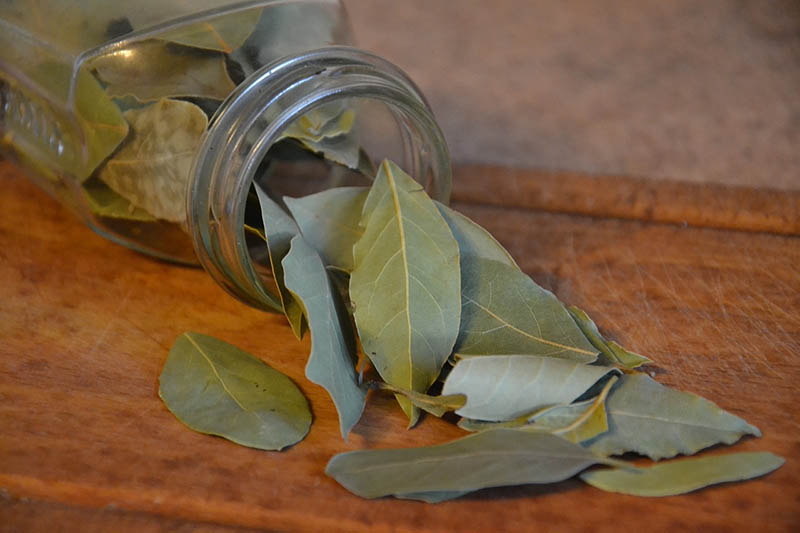
  • Bay leaves: Great for soups and human foods only, bay leaves are part of the Laurel family and are toxic to bearded dragons.
  • Dill: Dill is very acidic and high in oxalates.
  • Allium species: Garlic, onions, and chives are all very high in acidic compounds that can upset your beardie’s delicate digestive system.
Bay Leaves
Image Credit: Anna, Pixabay

What Do Bearded Dragons Eat in the Wild?

A wild bearded dragon will eat whatever they can get, but they prefer live bugs like worms, crickets, locusts, and roaches. That doesn’t mean a beardie is averse to eating lots of plants, though. That includes leaves, herbs, fruits, vegetables, and pretty much any greenery available. Bearded dragons are considered opportunistic, meaning their diet may change depending on what food sources are nearby in their native environment.

Can You Grow Herbs in a Bearded Dragon’s Tank?

Yes, you can grow many of the same herbs you grow in your kitchen in your bearded dragon’s tank. Herbs are typically compatible with the humidity and light levels you host in your beardie’s habitat. As a word of warning, you’ll want to keep a closer eye on the tank’s humidity levels with a hygrometer.

Too many plants can make the tank too muggy for your bearded dragon, or on the flip side, you may find yourself misting the tank frequently to keep the plants healthy. We suggest slowly introducing plants and observing how the humidity in the tank changes before adding more. Another valuable tip is that herbs don’t last long in the sweltering heat of most terrariums, so you’ll have to swap them out with new plants pretty often.

That said, beardies love being surrounded by plants because it tickles the wild parts of their brain that are used for foraging. If you’re willing to keep up with maintaining them, they’re a very nice addition to any habitat.
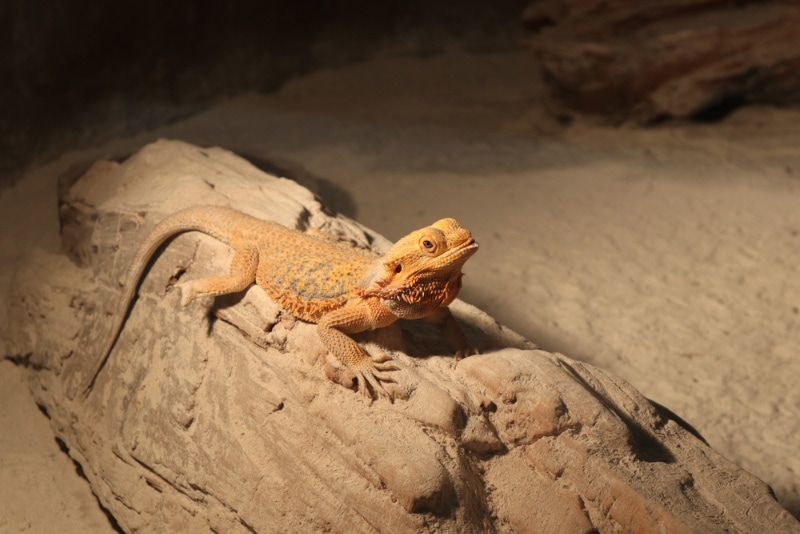
bearded dragon on a log
Image Credit: Astrid Widhowaty, Shutterstock

Tips for a Balanced Beardie Diet

Bearded dragons have some particular dietary needs that cat and dog owners might not totally understand yet. That’s okay because beardies are straightforward to take care of once you get a routine down. Let’s check out some essential tips for formulating a rock-solid feeding plan for your bearded dragon today.

Tips for a Healthy Bearded Dragon Diet:

  • The best protein for your bearded dragon includes dubia roaches, mealworms, calcium-dusted crickets, and locusts.
  • Until maturity at a year or two, your bearded dragon will prefer a bug-heavy diet with a lesser portion of leafy greens and other plants.
  • Fully grown bearded dragons tend to prefer a diet composed 50/50 of bug protein and vegetables/plants.
  • Only 10% or less of their diet should be fruit, which have vitamins and nutrients but little of the mineral content that beardies need, and are high in sugar.

Conclusion

Bearded dragons can eat a wide variety of herbs, but mint isn’t the best herb out there as far as nutrient content is concerned. Opt for herbs like rosemary, cilantro, and thyme, and be sure to rotate them out to maintain an interesting and diverse diet.

Related Reads:

Sources

Featured Image Credit: SMarina, Shutterstock

Get Hepper In Your Inbox

Pet care tips from our vets and experts, straight to your inbox.

List

Select all that apply.

You may opt-out at any time. View our Privacy Policy for more information.

Codee Chessher
Authored by

Codee Chessher

Join the conversation

Ask a question, share your story, or send private feedback.
Rate this post
Required to post. Only our editors see your rating.
Who should see this?

A human reviews every comment before it appears. Your email is never published.

Picked to go with this article

Can Bearded Dragons Eat Rosemary? Vet-Reviewed Safety Tips & Risks

Can Bearded Dragons Eat Rosemary? Vet-Reviewed Safety Tips & Risks

Bearded dragons are interesting reptiles that have unique dietary needs. If you’re interested in these little creatures or have them as pets, it’s crucial to b…

Visnja Radosavljevic
By Visnja Radosavljevic ·
Can Bearded Dragons Eat Thyme? Vet-Reviewed Nutritional Facts & FAQ

Can Bearded Dragons Eat Thyme? Vet-Reviewed Nutritional Facts & FAQ

Bearded Dragons are native to Australian deserts, where food options can be quite limited, so they have learned to adapt their diet to stay alive. Pet Bearded…

Elizabeth Gray
By Elizabeth Gray ·
Can Bearded Dragons Eat Basil? Vet-Approved Benefits & Tips

Can Bearded Dragons Eat Basil? Vet-Approved Benefits & Tips

Bearded dragons are popular exotic pets in the United States. They are relatively easy to look after (for a reptile), charismatic, and friendly. However, like…

Beth Crane
By Beth Crane ·
Can Bearded Dragons Eat Cilantro? Vet-Reviewed Nutrition Facts & FAQ

Can Bearded Dragons Eat Cilantro? Vet-Reviewed Nutrition Facts & FAQ

Bearded Dragons are omnivorous and should be fed a variety of insects, greens and occasionally fruit. Staple greens include vegetables like alfalfa, butternut…

Chantelle Fowler
By Chantelle Fowler ·

Keep reading

More stories you might like

10 Vet-Approved Greens for Bearded Dragons (With Pictures)

Bearded dragons are interesting pets. These amazing reptiles are relatively easy to care for and can even be suitable pets for older children. To keep a bearde…

Melissa Gunter
By Melissa Gunter ·
10 Vet-Approved Greens for Bearded Dragons (With Pictures)

What Do Bearded Dragons Eat as Pets? Vet Reviewed Diet

Bearded Dragons are omnivorous, meaning they consume a mixture of animal protein and veggies. In the wild, the exact animals and veggies the Bearded Dragons wo…

Kristin Hitchcock
By Kristin Hitchcock ·
What Do Bearded Dragons Eat as Pets? Vet Reviewed Diet

Can Bearded Dragons Eat Sage? Vet-Reviewed Nutrition Facts & FAQ

Bearded Dragons are omnivores that, in the wild, eat a combination of insects and plant matter. As pets, they are ideally given similar insects to those eaten…

Nicole Cosgrove
By Nicole Cosgrove ·
Can Bearded Dragons Eat Sage? Vet-Reviewed Nutrition Facts & FAQ

What Vegetables Can Bearded Dragons Eat? 27 Vet-Approved Options

Vegetables are an extremely important part of a bearded dragon’s diet, regardless of their age. For young beardies under 4 months of age, the diet should consi…

Brooke Billingsley
By Brooke Billingsley ·
What Vegetables Can Bearded Dragons Eat? 27 Vet-Approved Options

Can Bearded Dragons Eat Parsley? Our Vet Approved Advice

The question of whether bearded dragons can consume parsley is a common query among pet enthusiasts. After all, everyone wants to provide their scaled friends…

Melody Russell
By Melody Russell ·
Can Bearded Dragons Eat Parsley? Our Vet Approved Advice

Can Bearded Dragons Eat Rose Petals? Vet-Verified Facts & FAQ

Fresh from the flower, added to a salad, or in dehydrated treat form, rose petals are sometimes offered to herbivorous pets like hamsters, chinchillas, and gui…

Nicole Cosgrove
By Nicole Cosgrove ·
Can Bearded Dragons Eat Rose Petals? Vet-Verified Facts & FAQ

Can Bearded Dragons Eat Romaine Lettuce? Vet-Approved Nutritional Science & FAQ

Bearded dragons, also commonly known as beardies, belong to the Pogona genus. They are small to medium in size and live around 10 to 15 years when appropriatel…

Annaliese Morgan
By Annaliese Morgan ·
Can Bearded Dragons Eat Romaine Lettuce? Vet-Approved Nutritional Science & FAQ

Can Bearded Dragons Eat Oregano? Vet-Reviewed Nutrition Facts & FAQ

As a bearded dragon parent, you know your pet needs plenty of veggies, but what about herbs? While we tend to think of herbs as seasoning for “real” foods, whe…

Misty Layne
By Misty Layne ·
Can Bearded Dragons Eat Oregano? Vet-Reviewed Nutrition Facts & FAQ