Hepper is reader-supported. When you buy via links on our site, we may earn an affiliate commission at no cost to you. Learn more.
Can Cats Eat Pork? Vet-Reviewed Health Facts & FAQ

In this article
It’s not uncommon to have your cat rubbing up against your leg or sniffing at your plate while you enjoy crispy bacon or pork roast for dinner. And while pork is a meat, which is vital for a cat's primary diet, it’s not one that is usually listed on the ingredients label of their food. So, can cats eat pork?
Yes, cats can eat pork. However, if you feed it too frequently, it might become problematic. If you intend to share pork with your cat, we have all the information and answers to your questions in this article.

Can Cats Eat Pork?
Cats are obligate carnivores and can eat pork as long as it's cooked properly and offered in moderation. Pork provides similar nutrients as chicken or fish, but your cat should only have it as an occasional treat or snack to avoid any potential health issues.
Pork tends to be higher in fat than some of the more commonly used feline meat sources. You can find lean pork products, but it is far easier to use meat that is already much lower in fat, like chicken or fish, which is why these are more common in commercial cat foods. Cats with a lot of pork in their diet may be at risk of weight gain and obesity, if not carefully measured.
Processed pork is also high in sodium. If cats consume large portions of salty food frequently, it can lead to hypernatremia, although eating enough to cause illness is unlikely without any underlying problems.
Is Pork Healthy for Cats?
Pork is safe and healthy for cats when offered in moderation and not as a dietary staple. Pork is high in protein, and because cats are obligate carnivores, they require a lot of protein in their diets. However, as previously mentioned, leaner options should be fed more often than pork because they have higher protein and lower fat content per gram.
Pork is a good source of vitamins B6 and B12 and other vitamins and minerals. Vitamin B12 1 is crucial for cats since it is necessary for the optimal functioning of their immune, neurological, and digestive systems. Pork is also a good source of niacin, zinc, and potassium.
Pork contains taurine, which is essential for a cat's digestive system, the immune system, and the heart. Cats cannot synthesize their own taurine, so they must get it as an essential amino acid from their food.
Precautions for Feeding Your Cat Pork

As we mentioned before, cats can eat pork, which can provide your feline friend with great health benefits. However, that doesn't mean you can start serving up bacon for breakfast. If you choose to feed your cat pork, there are some precautions you need to take.
- The pork should have no bones! Bones are a choking hazard and cause intestinal blockages and constipation. It is vitally important to ensure that there are no bones.
- Avoid visible chunks of fat on the pork. Fat quickly leads to weight gain and overweight cats are susceptible to diabetes and arthritis.
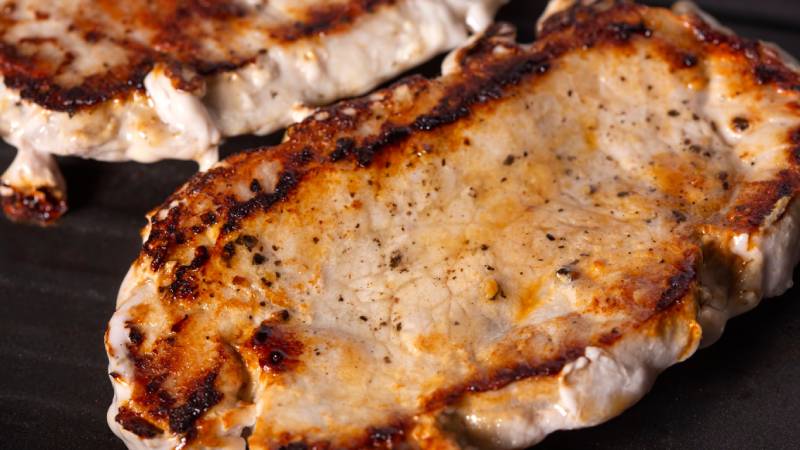
- The pork should be thoroughly cooked to 145° F before offering it to your cat. Cooking the pork will kill off any bacteria and parasites; it should never be fed raw.
- Because pork isn’t a common ingredient in cat foods, it is sometimes used for cats that have food sensitivities, allergies, or intolerances. For this reason, if your cat is not already on a diet that includes pork, it is better to keep it that way in case they ever need to change to a diet with a meat they haven’t had before (a novel protein diet).
- Ensure the pork is not covered in sauce or spices or accompanied by veggies such as garlic and onions since they are toxic to cats. The pork should be well-cooked and as plain as possible.
Frequently Asked Questions
What Type of Pork Can I Feed My Cat?
Generally, it’s best to select the leanest cuts and stay away from those that are fatty, like bacon. Lean cuts of pork include the loin roast, loin chops, and pork tenderloin. Fattier types of pork that you should avoid include bacon, pork shoulder chops, and pork belly.
Can Cats Eat Raw Pork?
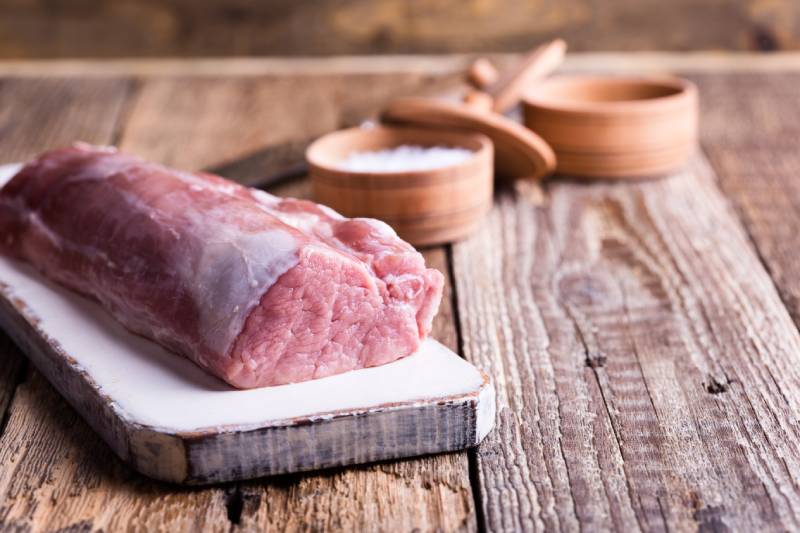
No, cats should never be fed raw pork. Although cats can properly digest raw pork, pork is known to carry parasites and bacteria that are killed off during cooking.
Do Cats Like the Taste of Pork?
Pork and most other kinds of meat are generally delicious for cats! Each cat is unique and has a unique palate, and although some cats will eat pork or cat food with a pork flavor, others will prefer chicken, turkey, fish, or beef.
What Do I Do If My Cat Ate Too Much Pork?
If your cat has overindulged in pork, keep a close eye out for digestive problems, such as vomiting and diarrhea, and stop feeding your pork. If your cat has stopped eating, seems unwell or has signs of an upset stomach contact your veterinarian immediately.
What Are the Best Alternatives to Pork?
There are several healthy and safer alternative protein sources to feed your cat other than pork. They are less fatty and contain less sodium, are higher in protein content, and contain many additional health benefits.
Chicken
Chicken is one of the most common proteins found in commercial cat food. It is more affordable and loaded with protein, and most cats really seem to enjoy it! You can serve plain, thoroughly cooked chicken as a snack or a quality cat food that contains chicken.
Fish
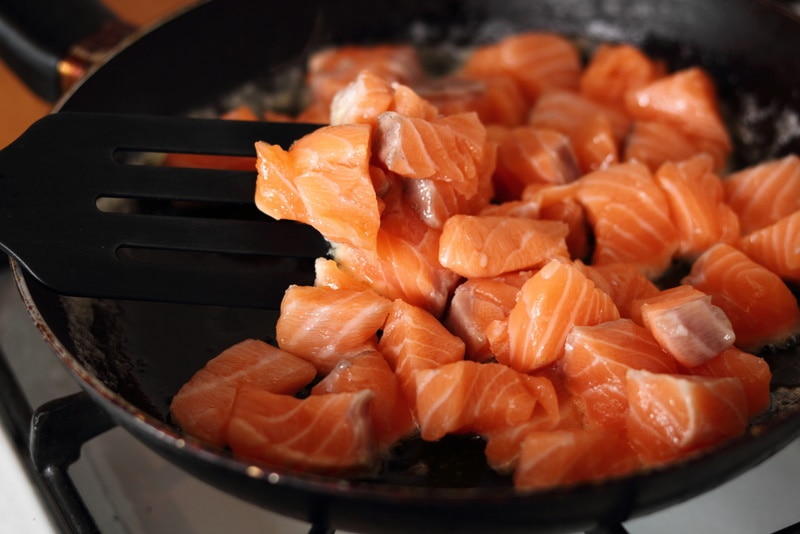
Fish is also a great alternative to pork, and cats love fish! It is packed with protein and essential fatty acids. Cats can eat tuna or salmon as a treat. If giving canned fish, offer fish in water options only.
Beef
In addition to iron, zinc, taurine, and B vitamins, beef is a rich source of protein for cats. Again, the meat should be cooked and not have any visible chunks of fat.
Food Allergies in Cats
Some cats may be allergic to certain foods. Cats with food allergies often have itchy skin and sometimes signs of an upset stomach such as vomiting or diarrhea. Commonly, the protein source in the diet is the cause of the allergies. Pork, chicken, beef and fish should be ok for most cats however, if you think your cat may have food allergies it is best to speak to your veterinarian for dietary advice.
Conclusion
Pork is a good source of protein, which can be nutritionally beneficial for your cat, but it is higher in fat and sodium. As a commonly used ingredient in foods for cats with allergies or sensitive stomachs, it is a good idea to keep pork off the regular menu in case you need to rely on it later. If you want to feed your cat pork, we recommend consulting with your veterinarian first.
Related Reads:
Sources
Featured Image Credit: matka_Wariatka, Shutterstock
Get Hepper In Your Inbox


Pet care tips from our vets and experts, straight to your inbox.
You may opt-out at any time. View our Privacy Policy for more information.
Nicole is a lover of animals of all sizes but is especially fascinated with the feline variety. She’s the proud mom of Baby, a Burmese, and works every day so he can relax in the sunshine or by the fire. She’s always had a cat in her home and has spent countless days with others, observing behaviors and softening up even the grouchiest of the lot. Nicole wants to share her kitty expertise with you so you and your cat can live happy, healthy, and care-free.
Join the conversation
Ask a question, share your story, or send private feedback.